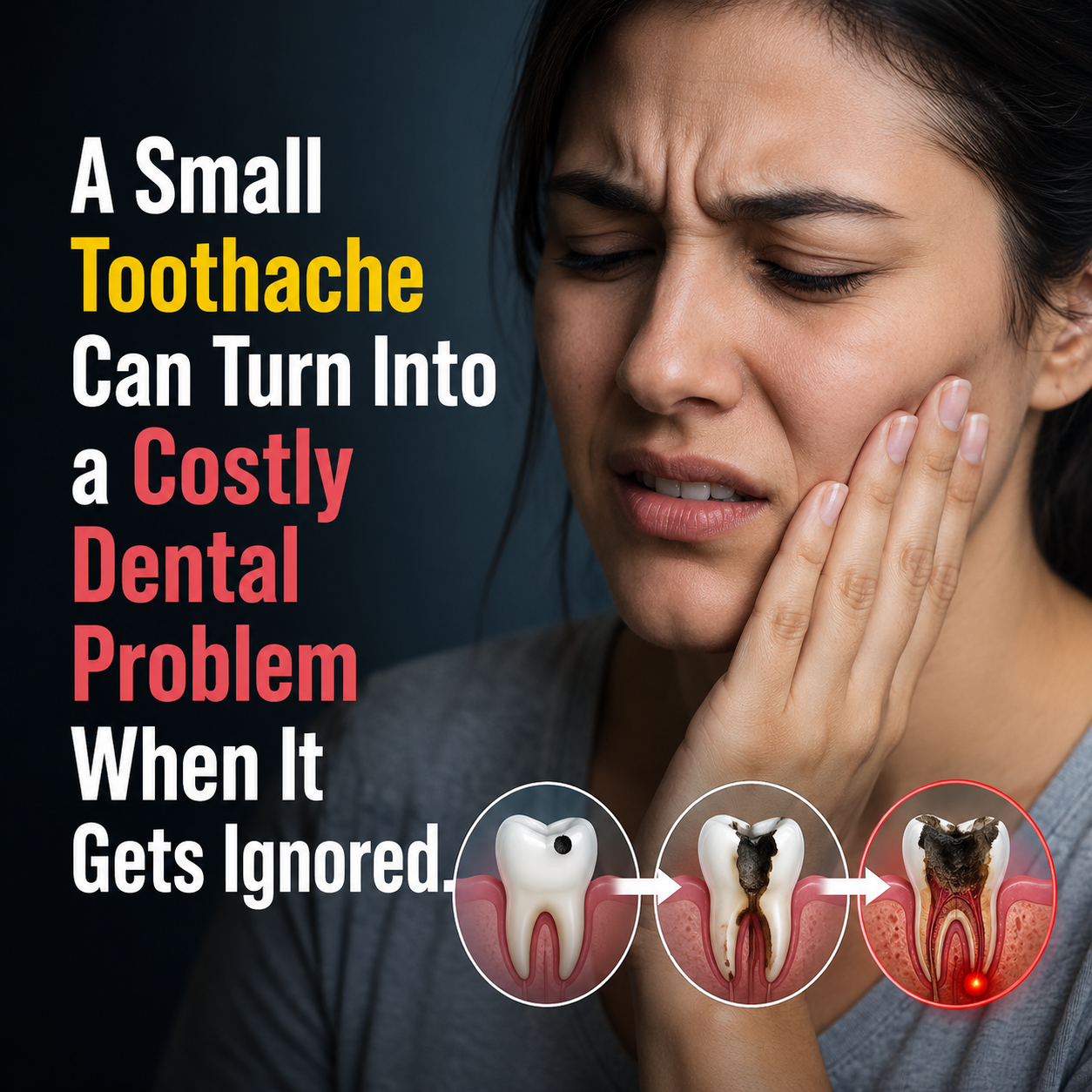
It often starts with something minor. A sharp pain when drinking coffee, sensitivity while chewing, or a dull ache that comes and goes. Many people ignore it, assuming it will settle on its own or waiting until the discomfort becomes unbearable.
The problem is that toothaches rarely disappear without a reason. In many cases, what begins as a small cavity or mild irritation can gradually develop into a serious dental issue requiring more complex and expensive treatment. Delaying dental care is one of the most common reasons simple problems become long-term oral health complications.
Table of Contents
Why a Toothache Should Never Be Ignored
A toothache is usually a sign that something is happening beneath the surface. Common causes include tooth decay, cracked teeth, gum disease, infections, or damaged fillings. Untreated decay can progress deeper into the tooth and eventually affect the nerve or surrounding tissue.
In the early stages, pain may only appear occasionally. Some people notice sensitivity to hot or cold drinks, while others experience discomfort when biting down. Because the pain can seem manageable, it is easy to postpone treatment.
Unfortunately, dental issues tend to worsen over time rather than stabilise. A cavity that may have required a simple filling can eventually lead to infection, abscess formation, or tooth loss if left untreated.




How Small Problems Become Expensive Treatments
One of the biggest misconceptions about oral health is that no pain means no problem. Tooth decay often develops silently in the beginning. By the time severe pain appears, the damage may already be extensive. For example, early enamel damage can sometimes be treated with a straightforward filling. But if decay reaches the inner pulp of the tooth, treatment may involve root canal therapy, crowns, or even extraction.
The financial difference between early and delayed treatment can be significant. Ignoring symptoms may also allow the infection to spread into the surrounding gums or bone. In difficult situations, dental infections can affect nearby tissues and create serious health complications.
Many people delay care because they are busy, anxious about treatment, or hoping the pain will pass. In reality, postponing treatment usually increases both the complexity and cost of fixing the problem later.
Gum Problems Often Start Quietly
Toothaches are not always caused by cavities alone. Gum disease is another major issue that often develops gradually. Bleeding gums, bad breath, tenderness, or gum recession may seem minor at first, but untreated gum disease can eventually damage the structures supporting the teeth. In advanced stages, teeth can become loose or require removal.
Like tooth decay, gum disease is far easier to manage when identified early. Routine dental check-ups help detect these issues before symptoms become severe. X-rays and examinations can often identify hidden decay or gum problems that are not yet visible or painful.
Why People Delay Seeing a Dentist
There are several reasons people postpone dental visits. Some assume the discomfort is temporary. Others worry about treatment costs or fear dental procedures. Busy schedules also play a role, especially when symptoms seem manageable.
However, waiting for pain to become severe is rarely a good strategy. Dental problems do not heal the same way minor cuts or bruises do. Once decay or infection begins, professional treatment is usually necessary to stop it from progressing.
Many patients later discover that earlier intervention would have been simpler, less invasive, and more affordable. This is why regular check-ups matter, even when there are no obvious symptoms.
The Importance of Early Diagnosis
Early diagnosis gives dentists more treatment options and often helps preserve natural tooth structure. A small cavity caught early may only require minimal treatment. A cracked tooth identified quickly may be protected before it fractures further. Gum disease detected in its early stages can often be controlled with professional cleaning and improved oral hygiene.
Regular visits also help identify hidden issues that patients may not notice themselves. Decay can develop between teeth or beneath old fillings without causing immediate pain. For people looking for experienced dentists in Sydney, early assessment can help prevent minor concerns from turning into major restorative procedures later.
Practical Ways to Reduce Dental Problems
Good daily habits play a major role in preventing toothaches and decay. Brushing twice daily with fluoride toothpaste, flossing regularly, reducing sugary snacks, and attending routine dental check-ups all help lower the risk of cavities and gum disease.
It is also important not to ignore warning signs such as persistent sensitivity, swelling, pain while chewing, or bleeding gums. Seeking treatment early is usually the simplest and most cost-effective approach.
Conclusion
A small toothache may seem easy to ignore, especially when the pain comes and goes. But dental problems rarely stay small forever. What starts as mild sensitivity or a tiny cavity can eventually develop into infection, severe pain, or tooth loss when left untreated.
Delaying care often leads to more complicated and expensive treatment later. Paying attention to early symptoms, maintaining regular dental check-ups, and addressing problems promptly can help protect both your oral health and your long-term costs.
FAQs
1. Can a toothache go away on its own?
Sometimes pain temporarily fades, but the underlying problem often remains and may continue worsening silently.
2. What usually causes a toothache?
Common causes include tooth decay, infections, cracked teeth, gum disease, damaged fillings, or sensitivity.
3. How quickly can tooth decay worsen?
Decay progresses at different rates, but untreated cavities can deepen over time and eventually affect the tooth nerve.
4. When should I see a dentist for tooth pain?
You should see a dentist if pain lasts more than a day or two, worsens, or is accompanied by swelling or sensitivity.
5. Can delaying treatment make dental care more expensive?
Yes. Early problems may only require simple treatment, while delayed care can lead to root canals, crowns, or extractions.
6. Are regular dental check-ups necessary even without pain?
Yes. Many dental problems develop without obvious symptoms in the early stages, making routine check-ups important for prevention.