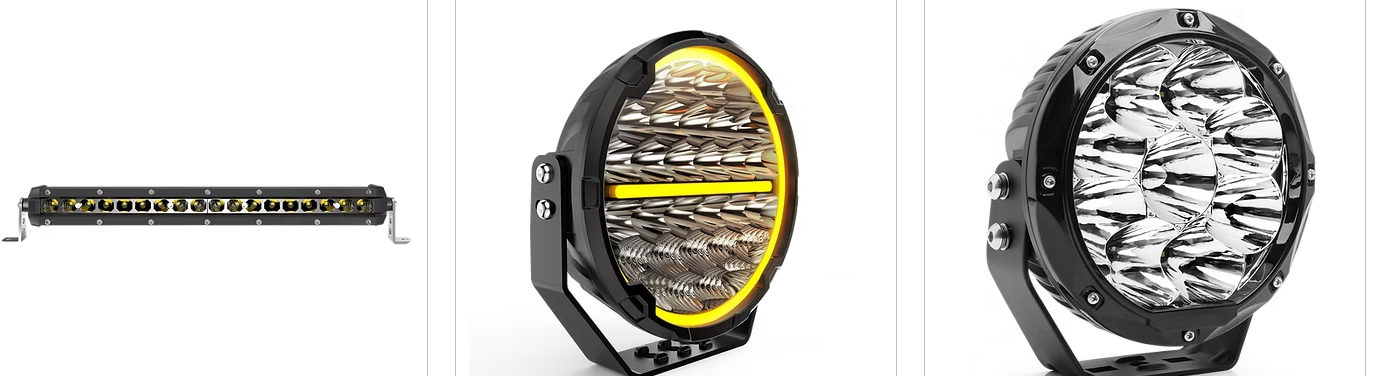
Navigating roads after the sun goes down presents a unique set of challenges for every motorist. Reduced visibility, impaired depth perception, and the glare from oncoming traffic all contribute to an environment that requires heightened focus and superior equipment. Upgrading to a high-quality illumination system is one of the most effective ways to mitigate these risks. Installing a set of LED DRIVING LIGHTS significantly enhances your field of view and response time on dark roads. By projecting a brighter, more focused beam, drivers can spot potential hazards, wildlife, and road changes far earlier than with standard factory headlights.
Statistical data consistently points to visibility as a primary factor in traffic safety. The National Highway Traffic Safety Administration frequently highlights that a disproportionate number of accidents occur during twilight and nighttime hours, despite a massive reduction in traffic volume. Relying on outdated halogen bulbs leaves drivers at a severe disadvantage when split-second reactions are required. Understanding the metrics and performance data behind modern illumination technology is essential for anyone looking to optimize their vehicle for nocturnal travel.
This comprehensive guide addresses the most pressing questions regarding nighttime driving safety. By examining the statistical benefits and technical specifications of modern illumination solutions, drivers can make informed decisions about upgrading their vehicle’s safety equipment.
Table of Contents
Why is night driving statistically more dangerous?
Traffic safety organizations report that while only a quarter of driving occurs at night, nearly half of all fatal crashes happen during these hours. The primary culprit is a severe reduction in visual acuity. Human eyes require adequate light to process distance, speed, and spatial awareness accurately. When a vehicle operates with weak illumination, the driver’s reaction time drops precipitously. At a speed of 60 miles per hour, a vehicle covers 88 feet every second. If a driver’s visibility is limited to only 150 feet, they have less than two seconds to perceive a hazard, decide on an action, and execute a maneuver.
Upgrading vehicle illumination directly targets this statistical imbalance. By extending the visible range up to 300% further than traditional bulbs, drivers regain the crucial seconds needed to brake or evade obstacles safely. The correlation between enhanced visibility range and reduced collision probability is a driving force behind the widespread adoption of modern lighting technologies in commercial and private vehicles alike.



How do LED options compare to traditional halogen bulbs in output?
The performance gap between legacy halogen technology and modern light-emitting diodes is massive. A standard halogen headlight typically produces around 1,000 to 1,500 lumens of light output while drawing roughly 55 watts of power. In contrast, modern diode-based driving lights can generate anywhere from 3,000 to over 10,000 lumens per unit, depending on the specific configuration and housing. This represents an increase in raw brightness of over 300 to 500 percent.
Furthermore, the efficiency metrics heavily favor newer technology. Traditional bulbs waste a significant portion of their energy generating heat rather than light. Diodes convert electricity to light with an efficiency rate exceeding 80%. This means they produce vastly superior illumination while placing a significantly lower electrical burden on the vehicle’s alternator and battery system. For drivers managing multiple accessories—such as communication radios, winches, or refrigeration units—this reduction in power draw is a critical operational advantage.
What role does color temperature play in driver fatigue?
Color temperature, measured in Kelvin (K), dictates the appearance of the light emitted. Halogen bulbs typically emit a warm, yellowish light at around 3000K to 3500K. While functional, this spectrum forces the human eye to work harder to distinguish contrast and detail in the dark, accelerating visual fatigue during long drives.
The most effective driving lights operate in the 5000K to 6500K range. This spectrum closely mimics natural midday sunlight. Statistical studies on ergonomics and driver endurance show that daylight-mimicking illumination significantly reduces eye strain. When the brain processes light that resembles daytime conditions, it suppresses the production of melatonin, the hormone responsible for inducing sleepiness. As a result, drivers maintain higher levels of alertness and concentration over extended periods.
What is the projected lifespan of these modern illumination systems?
Durability and longevity are areas where modern solid-state lighting thoroughly dominates older technologies. A conventional halogen bulb has an average operational lifespan of 500 to 1,000 hours. The delicate tungsten filament inside the bulb is highly susceptible to breaking from the constant vibrations and impacts experienced during daily driving, especially on rough terrain or unpaved roads.
Solid-state diodes possess no fragile filaments or glass capsules. Encased in rugged aluminum housings and protected by impact-resistant polycarbonate lenses, these systems boast an average lifespan of 30,000 to 50,000 hours. To put that statistic into perspective, if you operated your driving lights for four hours every single night, the system would last for over 30 years before experiencing diode failure. This extraordinary reliability eliminates the recurring cost and inconvenience of bulb replacements, making the initial investment highly economical over the lifespan of the vehicle.
How do beam patterns impact driving safety metrics?
Not all light output is created equal, and the distribution of that light is just as important as the raw lumen count. Manufacturers design specific beam patterns to address different statistical risks associated with driving environments.
Spot beams project a tightly focused shaft of light designed to penetrate deep into the darkness. These are crucial for high-speed highway driving, where spotting a hazard a half-mile away is necessary to allow sufficient braking distance. Flood beams, on the other hand, disperse light widely across the immediate foreground and shoulders of the road. This pattern is statistically most effective for navigating twisting mountain passes, off-road trails, and areas with high populations of nocturnal wildlife that may dart onto the roadway from the periphery. Many drivers opt for combination light bars that utilize both spot and flood reflectors, providing a comprehensive safety net that addresses both distance and peripheral hazards simultaneously.
Do environmental extremes affect system reliability?
Vehicles are subjected to brutal environmental conditions, from freezing blizzards to scorching desert heat. The reliability of critical safety equipment in these environments is paramount. Standard vehicle lighting housings often suffer from moisture ingress, which can shatter hot halogen bulbs or obscure the lens with condensation.
High-quality modern driving lights are engineered with extreme Ingress Protection (IP) ratings. Units rated IP68 or IP69K are completely sealed against dust intrusion and can withstand continuous submersion in water, as well as high-pressure, high-temperature water jets. Additionally, advanced thermal management systems—such as oversized heat sinks and integrated cooling fins—prevent the diodes from overheating in high ambient temperatures. This robust engineering ensures that regardless of the meteorological data or geographic extremes, the illumination system will continue to perform flawlessly.
Upgrading for a Safer Journey
The data surrounding nighttime driving hazards is clear, but the solutions are equally well-documented. Relying on inadequate factory lighting places an unnecessary burden on driver reaction times and overall road safety. By understanding the profound statistical advantages of high-lumen output, daylight color temperatures, and solid-state durability, vehicle owners can take proactive steps to protect themselves and their passengers. Investing in a superior illumination system is a permanent, data-backed upgrade that dramatically alters the nighttime driving experience, turning stressful, low-visibility conditions into clear, manageable journeys.