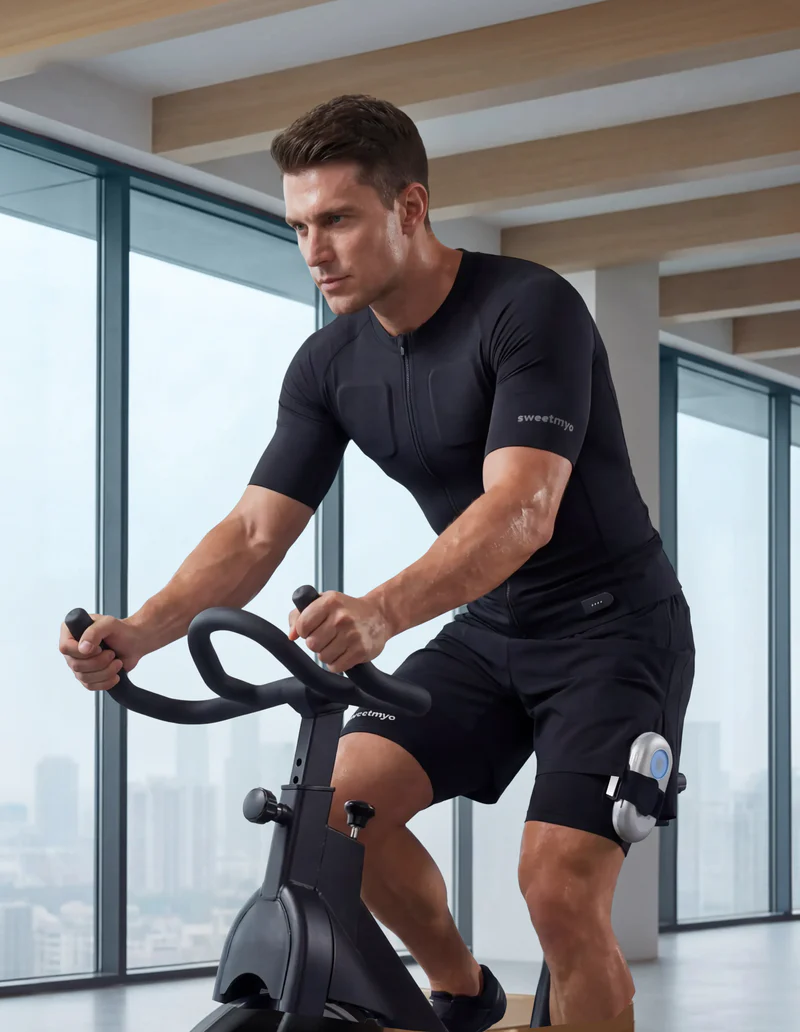
Every fitness enthusiast knows the frustration of hitting a plateau. You’ve been consistent with your training, dialed in your nutrition, and pushed through grueling sets—yet the mirror and the barbell tell the same stubborn story. When progressive overload and periodization alone stop delivering results, it might be time to look beyond conventional methods. Electrical Muscle Stimulation, or EMS, has emerged as a cutting-edge technique that sends controlled electrical impulses through your muscles, forcing deeper contractions than most people achieve on their own. Once reserved for physical therapy clinics and elite sports labs, EMS technology is now accessible enough for everyday lifters to incorporate into their routines.
This article aims to demystify EMS for muscle growth so you can decide whether it deserves a place in your training arsenal. We’ll start with the fundamentals of how EMS works, then dive into the science explaining why it triggers hypertrophy. From there, you’ll learn practical strategies for integrating EMS before, during, and after workouts, along with guidance on fine-tuning stimulation parameters for your body. Finally, we’ll explore how modern tools like the Sweetmyo app can streamline the entire process. Whether you’re a curious beginner or a seasoned athlete chasing new gains, these insights will help you train smarter.
Table of Contents
What is Electrical Muscle Stimulation (EMS)?
Electrical Muscle Stimulation is a technique that delivers low-level electrical impulses through electrodes placed on the skin, causing the underlying muscles to contract without voluntary effort from the brain. These impulses mimic the action potentials that your nervous system naturally generates when you decide to move a limb or squeeze a weight. The key difference is that EMS can recruit muscle fibers—particularly deep, hard-to-activate fast-twitch fibers—that many people struggle to engage through willpower alone.
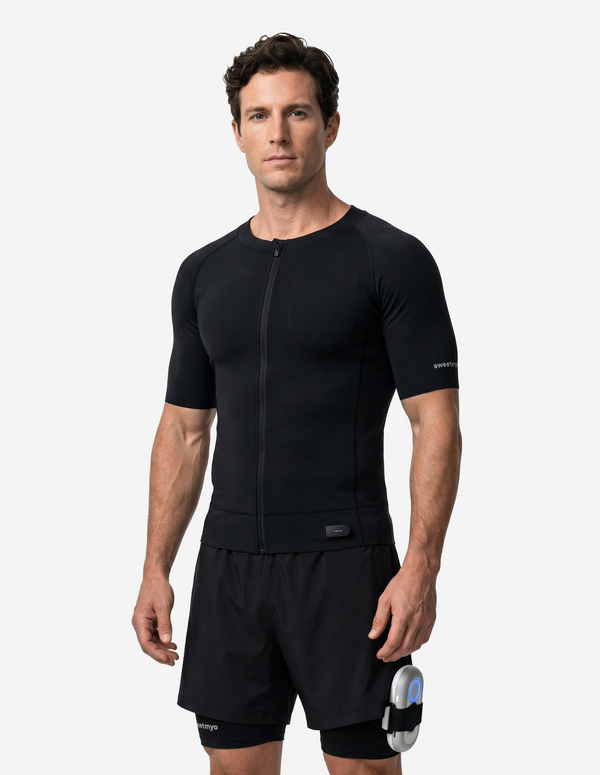
Modern EMS devices range from compact, portable units designed for home use to full-body suits employed in supervised studio settings. Regardless of the form factor, safety guidelines remain consistent: electrodes should never be placed over the heart, on broken skin, or near implanted medical devices. Sessions should start at low intensities and increase gradually to avoid muscle strain or skin irritation. Most manufacturers recommend limiting stimulation sessions to 20–30 minutes per muscle group.
What began as a rehabilitation tool in the 1960s for preventing muscle atrophy in bedridden patients has evolved into a legitimate performance-enhancement strategy. Professional athletes in soccer, cycling, and sprinting adopted EMS decades ago, and today’s affordable consumer devices have brought the same principles within reach of recreational lifters seeking an extra edge in their hypertrophy programs.




The Science Behind EMS for Muscle Growth
Muscle hypertrophy occurs when mechanical tension, metabolic stress, and muscle damage trigger a cascade of cellular repair processes that leave fibers thicker and stronger than before. During traditional resistance training, your central nervous system sends electrical signals down motor neurons to activate muscle fibers in a specific recruitment pattern—smaller, slow-twitch fibers fire first, and larger, fast-twitch fibers join in only as the load demands it. This orderly recruitment means that under moderate loads, many fast-twitch fibers never fully engage, leaving potential growth on the table.
EMS disrupts this hierarchy. Because the electrical current penetrates the tissue externally, it can activate fast-twitch motor units from the very first pulse, bypassing the body’s natural tendency to conserve high-threshold fibers for heavy or explosive efforts. A 2010 study published in the Journal of Strength and Conditioning Research found that athletes who supplemented their training with EMS over five weeks experienced significantly greater gains in isometric strength compared to a control group performing the same program without stimulation. More recent research in the European Journal of Applied Physiology confirmed that EMS combined with voluntary contractions produced higher levels of muscle activation than either method alone, suggesting a synergistic effect on the neuromuscular system.
The practical takeaway is straightforward: voluntary contractions build the foundation of hypertrophy, but EMS can amplify the signal. By forcing deeper fiber recruitment and sustaining tension across a broader cross-section of muscle tissue, electrical stimulation creates a stimulus environment that your body must adapt to—ultimately translating into measurable size and strength improvements when paired with sound training principles.
Integrating EMS into Your Training Days
Knowing the science is one thing—putting it into practice is where results actually happen. The most common mistake newcomers make is treating EMS as a standalone workout replacement, cranking up the intensity and expecting it to do all the heavy lifting. In reality, EMS delivers its greatest benefits when layered strategically around your existing training. Think of it as a force multiplier: it amplifies the work you’re already doing rather than substituting for the barbells, dumbbells, and bodyweight movements that form the backbone of any solid hypertrophy program.
Timing matters more than most people realize. The way your muscles respond to electrical stimulation shifts depending on whether they’re cold and resting, actively contracting under load, or recovering from a hard session. Each window—pre-workout, intra-workout, and post-workout—offers distinct advantages, and the smartest approach is to rotate through all three based on your weekly training split and recovery needs. Below is a breakdown of how to use each window effectively.
Pre-Workout Activation with EMS
Applying EMS for five to ten minutes before training serves as a powerful warm-up strategy. Set the device to a moderate frequency with short pulse durations to generate gentle, rhythmic contractions in the muscles you’re about to train. This increases local blood flow, raises tissue temperature, and “wakes up” motor units that might otherwise take several warm-up sets to fully engage. For example, running a brief EMS activation on your glutes before a squat session can dramatically improve mind-muscle connection, helping you feel the target muscle working from your very first working set. Athletes who struggle with lagging body parts often find that pre-workout EMS bridges the gap between knowing a muscle should be firing and actually feeling it contract.
Enhancing Workouts with EMS
Using EMS during resistance training is where the synergy between voluntary and involuntary contractions becomes most apparent. Strap electrodes onto the target muscle group and activate stimulation while performing your normal sets. The external impulses recruit additional fibers on top of those your nervous system is already driving, effectively increasing the total contractile force and the percentage of muscle tissue under tension. Practical application looks like this: during a set of dumbbell curls, the EMS unit fires in sync with your concentric phase, making each rep feel heavier without adding actual load. This technique is especially useful during deload weeks or when working around a minor joint issue, because you can maintain a potent hypertrophic stimulus at lower external loads. Start with conservative intensity so the stimulation enhances rather than disrupts your movement pattern, and increase gradually as coordination improves.
Post-Workout Recovery and EMS
After training, switching to a low-frequency recovery program helps flush metabolic waste products from fatigued muscles and promotes nutrient-rich blood flow to damaged tissue. Gentle, pulsing contractions act like a mechanical pump—contracting and relaxing the muscle just enough to encourage circulation without adding further mechanical stress. Many users report noticeably reduced delayed-onset muscle soreness when they run a 15- to 20-minute recovery session within an hour of finishing their workout. On dedicated rest days, a light EMS session keeps muscles active and pliable, which can shorten overall recovery time and allow you to return to intense training sooner. This is particularly valuable during high-volume training blocks where accumulated fatigue threatens to derail consistency.
Optimizing Muscle Engagement with EMS
Getting EMS right isn’t just about strapping on electrodes and pressing start—the difference between a productive session and a wasted one often comes down to how well you dial in your stimulation parameters. Every muscle group responds differently to electrical input, and your own tolerance, training history, and goals should shape the settings you choose. Treating parameter adjustment as a skill rather than a guessing game will accelerate your results and keep you safe in the process.
Understanding Stimulation Parameters
Three core variables determine what your muscles experience during an EMS session. Frequency, measured in hertz (Hz), controls how many impulses reach the muscle per second. Low frequencies between 1 and 10 Hz produce gentle twitches ideal for recovery and blood flow, while moderate ranges of 20 to 50 Hz generate sustained contractions suited for endurance-oriented work. Pushing into the 50 to 85 Hz range targets fast-twitch fibers aggressively, making it the go-to zone for hypertrophy and strength goals. Pulse width, measured in microseconds, dictates how long each individual impulse lasts. Wider pulses (300–400 µs) penetrate deeper into large muscle groups like the quadriceps and glutes, whereas narrower pulses (100–200 µs) work better for smaller muscles such as the biceps or calves. Finally, amplitude—the actual intensity level you feel—determines how forcefully the muscle contracts. Higher amplitude recruits more motor units but also increases the risk of cramping if applied too aggressively.
Step-by-Step Guide to Adjusting Intensity
If you’re new to EMS, start every session at the lowest amplitude setting and increase by small increments until you see a visible contraction without pain. During your first week, keep frequencies in the 30 to 40 Hz range and pulse widths around 250 µs so your muscles and skin adapt to the sensation. In the second and third weeks, raise the frequency to 50–70 Hz for working sets and experiment with slightly wider pulse widths on larger muscle groups. By week four, you should have a reliable baseline: the intensity at which you feel a strong, tolerable contraction through the full range of motion. From there, apply a progressive approach similar to adding weight to the bar—nudge the amplitude up by one or two levels each week. Always listen to your body: sharp or burning pain signals overstimulation, and the correct response is to reduce intensity immediately rather than push through. Keeping a brief log of your settings after each session helps you track what works and avoid repeating combinations that caused discomfort.
Leveraging Technology: The Sweetmyo App
Managing frequencies, pulse widths, and session timing across multiple muscle groups can feel overwhelming, which is exactly where the Sweetmyo app proves its value. The app lets you select preset EMS programs tailored to specific goals—hypertrophy, strength, or recovery—so you spend less time fiddling with settings and more time training. Built-in progress tracking logs your stimulation parameters alongside workout data, making it easy to spot trends and adjust your approach week to week. You can also sync sessions with your existing training schedule, ensuring EMS activation, intra-workout enhancement, and recovery protocols land on the right days without guesswork. For anyone serious about integrating electrical stimulation systematically rather than sporadically, having a centralized platform that organizes every variable in one place turns a complex process into a streamlined habit.
Build Smarter Gains with EMS-Enhanced Training
Electrical Muscle Stimulation offers a genuine pathway past the plateaus that frustrate even dedicated lifters. By recruiting fast-twitch fibers that voluntary effort alone often misses, EMS creates a deeper hypertrophic stimulus that complements your existing barbell and dumbbell work. The keys to success are straightforward: use pre-workout activation to prime stubborn muscles, layer stimulation over resistance training to amplify fiber recruitment, and apply low-frequency recovery protocols to accelerate repair between sessions. Equally important is treating intensity adjustment as a progressive skill—start conservatively, track your parameters, and increase amplitude only when your body signals readiness.
Tools like the Sweetmyo app remove much of the complexity by organizing programs, logging data, and aligning EMS protocols with your weekly split so nothing falls through the cracks. That said, technology works best when paired with common sense. If you have underlying health conditions or implanted devices, consult a medical professional before starting any EMS program. For everyone else, begin with short, moderate sessions, pay attention to how your muscles respond, and build from there. The combination of smart training, disciplined recovery, and targeted electrical stimulation can unlock a new level of growth—apply these techniques consistently and let the results speak for themselves.