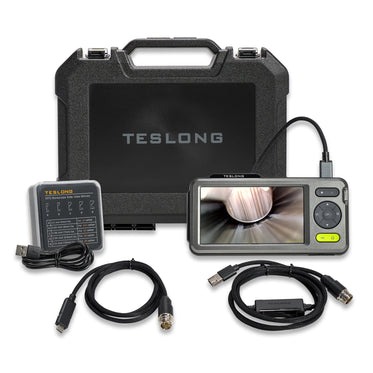
Picture this: you’re trying to diagnose a mysterious ticking sound deep within an engine block, but the component responsible sits behind a maze of hoses, wiring harnesses, and manifold runners. Traditional inspection would mean hours of disassembly, mounting labor costs, and the risk of introducing new problems during reassembly. Every mechanic has faced this frustration—knowing something is wrong but unable to see it without tearing the engine apart. This is exactly where a quality borescope transforms your diagnostic workflow. Modern dual lens cameras paired with flexible probes give mechanics direct visual access to cylinders, valve seats, intake ports, and other confined spaces without removing a single bolt. These tools eliminate guesswork, reduce diagnostic time from hours to minutes, and help you communicate findings clearly to customers. In this guide, we’ll break down what makes dual lens borescopes superior for automotive work, why probe flexibility matters more than most mechanics realize, and how to choose the best borescope that meets the demands of a professional shop environment.
Table of Contents
The Critical Role of Borescopes in Modern Automotive Repair
Visual inspection remains the foundation of accurate engine diagnostics. A mechanic who can see the problem directly—carbon buildup on intake valves, scoring on cylinder walls, or a cracked piston ring land—can diagnose with confidence rather than relying on educated guesses or expensive trial-and-error part swaps. Traditional methods demanded significant disassembly just to confirm a suspicion, turning a thirty-minute diagnosis into a half-day ordeal that customers neither appreciated nor wanted to pay for.
Borescope technology changed this equation fundamentally. What began decades ago as rigid, fiber-optic instruments limited to straight-line inspections has evolved into sophisticated digital cameras capable of navigating serpentine paths through engine internals. Today’s automotive inspection cameras deliver high-resolution imagery in real time, allowing mechanics to peer into spark plug holes, oil drain passages, and turbocharger housings without disturbing a single fastener. For professional shops where bay time equals revenue, this efficiency gain is substantial. A reliable borescope pays for itself within weeks by compressing diagnostic timelines, reducing comebacks from missed issues, and building customer trust through visual evidence shared directly on screen. The tool has shifted from luxury to necessity in any serious mechanic’s arsenal.
Dual Lens Borescope Cameras: Enhanced Visibility for Complex Inspections
What is a Dual Lens Borescope?
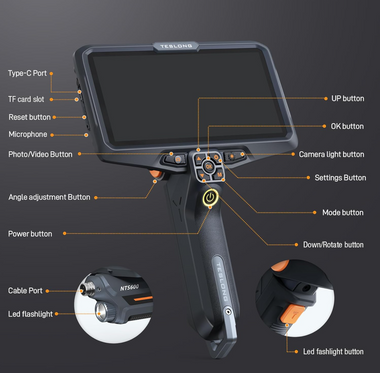
A dual lens borescope incorporates two separate camera modules on a single probe tip—typically one forward-facing lens and one side-viewing lens. Unlike standard single lens models that force you to rotate and reposition the probe repeatedly to see different angles, a dual lens borescope captures both perspectives simultaneously or allows instant switching between views without physically moving the camera. The forward lens provides a direct line-of-sight view down passages and bores, while the side lens reveals conditions on surrounding walls, seats, and lateral surfaces. This dual-perspective design means fewer insertion attempts, less fumbling in tight quarters, and a more complete picture of internal conditions gathered in a single pass.
Applications in Engine Diagnostics
Engine internals present inspection challenges that single-view cameras simply cannot address efficiently. When you insert a dual lens borescope through a spark plug hole, the forward-facing camera lets you examine the piston crown for erosion, detonation damage, or excessive carbon deposits, while the side-viewing lens simultaneously reveals cylinder wall scoring, crosshatch wear patterns, and ring land condition without repositioning. Inspecting intake valves on direct-injection engines—where carbon buildup is notoriously difficult to assess—becomes straightforward because the side lens captures valve tulip and seat conditions as you navigate past the port runners. Turbocharger compressor wheels, timing chain guides, and transmission bell housing internals all benefit from this dual-angle approach. The practical result is that mechanics cut inspection time roughly in half compared to single lens alternatives, because each probe insertion yields twice the diagnostic information. For shops handling high-volume diagnostics, a dual lens borescope eliminates the repeated probe adjustments that slow down every inspection and introduces a level of thoroughness that catches problems a single perspective would miss entirely.




Flexible Probes: The Key to Accessing Tight Spaces
Design and Durability of Flexible Probes
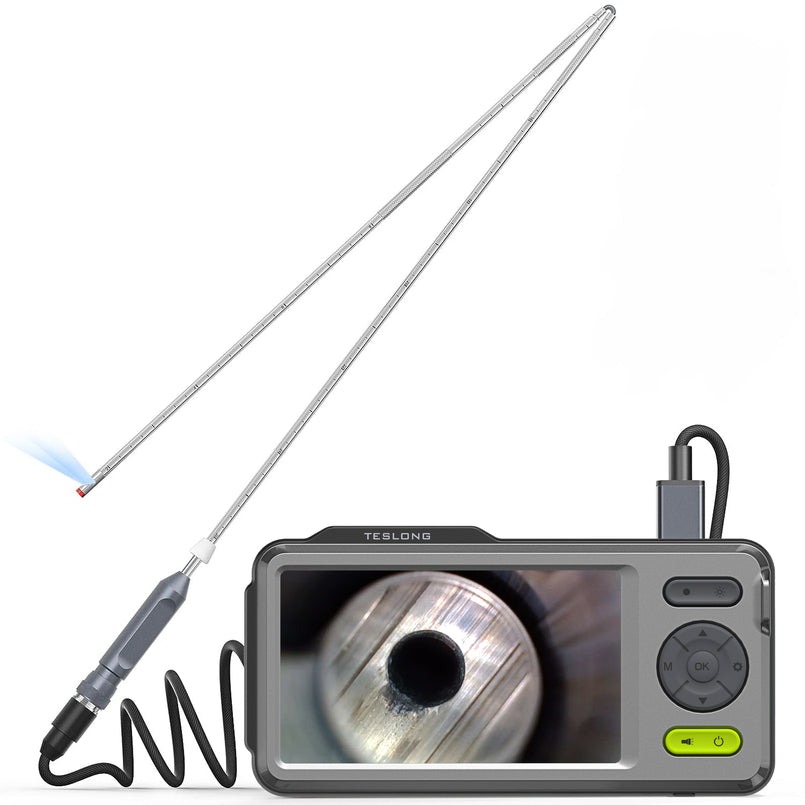
The flexible probe is arguably the most mechanically demanding component of any borescope designed for automotive work. Engine bays are hostile environments—sharp edges on casting flash, residual oil and coolant, extreme temperature variations, and the constant risk of the probe being pinched between components during insertion. Quality flexible probes are constructed with a braided tungsten or stainless steel outer sheath that resists kinking and abrasion while maintaining smooth articulation through tight bends. Inside this armor, fiber-optic bundles or miniaturized wiring carry image data from the camera tip back to the display unit without signal degradation, even when the probe is bent at acute angles. The best probes offer a semi-rigid design that holds its shape when positioned but flexes readily when guided around obstacles—striking a balance between rigidity for controlled navigation and suppleness for navigating S-curves through intake runners or past valve train components. Probe diameters typically range from 3.9mm to 8.5mm for automotive applications, with thinner probes accessing spark plug holes and injector ports while thicker options deliver superior image quality and LED illumination. For professional mechanics who use these tools daily, durability is non-negotiable. A probe that frays, loses flexibility, or develops dead pixels after a few months represents wasted investment. Look for reinforced junction points where the probe meets the handle—this stress zone fails first on cheaper models.
Practical Benefits for Mechanics
A flexible probe fundamentally changes how mechanics approach confined-space inspections. Rather than removing intake manifolds, valve covers, or transmission pans to gain visual access, the probe threads through existing openings—dipstick tubes, sensor ports, drain holes, and spark plug wells—following the natural geometry of the engine. This capability eliminates hours of unnecessary disassembly and the associated risks of broken fasteners, damaged gaskets, or disturbed sensor calibrations. In practice, a mechanic investigating a coolant leak can route the probe through a freeze plug opening and navigate it along the block’s water jacket, visually confirming corrosion or casting porosity without pulling the engine. Similarly, inspecting timing chain stretch or guide wear becomes a ten-minute task through the oil filler neck rather than a multi-hour teardown. The flexible probe also reduces the chance of damaging the tool itself—because it conforms to the path rather than forcing against obstructions, there’s less mechanical stress on both the camera and the engine internals being inspected. For shops handling fleet maintenance or high-volume repair work, this workflow efficiency compounds rapidly, freeing up bay time and allowing technicians to move through diagnostic queues faster without sacrificing thoroughness.
Step-by-Step Guide to Using a Borescope for Engine Inspections
Preparation and Safety Steps
Before inserting any automotive inspection camera into an engine, proper preparation prevents both equipment damage and inaccurate readings. Start by ensuring the engine has cooled completely—hot surfaces can damage probe sheaths and produce heat distortion in camera imagery. Remove the spark plugs or access port covers you plan to use as entry points, and blow compressed air through these openings to clear loose debris that might obscure the camera lens once inside. Wipe the borescope lens with the included microfiber cloth, checking that both dual lens elements are free of oil film or fingerprints. Confirm that the display unit is fully charged or connected to shop power, and verify that the LED illumination functions on both brightness settings. Wear nitrile gloves to prevent skin oils from contaminating both the probe and engine internals, and keep safety glasses on since compressed air and debris are involved during port clearing.
Inspection Process
Insert the probe slowly and deliberately—forcing it around bends risks kinking the cable or scratching cylinder walls. Feed the flexible probe through your chosen access point while watching the live display, using the forward-facing lens to navigate and the side lens to survey surrounding surfaces as you advance. Rotate the probe gently when you encounter resistance, allowing it to find the natural path rather than pushing against obstructions. Once positioned inside a cylinder, sweep the side-view camera in a full rotation to capture the entire wall surface, then angle downward to examine the piston crown. For intake port inspections, advance through the runner while monitoring valve deposits on the side lens. Record video rather than relying solely on still images—continuous footage ensures you capture transient details like hairline cracks that are easy to miss in a single frame. Mark timestamps when you spot abnormalities so you can reference them later during customer consultations.
Interpreting Results and Taking Action
Reading borescope imagery effectively requires understanding what normal wear looks like versus genuine damage. Cylinder walls should show consistent crosshatch honing patterns; vertical scoring or polished smooth areas indicate ring seal failure or piston slap. Carbon deposits on intake valves appear as dark, crusty buildup that narrows the flow path—light coating is normal on high-mileage direct-injection engines, but heavy accumulation restricts airflow and warrants walnut blasting. Coolant intrusion shows as white mineral deposits or rusty staining in areas that should remain dry. When you identify a problem, save the image or clip directly to the customer’s service file. This visual evidence makes repair authorization conversations far more productive—customers trust what they can see. Based on findings, determine whether the issue requires immediate repair, monitoring at the next service interval, or further teardown to assess full extent. A borescope finding of minor cylinder scoring, for example, might justify an oil consumption monitoring plan rather than an immediate overhaul, saving the customer money while documenting the baseline condition for future comparison.
Choosing the Best Automotive Inspection Camera: A Buyer’s Guide
Selecting the best borescope for professional automotive work comes down to balancing several critical factors against your shop’s specific demands. Image quality should top your priority list—look for cameras delivering at least 1080p resolution with adjustable LED brightness, since poorly lit or grainy footage defeats the purpose of visual inspection entirely. Probe specifications matter equally: ensure the flexible probe length accommodates your deepest inspection needs (typically 1.5 to 3 meters for engine work), and confirm the diameter fits through spark plug holes and sensor ports on the vehicles you service most frequently. Manufacturers like Teslong have developed dual lens models specifically with automotive technicians in mind, offering probe diameters and lengths tailored to common engine access points. Durability separates professional-grade tools from disposable consumer gadgets, so prioritize waterproof ratings of IP67 or higher, reinforced cable junctions, and scratch-resistant lens covers that withstand repeated contact with metal surfaces. Additional features worth evaluating include WiFi connectivity for streaming to tablets or phones, onboard video recording with expandable storage, articulation control at the probe tip, and compatibility with multiple display options. Budget matters, but consider the tool’s cost against the labor hours it saves—a more capable unit that shaves fifteen minutes off every inspection recovers its price difference quickly. Before purchasing, run through this checklist: dual lens capability, probe flexibility and diameter suitable for your applications, minimum 1080p resolution, waterproof construction, recording functionality, and a warranty that reflects the manufacturer’s confidence in longevity.
Why Dual Lens Borescopes Are Essential for Professional Mechanics
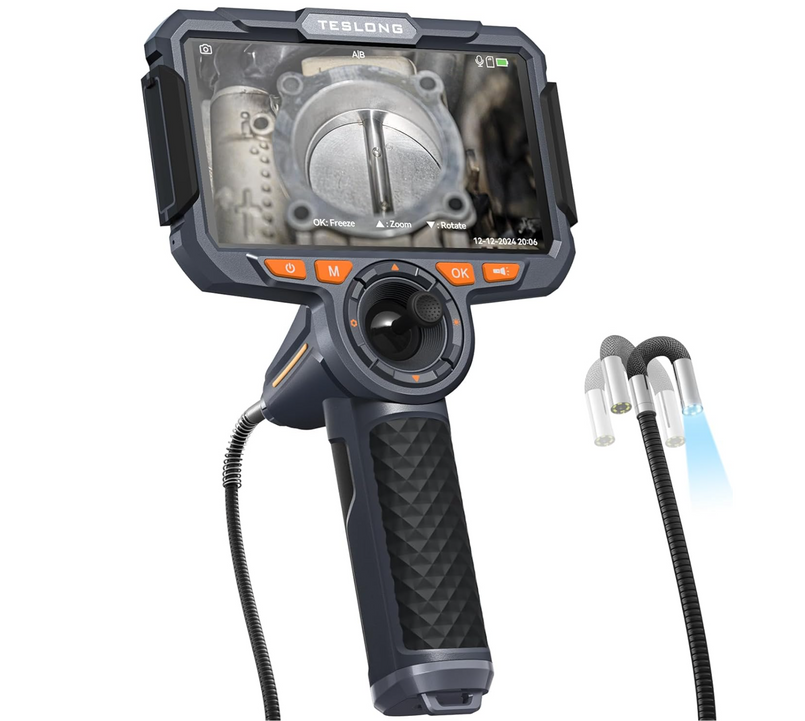
A quality borescope has become indispensable in modern automotive repair, bridging the gap between suspicion and confirmation without the costly overhead of unnecessary disassembly. Dual lens cameras deliver the comprehensive visibility that complex engine internals demand—capturing both forward and lateral perspectives in a single insertion, cutting inspection time in half while doubling the diagnostic information gathered. Flexible probes complement this capability by threading through the tight, winding passages that define modern engine architecture, reaching components that would otherwise require hours of teardown to access visually. Together, these features directly address the mechanic’s core needs: clear, reliable imagery from durable equipment that withstands daily professional use. Investing in a well-built dual lens borescope with a robust flexible probe pays dividends through faster diagnostics, fewer missed issues, stronger customer communication, and reduced wear on both the technician and the vehicle. As camera miniaturization continues advancing and image processing grows more sophisticated, tomorrow’s inspection tools will offer even greater resolution, AI-assisted defect recognition, and seamless integration with shop management systems—making now the ideal time to establish borescope-driven diagnostics as a standard practice in your workflow.