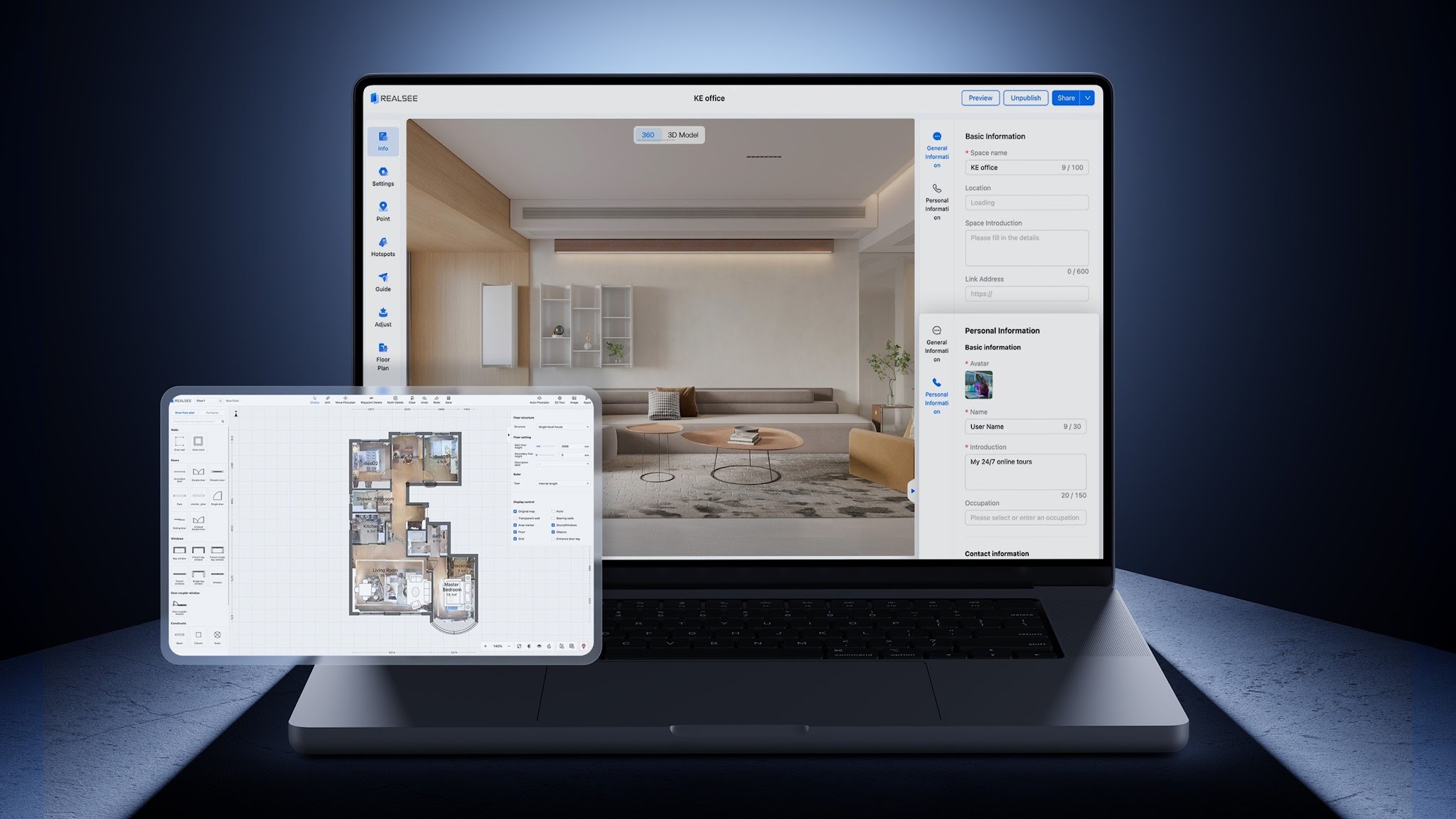
Every year, irreplaceable cultural artifacts face threats from environmental degradation, natural disasters, and the simple passage of time. Museums worldwide hold collections that may never be seen by the vast majority of people, locked behind geographic and physical barriers. In response, an unexpected ally has emerged from the commercial real estate sector: advanced photography and scanning tools originally designed to market properties are now transforming how institutions document and share their cultural treasures.
360-degree cameras, 3D scanners, LIDAR systems, and photogrammetry software—technologies that once helped sell homes and commercial spaces—are being repurposed to create stunning digital records of humanity’s most precious objects and sites. These tools offer museum curators practical, increasingly affordable pathways to build immersive virtual experiences that both preserve artifacts digitally and open collections to global audiences. This article explores the key trends driving this crossover, examines the specific tools making it possible, and provides actionable guidance for curators looking to integrate these technologies into their preservation and engagement strategies.
Table of Contents
The Imperative for Digital Preservation in Cultural Heritage
Museum curators face a persistent and intensifying set of challenges. Physical artifacts deteriorate over time—textiles fade, metals corrode, organic materials decay—regardless of how carefully controlled storage environments may be. Climate change accelerates these processes, introducing unpredictable humidity fluctuations and temperature extremes that threaten even well-maintained collections. Natural disasters, from flooding to earthquakes, can destroy in minutes what took centuries to create. Meanwhile, the vast majority of museum holdings remain in storage, unseen by the public; most institutions display only a fraction of their collections at any given time.
Beyond physical threats, there is a growing expectation from audiences worldwide for digital access. Visitors increasingly expect to explore collections remotely, whether for research, education, or personal enrichment. Institutions that lack a digital presence risk irrelevance to younger demographics who engage primarily through screens. Digital preservation addresses both concerns simultaneously: it creates a permanent, high-fidelity record that survives physical loss while enabling global access without geographic limitation. For curators, the foundational step is clear—capturing artifacts in digital form with enough detail and accuracy to serve both as an archival backup and as a compelling resource for public engagement. The tools to accomplish this are no longer confined to specialized labs; they have arrived from an unexpected source.
Key Real Estate Photography Tools Adapted for Heritage Work
The commercial real estate industry invested heavily in visual technology to help buyers experience properties remotely—a goal that aligns remarkably well with museum digitization needs. The same tools that create immersive property walkthroughs and detailed architectural documentation now serve as the backbone of cultural heritage capture workflows. What makes these real estate photography tools particularly attractive to institutions is their maturity: years of refinement for the real estate market have made them reliable, user-friendly, and supported by robust software ecosystems. Curators can leverage this existing infrastructure rather than building specialized solutions from scratch.




360-Degree Cameras and Virtual Tour Software
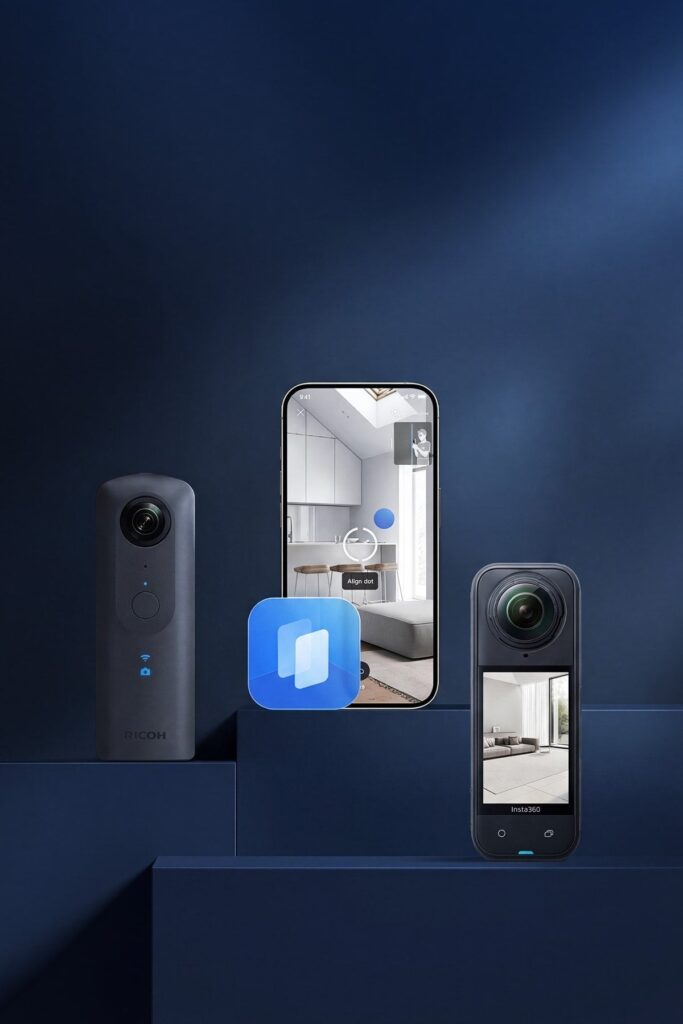
Originally deployed to let prospective buyers walk through homes from their couches, 360-degree cameras now enable museums to offer complete spatial experiences of galleries and exhibition halls. Cameras like the Ricoh Theta series or Insta360 capture full spherical images that, when stitched together through platforms such as Matterport, Realsee, or 3DVista, produce navigable virtual environments. Visitors click through rooms, zoom into display cases, and explore at their own pace. For curators, this means temporary exhibitions can live on indefinitely in digital form, traveling collections can be experienced by audiences who never visited the host institution, and storage areas can be documented systematically for internal reference. Integration with web platforms ensures these tours reach audiences through standard browsers without requiring specialized software downloads.
High-Resolution DSLR/Mirrorless Cameras and Photogrammetry
Where 360-degree cameras capture spaces, high-resolution cameras paired with photogrammetry software capture individual objects in extraordinary detail. The technique involves photographing an artifact from dozens or hundreds of angles, then using software like Agisoft Metashape or RealityCapture to reconstruct a precise 3D model complete with surface texture. Real estate photographers already use this approach for architectural details and staging elements; applied to cultural objects, it produces models accurate to sub-millimeter resolution. These digital records capture surface wear, paint layers, inscriptions, and tool marks that may be invisible in standard exhibition photography, making them invaluable for conservation research and condition monitoring over time.
LIDAR Scanners and Drones for Large-Scale Capture
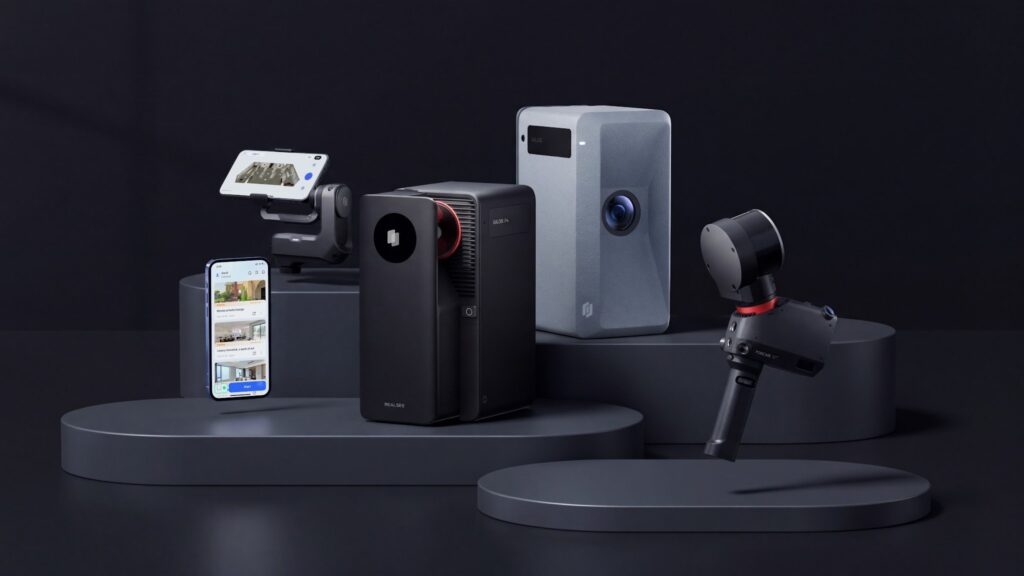
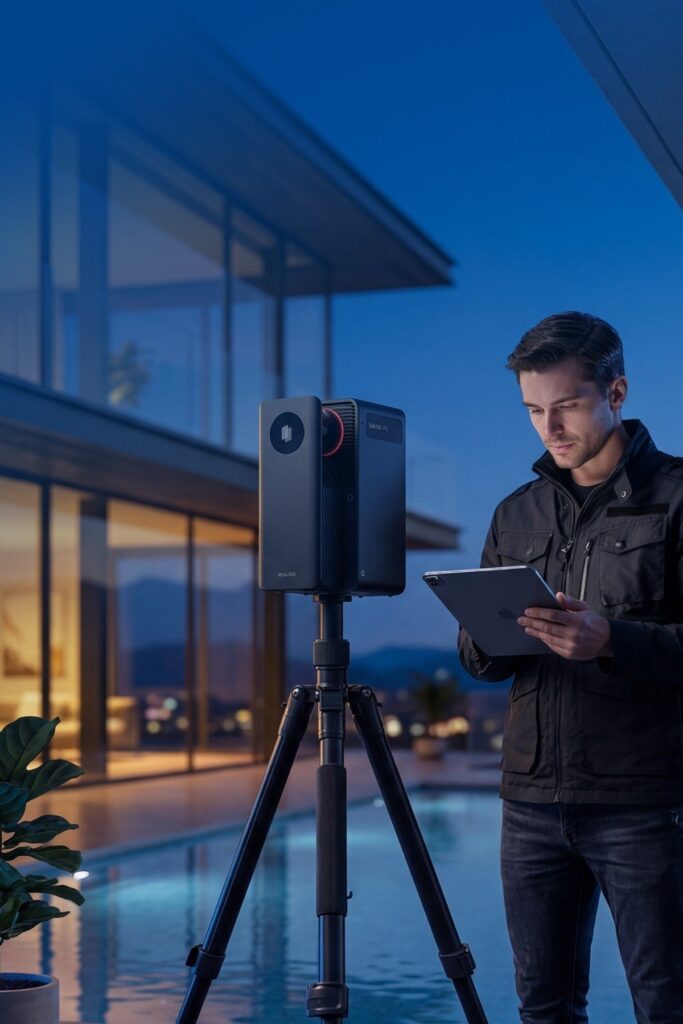
For heritage that exceeds the scale of individual objects—building facades, archaeological sites, monumental sculptures, or entire historic districts—LIDAR scanners and camera-equipped drones provide the necessary reach. LIDAR emits laser pulses to measure distances with millimeter precision, generating dense point clouds that map complex geometries regardless of lighting conditions. Drones extend this capability to rooftops, cliff faces, and other inaccessible areas that would otherwise require expensive scaffolding. In real estate, these tools document large commercial properties and land parcels; in heritage work, they record the exact dimensional state of structures vulnerable to seismic activity, coastal erosion, or urban development pressure. The resulting datasets serve as authoritative baselines against which future deterioration can be measured and restoration efforts planned.
A Practical Guide to Creating Engaging Virtual Exhibits
Having the right tools means little without a clear process for turning raw captures into compelling digital experiences. Curators who approach virtual exhibit creation methodically—treating it as they would a physical exhibition design project—achieve far better results than those who simply digitize without direction. The following framework translates real estate visualization workflows into a heritage-specific process that balances preservation rigor with audience engagement.
Step 1: Project Planning and Artifact Selection
Begin by identifying which portions of your collection offer the highest return on digitization effort. Priority candidates include items too fragile for regular display, objects central to upcoming educational programs, and pieces with strong public interest that remain in storage. Define your project scope early: are you documenting a single gallery, a traveling exhibition, or a thematic selection drawn from multiple departments? Establish clear goals—whether the primary aim is archival preservation, remote audience access, research facilitation, or a combination. Budget realistically by distinguishing between one-time equipment investments and ongoing costs like software subscriptions and staff training. Even modest budgets can produce meaningful results when scope is well-defined; a focused project covering twenty key artifacts will outperform an unfocused attempt to capture thousands.
Step 2: Digital Capture Process Using Real Estate Tools
Execute capture systematically, working space-by-space and object-by-object. For gallery environments, position 360-degree cameras at regular intervals to ensure seamless transitions between viewpoints, using consistent white balance and exposure settings throughout. For individual artifacts, set up controlled lighting that eliminates harsh shadows and color casts—diffused LED panels work well and generate minimal heat that could stress sensitive materials. Photograph each object from a minimum of 40 to 60 overlapping angles for photogrammetry, maintaining consistent distance and focus. Record metadata for every capture session: date, lighting conditions, camera settings, and artifact condition notes. This documentation ensures data integrity and makes future comparisons meaningful. Store raw files redundantly across local drives and cloud backups before any processing begins.
Step 3: Assembling and Launching the Virtual Tour
Select a virtual tour platform based on your institution’s technical capacity and audience reach goals. Platforms like Matterport offer streamlined pipelines from capture to publication, while open-source options such as Pannellum provide greater customization for institutions with development resources. Stitch 360-degree images into navigable sequences, then embed interactive hotspots that trigger informational overlays—provenance details, conservation histories, audio narration, or links to related objects. Place navigation cues intuitively so visitors move through the virtual space as naturally as they would a physical gallery. Before launch, conduct usability testing with diverse participants including those unfamiliar with virtual environments, those using mobile devices, and users relying on accessibility tools. Refine loading times, label clarity, and navigation logic based on feedback. Publish through your institution’s website and promote through educational partnerships and social channels to ensure the investment reaches its intended audience.
Developing High-Fidelity Digital Twins for Artifacts
Beyond basic documentation, the convergence of real estate scanning tools enables curators to create true digital twins—precise, interactive replicas that mirror every measurable property of a physical artifact. A digital twin goes further than a photograph or even a standard 3D model; it integrates geometric data from LIDAR or photogrammetry with surface texture maps, spectral imaging data, and condition assessments into a unified digital object that can be examined, measured, and monitored over time. Researchers can rotate a digital twin of a fragile ceramic vessel, measure wall thickness at any point, compare current surface conditions against scans taken years earlier, and detect deterioration invisible to the naked eye—all without touching the original.
For education, digital twins allow students to interact with artifacts that would otherwise remain behind glass or in restricted storage. A conservator can annotate specific areas of concern directly on the model, creating a living condition report that evolves with each new scan. Institutions are also exploring 3D printing from digital twin data to produce tactile replicas for visually impaired visitors or hands-on teaching collections. The key advancement is treating these digital assets not as static snapshots but as dynamic records that accumulate layers of information over their lifespan, becoming richer and more valuable with each update. This transforms preservation from a one-time act into a continuous, evolving practice anchored by tools already proven in commercial applications.
Measuring and Enhancing Visitor Engagement
Creating digital assets is only half the equation; understanding how audiences interact with them determines whether these investments fulfill their potential. Virtual tours and digital twins generate rich analytics that physical exhibitions cannot match. Curators can track which galleries visitors spend the most time in, which artifacts attract the most zoom interactions, where users drop off, and how navigation paths differ across demographics. These insights inform both digital refinements and physical exhibition design—if a particular object draws sustained attention online, it may warrant more prominent physical placement or expanded interpretive materials.
Integration with broader outreach amplifies impact significantly. Embedding virtual tour segments within school curricula gives educators ready-made teaching tools tied to specific learning objectives. Social media campaigns that feature rotating highlights from digital twins—a close-up of brushwork on a painting, a previously unseen inscription revealed through enhanced scanning—generate shareable content that drives traffic back to the full experience. Partnerships with travel platforms and cultural tourism sites introduce collections to audiences who may plan future in-person visits based on their virtual exploration. Institutions should also consider gamification elements such as scavenger hunts within virtual tours or comparative challenges using digital twin data to sustain repeat engagement. The goal is treating digital preservation outputs not as static archives but as living engagement platforms that continuously connect collections with new audiences through channels those audiences already use.
Embracing Digital Tools to Safeguard Cultural Heritage for Future Generations
The repurposing of real estate photography and scanning tools for cultural heritage preservation represents one of the most practical and impactful technology crossovers in the museum sector today. 360-degree cameras, photogrammetry workflows, LIDAR scanners, and drone systems—all refined through years of commercial application—now offer curators proven, accessible pathways to digitize collections with remarkable fidelity. This convergence delivers a dual benefit that few single investments can match: it creates enduring digital records that protect against physical loss while simultaneously breaking down the geographic and physical barriers that have long limited public access to cultural treasures.
As these tools continue to decrease in cost and increase in capability, the gap between institutions that embrace digital preservation and those that delay will widen considerably. Collections that exist only in physical form remain vulnerable and invisible to the vast majority of potential audiences. The path forward requires neither massive budgets nor specialized technical backgrounds—it demands willingness to begin, even modestly, with focused projects that build institutional capacity over time. Curators who act now position their collections not just to survive but to thrive in an increasingly digital cultural landscape, reaching audiences their predecessors could never have imagined.