Michigan winters are not a theoretical problem. They arrive early, stay long, and push residential heating systems to their limits for months at a time. For homeowners across the state, the question of how to heat a home effectively is not an abstract one — it is a recurring, practical concern that affects comfort, monthly costs, and the long-term condition of the home itself.
Forced-air systems have been the default choice in Michigan for decades, largely due to their familiarity and the widespread availability of installation contractors. But familiarity does not always mean effectiveness. A growing number of Michigan homeowners have moved away from conventional forced-air systems and toward radiant heating, not as a trend, but as a considered response to genuine performance problems they experienced firsthand.
The shift is worth examining. What these homeowners found is not just a different way to heat a space, but a meaningfully different experience of living in a home during a Michigan winter — one defined by consistency, silence, and a reduction in the small daily frustrations that forced-air heating tends to produce.
Table of Contents
What Radiant Heating Actually Does Differently
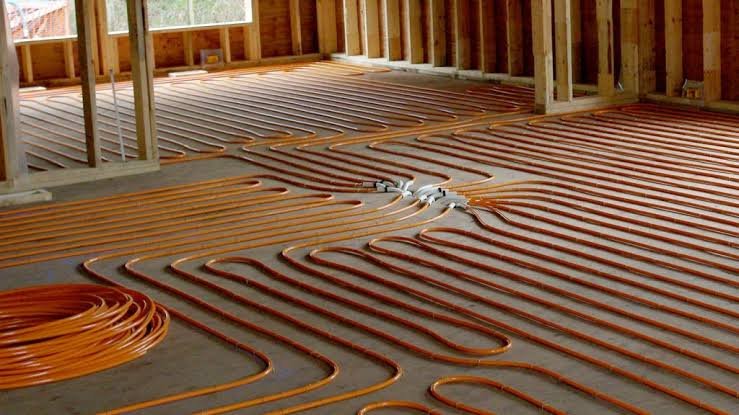
For homeowners exploring energy efficient radiant heating michigan options, the first important distinction is understanding how radiant systems deliver heat compared to forced-air alternatives. Forced-air systems heat air and move it through ductwork into rooms. Radiant systems heat surfaces — floors, walls, or panels — which then release warmth into the surrounding space through direct radiation and the natural transfer of heat from warm surfaces to cooler objects and people nearby.
This distinction matters because the air in a room is not what makes a person feel warm or cold. The surrounding surface temperatures do. When the floor beneath your feet is warm and the walls retain heat, the body loses far less heat to its environment. The result is a room that feels comfortable at a lower air temperature, which has real implications for how hard the system has to work and how much energy it consumes over time.
Radiant heat also does not move air around a room in the way that forced-air systems do, which means it does not redistribute dust, allergens, or dry air throughout the living space during operation.
Why Surface Temperature Matters More Than Air Temperature
The body’s experience of warmth is governed by radiant exchange — the transfer of heat between skin and the surrounding surfaces. When a room’s surfaces are cold, as they often are with forced-air heating in Michigan’s climate, the body continues to lose heat even when the air temperature is technically at a comfortable level. This is why forced-air rooms can feel drafty or uneven despite the thermostat reading exactly where it should.
Radiant systems address this directly by raising the temperature of the surfaces themselves. Once floors and walls reach an appropriate temperature, the body’s radiant heat loss is reduced, and the room feels genuinely warm rather than nominally warm. This is a physical distinction, not a marketing one, and it explains why homeowners who switch often describe radiant heating as feeling fundamentally different from what they experienced before.
Reason One: Consistent Warmth Across the Entire Home
One of the most common complaints about forced-air heating is temperature variation — rooms that are too warm near vents and noticeably cooler just a few feet away. In older Michigan homes with long duct runs or poorly sealed systems, this variation can be significant. Radiant systems distribute warmth across the full floor surface of a room, which eliminates the concentration of heat near any single point.
Homeowners who have made the switch frequently describe the consistency as the most immediately noticeable change. Every corner of the room reaches a stable temperature, and that stability holds throughout the day rather than cycling between warm and cool as the system turns on and off.
Reason Two: Reduced Energy Consumption Over Time
Michigan’s heating season runs long. From November through March, and often into April, residential heating systems operate almost continuously. Over that span, even modest differences in energy consumption accumulate into meaningful savings. Radiant systems, particularly hydronic systems that use heated water circulated through tubing, tend to operate at lower temperatures than forced-air furnaces while achieving the same or better comfort outcomes.
Because radiant heat works by raising surface temperatures rather than air temperatures, systems can maintain comfortable conditions at lower thermostat settings. According to the U.S. Department of Energy, radiant floor heating can be more efficient than baseboard heating and is often more efficient than forced-air systems, particularly when the heat source is a condensing boiler or compatible heat pump.
Why Efficiency Gains Compound During Long Heating Seasons
The efficiency advantage of radiant heating is not dramatic in any single week. It is cumulative. Over a Michigan winter that spans five or six months of consistent heating demand, the difference between a system operating at lower output temperatures with less cycling and one running at high temperatures with frequent on-off cycles adds up to a measurable reduction in fuel or electricity use. For homeowners in older, larger homes — which describes a substantial portion of Michigan’s residential housing stock — the difference becomes even more pronounced because the heating system is working harder to begin with.
Reason Three: No Ductwork, No Air Quality Compromise
Duct systems collect dust, moisture, and debris over time. In Michigan, where homes are sealed tightly for extended periods during winter, the air circulated through an aging duct system can carry particulates into living spaces with every heating cycle. For households with allergy sensitivities, respiratory conditions, or young children, this is not a trivial concern.
Radiant heating operates without moving air at all. There are no ducts to clean, no blower motors cycling on and off, and no air currents redistributing settled dust. This makes radiant systems a practical choice for homeowners who have noticed that indoor air quality deteriorates during the heating season — a pattern that is common in Michigan homes where windows remain closed from October onward.
Reason Four: Quieter Operation Throughout the Home
Forced-air systems make noise. The blower starts, the air rushes through ducts, and the registers deliver heat with an audible presence. In homes where ducts expand and contract with temperature changes, the noise can be intermittent and unpredictable. Radiant systems operate without any of these sounds. Hydronic systems circulate water quietly through tubing embedded in floors or panels, and the only moving parts are small, low-velocity pumps that most homeowners never notice.
This is particularly relevant in Michigan homes used as long-term residences where people spend extended time indoors during winter. The absence of constant mechanical noise changes the acoustic character of a home in a way that homeowners consistently mention as an unexpected benefit of the switch.
Reason Five: Better Compatibility With Modern Heat Sources
Michigan homeowners who are evaluating long-term energy strategy — whether that involves natural gas, heat pumps, or solar thermal systems — will find that radiant heating is more compatible with a wider range of heat sources than forced-air systems. Hydronic radiant systems can be paired with condensing boilers, air-to-water heat pumps, and in some cases geothermal systems. Because these heat sources operate most efficiently at lower water temperatures, and because radiant systems are designed to work effectively at lower temperatures, the pairing is technically well-suited.
Why Heat Source Flexibility Matters in Michigan’s Climate
Michigan’s energy landscape is not static. Utility costs shift, fuel availability varies regionally, and homeowners increasingly want systems that can adapt over time without requiring a complete replacement of the heating infrastructure. A radiant system installed today with a conventional boiler can, in many cases, be transitioned to a heat pump heat source in the future without changing the distribution system. That adaptability is a meaningful practical consideration for homeowners planning beyond the next few years.
Reason Six: Long-Term Durability and Low Maintenance Requirements
Radiant systems, particularly those using cross-linked polyethylene tubing embedded in concrete or installed beneath flooring, have operational lifespans that significantly exceed those of forced-air components. There are no filters to replace, no blowers to service, no duct seams to reseal. Hydronic systems require periodic checks of the boiler or heat source and occasional attention to the circulating pump, but the distribution system itself is largely maintenance-free once installed correctly.
For Michigan homeowners who have dealt with recurring duct repairs, blower motor replacements, or the gradual degradation of aging forced-air systems, the reduced maintenance burden is a practical advantage that becomes more apparent over years of ownership rather than months.
Reason Seven: Comfort as a Daily, Lived Experience
The reasons above are largely operational or economic, but the most consistent thing homeowners say after switching to radiant heating is simply that the experience of being in their homes during winter changed. The floors are warm. The rooms feel stable. There is no noise, no draft, no part of the house that remains persistently colder than the rest.
Michigan winters demand a lot from both heating systems and the people living through them. A system that quietly and consistently does its job without noticeable failure points — without cold spots, noise, dry air, or erratic cycling — changes how a home feels to live in at a level that operational data alone does not fully capture. This is not a minor quality-of-life adjustment. For homeowners who spend a significant portion of the year indoors in a cold climate, it represents a substantial change in how they experience their own homes.
Energy efficient radiant heating michigan installations have grown steadily as more homeowners move past initial familiarity with forced-air systems and evaluate alternatives based on actual performance. The pattern is consistent enough that contractors and HVAC professionals across the state have noted the shift in what their clients are asking about and requesting.
Closing Thoughts
The shift toward radiant heating among Michigan homeowners is not driven by novelty. It is driven by the specific demands of a long, cold winter climate and the accumulated experience of homeowners who found that their existing systems were not meeting those demands well enough. Forced-air heating is not a failing technology, but it carries limitations that become more apparent in climates where heating systems must perform reliably for months at a time.
Radiant heating addresses several of those limitations directly — through consistent warmth, reduced energy consumption, better air quality, quiet operation, and long-term durability. For homeowners who are evaluating their options, whether after a frustrating winter or in anticipation of a home renovation, the considerations above are worth examining carefully alongside the specifics of the home, the installation requirements, and the available heat sources in a given location.
The homeowners who have made the switch and describe themselves as unlikely to return are not reacting to a single feature. They are responding to the cumulative effect of a system that simply works better for where they live and how they use their homes. In a climate like Michigan’s, that cumulative effect is difficult to overlook.
-

-

-
-

-

-