For caregivers working in home health settings, assisted living facilities, or supporting family members with mobility limitations, bathing assistance is one of the most physically demanding and safety-critical tasks in daily care. A poorly chosen shower seat can compromise both caregiver safety and patient dignity. Yet many purchasing decisions are still made based on price alone, without a clear understanding of what actually makes a shower chair reliable and appropriate for a specific care environment.
Shower chairs are not interchangeable. The materials, construction, and configuration all affect how the equipment performs under daily use, how easily it can be cleaned, and how well it holds up in wet environments over time. PVC-based shower chairs, in particular, have become a common choice across both residential and light clinical settings in the United States. Understanding why that is, and what to look for when selecting one, helps caregivers make decisions grounded in real operational needs rather than assumptions.
Table of Contents
Why PVC Has Become a Standard Material in Shower Seating
Polyvinyl chloride, widely known as PVC, is used across a broad range of medical and home care equipment because it resists moisture, does not rust, and holds its structural integrity under repeated exposure to water and cleaning agents. In shower environments specifically, these properties matter because the chair is never truly dry. It absorbs splashing water during use, sits in a humid room between uses, and must be cleaned regularly with products that would corrode metal or degrade certain plastics over time.
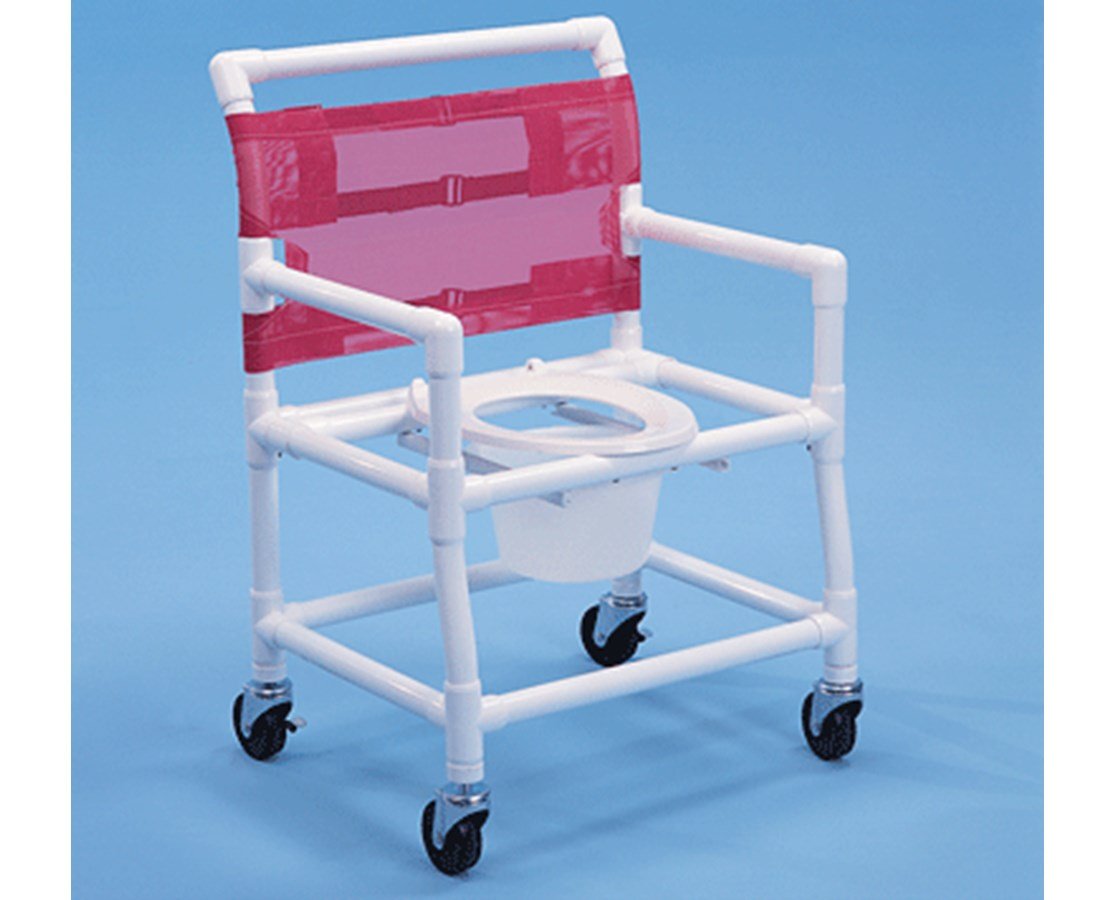
A well-constructed pvc shower chair offers a balance of lightweight portability and structural durability that many other materials struggle to match in wet-use applications. Steel frames, even coated ones, are prone to rust at joints and welds. Aluminum frames resist rust but can oxidize and weaken over time when exposed to common cleaning agents. PVC as a primary frame material sidesteps most of these concerns, which is why it appears consistently across home care supply catalogs and institutional purchasing lists.
That said, not all PVC chairs are built to the same standard. The difference between a chair that holds up through eighteen months of daily use and one that becomes unsafe within six months often comes down to wall thickness of the tubing, the quality of the joints, and the type of seating surface used in combination with the frame.
Understanding How Material Quality Affects Long-Term Safety
In caregiver settings, equipment failure is not just a financial inconvenience. A chair that cracks, wobbles, or becomes unstable mid-use creates a fall risk for the person being assisted and a potential injury scenario for the caregiver as well. PVC tubing with insufficient wall thickness can flex under load in ways that are not immediately obvious during an in-store or online product inspection. Over time, that flex concentrates stress at joints and connection points, which is where failures typically begin.
Caregivers should pay attention to how a chair feels when weight is applied to its seat and armrests before committing to a product for regular use. A quality PVC frame should feel rigid and stable, not springy or loose. Joints should be bonded or mechanically secured, not simply press-fit. When a product relies entirely on friction to hold its frame together without any secondary locking mechanism, the assembly will loosen with repeated use, particularly under the weight-shifting that occurs during transfer assistance.
Matching the Chair Configuration to the Care Situation
Shower chairs are available in a range of configurations, and the appropriate choice depends heavily on the mobility level of the person being assisted, the physical layout of the shower or bathing area, and the type of assistance the caregiver provides. Selecting a configuration that does not match these factors creates unnecessary strain on both the caregiver and the person receiving care, regardless of how well the chair is built.
Fixed Versus Adjustable Seating Height
Adjustable-height chairs allow the seat to be repositioned to accommodate different user heights or to align with transfer surfaces such as a wheelchair or bed. This is particularly important in home care settings where the same chair may be used by different individuals over time, or where the user’s condition changes and their ability to lower themselves to a fixed height decreases.
Fixed-height chairs are simpler in construction and typically more stable, but they only work reliably when the user’s proportions and mobility level align with the chair’s set position. For caregivers managing multiple clients or households, adjustable models offer more flexibility and reduce the need to purchase multiple chairs for different situations.
With or Without Armrests and Back Support
A chair with full back support and armrests is appropriate for individuals who cannot maintain an upright seated position independently or who need something to grip during transfers. A backless bench or transfer bench serves a different purpose — it supports lateral transfers from wheelchair to shower and requires the user to have reasonable core stability.
Mismatching the chair type to the user’s actual functional ability is a common source of incidents. Placing someone with poor trunk control on a backless bench, or relying on a basic shower stool for someone who needs transfer assistance, introduces risk that a correctly selected chair would have avoided. The chair is not a passive accessory; it is a functional component of the care process.
Drainage, Hygiene, and the Reality of Daily Cleaning
Shower chairs in active care environments need to be cleaned after every use. This is not a recommendation — it is a basic infection control standard, particularly in settings where the same chair is used by more than one individual or where the user has any open skin conditions. The chair’s surface design affects how practical this actually is in daily workflow.
Chairs with solid, flat seating surfaces trap water and soap residue, creating conditions where bacteria can accumulate in surface imperfections over time. Seating surfaces with drainage openings or contoured designs that allow water to run off reduce this risk and make the cleaning process faster and more thorough. According to guidance published by the Centers for Disease Control and Prevention, environmental surfaces in care settings should be cleaned with EPA-registered disinfectants, and surface design that supports complete contact cleaning is a relevant consideration in that context.
Rubber Feet and Floor Stability
The chair legs make direct contact with wet tile or fiberglass shower surfaces, and the quality of the rubber feet determines how reliably the chair stays in place during use. Thin, hard rubber tips offer minimal grip and can slide on soap-filmed surfaces. Wider, softer rubber feet with a suction-cup-style base provide substantially more traction and also protect the shower floor from scratching.
Caregivers should inspect rubber feet regularly as part of routine equipment checks. Worn or cracked feet should be replaced before the chair is used again. Most manufacturers offer replacement feet, and the cost of replacing them is negligible compared to the cost of a fall incident or a damaged shower floor.
Weight Capacity and Structural Ratings
Every shower chair carries a manufacturer-stated weight capacity, and this figure should always be taken seriously. Structural ratings for this type of equipment are typically established through load testing that accounts for dynamic forces — meaning the weight of a person shifting, sitting down suddenly, or reaching across the chair — not just static weight at rest.
Using a chair beyond its rated capacity creates a failure risk that may not be immediately visible. PVC frames under excess load may not crack immediately, but internal stress accumulates, and the failure when it comes can be sudden. For larger users, bariatric-rated shower chairs exist and are designed with reinforced frames and seating surfaces appropriate to the additional load requirements.
Caregivers and facility procurement staff should document the weight capacities of chairs in active use alongside the user profiles they serve, and this information should be reviewed whenever a chair is reassigned to a different individual. It is a straightforward step that is often overlooked until a problem occurs.
Portability and Storage in Home Care Environments
In home care settings, a shower chair often needs to be moved between rooms, stored when not in use, or transported between a client’s home and other locations. PVC chairs are generally lighter than steel-framed alternatives, which matters when caregivers are responsible for setting up and breaking down equipment across multiple visits per day.
Foldable PVC shower chair models reduce storage footprint and make transport more practical, though the folding mechanism adds a point of wear that should be inspected regularly. Non-folding chairs are typically more rigid but require more dedicated storage space. The right choice depends on the specific workflow of the caregiver and the physical constraints of the home or facility.
Closing Thoughts
Choosing a shower chair is a practical, operational decision with direct safety implications. For caregivers across the United States who manage daily bathing assistance, the quality and appropriateness of the equipment they use affects not only the safety of the people in their care but also their own physical well-being and the consistency of the care they provide.
PVC shower chairs represent a sound baseline option for most home and light clinical environments, provided the chair is selected with attention to construction quality, configuration, hygiene design, and appropriate weight ratings. The variables outlined in this guide are not complex, but they are frequently overlooked when purchasing is driven by cost alone. Taking the time to evaluate these factors before selecting equipment reduces the likelihood of mid-use failures, improves caregiver workflow, and supports better outcomes for the people who depend on this equipment every day.
When the chair works the way it should, it becomes invisible — simply part of a routine that runs safely and without incident. That is the standard every caregiver should be purchasing toward.
-

-

-

-

-

-