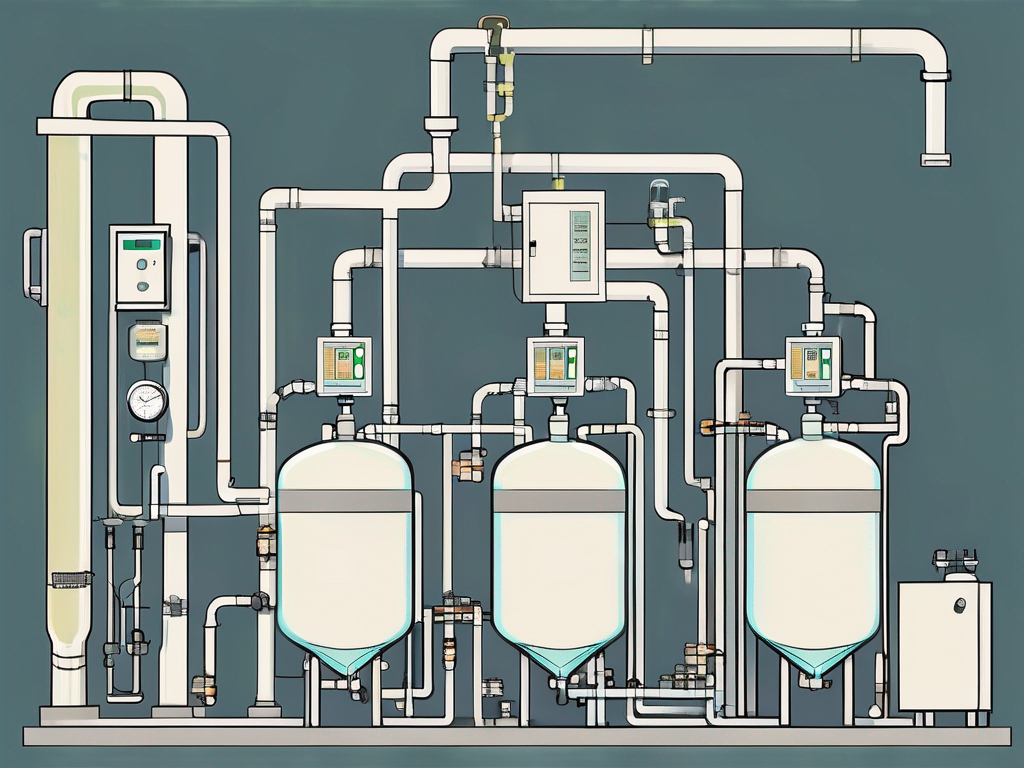
Texas municipalities have increasingly shifted toward chloramine as a disinfectant in public water supplies. Unlike free chlorine, which dissipates relatively quickly, chloramine is a more stable compound that remains active through longer distribution systems — a practical choice for a state with sprawling water infrastructure. But that stability comes with consequences for residential filtration equipment.
Standard filtration components that perform reliably in chlorinated water can degrade significantly when exposed to chloramine over time. Seals crack, membranes weaken, and carbon media becomes less effective at the rates homeowners expect. For Texas households relying on whole-home or point-of-use filtration systems, this is not a theoretical concern — it is a maintenance and reliability issue that affects water quality, equipment lifespan, and household spending.
Understanding which components are specifically designed to hold up against chloramine — and why they differ from conventional alternatives — gives homeowners a clearer basis for making decisions about their filtration setup.
Table of Contents
Why Chloramine Changes the Component Selection Equation in Texas
For a practical reference on how chloramine interacts with filtration infrastructure at the residential level, the Chloramine-Resistant Components Filtration System Texas overview outlines the specific component categories that require attention when municipal water contains chloramine rather than free chlorine. The distinction matters because chloramine behaves differently at the molecular level, and its effects on polymer-based materials, carbon beds, and membrane surfaces accumulate in ways that routine maintenance alone cannot address.
Texas water systems — particularly in the Dallas-Fort Worth metroplex, Houston, San Antonio, and Austin — have used chloramination for years. Homeowners who installed filtration systems under the assumption of chlorinated water may unknowingly be running equipment that is slowly losing structural integrity. The failure often does not appear as a dramatic breakdown. Instead, it shows up gradually: shortened filter life, inconsistent water quality, and components that need replacement far ahead of schedule.
The Chemical Difference That Drives Equipment Decisions
Chloramine is formed by combining chlorine with ammonia. The resulting compound is less reactive than free chlorine in many ways, but it is also more persistent and more penetrating when it comes to certain synthetic materials. Many elastomers and plastics that tolerate chlorine exposure begin to swell, harden, or lose flexibility when continuously exposed to chloramine. This degradation affects the sealing capacity of fittings, the structural stability of housings, and the functional surface area of filter media.
For homeowners, the practical implication is that a filtration system built around standard-grade components can become unreliable within a fraction of its expected service life when operating in a chloraminated water environment. The cost of replacement and the disruption to household water quality are both avoidable if the right components are selected at the outset.
Catalytic Carbon Media
Standard activated carbon is widely used in residential filtration because of its effectiveness at reducing chlorine and a range of organic compounds. However, it has limited ability to address chloramine. Catalytic carbon is a modified form of activated carbon that has been processed to increase its surface reactivity, specifically to improve its ability to break down chloramine molecules.
Why the Distinction Between Carbon Types Matters
A homeowner who installs a carbon-based filter expecting chloramine reduction but uses standard granular activated carbon is likely to see diminishing performance faster than anticipated. The carbon becomes saturated without having effectively neutralized the chloramine, and what remains in the treated water can still affect taste, odor, and downstream equipment. Catalytic carbon addresses this gap by converting chloramine into harmless byproducts rather than simply adsorbing it. The distinction in outcome — actual neutralization versus incomplete adsorption — has a direct effect on both water quality consistency and how often the media bed needs to be replaced.
EPDM and PTFE-Based Seals and O-Rings
Seals and O-rings are often overlooked in filtration discussions, but they are among the first components to show chloramine-related degradation. Seals made from standard rubber compounds, including NBR (nitrile butadiene rubber), are particularly vulnerable to chloramine exposure. Over time, they lose elasticity, become brittle, and eventually fail to maintain a watertight connection.
The Long-Term Sealing Risk in Chloraminated Systems
EPDM (ethylene propylene diene monomer) and PTFE (polytetrafluoroethylene) are the two most common seal materials rated for use in chloraminated water systems. EPDM offers good chemical resistance and flexibility across a wide temperature range, which is relevant in Texas where water temperatures can vary considerably between seasons. PTFE, while more rigid, provides an extremely stable barrier against chemical permeation. When seals begin to fail in a whole-home system, the immediate risks include minor leaks at housing connections, but the longer-term risk is cross-contamination between filtered and unfiltered water lines — a problem that often goes undetected until water quality noticeably changes.
Chloramine-Resistant Filter Housings
Filter housings are typically made from engineered plastics, and not all of those plastics perform equally when exposed to chloraminated water over years of continuous use. Polypropylene and certain grades of high-density polyethylene are generally more resistant to the chemical stress that chloramine introduces. Housings made from lower-grade plastics may appear structurally sound for years before showing surface crazing, micro-cracking, or reduced thread integrity at connection points.
Structural Failure Patterns Homeowners Often Miss
One of the more common issues in older filtration setups is a housing that looks intact from the outside but has developed internal stress fractures near the threaded collar or base fitting. These fractures may not cause immediate leaks, but they compromise the housing’s ability to maintain pressure and can allow bypass flow — water that moves around the filter media rather than through it. In a chloraminated water environment, this means the homeowner believes their system is filtering the water when it is not doing so effectively. Selecting housings rated for chloramine resistance from the point of installation avoids this failure mode entirely.
Reverse Osmosis Membranes Rated for Chloramine Environments
Standard thin-film composite (TFC) reverse osmosis membranes are notably sensitive to chloramine exposure. Unlike free chlorine, which many membrane manufacturers account for in their standard ratings, chloramine can degrade TFC membranes at a molecular level, reducing rejection rates and shortening membrane life. This is a documented concern in the water treatment industry, and according to information published by the U.S. Environmental Protection Agency, the behavior of disinfectants in drinking water distribution systems has measurable downstream effects on treatment equipment.
Selecting Membranes for Long-Term Performance
For Texas households using reverse osmosis systems — particularly those on point-of-use systems under the kitchen sink — the membrane is the most critical and most expensive component to replace. Some membrane formulations are specifically designed with chloramine tolerance in mind, using modified polyamide chemistry or protective coatings that extend functional life in disinfectant-heavy water conditions. Matching the membrane specification to the actual water chemistry in the home is a straightforward step that significantly affects how often the entire RO system needs to be serviced.
Sediment Pre-Filters with Chemical-Resistant Media
Pre-filtration serves a protective function for the rest of the system — it removes particulate matter before water reaches carbon stages or membranes. But in a chloramine-resistant components filtration system texas context, the pre-filter housing and media must themselves be rated for chloramine exposure, not just for sediment removal. A pre-filter that degrades internally can shed particles into the water stream it is supposed to be cleaning.
The Role of Pre-Filtration in System Longevity
Polypropylene sediment cartridges in chloramine-resistant grades maintain their structural integrity without leaching byproducts, even after extended contact with chemically active water. This matters because some lower-cost sediment cartridges use binders or fiber materials that begin to break down in the presence of oxidizing compounds. In a chloramine-resistant components filtration system texas setup, every stage needs to be compatible with the water chemistry, not just the primary treatment stages. A weak pre-filter can compromise the performance of a well-designed carbon or RO stage downstream.
Chloramine-Compatible Fittings and Push-Connect Connections
Push-connect fittings are widely used in residential filtration systems for their convenience, but the internal components — particularly the collet rings and body materials — vary considerably in their resistance to chloramine. Fittings made from brass with standard plating or certain nylon formulations may experience accelerated wear when chloramine is present continuously in the water flow.
Connection Integrity Over the Full System Lifespan
A chloramine-resistant components filtration system texas installation should specify fittings made from materials rated for potable water with chloramine resistance — typically John Guest-style fittings in chloramine-safe formulations, or brass body fittings with appropriate lining. Connection failures in filtration systems are disproportionately common at fittings compared to media or housings, and in many cases, the failure is attributed to the fitting material rather than improper installation. Selecting the correct fitting from the start prevents the need to troubleshoot slow leaks or pressure loss months or years down the line.
Flow Control Valves and Bypass Components
Flow control valves regulate how water moves through different stages of a filtration system. In a chloramine-resistant components filtration system texas environment, these valves must be constructed from materials that do not absorb or react with chloramine over time. Valves with rubber internals — particularly check valves in RO systems — are susceptible to the same degradation patterns seen in O-rings and seals.
Operational Reliability as a Component Selection Criterion
Valve failure in a filtration system often presents as irregular pressure, inconsistent flow rate, or unexpected bypass of treated water back into unfiltered lines. These failures are intermittent, which makes them difficult to diagnose without a systematic understanding of how the component materials interact with the water chemistry. Specifying chloramine-rated valve bodies and internal components during installation, rather than retrofitting after problems appear, is the more cost-effective approach for any Texas household with confirmed chloramine in their municipal supply.
Closing Perspective
Texas homeowners who invest in residential water filtration are generally doing so to improve consistency, taste, and long-term health outcomes. But the value of that investment depends heavily on whether the system components are matched to the actual chemistry of the water supply. Chloramine is now a routine feature of municipal water treatment across most major Texas cities, and it places real demands on filtration infrastructure that standard components were not designed to meet.
The seven components covered here — catalytic carbon media, chemical-resistant seals, durable housings, compatible RO membranes, chloramine-safe sediment pre-filters, rated fittings, and appropriate flow control valves — form the foundation of a system that performs reliably over time. None of these represent exotic or specialized equipment. They are widely available, and the difference between choosing them and defaulting to standard-grade alternatives is largely a matter of knowing what to look for before a system is installed or serviced.
For Texas homeowners reviewing their current filtration setup or planning a new installation, verifying component compatibility with chloraminated water is a practical step that directly affects both system performance and long-term maintenance costs. The information needed to make that determination is available, and the component options exist to build systems that hold up under real Texas water conditions.
-

-
-

-

-

-