Planning a group excursion to the outskirts of Las Vegas often results in a clash between those seeking luxury and those craving raw adventure. For organizers, the challenge is balancing safety, logistics, and the “thrill factor” to ensure the trip doesn’t devolve into a scheduling nightmare.
When moving a group of ten or more people into the desert, the margin for error is slim. From hydration failures to equipment malfunctions, the desert environment is unforgiving. However, with a structured approach to logistics and activity selection, you can transition from a chaotic itinerary to a seamless high-energy experience.
Table of Contents
Solving the Logistics of Desert Transport
The most common failure in group desert trips is the “last mile” problem. Many groups rent standard SUVs or passenger vans, only to realize that the actual trailheads are inaccessible to non-4WD vehicles. A standard AWD crossover may handle a gravel road, but it will bottom out or get stuck in the soft silt of Mojave wash-outs; these terrains require a true 4WD system with low-range gearing to maintain torque and clear obstacles without burning out the transmission.
To avoid this, prioritize operators who provide shuttle services directly from the Strip or designated meeting points. If you are coordinating your own transport, ensure every vehicle has a full-sized spare tire. The sharp volcanic rock of the Mojave is notorious for shredding standard highway tires, and a “donut” spare is useless in a sandy basin.
Furthermore, consider the “staggered arrival” strategy. Instead of having ten cars arrive at once, coordinate a single meeting point. This reduces traffic congestion at the trailheads and allows the group leader to verify that everyone has the necessary safety gear—such as helmets and goggles—before departing for the dunes.


Selecting High-Impact Activities for Mixed Skill Levels
Not every member of a group has the same comfort level with off-roading. If you put a novice on a high-powered machine next to an expert, you risk either a collision or a bored veteran. The key is to select activities that offer scalable difficulty.
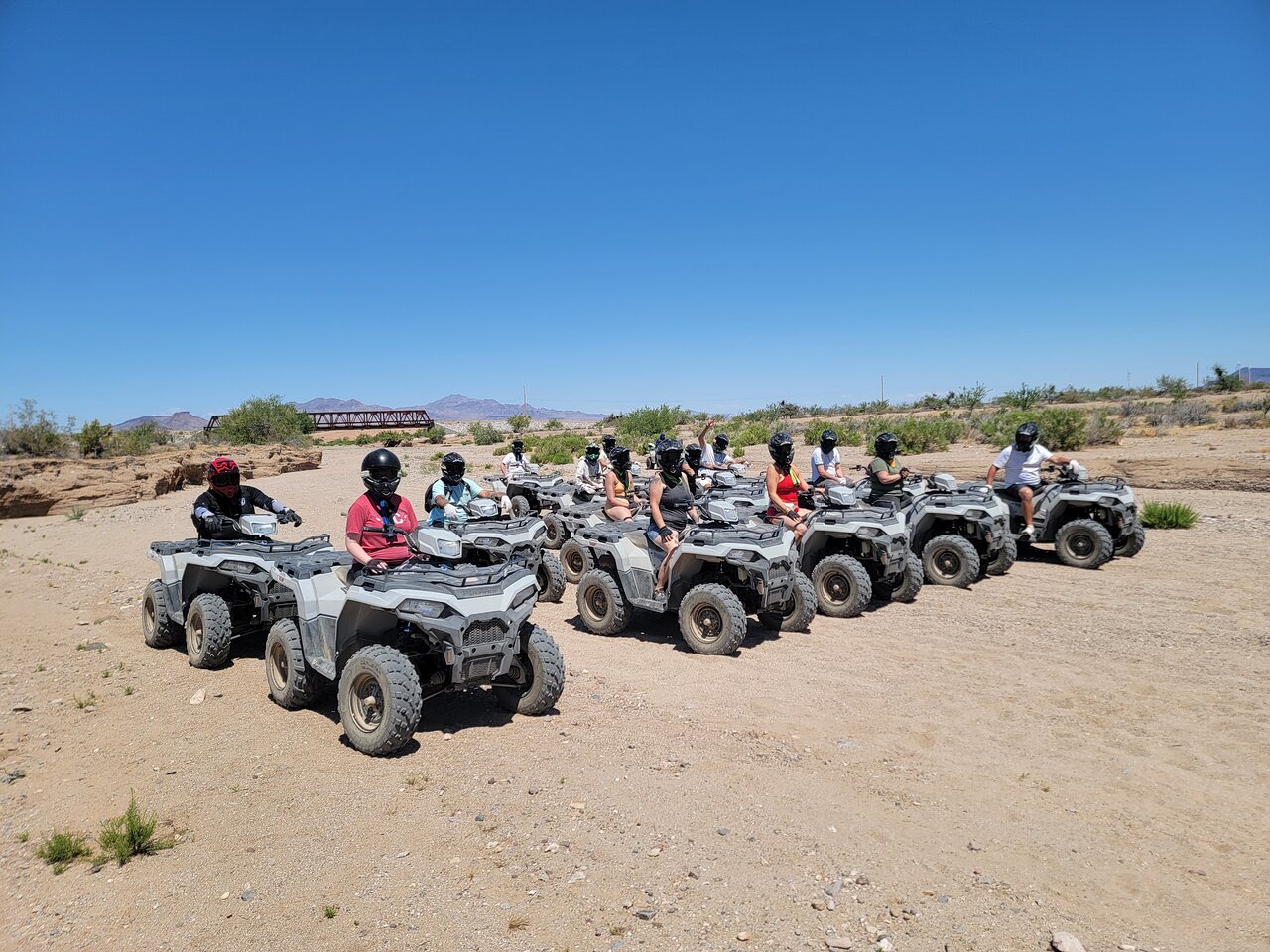
For those looking to experience the rugged terrain of the valley, booking a professional tour for ATV Las Vegas allows the group to stay together while the guides adjust the pace based on the slowest rider. This removes the pressure from the novice and ensures the experienced riders still get a sense of speed and agility.
Balancing the Itinerary
To keep the energy high without burning out the group, follow the “Peak-Valley-Peak” scheduling method:
- The Morning Peak: Schedule the most physically demanding activity (like ATVing or hiking) for the earliest possible slot to beat the midday heat.
- The Midday Valley: Plan a low-energy transition, such as a catered lunch in a shaded area or a visit to a local attraction, between 1:00 PM and 4:00 PM.
- The Evening Peak: End the day with a social high, such as a sunset viewing point or a group dinner, to cement the shared experience.
Managing Health and Safety in Extreme Heat
Dehydration is the primary cause of trip cancellations and medical emergencies in the Mojave. The dry heat of Nevada evaporates sweat almost instantly, meaning riders often don’t realize they are dehydrated until they experience dizziness or heat exhaustion.
A common operational failure occurs when a participant relies solely on a handheld water bottle, which often runs dry halfway through a trail. For example, a rider may suffer from heat cramps and disorientation, leading to a loss of vehicle control. The recovery step in this scenario is the immediate deployment of a “water buddy” system: the guide halts the convoy, moves the affected rider into the shade of a vehicle or tarp, and administers chilled electrolytes and a cool compress to the neck and armpits to drop the core temperature before attempting to move again.
The 1:1 Hydration Rule
Implement a strict 1:1 hydration rule: for every hour of activity, every participant must consume at least one liter of water. Encourage the use of electrolyte powders rather than plain water to prevent hyponatremia (low sodium levels) during intense physical exertion.
Protective Gear Requirements
Desert dust is abrasive and can cause respiratory irritation or eye injuries. Ensure the group is equipped with:
- Closed-toe boots: Sand and rocks can reach temperatures high enough to cause burns through sneakers.
- Full-face or goggles: To protect against “roost” (debris kicked up by the vehicle in front).
- Long-sleeve breathable fabrics: To prevent sun-scald and protect skin from brush and thorns.
Budgeting for Group Contingencies
When organizing for a group, the “sticker price” of an activity is rarely the final cost. To avoid awkward financial disputes at the end of the trip, create a transparent contingency fund.
Budget for the following “hidden” costs:
- Damage Deposits: Most off-road rentals require a deposit. A common failure point is a torn vinyl seat or a snapped footpeg from a low-side slide; these repairs can easily cost $150–$300 per incident. If the contingency fund isn’t pre-funded, these costs often lead to friction between the organizer and the participant.
- Tipping: In the adventure tourism industry, guides do the bulk of the heavy lifting. Budgeting a collective tip for the guides ensures a higher level of service and better route selection.
- Emergency Supplies: Allocate funds for a “group kit” containing extra water, first-aid supplies, and emergency flares.
Success in the Mojave depends on moving from abstract planning to operational precision. By accounting for the mechanical realities of 4WD transport, the financial volatility of equipment damage, and the physiological demands of the heat, you can ensure the trip is remembered for the adrenaline rather than the accidents. Prioritizing these logistical pillars allows the group to focus on the experience of the desert without the stress of preventable failures.