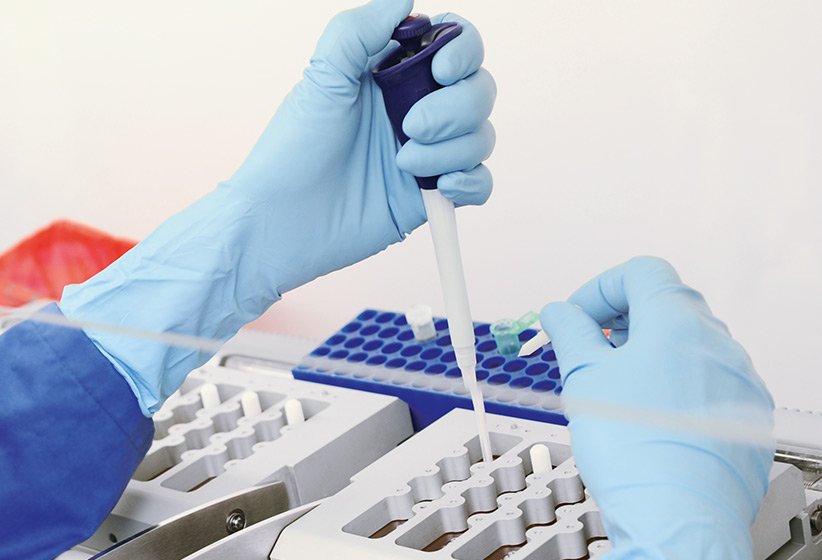
If you’ve spent any time sourcing research chemicals, you’ve probably been handed a Certificate of Analysis (COA) and taken it more or less on faith. But a COA is only useful if you know how to read it — and knowing how to read one is the best defense against low-quality material. Here’s a plain-language walkthrough of what these documents contain and how to evaluate them.
Table of Contents
What a COA Is (and Isn’t)
A Certificate of Analysis is a lab-generated document reporting the analytical results for a specific batch of a compound. The key word is specific: a COA is only meaningful when it’s tied to the exact batch you’re receiving. A generic certificate reused across every order tells you nothing about the vial in your hand.
So the first thing to check is whether the document references a batch or lot number that matches your product. If it doesn’t — or if the supplier can’t tell you which batch a given COA belongs to — the document isn’t doing its job.
The Two Tests That Matter Most
Most reputable COAs for research peptides report results from two analytical methods:
High-Performance Liquid Chromatography (HPLC) is the purity test. HPLC separates the target compound from any impurities, degradation products, or synthesis byproducts and expresses the result as a percentage. For research peptides, ≥99% is the standard you want to see. The accompanying chromatogram — a graph made up of peaks — should show one dominant peak with minimal secondary activity.


Mass Spectrometry (MS) is the identity test. MS measures molecular weight to confirm the compound is actually what the label claims. A matching observed mass is what verifies you’re looking at the correct molecule and not something mislabeled or substituted.
Put simply: HPLC answers how pure, and MS answers is it the right compound. You want both, not one or the other.
Red Flags to Watch For
A few warning signs should make you pause:
- No batch number, or a batch number that doesn’t match your order.
- No lab name, or an unverifiable one. Independent, third-party lab results carry far more weight than in-house-only numbers.
- Purity claims with no supporting chromatogram. A figure on its own is just a claim; the graph is the evidence.
- Documents that are clearly old being reused for current stock.
None of these are automatically proof of bad material, but any of them is a reason to ask more questions before you commit.
Storage and Handling Affect Real-World Quality
Even a compound that tested at high purity can degrade if it’s mishandled after testing. Lyophilized (freeze-dried) peptides are generally stable, but prolonged exposure to heat, humidity, or light can drive degradation such as hydrolysis and deamidation. This is why the storage guidance printed on a label — and a supplier who actually follows sound storage and quarantine practices — matters as much as the original test result. A great COA on a poorly stored vial doesn’t help anyone.
Why Independent Labs Carry More Weight
There’s an important distinction between a supplier testing its own product and a supplier sending samples to an outside laboratory. In-house results can be perfectly accurate, but they ask you to trust the same party that’s selling you the product. A named, independent third-party lab removes that conflict of interest. When a vendor is willing to publish external lab documentation and let you cross-check it, that’s a meaningful signal about how they operate.
Choosing a Supplier You Can Verify
The suppliers worth your time are the ones who make this whole process easy: batch-specific COAs, named third-party labs, clear storage instructions, and transparent labeling that includes CAS numbers and Research Use Only wording. Canadian vendors such as Ronin Peptides publish batch documentation from independent laboratories and label their catalog to that standard — exactly the kind of transparency that lets a researcher verify what they’re getting rather than take it on trust. This matters most with high-demand compounds where purity varies widely between sources; retatrutide in Canada is a good example, since the ability to check a COA against the batch in front of you is the difference between guessing and knowing.
A final note: research peptides are supplied strictly for laboratory and research purposes. They are not intended for human or animal consumption and should be handled only by qualified individuals.