Top 10 Features to Look for in a Vaccine Temperature Data Logger (According to US Cold Chain Experts)

Vaccine storage failures in the United States cause tens of millions of dollars in product loss each year, and the consequences extend well beyond cost. When a temperature excursion occurs and goes undetected, the integrity of an entire inventory is in question. Healthcare providers are left with a difficult decision: discard the product or attempt to verify its viability through documentation that may be incomplete or unreliable.
The monitoring equipment that sits between a functioning refrigeration unit and a confirmed cold chain is not a background tool. It is the only independent record of what actually happened to a product during storage or transit. For pharmacy directors, immunization coordinators, logistics managers, and public health administrators, selecting the right monitoring equipment is a procurement decision with genuine operational consequences.
This guide outlines the ten features that cold chain professionals in the United States consider most important when evaluating temperature monitoring equipment for vaccine storage. Each feature reflects a real operational need, drawn from common failure patterns, regulatory requirements, and the practical demands of daily clinical or logistics environments.
Table of Contents
1. Continuous, Uninterrupted Logging Without Manual Intervention
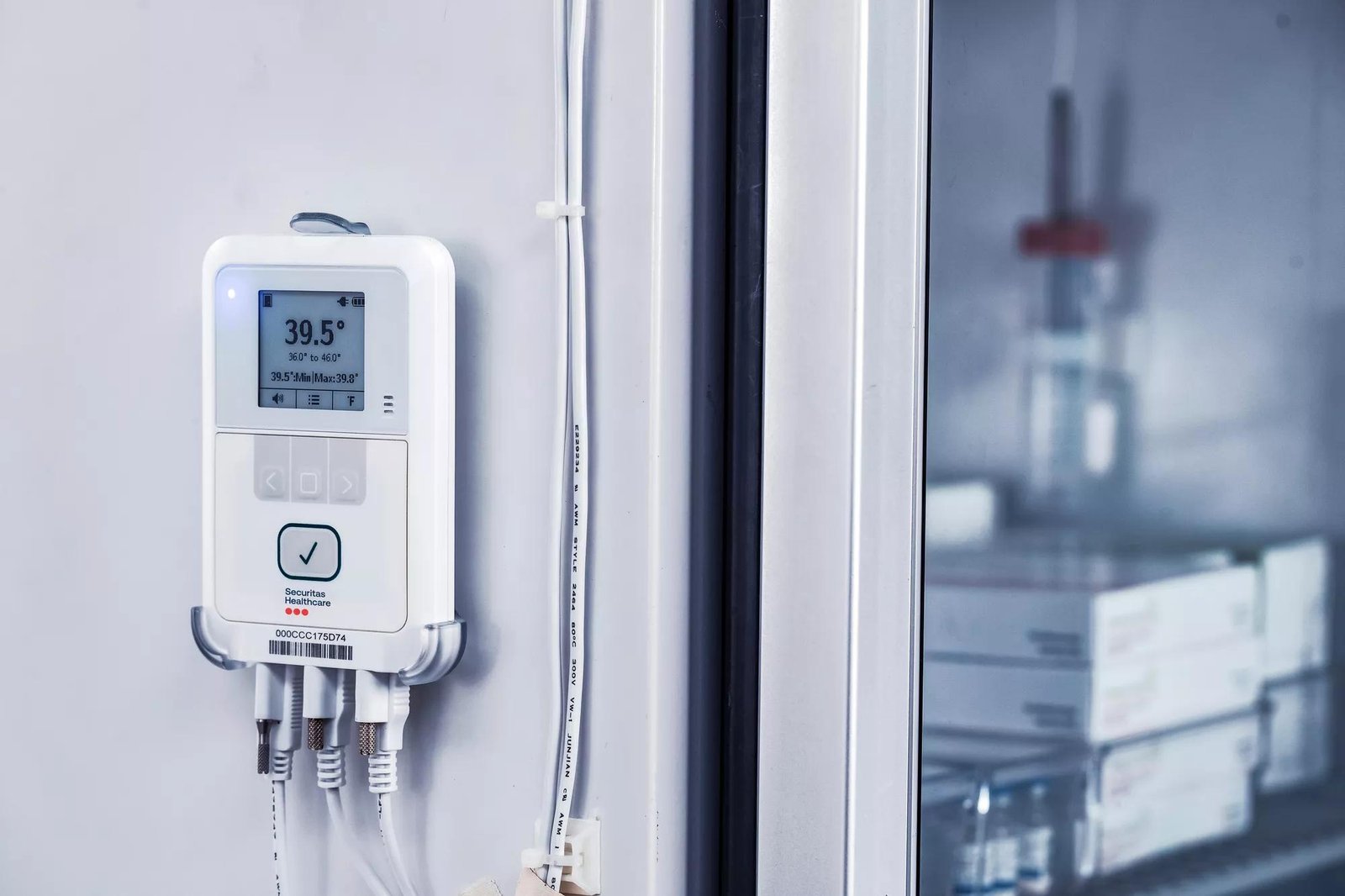
A vaccine temperature data logger earns its place in the cold chain by recording temperature conditions automatically, without depending on staff to initiate readings or manually check intervals. The value of continuous logging lies in its independence from human scheduling. Temperature excursions do not occur on convenient timelines, and gaps in data—even brief ones—can become significant during an audit or a regulatory review.
For facilities that manage large volumes of vaccines across multiple storage units, fully automatic and continuous recording removes a significant source of human error from the monitoring process. It also produces a complete chronological record that can be presented to state health departments, accreditation bodies, or insurance providers without qualification.



Why Logging Frequency Matters in Practice
The interval at which a logger records temperature directly affects its ability to detect short-duration excursions. A unit that records every thirty minutes might miss a rapid temperature spike that lasted twenty minutes but was sufficient to degrade product quality. More frequent intervals produce a denser data record that is harder to dispute and more useful for root cause analysis after an incident.
Facilities should evaluate logging frequency in the context of their specific storage environment. A walk-in cold room with stable ambient conditions may tolerate slightly wider intervals than a countertop unit in a high-traffic area where door-opening frequency creates frequent short-term temperature shifts.
2. Real-Time Alerting With Configurable Thresholds
Knowing that a temperature excursion occurred after the fact is operationally useful for documentation but practically insufficient for preventing product loss. Real-time alerting changes the response window from hours to minutes. When a monitoring system sends an immediate notification at the moment a threshold is crossed, staff can respond while there is still time to transfer product, address equipment failure, or escalate the issue.
The Difference Between Alert Delivery and Alert Reliability
Alert delivery method matters as much as the alert itself. Systems that depend entirely on Wi-Fi for notification delivery are vulnerable to network outages that may coincide with power disruptions—precisely the conditions under which an alert is most needed. Redundant alert pathways, such as cellular backup alongside network-based notifications, provide greater assurance that a critical message will reach someone who can act on it.
Configurable thresholds allow facilities to align alert parameters with the specific products being stored. Different vaccine formulations may have different storage requirements, and a monitoring system that supports multiple, independently configured alarm levels gives administrators greater precision in managing varied inventory.
3. Regulatory Compliance Documentation Support
In the United States, vaccine storage monitoring is subject to requirements from the Centers for Disease Control and Prevention (CDC), state immunization programs, and in many cases, accreditation standards from bodies such as The Joint Commission. The documentation generated by a monitoring device must meet a defined standard to be usable during inspections or in response to an adverse event review.
What Compliant Records Actually Look Like
A compliant temperature record includes a continuous time-stamped log, clear identification of the storage unit being monitored, and exportable data in a format that survives software changes and equipment replacement. Records stored only within a proprietary system that requires active subscription access to retrieve create a long-term documentation risk that many facilities do not fully consider at the time of purchase.
The CDC’s vaccine storage and handling guidance specifies that temperature monitoring data should be reviewed at designated intervals and retained for a minimum period. Monitoring equipment that produces records aligned with these expectations reduces the administrative burden of compliance and makes external audits more manageable.
4. Calibration Traceability and Accuracy Verification
A temperature reading is only as reliable as the instrument producing it. Calibration traceability refers to the ability to demonstrate that a monitoring device’s measurements have been verified against a known, accepted standard. In practice, this means the device was tested by an accredited laboratory and that documentation of that testing can be produced on request.
How Calibration Drift Affects Long-Term Reliability
Sensors in temperature monitoring equipment can drift over time, gradually reporting temperatures that differ from actual conditions. This drift is not always dramatic or immediately obvious, which makes it particularly problematic. A device that reads slightly warmer or cooler than actual conditions may produce records that appear compliant while masking conditions that are not.
Facilities should evaluate how frequently a device requires recalibration and whether that process is straightforward to perform or requires returning the unit to the manufacturer. Some environments, particularly those with high regulatory scrutiny, benefit from devices that support on-site verification checks between full calibration cycles.
5. Battery Performance and Power Redundancy
Power disruptions are among the most common triggers for temperature excursions in vaccine storage environments. A monitoring device that loses power at the same time as the storage unit it is watching provides no useful record of what happened during the outage and no alert that would have prompted a manual response.
Evaluating Battery Life in Context
Battery backup duration should be evaluated against the realistic length of power disruptions in the facility’s geographic area and infrastructure context. A hospital in a region with frequent severe weather events has different needs than a physician’s office in a stable urban environment. Extended battery life provides a wider response window and a more complete data record during extended outages.
Some monitoring systems also support external battery packs or connection to facility-level backup power systems, which can further reduce the risk of monitoring gaps during extended events.
6. Data Export and System Integration Capability
Temperature data that exists only within a monitoring device’s internal memory or a closed platform creates operational limitations. Facilities that manage vaccine storage across multiple locations, or that need to consolidate temperature records alongside other inventory and compliance documentation, benefit significantly from monitoring systems that support straightforward data export.
Integration With Existing Workflows
The ability to export data in standard formats—such as spreadsheet or PDF—allows temperature records to be incorporated into existing documentation systems without requiring staff to learn new platforms or maintain separate workflows. For multi-site organizations, centralized monitoring dashboards that aggregate data from all locations provide administrators with a consistent operational overview and simplify periodic reporting tasks.
7. Physical Placement Flexibility and Sensor Configuration
Vaccine storage environments vary considerably. A public health clinic operating from a rented space has different physical constraints than a hospital pharmacy with dedicated cold storage infrastructure. A monitoring device that requires specific installation conditions or has limited sensor placement flexibility may not fit cleanly into every environment it needs to serve.
The Role of Probe Placement in Measurement Accuracy
Where a temperature sensor is physically located within a storage unit affects what it measures. A sensor placed near a door or at the front of a shelf will record different conditions than one positioned in the geometric center of the storage space. Some monitoring systems support multiple probes, allowing facilities to monitor temperature at several points simultaneously and identify internal gradients that a single sensor would miss entirely.
8. Tamper Evidence and Audit Trail Integrity
Temperature records submitted during audits or insurance claims carry greater credibility when the monitoring system can demonstrate that the data has not been altered after the fact. Tamper-evident logging creates a verifiable chain of custody for temperature data that parallels the physical chain of custody for the product itself.
Why Audit Trail Integrity Is a Procurement Consideration
When a temperature excursion leads to a product loss claim or a regulatory inquiry, the quality of the documentation becomes the basis for every decision that follows. Monitoring systems that produce records with clear timestamps, user access logs, and no ability to overwrite historical entries provide a more defensible record than those that allow post-hoc editing or have no access tracking at all.
9. Ease of Use and Staff Training Requirements
Monitoring equipment that is technically capable but operationally complex creates a different kind of risk. If front-line staff find a system difficult to interpret, they are less likely to respond appropriately to alerts or flag unusual readings before they become problems. Usability is not a secondary consideration—it is a direct factor in whether the equipment performs its intended function in practice.
Designing for the Actual User Environment
In high-turnover environments such as retail pharmacies or community health clinics, the staff operating monitoring equipment may change frequently and have limited time for formal training. Monitoring systems with clear displays, straightforward alert acknowledgment processes, and accessible documentation allow facilities to maintain consistent monitoring practices even as personnel changes occur.
10. Vendor Support, Warranty, and Long-Term Parts Availability
A monitoring device purchased today may need to function reliably for several years. The vendor’s ability to support that device over its operational life—through firmware updates, replacement parts, technical assistance, and calibration services—is a factor that belongs in the initial procurement decision, not as an afterthought once a problem arises.
Evaluating Support Infrastructure Before Purchase
Facilities should ask vendors directly about their support model: whether technical assistance is available during the facility’s operating hours, what the typical response time is for hardware issues, and what happens to stored data if the vendor’s cloud platform changes or is discontinued. These are not hypothetical concerns. They represent failure modes that have affected facilities that chose monitoring equipment based on initial cost or feature lists alone, without evaluating the long-term support relationship.
• Confirm calibration services are available domestically and within a reasonable turnaround window.
• Verify that replacement sensors and batteries can be sourced independently if needed.
• Review warranty terms carefully, particularly around sensor failure and software-related defects.
• Ask about the vendor’s policy for data migration if their platform undergoes significant changes.
Conclusion: Making a Considered Equipment Decision
Selecting a temperature monitoring solution for vaccine storage is not primarily a technology decision. It is an operational risk decision. The features outlined in this article—from continuous logging and real-time alerting to calibration traceability and vendor support—each address a specific failure point that cold chain professionals have encountered in real-world environments.
No single feature makes a monitoring system adequate on its own. What matters is how these capabilities work together to produce a reliable, auditable, and operationally practical record of storage conditions over time. Facilities that invest time in evaluating these dimensions before procurement tend to encounter fewer surprises after deployment and are better positioned when regulatory reviews or incident responses require documentation.
For administrators currently in the process of evaluating options, beginning with a structured review of current documentation gaps and workflow constraints—before comparing product specifications—will produce a more focused and defensible procurement decision. The right monitoring equipment is the one that fits the actual operating environment, not the one with the longest feature list.