Every year, highway congestion, accidents, and emergency incidents cost lives and billions in economic losses. As traffic volumes climb steadily across major road networks, the pressure on highway authorities to communicate faster and more clearly with drivers has never been greater. Yet many road management teams still rely on static signs that cannot adapt to rapidly changing conditions — a dangerous gap between what drivers need and what outdated infrastructure delivers.
LED screens have emerged as the definitive answer to this challenge. Offering superior brightness, real-time updateability, and long-term durability, they give highway teams the tools to manage traffic flow, broadcast emergency alerts, and reduce accident rates with measurable impact. Compared to traditional fixed signage, modern LED display systems deliver a compelling combination of visibility and cost-effectiveness that makes them increasingly hard to overlook.
This guide is written specifically for highway maintenance and management teams looking to deploy or upgrade their display infrastructure. From selecting the right display type to navigating installation and ongoing optimization, the following sections walk through every critical stage of a successful highway LED deployment.
Table of Contents
Understanding the Needs and Challenges of Highway Display Systems
Highway display systems carry a responsibility that few other infrastructure components match. When a multi-vehicle accident blocks two lanes ahead or a sudden fog bank drops visibility to near zero, drivers need clear, immediate guidance — not a static sign that was last updated during installation. High-visibility messaging directly influences driver behavior, and that influence translates into measurable outcomes: reduced rear-end collisions, smoother lane transitions, and faster emergency response coordination.
Yet highway authorities face a demanding set of challenges when maintaining or upgrading these systems. Weather is the most relentless adversary. Displays must function reliably through extreme heat, freezing temperatures, driving rain, and dust storms. Vandalism adds another layer of risk, particularly on lower-mounted installations near urban interchanges. Budget constraints compound both problems — capital expenditures for infrastructure upgrades are perpetually under scrutiny, and ongoing maintenance costs can quietly erode the value of even a well-chosen system over time.




Traditional static signs struggle against all three challenges simultaneously. They cannot be updated remotely, they require physical replacement when damaged, and they offer no flexibility for seasonal or incident-specific messaging. LED technology fundamentally changes this equation. Modern highway LED displays are engineered with ruggedized enclosures, anti-vandal coatings, and energy-efficient components that reduce both operational costs and maintenance frequency. Remote content management eliminates the need for crews to physically access signs for routine updates, cutting labor expenses significantly. Over a five-to-ten-year lifecycle, the total cost of ownership for a well-specified LED system consistently outperforms legacy alternatives, making the transition not just operationally superior but financially sound for highway management teams.
Key Types of LED Displays for Highway Applications
Choosing the right display type is as important as any other deployment decision. Highway environments vary enormously — a rural motorway gantry faces completely different demands than a temporary construction zone diversion or a patrol vehicle responding to an incident. Understanding which LED display category fits each scenario prevents costly mismatches between equipment capabilities and operational requirements.
Gantry VMS: The Backbone of Highway Communication
Variable Message Signs mounted on overhead gantries are the workhorses of permanent highway communication. Positioned above traffic lanes, they deliver lane-specific instructions, speed limit adjustments, and hazard warnings to drivers with maximum sightline advantage. Their real strength lies in integration — modern Gantry VMS units connect directly to traffic management centers, allowing operators to push updated messages within seconds of an incident being detected. When paired with loop detectors or radar sensors, they can even trigger automated responses without manual intervention.
Outdoor Rental LED Displays for Flexible Deployment
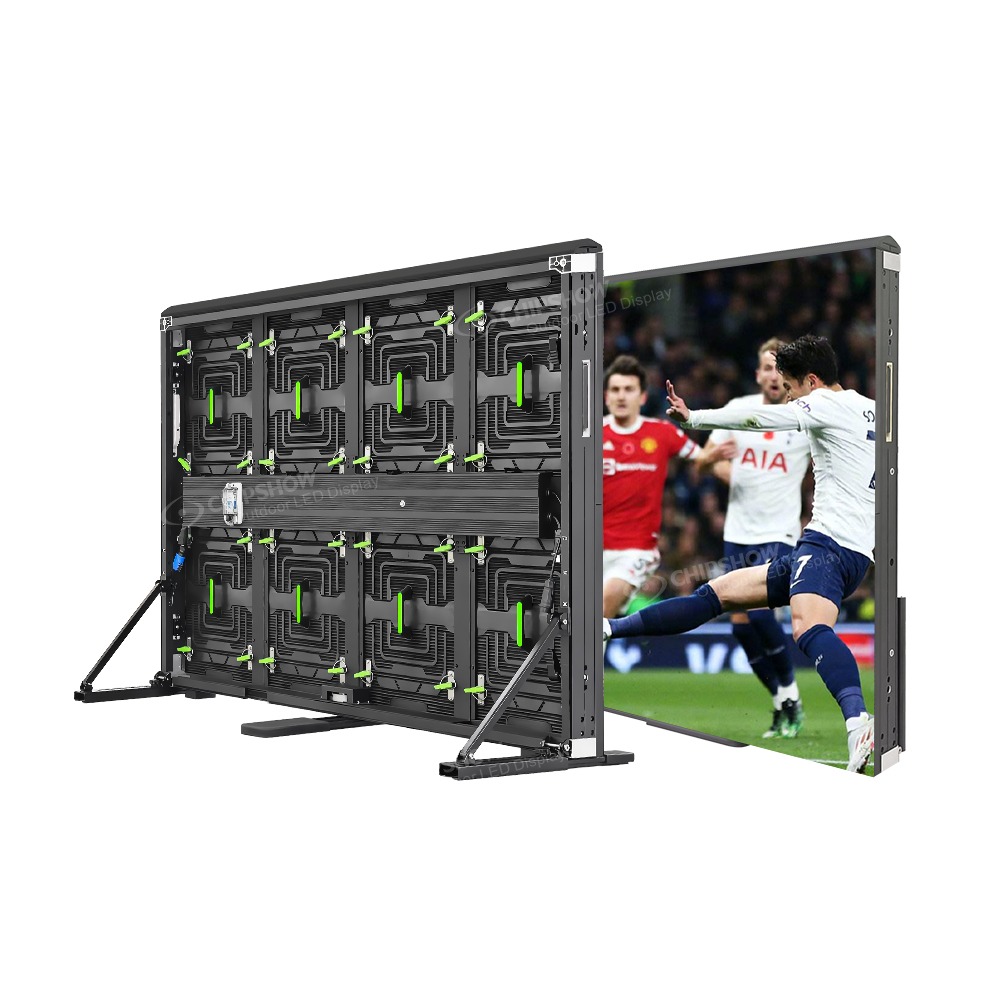
Not every highway situation calls for permanent infrastructure. Road construction projects, planned events near major interchanges, or temporary detour routes demand displays that can be repositioned quickly and removed when no longer needed. Outdoor rental LED displays meet this requirement with modular panel designs that assemble and disassemble without specialized equipment. Manufacturers such as Chipshow LED have developed ruggedized rental cabinets specifically suited to outdoor exposure, and renting rather than purchasing eliminates capital expenditure for short-duration projects — a practical advantage when budgets are allocated per project rather than as long-term infrastructure investment.
Vehicle-Mounted Displays for Mobile Alert Systems
When an incident unfolds in real time, stationary signs cannot always reach drivers approaching from multiple directions. Vehicle-mounted LED displays mounted on maintenance trucks or patrol vehicles fill this gap by bringing warnings directly to the point of hazard. These units are purpose-built for mobility, with vibration-resistant mounts and wireless content control that allows operators to update messaging from a cab-mounted tablet. Their most critical use cases include incident perimeter management, rolling road closures, and dynamic speed reduction zones where fixed infrastructure simply cannot respond fast enough.
Essential Considerations for Deploying LED Screens on Highways
Before a single bolt is tightened or cable connected, highway teams must work through a structured set of pre-deployment considerations. Skipping this groundwork is one of the most common reasons LED installations underperform — a display that looks adequate on paper can fail operationally if site conditions, technical specs, or system compatibility haven’t been properly evaluated.
Site Assessment and Environmental Durability
Start by visiting each proposed installation point to evaluate sightline angles, ambient light levels, and surrounding obstructions. A display positioned where morning glare competes with screen output, or where an overpass creates shadow interference, will underdeliver regardless of its hardware quality. Environmental durability deserves equal attention — highway displays must carry a minimum IP65 rating to withstand rain ingress and dust accumulation, while installations in coastal or high-humidity corridors should meet IP66 or higher. Materials matter too: aluminum enclosures with anti-corrosion coatings outlast steel alternatives in harsh climates and reduce long-term maintenance overhead significantly.
Technical Specifications: Brightness, Resolution, and Power
Highway LED displays require a minimum brightness of 5,000 nits for daytime legibility, with premium installations pushing 8,000 nits or above for direct-sunlight environments. Pixel pitch selection should match the intended viewing distance — a P16 or P20 pitch is typically appropriate for gantry-mounted signs read at 100 meters or beyond, while closer-range installations benefit from tighter pitches. Energy efficiency directly affects long-term cost-effectiveness; displays with automatic brightness adjustment sensors reduce power consumption during low-light periods without compromising visibility when conditions demand full output.
Integration with Existing Traffic Management Infrastructure
A highway LED display operating in isolation delivers only a fraction of its potential value. Effective deployments connect displays to central traffic management platforms via standard communication protocols such as NTCIP or UTMC, enabling operators to push messages system-wide from a single interface. Compatibility with roadside sensors — loop detectors, radar speed monitors, and weather stations — unlocks automated triggering, where displays respond to detected conditions without waiting for manual input. Confirming these integration pathways before procurement prevents expensive retrofitting after installation.
Step-by-Step Guide to Deploying LED Screens for Highway Displays
Phase 1: Needs Analysis and System Design
Effective deployment begins long before any hardware is ordered. Start by commissioning traffic flow studies at each target corridor — peak hour volumes, incident frequency data, and driver sight distances all inform which display types and message formats will perform best. Define the full range of message types the system must support: speed advisories, lane control signals, emergency alerts, and weather warnings each carry different content requirements that shape screen size and resolution decisions. Map these requirements against candidate display categories — permanent Gantry VMS for high-volume motorways, rental units for construction corridors, vehicle-mounted displays for patrol response. Bring together traffic engineers, IT teams, and finance stakeholders early to align technical ambitions with available budgets, preventing redesigns mid-procurement.
Phase 2: Procurement, Installation, and Calibration
Supplier selection deserves rigorous evaluation. Request documented performance data covering brightness output, mean time between failures, and software update support commitments — not just specification sheets. Verify that proposed units carry appropriate IP ratings and have been tested to relevant highway standards before signing contracts. During installation, enforce lane closure protocols and coordinate with traffic management centers to minimize disruption. Mount gantry units at the engineered height and angle determined during site assessment, then conduct immediate post-installation calibration: set brightness thresholds for day and night conditions, confirm communication links to the traffic management platform, and verify that automated sensor triggers fire correctly under simulated conditions before going live.
Phase 3: Testing, Maintenance, and Optimization
Commission each display through a structured testing cycle that includes full message library verification, failover response checks, and brightness sensor accuracy validation. Establish a preventive maintenance schedule — quarterly inspections covering LED module integrity, cabinet seals, and communication hardware catch failures before they cause outages. Log all fault events and response times to build a reliability baseline that justifies future budget requests. Use operational data to continuously refine messaging: analyze which alert formats produce the fastest driver response and retire underperforming templates. Proactive care consistently extends system lifespan beyond manufacturer estimates, compounding the cost-effectiveness advantage that made LED the right choice from the outset.
Building Safer Highways Through Smarter LED Display Infrastructure
Deploying LED screens across highway networks is no longer a forward-looking ambition — it is a practical necessity for authorities serious about road safety and operational efficiency. The advantages are clear and compounding: superior visibility that reaches drivers in time to change behavior, real-time content control that static signs can never match, and a total cost of ownership that justifies the investment across a five-to-ten-year lifecycle. From permanent gantry VMS installations to flexible rental units and vehicle-mounted alert systems, the right display configuration exists for every highway scenario and budget profile.
The deployment path outlined here — grounded in thorough needs analysis, careful procurement, disciplined installation, and proactive maintenance — gives highway management teams a reliable framework for avoiding the missteps that cause underperforming systems. Following these phases systematically transforms LED technology from a capital expense into a long-term operational asset.
Looking ahead, the case for LED highway displays will only strengthen. Emerging smart connectivity standards are enabling tighter integration between displays, vehicle telematics, and autonomous driving systems, while solar and energy-harvesting technologies are making off-grid installations increasingly viable. Highway authorities that build their display infrastructure on LED platforms today are positioning themselves to adopt these advances without wholesale replacement. The road to safer, more efficient highway networks runs directly through smarter display systems — and the tools to build them are available right now.