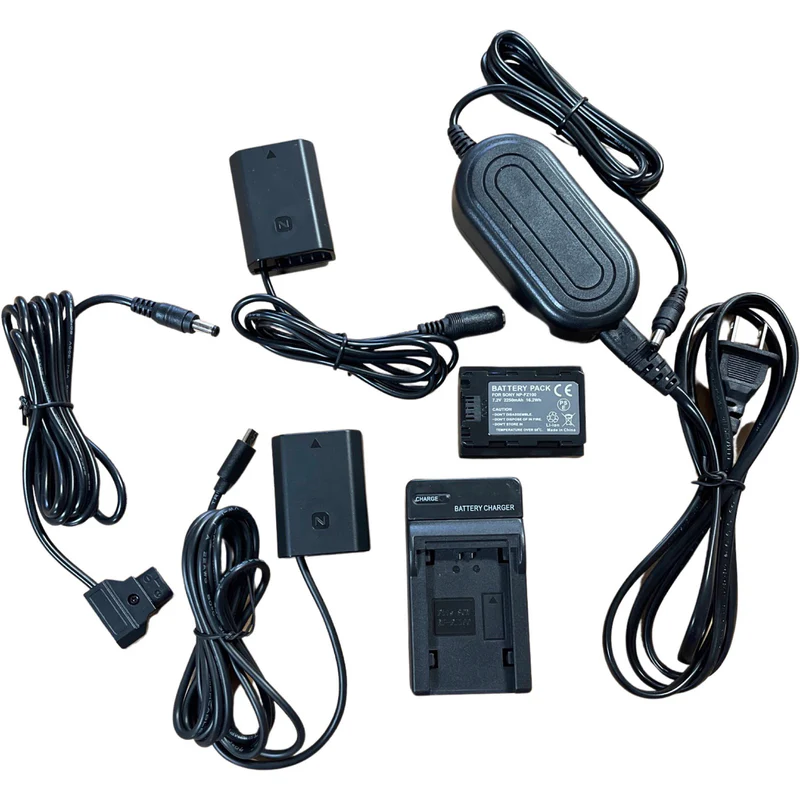
Production schedules do not tolerate power failures. Whether you are shooting a multi-camera documentary, a broadcast news segment, or a commercial on location, your camera rig depends on a reliable power chain from the first setup call to the final take of the day. The battery system is a central part of that chain, and the charger feeding those batteries is often the component that receives the least careful consideration during the purchasing process.
Most professionals make charger decisions based on price or convenience, then discover problems only when they are already on set. Incompatible connectors, slow charge cycles that do not keep pace with production turnover, or chargers that degrade battery cell health over time — these are operational problems with direct consequences for scheduling and cost. Choosing a charger with genuine attention to your rig’s requirements prevents those problems before they occur.
This guide addresses the practical factors that determine whether a charger is genuinely suited to your camera system or simply adequate on paper.
Table of Contents
Understanding What the D-Tap Standard Actually Requires
The D-Tap connector — also referred to as a P-Tap connector — is a two-pin power interface widely used in professional broadcast and cinema environments. It was originally developed to provide a standardized output from V-mount and Gold Mount batteries, giving cinematographers a reliable way to power accessories directly from a battery without adapters or secondary power sources. Over time, the same connector system became relevant for charging and communication between batteries and external power units.
When selecting a d tap battery charger, the connection type is only the starting point. The connector interface defines physical compatibility, but it does not address the broader compatibility question of whether the charger is designed to handle the battery chemistry, capacity, and protection requirements of your specific battery system. Many operators assume that if a charger has the right connector, it will work properly with any compatible battery. In practice, that assumption causes both short-term operational issues and long-term battery degradation.



A well-specified d tap battery charger accounts for the battery’s internal chemistry, its charge curve requirements, and its cell protection thresholds. These factors are not visible at the connector level. They require either charger documentation review or direct confirmation from the battery manufacturer.
Why Chemistry Compatibility Matters Beyond Voltage
Lithium-ion cells, which power most modern professional camera batteries, follow a specific charge profile. That profile involves a constant current phase followed by a constant voltage phase, with precise cutoffs that prevent overcharging. A charger that does not follow this profile — even if it delivers the correct nominal voltage — can cause cells to charge unevenly, reducing overall capacity over time and, in serious cases, creating safety risks.
This is not a theoretical concern. Chargers designed for lower-tier consumer applications are often built with simplified charging circuits that approximate the correct profile rather than executing it precisely. When used repeatedly with high-capacity professional batteries, the cumulative effect on cell health becomes measurable within a production cycle. The cost of replacing batteries prematurely almost always exceeds the savings made on a cheaper charger.
Matching Charging Speed to Production Workflow
Production workflows are not uniform. A single-camera interview setup has very different battery rotation requirements compared to a six-camera live event or a run-and-gun documentary. The charge rate of a d tap battery charger — meaning how quickly it can bring a depleted battery to full capacity — directly affects how many batteries you need in rotation and how much downtime is built into the shooting day.
Operators who underestimate this often end up purchasing more batteries than necessary to compensate for slow charge cycles. That adds cost and weight to the kit. Conversely, choosing a charger with too aggressive a charge rate without verifying the battery’s maximum input tolerance can accelerate cell wear. The relationship between charger output and battery input capacity is a specification that should always be confirmed before purchase.
Single-Bay vs. Multi-Bay Chargers in Field Conditions
Single-bay chargers are compact and appropriate for setups where battery rotation is minimal or where only one or two batteries are in active use. They are common in solo operator environments where weight and bag space matter more than throughput.
Multi-bay chargers allow simultaneous charging of several batteries and are better suited to larger productions where multiple camera bodies, monitors, and wireless systems are all drawing from the same battery ecosystem. The trade-off is size and the need for stable AC power, which is not always available on location. Some productions rely on a combination of both — a multi-bay charger at base camp and single-bay units in the field — which requires that all chargers in the system are matched to the same battery standard to avoid inconsistencies in charge state reporting.
Charge Rate Consistency Over Extended Sessions
One factor that rarely appears in product descriptions is charge rate consistency across the full charge cycle and across different ambient temperatures. Many chargers perform well under ideal conditions but slow significantly in cold environments or after sustained use. For productions working in variable weather or across long shooting days, this inconsistency can disrupt battery rotation schedules in ways that are difficult to anticipate without prior field experience with the equipment.
Reviewing third-party field reports and professional community feedback — rather than relying solely on manufacturer specifications — gives a more accurate picture of how a charger performs across real-world conditions.
Communication Features and Battery Management Systems
Modern professional camera batteries often include onboard battery management systems that track charge cycles, cell health, remaining capacity, and temperature. These systems communicate with compatible chargers to adjust the charging process dynamically, not just based on a fixed profile but based on the actual condition of each individual cell group within the battery.
A d tap battery charger that supports this communication capability offers a meaningful operational advantage. It allows the charger to respond to the battery’s real state rather than applying a generic charge profile. This extends battery service life, provides more accurate charge state readings, and can flag batteries that are approaching the end of their useful cycle count before they fail unexpectedly on set.
When Communication Is Absent
Not all D-Tap chargers support battery management communication. Many are passive devices that deliver power without receiving feedback from the battery. This is not inherently a problem for all use cases, but it does mean that the operator carries more responsibility for monitoring battery health manually — tracking cycle counts, checking for capacity loss, and rotating batteries out of service based on observation rather than automated reporting.
For productions with large battery inventories or long deployment periods between full kit reviews, the absence of communication features increases the risk that a degraded battery remains in active use longer than it should. According to the Battery University resource maintained by Cadex Electronics, consistent charging practices and proper charge termination are among the most significant factors in extending lithium-ion battery service life — a point that underscores why charger selection affects more than just convenience.
Power Source Compatibility and Location Considerations
Location production introduces power constraints that studio environments do not. A d tap battery charger designed for use in controlled facility settings may not perform reliably when powered from a portable generator, a location-specific power grid with voltage fluctuations, or a vehicle’s electrical system. Chargers with wide input voltage tolerance and built-in surge protection are better suited to field use, even if they cost more than fixed-facility alternatives.
This consideration extends to international production. Productions that travel across regions encounter different voltage standards and power frequencies. A charger without auto-ranging input capability requires step-down transformers or regional-specific power supplies, which adds complexity to the kit and increases the risk of power-related equipment failure in unfamiliar environments.
DC-Powered Charging in Remote Environments
Some productions operate in locations where AC power is either unavailable or impractical. Remote documentary work, aerial and drone-support operations, and certain outdoor broadcast environments require chargers that can operate from DC power sources — including vehicle batteries, solar charge controllers, or portable power stations. Not all D-Tap chargers include this capability, and those that do vary significantly in how efficiently they manage DC input. Identifying this requirement early in the kit planning process prevents last-minute equipment substitutions that disrupt pre-production timelines.
Build Quality and Long-Term Reliability
Camera rigs move constantly. They go into cases, onto planes, into vehicles, and out into conditions that range from climate-controlled studios to exposed outdoor environments. A charger that performs adequately in controlled conditions may develop connection reliability problems, thermal management issues, or housing failures after sustained field use.
Build quality is difficult to evaluate from product listings alone. The most reliable indicators are the manufacturer’s stated warranty terms, the availability of replacement parts and service support, and the track record of the product across professional communities and rental houses. Rental house adoption, in particular, is a reasonable proxy for durability — equipment that fails frequently under heavy rotation does not remain in rental inventories.
Considering the total cost of ownership — including the cost of battery replacement resulting from poor charging practices — reframes the charger selection decision from a low-stakes accessory purchase to a meaningful operational investment.
Conclusion
Choosing a d tap battery charger is not a decision that should follow a simple checklist. The right charger depends on the specific batteries in your system, the chemistry those batteries use, the pace and environment of your productions, and the level of battery management visibility your workflow requires. A charger that works well for a studio-based single-camera operator may be entirely unsuitable for a multi-camera location production working across variable temperatures and inconsistent power sources.
The practical approach is to start with the battery manufacturer’s documentation and recommendations, then evaluate charger options against the real conditions of your work — not ideal conditions. Confirm chemistry compatibility, charge rate appropriateness, communication capability if it is available for your battery system, and input power flexibility for the environments where you operate.
Power reliability on a production is not glamorous, but it is foundational. The time invested in making a well-informed charger selection pays back consistently across every shooting day, every battery rotation, and every battery that remains in service longer because it was charged correctly from the beginning.