How to Source Custom Wood Pallets in Allentown PA Without Sacrificing Lead Time or Load Capacity

For warehouse managers, logistics coordinators, and plant operations teams in the Lehigh Valley region, pallet sourcing rarely gets the attention it deserves until something goes wrong. A shipment gets delayed because the available pallet stock doesn’t match the product dimensions. A load shifts in transit because the deck configuration wasn’t suited for the weight distribution. A supplier changes their standard offering mid-contract, and suddenly the entire packaging line needs to adjust.
These are not edge cases. They are recurring operational problems that trace back to the same root issue: relying on standard pallet inventory when the application clearly requires something built to specification. Understanding how to source custom wood pallets correctly — and how to do it without creating new problems around lead time or structural adequacy — is a practical matter worth working through carefully.
Table of Contents
Why Custom Pallets Require a Different Sourcing Approach Than Standard Stock
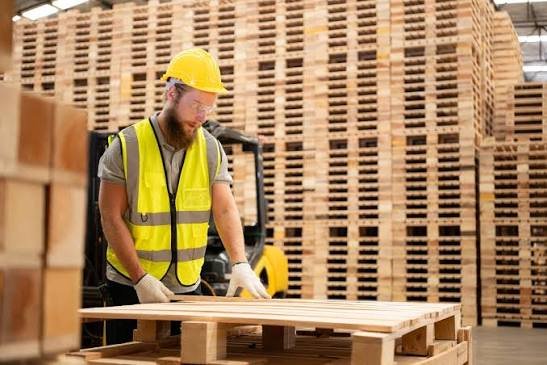
Standard pallets exist because many industries share similar load requirements, and producing them at volume reduces cost. But standard sizing and construction don’t account for the specific weight distribution, overhang tolerance, racking compatibility, or handling method of every operation. When a facility’s product consistently falls outside those assumptions, the workaround — banding, blocking, using double pallets — often costs more over time than simply ordering pallets built for the application.
Sourcing custom pallets allentown pa means engaging with a supplier who builds to order rather than fulfills from a fixed inventory. This distinction matters because the entire sourcing timeline, communication process, and quality verification process changes when you move from selecting a SKU to specifying a build. Facilities in and around Allentown that have made this transition often find that lead times are more predictable, not less, because the production schedule is tied to a confirmed specification rather than fluctuating stock availability.
The decision to go custom also affects how you evaluate suppliers. A distributor who resells standard pallets from a regional pool is a fundamentally different kind of vendor than a manufacturer who cuts, assembles, and grades lumber to meet a submitted design. Knowing which type you’re working with before committing is the first step in managing expectations on both sides.



The Difference Between Custom Configuration and Custom Construction
Not all custom pallet orders involve the same level of modification. Some operations need a non-standard footprint — a different deck length or width — but are fine with conventional construction methods and standard lumber grades. Others need a fundamentally different board arrangement, a different entry point configuration, or a specific stringer design to work with their automated handling equipment.
Understanding where your need falls on that spectrum helps you communicate more precisely with a supplier and prevents scope creep in both directions. Asking for a custom configuration when you actually need custom construction leads to a pallet that looks right but fails under load. Asking for custom construction when a simple size change would suffice adds cost and lead time unnecessarily.
Before initiating contact with any supplier, document exactly what the pallet needs to do: what equipment handles it, how it’s stored, how it’s transported, and what it carries. That functional description is more useful than a dimensional drawing alone, because it allows a skilled supplier to validate whether the proposed build will actually perform.
How Lead Time Is Actually Controlled in a Custom Pallet Order
Lead time in custom pallet production is shaped by factors that most buyers don’t consider until they’re already behind schedule. Material availability, production queue depth, and specification complexity all influence how long an order takes from confirmation to delivery. The facilities that consistently receive their orders on time are usually the ones that understand how each of those factors works and plan accordingly.
Material Availability and Lumber Sourcing Stability
Wood pallet construction depends on softwood and hardwood lumber supply, which fluctuates based on regional mill output, seasonal demand, and broader supply chain conditions. A supplier who sources lumber locally or regionally tends to have more consistent lead times than one who depends on long-distance or imported supply. In the Allentown area, proximity to Pennsylvania timber markets can be a meaningful advantage — but only if the supplier is actively managing those relationships rather than purchasing opportunistically.
When evaluating a custom pallet supplier, ask directly how they manage lumber sourcing during periods of constrained supply. A supplier who has established relationships with multiple mills and carries adequate raw material inventory is far less likely to delay your order due to a lumber shortage than one who buys as needed. This is not a minor operational detail — it’s one of the primary reasons custom pallet lead times extend unpredictably for some buyers while remaining stable for others.
How Production Queue Depth Affects Your Timeline
Custom pallet manufacturing is not a pull-from-shelf operation. Each order enters a production queue, and the position of that order in the queue determines when production begins. Suppliers who manage a large, diverse customer base may have significantly longer queue times during peak periods — particularly in Q3 and Q4 when packaging and logistics volumes increase across most industries.
Establishing a relationship with a supplier before you have an urgent need gives you standing in that queue. Blanket orders and scheduled releases — where you commit to a volume over a defined period rather than ordering reactively — are one of the most effective ways to maintain predictable lead times on custom specifications. Many Allentown-area manufacturers and distributors have moved to this model precisely because it removes the uncertainty of placing a large order on short notice.
Load Capacity as a Design Requirement, Not a Product Feature
Load capacity in a wood pallet is not a fixed attribute of a product category — it’s a result of how the pallet is built. The species of wood used, the thickness and width of the deck boards, the number and placement of stringers or blocks, and the fastener pattern all contribute to how much weight a pallet can safely carry under specific conditions. Changing any one of those variables changes the load capacity, sometimes significantly.
This is why purchasing custom pallets without specifying load requirements is a meaningful risk. A supplier building to general “heavy duty” assumptions may produce a pallet that performs adequately under static storage conditions but fails under dynamic load — when the pallet is moved by forklift, stacked under pressure, or subjected to vibration in transport. The National Institute of Standards and Technology has documented how load testing standards for industrial packaging components vary considerably based on test method and application context, reinforcing why operational conditions — not just weight ratings — should drive design decisions.
Static Load vs. Dynamic Load: Why the Distinction Matters in Specification
A pallet sitting on a warehouse floor carries a static load. A pallet being picked up by a forklift, placed on a conveyor, or loaded into a truck experiences dynamic load — force applied unevenly, often with impact. These two conditions place very different stresses on the pallet structure, and a build optimized for one may underperform in the other.
When sourcing custom pallets for operations that involve both storage and active handling, the specification should account for both. This means describing to your supplier not just what the pallet will carry, but how it will be moved, how frequently, and by what equipment. A well-constructed custom pallet built around those operational parameters will consistently outlast a heavier standard pallet that wasn’t designed with the specific handling method in mind.
Racking Compatibility and Structural Design Considerations
Facilities that use selective racking, drive-in racking, or push-back systems have an additional layer of pallet specification to manage. The pallet must span the rack beams without deflection under load, and that span requirement is determined by the rack configuration, not the product weight alone. A pallet that works perfectly on the floor may fail structurally when racked, even under the same load, simply because the support points are different.
Communicating rack beam spacing and configuration to your pallet supplier is not optional if your pallets will be stored in rack systems. A supplier experienced in industrial applications will ask for this information as a standard part of the specification process. If a supplier does not ask, that gap in their intake process should prompt further evaluation of whether they have adequate experience with your application type.
Evaluating Suppliers in the Allentown Area for Custom Pallet Work
The Lehigh Valley has a well-developed manufacturing and logistics sector, which means there are multiple pallet suppliers operating in and around Allentown. Not all of them are equipped for custom production. Some focus exclusively on new standard pallets, others on recycled or reconditioned stock, and a smaller group manufactures to specification.
When evaluating suppliers for custom pallet work, the relevant questions are operational rather than promotional. How are specifications documented and confirmed before production begins? What quality control steps occur during and after production? How are lumber grades selected for a given application? What is the process when a completed order doesn’t meet specification? A supplier who can answer those questions with specificity and consistency is far more likely to deliver a reliable result than one who quotes quickly and follows up slowly.
Geographic proximity to Allentown also carries real logistical value. A supplier within the region can accommodate shorter-notice orders more readily, reduce freight costs on delivery, and allow for site visits if specification questions arise during production. For facilities with ongoing pallet needs — rather than one-time orders — that proximity tends to produce a more stable supply relationship over time.
Bringing It Together: A Practical Sourcing Framework
Sourcing custom wood pallets in Allentown without compromising lead time or load capacity comes down to preparation, communication, and supplier selection — in that order. Facilities that invest time upfront in documenting their actual requirements, understanding what drives lead time at the supplier level, and selecting a manufacturer genuinely capable of custom production consistently have better outcomes than those who approach pallet sourcing as a commodity purchase.
The problems that prompt most facilities to look for custom pallets — load failures, handling inefficiencies, incompatibility with racking or equipment — are not solved by finding a lower price on a standard product. They are solved by finding a supplier who understands the application and builds accordingly. In a region with active industrial demand like the Lehigh Valley, that kind of supplier relationship is worth developing proactively, before an urgent need creates pressure to compromise on the evaluation process.
When the specification is clear, the supplier is capable, and the production relationship is well-managed, custom pallets do not require longer lead times or create load capacity uncertainty. They eliminate both problems by replacing general-purpose assumptions with builds that match the actual operational context.