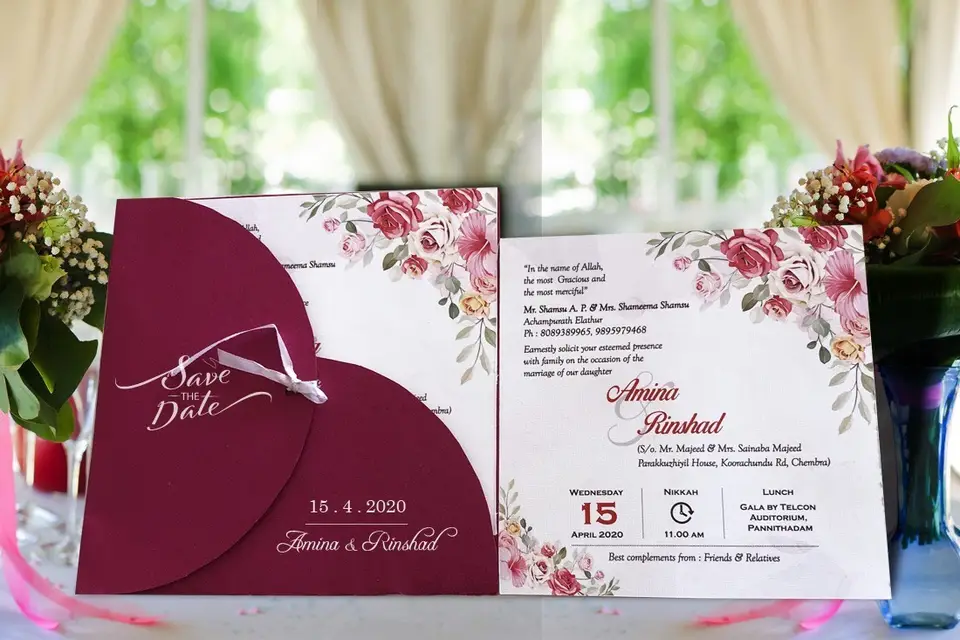
Wedding invitations are among the few elements of a wedding that guests encounter before they ever arrive at the venue. They set expectations, communicate tone, and reflect the level of care that has gone into the event. Yet the process of ordering them is often treated as an afterthought — something to be handled quickly between venue bookings and catering decisions.
For brides planning weddings in Dallas and the surrounding areas, the custom invitation process comes with its own set of practical realities that aren’t always obvious upfront. Local print timelines, paper sourcing, design coordination, and proofing requirements all affect whether the final product arrives on time and in the condition expected. Many brides only discover these factors after they’ve already made decisions that are difficult to reverse.
What follows is a straightforward account of the things that most commonly catch Dallas brides off guard — not to discourage the process, but to help anyone approaching it do so with clear, realistic expectations.
Table of Contents
1. The Timeline Is Almost Always Longer Than You Expect
When couples begin researching custom wedding invitations dallas tx, one of the first surprises is how much time the full process requires. From initial design consultation to final delivery, the process often spans six to ten weeks, and that window doesn’t account for revision rounds, paper shortages, or shipping delays from specialty vendors. Invitations should be in guests’ hands six to eight weeks before the wedding date, which means the design process needs to begin far earlier than most people plan for.
Why Revision Rounds Matter More Than You Think
Most print providers build one or two revision rounds into their standard workflow. Each round introduces additional days between proof approval and production start. If the text changes after a proof has been approved — a common occurrence when venue addresses shift or ceremony times are adjusted — the entire proofing cycle may need to restart. Brides who account for at least three potential rounds of changes are better positioned to absorb unexpected delays without compromising their mailing schedule.




2. Paper Choice Has Real Consequences Beyond Aesthetics
The paper stock chosen for wedding invitations affects more than appearance. It determines how printing inks absorb and dry, whether certain printing methods are even feasible, how the piece feels when handled, and how it holds up through postal processing. Heavier paper stocks often require additional postage, which can meaningfully increase costs on large guest lists. Textured papers interact differently with digital printing versus letterpress or foil stamping, and not every print method is compatible with every paper type.
Specialty Finishes and Their Hidden Requirements
Foil stamping, embossing, and letterpress printing each require specific paper weights and compositions to produce clean results. A paper that looks ideal on a sample card may not perform the same way during a full production run under the pressure and heat of specialty equipment. Brides who fall in love with a particular finish during a consultation should confirm with the print provider whether the desired paper is compatible before committing to a design direction. Changing paper mid-production is one of the more disruptive and costly corrections in the invitation process.
3. Matching Suite Components Require Careful Coordination
A full wedding invitation suite typically includes the main invitation, an inner or outer envelope, an RSVP card with a return envelope, and supporting inserts for accommodations or directions. Each component must be designed, proofed, and produced in a way that ensures visual and tonal consistency across the entire set. Ordering components from different vendors, or at different times, introduces real risk that colors, fonts, or paper finishes will not align precisely in person, even if they appeared consistent on a screen.
Color Consistency Across Multiple Print Runs
Even when all components are ordered from the same provider, color consistency across multiple print runs is not automatic. Print conditions can shift between production batches, particularly when jobs are run on different days or on different equipment. Brides ordering large suites should ask whether all components will be printed in the same production run, or at minimum, whether the provider uses standardized color calibration processes. A slight variation in background color between the invitation card and the RSVP card is the kind of detail that only becomes visible once everything is assembled together.
4. Wording Errors Are the Bride’s Responsibility After Proof Approval
In most professional print agreements, once a proof has been reviewed and approved by the client, the print provider is no longer responsible for typographical errors that were present in the approved version. This is a standard industry position, and it applies regardless of whether the error was introduced by the designer, the client, or a miscommunication between both. Every piece of text on a proof — names, dates, addresses, times, and any directional language — needs to be reviewed with careful attention before approval is given.
Common Errors That Slip Through Proofing
The errors that appear most frequently in reprinted wedding invitations are not the obvious ones. They tend to be subtle: a ceremony time listed as AM when it should be PM, a venue name missing one word, a zip code transposed by a single digit, or a spouse’s name spelled correctly in the header but incorrectly in the RSVP return address. Reading a proof in the same way one would read a legal document — slowly, in sections, and ideally by more than one person — is the most reliable way to catch these errors before production begins.
5. Postage and Mailing Are a Separate Planning Process
Many brides treat mailing as a simple final step when, in reality, it involves its own set of decisions and potential complications. Invitation suites that exceed standard weight or dimension thresholds require additional postage. Envelopes with metal clasps, wax seals, or unusual shapes may need to be hand-canceled at the post office rather than processed through automated sorting equipment. Failure to account for these requirements can result in invitations being returned to sender, arriving damaged, or being assessed additional postage that guests are asked to pay upon delivery.
The Case for Taking a Sample to the Post Office
Before committing to a full production run of assembled and sealed suites, bringing a completed sample to a local Dallas post office for weigh and measure verification is a straightforward way to confirm postage requirements in advance. The United States Postal Service publishes mailing standards that define what qualifies as a standard letter versus a non-machinable piece, and the cost difference between those categories can be significant across a guest list of any size.
6. Digital Mockups and Physical Samples Are Not the Same Thing
Screen-based proofs are a standard part of most digital print workflows, but they cannot fully replicate how a printed piece looks and feels in person. Color rendering on a monitor varies based on screen calibration, ambient lighting, and display settings. A color that reads as warm ivory on a laptop screen may print as near-white on a matte paper stock. For any invitation that relies on precise color matching — particularly those incorporating florals, watercolor designs, or specific brand palettes — requesting a physical printed sample before approving the full production run is a reasonable and often necessary step.
7. Guest Address Collection Should Begin Before Design Does
Collecting complete and accurate mailing addresses from all intended guests is a logistical task that takes more time than most couples anticipate. Addresses must be current, correctly formatted, and organized in a consistent way before they can be used for envelope printing or hand addressing. Beginning this process after the invitations are already printed creates a bottleneck that delays mailing, sometimes by weeks. The address collection process should begin at the same time as — or ideally before — the design phase starts.
8. Budget Estimates Rarely Reflect Final Costs
Initial quotes for custom wedding invitations in the Dallas area often reflect base pricing for a specific paper, print method, and quantity. They do not always include envelope printing, assembly, specialty finishes, shipping, or rush processing fees. Brides who compare vendors based on initial quotes without accounting for these additional components often find that the final invoices differ significantly from their expectations. A thorough cost comparison should include all anticipated components, not just the invitation card itself.
9. Quantity Ordering Requires a Buffer
Ordering exactly the number of invitations needed for the guest list is a common and costly mistake. Invitations are damaged during assembly, lost in the mail, or needed for additional guests who are added after the original order is placed. Reprinting a small quantity later almost always costs more per unit than ordering the buffer quantity upfront, and it introduces the risk that the paper stock or specific print batch may no longer be available. A standard working buffer of ten to fifteen percent above the confirmed guest count is a reasonable planning assumption.
10. The Relationship with the Print Provider Affects the Outcome
The quality of communication between a bride and her print provider has a direct effect on the final product. Providers who understand the couple’s vision, priorities, and timeline constraints are better positioned to flag potential issues early, suggest alternatives when supply or scheduling problems arise, and produce work that reflects what was actually intended. This relationship is built through clear communication, timely responses to proofs, and honest conversations about budget and timeline from the beginning of the engagement.
According to guidance from the Federal Trade Commission, consumers benefit from reviewing service agreements carefully before approving work — a principle that applies directly to print production contracts, where proof approval often transfers significant responsibility to the customer.
Closing Thoughts
Ordering custom wedding invitations is a process that rewards preparation. The brides who report the smoothest experiences are almost universally the ones who began earlier than they thought necessary, asked more questions than felt comfortable, and treated the proofing process with the same rigor they applied to their vendor contracts.
Dallas couples have access to a range of print providers capable of producing high-quality work. The difference between a smooth process and a stressful one rarely comes down to the vendor itself — it comes down to how well-prepared the client is when the process begins. Understanding the timeline, the paper variables, the mailing requirements, and the terms of the production agreement before placing an order is the most reliable way to ensure that the finished invitations reflect what was intended.
None of what’s described here is particularly complicated. But it does require that invitation planning be treated as a real production process rather than a simple purchase. Given how much those envelopes communicate before a single guest walks through the door, that level of care is well spent.