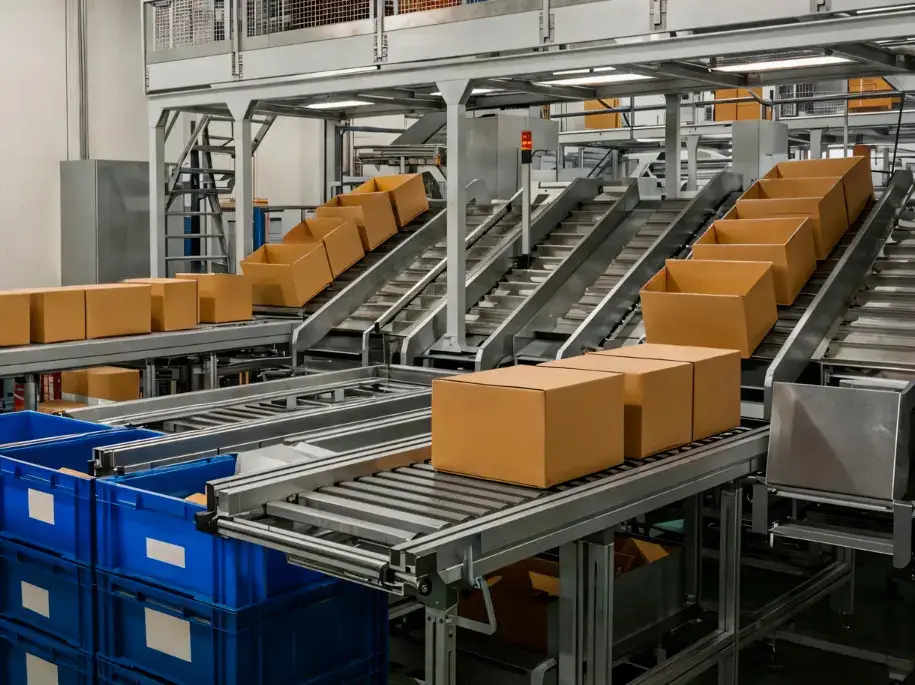
Selecting a conveyor system is rarely treated as a high-stakes decision until something goes wrong. For many Fort Worth operations — whether in distribution, light manufacturing, fulfillment, or warehousing — the conveyor system is the backbone of daily output. When it underperforms, the effects are immediate: missed shipments, slower throughput, and workforce disruption that compounds over time.
The challenge is that most businesses approach this decision the same way they would purchase standard equipment. They compare prices, review a few product specs, and choose based on what looks sufficient on paper. What they often miss are the operational realities that only surface after installation — realities that determine whether the system truly supports the workflow or quietly works against it.
The five mistakes below reflect patterns that appear repeatedly across industries where conveyor systems are central to daily operations. Understanding them before making a purchase decision can prevent significant cost and disruption down the line.
Table of Contents
Mistake 1: Treating the Selection Process Like a Standard Equipment Purchase
When a business begins looking for a package conveyor company fort worth, the instinct is often to treat the search like any other vendor comparison. Quotes are gathered, product brochures are reviewed, and the lowest price that meets the general description of the need wins. This approach ignores the fundamental difference between buying equipment and configuring a system.
A conveyor system is not a standalone machine. It interacts with your floor layout, your package types, your staffing patterns, and your throughput demands. A company that functions well as a package conveyor company fort worth businesses rely on will approach the engagement with questions before proposals — asking about package dimensions, volume fluctuations, existing infrastructure, and how the system connects to upstream or downstream processes.


Why This Distinction Changes the Outcome
When the purchase is treated as a transaction rather than a configuration process, businesses often end up with systems that technically function but don’t fit the actual workflow. A conveyor rated for general use may struggle with the specific weight distribution of your products. A system sized for average daily volume may have no capacity for peak periods. These gaps don’t appear in the quote stage — they appear three months after installation when the system is under real operational pressure.
The right provider will invest time upfront to understand how your facility actually runs, not just how it looks on a floor plan. That early alignment is what separates a system that performs consistently from one that requires constant adjustment.
Mistake 2: Prioritizing Purchase Price Over Total Operational Cost
The purchase price of a conveyor system is one of the most visible numbers in any capital equipment decision. It is also one of the least informative when it comes to what the system will actually cost the business over time. Maintenance requirements, energy consumption, parts availability, and downtime frequency all contribute to the true cost of ownership — and these factors vary significantly between systems that may carry similar upfront price tags.
The Real Cost of Cheap Components
Systems built with lower-grade components often require more frequent maintenance intervals and have shorter service lives. In a high-volume environment, even minor conveyor stoppages translate directly into labor inefficiency and delayed output. When a system is down for an unplanned repair, the cost is rarely limited to the repair itself. It includes idle staff time, rescheduled shipments, and the operational pressure that builds when a backlog accumulates.
Businesses that focus exclusively on purchase price also tend to overlook the cost of replacement parts. A system sourced from a provider with limited local support may require long lead times for components, extending downtime during repairs. This is a particularly relevant concern in active fulfillment or distribution environments where even a half-day stoppage has measurable impact.
Understanding the Full Cost Picture
Before committing to any system, it is worth asking the provider to walk through expected maintenance schedules, common wear components, and typical service timelines for the specific model under consideration. That conversation reveals a great deal about the realistic cost of operating the system — and about whether the provider is equipped to support it after the sale.
Mistake 3: Underestimating the Importance of Local Support and Service Response
Many Fort Worth businesses purchase conveyor systems from national distributors or remote vendors who offer competitive pricing but limited local presence. This arrangement works well during the sale and initial installation phase. It becomes a liability when the system needs service.
Conveyor systems require periodic maintenance and, at some point, unplanned repairs. The speed at which a provider can respond to a service call directly affects how long a facility remains partially or fully offline. A vendor located several states away, or one that routes service requests through a national scheduling center, will rarely be able to meet the response windows that active operations require.
What Local Presence Actually Means for Operations
Local support is not simply about geography. It reflects whether a provider has invested in the regional market, maintains service personnel who are familiar with the systems they’ve installed, and can respond to urgent calls with the right knowledge and parts. Providers with genuine local infrastructure tend to have faster diagnostic accuracy because their technicians have direct familiarity with the equipment in the field.
The distinction between a vendor and a service partner becomes clear the first time something needs to be fixed quickly. Businesses that evaluate service capability before purchase — not after — are far better positioned when that moment arrives.
Mistake 4: Failing to Account for Future Volume and Workflow Changes
A conveyor system that fits today’s operation perfectly may be undersized or poorly configured for the operation that exists two years from now. Growth in order volume, changes in product mix, facility expansions, and shifts in fulfillment strategy all affect how a conveyor system needs to perform. Businesses that select a system based solely on current conditions often find themselves constrained by infrastructure that cannot adapt.
Building for Adaptability Without Overbuilding
This does not mean purchasing more capacity than the business currently needs. Overbuilding introduces its own set of problems, including higher upfront cost and systems with unnecessary complexity that increase maintenance burden. The goal is selecting a system with a configuration that can be reasonably expanded or modified as operational needs evolve.
According to the Material Handling Industry (MHI), conveyor systems that are selected with scalability in mind consistently deliver better long-term value than those configured exclusively for present-state requirements. The planning process should include honest conversations about where the business expects to be operationally in the near to medium term, and what flexibility the system will need to accommodate that trajectory.
The Risk of Locking In Too Early
Some systems are sold as fixed configurations with no practical path for expansion or modification. If a business outgrows that system, the choice becomes either working around limitations that affect output, or replacing the system entirely — a far more disruptive and expensive outcome than selecting an adaptable system from the start.
Mistake 5: Skipping the Site Assessment and Installation Planning Phase
It is not uncommon for businesses to approve a conveyor purchase based on catalog specifications and vendor assurances, then discover during installation that the system does not fit the space as expected, conflicts with existing infrastructure, or requires facility modifications that were not anticipated. These issues are almost always avoidable with a proper site assessment conducted before the purchase decision is finalized.
What a Site Assessment Actually Covers
A thorough site assessment goes beyond measuring floor space. It accounts for ceiling height relative to system elevation, floor load capacity, electrical and power access, traffic flow patterns for staff and equipment, and how the new conveyor system will interface with existing stations, sorting areas, or loading zones. Each of these factors can affect the final configuration, the installation timeline, and the system’s performance once it is operational.
Providers who skip this step, or who conduct a cursory walkthrough without detailed documentation, are more likely to encounter problems during installation. Those problems rarely stay contained to the installation phase. They tend to create lasting issues with system alignment, operator workflow, and maintenance access that affect performance indefinitely.
Installation as a Phase, Not an Event
Installation planning should also include coordination with the facility’s operations team to schedule the work in a way that minimizes disruption to ongoing production. A phased installation approach, where sections of the system are brought online incrementally, is often more realistic for active facilities than a complete shutdown and rebuild. This requires planning, communication, and a provider who treats installation as a structured process rather than a one-day delivery event.
Conclusion: Decisions Made Before Purchase Define Performance After It
The mistakes described here share a common thread: they are all decisions made — or avoided — before the system is ever installed. Once a conveyor system is in place, the room to correct fundamental errors in vendor selection, system configuration, or installation planning narrows considerably. Addressing those issues after the fact is almost always more expensive and more disruptive than taking the time to ask the right questions upfront.
Fort Worth businesses that approach this decision with operational clarity — understanding their workflow requirements, evaluating providers on service capability as well as price, and building in room for future growth — tend to end up with systems that perform reliably over time. Those that treat it as a standard procurement exercise often discover, too late, that the true cost of a conveyor system extends well beyond the purchase order.
The selection process is where performance is decided. The installation simply makes it visible.