The 2025 Buyer’s Guide to Cloud Based Inventory Management Software for U.S. Retailers and Distributors

Inventory control has always been one of the more demanding operational challenges for retailers and distributors. The margin for error is narrow. A product that cannot be located, counted accurately, or replenished on time creates downstream problems that compound quickly — delayed shipments, customer dissatisfaction, and inaccurate financial records. For years, many businesses managed these pressures with on-premise systems and manual processes that worked reasonably well in stable environments. But U.S. supply chains today are not particularly stable, and the tools businesses rely on need to reflect that reality.
The shift toward cloud-hosted inventory tools has accelerated across sectors — from regional wholesale distributors to mid-size retail chains operating across multiple locations. This is not simply a technology trend. It reflects a genuine change in how businesses need to access, update, and act on inventory data. The decisions retailers and distributors make in 2025 about their inventory infrastructure will have operational consequences that extend well beyond the next fiscal year. This guide is written to help those decision-makers evaluate their options honestly, understand what they are actually buying, and avoid common mistakes in the selection process.
Table of Contents
What Cloud Based Inventory Management Software Actually Does
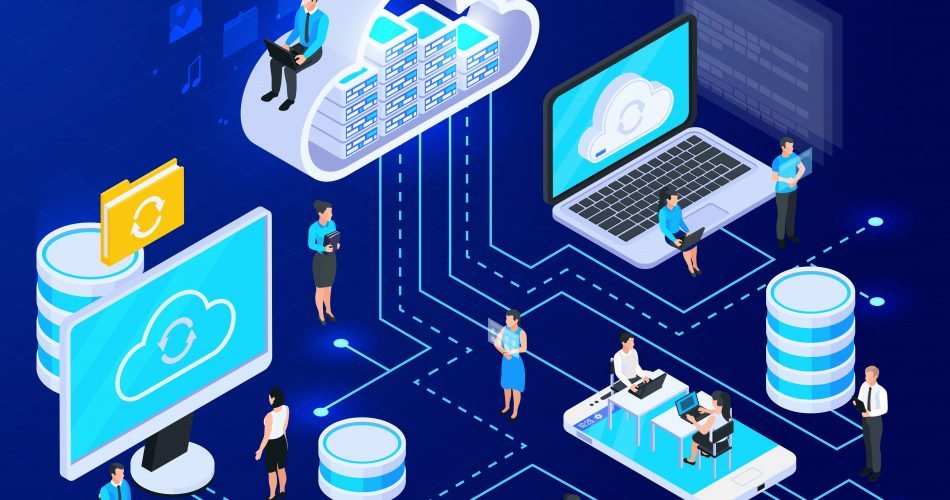
At its core, cloud based inventory management software is a system that stores inventory data on remote servers and makes that data accessible through the internet rather than through locally installed programs. This distinction matters more than it might initially appear. When inventory data lives on a local server or a single workstation, access is constrained by physical location, device availability, and the technical resources of whoever maintains that infrastructure. When it lives in the cloud, authorized users can access the same data simultaneously from a warehouse floor, a corporate office, or a mobile device — without waiting for manual synchronization or risking version conflicts.
For distributors managing multiple fulfillment points, or retailers coordinating stock across regional store locations, this accessibility directly affects operational speed and accuracy. Purchase orders, receiving logs, reorder triggers, and stock adjustments can be processed in real time by different team members without creating data silos. The system becomes a single source of operational truth rather than a patchwork of spreadsheets and disconnected databases.
Businesses evaluating their options can review what purpose-built cloud based inventory management software includes in terms of core functionality and integration support — understanding the specific capabilities available helps frame realistic expectations before any vendor conversation begins.




The Difference Between Cloud-Hosted and Cloud-Native Architecture
Not all cloud inventory tools are built the same way. Some platforms are legacy systems that have been adapted to run on cloud infrastructure — meaning the underlying architecture was originally designed for on-premise deployment and has since been hosted remotely. Others are built natively for the cloud from the ground up, which affects how the software handles concurrent users, data updates, and system scalability.
For most small to mid-size retailers and distributors, this architectural distinction becomes relevant when the business grows or when operational volume spikes — during peak season, for instance, or after acquiring a new distribution facility. Cloud-native systems are generally more responsive to those conditions because they are built to scale dynamically. Cloud-hosted legacy systems may require manual configuration adjustments or may impose usage limits that create bottlenecks at precisely the wrong moments.
Key Operational Capabilities to Evaluate Before Buying
Purchasing inventory software is a commitment that typically spans several years. The features that seem appealing in a demonstration may not be the ones that matter most once the system is embedded in daily operations. Before entering any vendor evaluation, it helps to have a clear picture of the operational outcomes the software needs to support — not just the features it advertises.
Real-Time Stock Visibility Across Locations
For distributors and multi-location retailers, the most fundamental requirement is accurate stock visibility across all inventory points simultaneously. This means that when a warehouse receiving team logs an incoming shipment, that update should be immediately visible to the purchasing team, the customer service team, and any connected sales channels. Delays in that visibility — even delays of a few hours — create the conditions for overselling, incorrect replenishment orders, and fulfillment errors that erode customer trust over time.
Real-time visibility is not a feature that should be assumed. During vendor evaluation, it is worth asking specifically how the system handles simultaneous data entry from multiple users, how quickly updates propagate across the system, and whether any part of the workflow requires manual syncing or batch processing. These details reveal the practical limitations of a platform in ways that feature lists do not.
Integration with Existing Systems
Inventory software does not operate in isolation. Most retailers and distributors already have systems in place for point-of-sale transactions, accounting, e-commerce platforms, and supplier communications. When a new inventory system cannot connect cleanly with those existing tools, the organization ends up managing data in multiple places — which defeats much of the purpose of centralizing inventory control.
Integration capability is one of the more important and often underweighted factors in the buying decision. A platform may have strong native inventory features but limited ability to connect with the ERP system or e-commerce channel the business already depends on. Evaluating integration through actual API documentation or through a technical proof-of-concept is more reliable than accepting general assurances from a sales representative.
Reorder Automation and Demand Forecasting
Manual reordering is one of the most common sources of inventory imbalance in retail and distribution operations. When purchasing decisions are made based on memory, habit, or static minimum stock levels, the business tends to accumulate excess inventory in slow-moving categories while running short in high-demand items. Automated reorder triggers, when properly configured, create a more consistent replenishment rhythm that reduces both overstock costs and stockout risk.
Demand forecasting adds another layer of intelligence by analyzing historical sales patterns, seasonal trends, and lead time variability to recommend purchasing quantities and timing. The sophistication of these forecasting tools varies considerably across platforms. For businesses with relatively simple, stable product lines, basic automation may be sufficient. For distributors managing hundreds of SKUs across multiple supplier relationships, more advanced forecasting logic can meaningfully reduce the carrying costs and cash flow strain associated with poor inventory positioning.
Implementation Risks That Buyers Often Underestimate
The selection of inventory software receives significant attention during a buying process, but implementation tends to receive far less. This is where many projects encounter serious difficulty. A well-chosen platform can still fail operationally if the transition from legacy systems is poorly managed, if staff training is inadequate, or if data migration introduces errors that take months to identify and correct.
Data Migration and Historical Record Integrity
Moving inventory records from one system to another — whether from a legacy on-premise platform, a collection of spreadsheets, or a previous cloud tool — introduces real risk. Historical data rarely maps cleanly from one system’s structure to another’s. Field names differ, category structures do not align, and records that were maintained inconsistently in the old system carry those inconsistencies into the new one unless cleaned in advance.
Businesses that approach data migration as a straightforward technical task often discover that it is actually an extended data governance project. Cleaning historical records, resolving duplicate entries, and verifying that SKU structures transfer accurately can take significantly longer than anticipated. Allocating proper time and internal resources for this work — before go-live rather than after — is one of the more important decisions in the implementation process.
User Adoption and Workflow Adjustment
Inventory software only delivers its intended value if the people using it do so consistently and correctly. In warehouse and distribution environments, where staff may have developed efficient routines around older systems, a new platform can feel disruptive even when it is objectively more capable. Resistance to change in these environments often shows up as workarounds — team members reverting to spreadsheets or paper-based tracking alongside the new system, which undermines data integrity across the organization.
Successful implementations tend to involve operations managers closely in the configuration and training process, not just the IT or finance teams who typically lead the software evaluation. When the people responsible for day-to-day inventory work understand the logic behind the new system and feel some ownership over how it is set up, adoption tends to be faster and more consistent. According to research compiled by the National Institute of Standards and Technology, operational technology transitions that include frontline worker involvement in design and testing phases show measurably better long-term performance outcomes than top-down implementations.
Vendor Evaluation: Questions That Reveal Actual Capability
Vendor demonstrations are designed to show software performing well under ideal conditions. The questions that reveal actual platform capability are the ones that probe edge cases, failure scenarios, and the vendor’s track record with businesses of similar size and complexity.
When evaluating cloud inventory platforms, the following areas deserve specific, detailed answers rather than general assurances:
• How does the platform handle system downtime or connectivity loss — can staff continue working offline, and how does the system reconcile data when connectivity is restored?
• What does the onboarding process include, and what level of technical support is available after the initial setup period ends?
• How frequently is the platform updated, and how are those updates deployed — do they require scheduled downtime or operate transparently in the background?
• What data export capabilities does the platform offer, and how straightforward is it to retrieve historical records if the business needs to transition away from the platform in the future?
• How does the vendor handle data security, and what certifications or compliance standards does the platform maintain?
These questions shift the conversation from feature comparison to operational reality. The answers — and the vendor’s willingness to answer them directly — provide meaningful signal about whether the platform and the vendor relationship will hold up over time.
Pricing Models and Total Cost of Ownership
Cloud inventory platforms are typically priced on a subscription basis, which creates a different financial structure than traditional one-time software purchases. Monthly or annual subscription fees are more predictable than large upfront licensing costs, but they need to be evaluated over a multi-year horizon to understand true total cost. Implementation fees, training costs, integration development, and any charges for additional users or data storage can add substantially to the base subscription price.
Total cost of ownership also needs to account for the internal time required to manage the system, maintain integrations, and handle the ongoing configuration changes that any growing business will need. Platforms that appear affordable at the subscription level sometimes require significant technical involvement to operate effectively, which shifts cost from the vendor invoice to internal labor or consulting fees.
Conclusion: Making a Decision That Holds Up Over Time
Choosing inventory software in 2025 is less about finding the most feature-rich platform and more about finding the one that fits the actual operating environment of the business — its existing systems, its team’s technical capacity, its growth trajectory, and its tolerance for implementation disruption. The retailers and distributors who make this decision well are typically those who spend more time defining their own operational requirements before engaging with vendors than they do comparing feature matrices after.
Cloud based inventory management software has matured to the point where there are solid, reliable options available for businesses across a wide range of sizes and industries. The differentiation between platforms is now less about whether they can handle core inventory functions and more about how well they integrate, how stable they are under real operational conditions, and how effectively the vendor supports customers once the initial sale is complete.
The buying process itself should be treated as due diligence, not product discovery. Coming into it with clear requirements, realistic implementation timelines, and specific questions for vendors will produce better outcomes than approaching it as a search for the best-marketed solution. The goal is a system that your operations team trusts, uses consistently, and can rely on when demand spikes, supply chains shift, or business conditions require quick adjustments. That level of operational reliability is what makes the investment worthwhile.