7 Things That Determine the Cost of a Private Pilates Session (And How to Know You’re Getting Value)

For anyone considering private Pilates instruction, the first question is almost always about price. And it is a fair question — not because people are looking for the cheapest option, but because they want to understand what they are actually paying for before committing to a practice that may span months or years. Unlike group fitness classes with flat-rate memberships, private Pilates sessions vary considerably in price, and those differences are not arbitrary. They reflect real distinctions in training, equipment, location, and the overall structure of the service being provided.
Understanding what drives pricing helps you evaluate options more clearly. It moves the conversation away from “is this expensive?” toward “does this price reflect what I need?” That is a more useful question, and it tends to lead to better decisions about where to invest your time and money in physical wellness.
Table of Contents
1. Instructor Qualifications and Training Background
The single most significant factor in what you pay for a private session is who is teaching it. Pilates instruction is not uniformly regulated, and the range of credentials in the field is wide. Some instructors complete a weekend course and begin teaching. Others go through comprehensive certification programs that require hundreds of hours of observed practice, anatomy study, and supervised client work before they are considered ready to teach independently.
When researching private pilates session cost across studios and independent instructors, you will find that the gap between entry-level and experienced instructors often accounts for a substantial portion of price variation. This is not simply about years in practice — it is about depth of training, ability to work with complex conditions like post-surgical rehabilitation or chronic pain, and the precision with which an instructor can adapt a session to an individual’s specific body.
Instructors who have trained under recognized certification bodies such as the Pilates Method Alliance carry credentials that reflect a defined standard of competency. That standard matters most when you are working with a physical condition, recovering from injury, or managing something like scoliosis or joint hypermobility — situations where a less experienced teacher may not have the clinical awareness to guide you safely.




2. Equipment Type and Studio Infrastructure
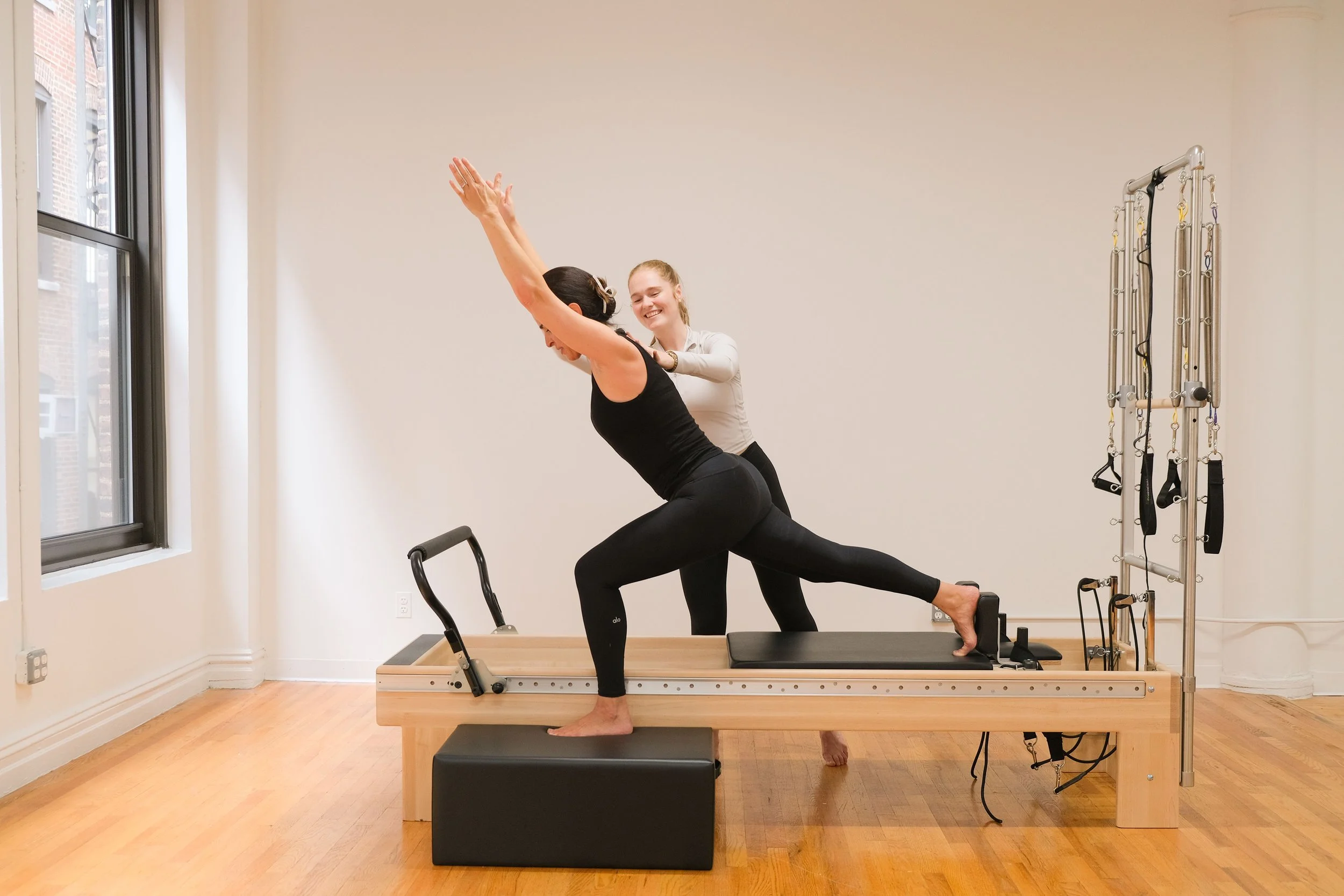
Private Pilates sessions are typically taught using either a reformer, a full apparatus system, or a combination of both. The Reformer is the most recognizable piece of equipment — a spring-resistance carriage system that allows for a wide range of exercises across different body positions. Full-apparatus studios also include equipment such as the Cadillac, the Wunda Chair, and the Ladder Barrel, each designed to target specific movement patterns and provide different kinds of resistance or support.
What Equipment Investment Means for the Client
Studios that maintain a full range of apparatus equipment carry significantly higher overhead than those offering mat classes or limited equipment instruction. That overhead — purchasing, maintaining, and replacing commercial-grade equipment — is reflected in session pricing. When you walk into a studio with multiple pieces of apparatus, you are paying for the ability to receive a session tailored to your specific needs on any given day, whether that means working on spinal articulation on the Cadillac or addressing hip stability on the Chair.
For clients with specific rehabilitation goals or movement limitations, access to this range of equipment is not a luxury. It is often a functional necessity. A session on a reformer alone may not provide enough variability for someone managing post-operative recovery or working through asymmetrical movement patterns.
3. Session Length and Scheduling Structure
Not all private sessions are the same length, and that difference matters more than it might appear. A fifty-minute session and a seventy-five-minute session are not just different in time — they reflect different approaches to instruction. Shorter sessions may be appropriate for clients with a well-established practice who need focused work on a specific area. Longer sessions provide room for proper warm-up, more complex exercise sequencing, and adequate cool-down or integration work at the end.
How Scheduling Affects Overall Value
Studios that offer flexible scheduling — including early morning, evening, and weekend slots — often price those off-hours appointments differently. Consistent access to your preferred time slot may carry a premium, particularly in urban areas where instructor availability at peak times is limited. Some studios offer package pricing or recurring appointment structures that reduce the per-session rate in exchange for a commitment to regularity. This kind of arrangement tends to benefit both parties: the client receives a lower rate and a consistent schedule, while the instructor can plan their week with greater predictability.
4. Geographic Location and Market Context
Where a studio operates has a direct effect on what it must charge to remain financially viable. Rent, staffing costs, and the general cost of running a service business vary significantly between a major metropolitan area and a mid-sized regional city. An instructor working out of a private home studio in a suburban area has fundamentally different overhead than one running a dedicated studio space in a dense urban neighborhood.
This does not mean that higher prices in expensive markets automatically indicate higher quality. But it does mean that comparing a session rate in one city to a rate in another without accounting for local market conditions gives an incomplete picture. Within the same market, price differences between studios are more meaningful as indicators of service depth and instructor expertise.
5. Individualization and Session Customization
One of the defining characteristics of private Pilates instruction — as opposed to group or semi-private formats — is that the session is built around one person. A skilled instructor does not simply run a standard sequence. They observe how your body moves, identify compensations or limitations, and adjust the session in real time based on what they see. That level of individualization requires ongoing attention, experience, and an ability to think analytically about movement.
Why Customization Is a Skill, Not a Feature
Instructors who can reliably deliver highly individualized sessions have typically worked with a broad range of clients, including those with complex needs. They have developed the observational skills to notice subtle shifts in alignment, the knowledge to understand what those shifts mean functionally, and the repertoire to respond with appropriate exercise modifications. This is not something that comes from a basic certification — it develops over time through consistent practice and ongoing professional development.
When a session is genuinely tailored to you, the results tend to accumulate more efficiently. You are not working through a generic program that may or may not address your specific movement patterns. You are receiving instruction designed to meet you where you are on that particular day.
6. Studio Reputation and Client Retention Patterns
Studios that have been operating for a significant period of time and that maintain a consistent client base are generally charging rates that reflect demonstrated results. In a service business like Pilates instruction, reputation is built through outcomes — clients who return week after week because the work is helping them, and who refer others because their experience has been consistently positive.
High client retention is one of the more reliable signals that a studio is delivering real value. It suggests that instructors are skilled, that the environment supports focused work, and that clients feel the investment is worthwhile. Studios with unstable client bases or frequent instructor turnover often reflect a different kind of operation — one where pricing may be lower but consistency of experience is less certain.
7. Intake Process and Ongoing Progress Tracking
A well-structured private Pilates program begins before the first session. A thorough intake process — which may include a movement assessment, health history review, and a conversation about goals — allows the instructor to understand the client as a whole person rather than simply a new appointment. This front-end investment of time and attention is often invisible in the pricing conversation, but it shapes everything that follows.
The Operational Value of Tracking Progress Over Time
Instructors who track client progress across sessions are able to build on previous work in a systematic way. They know what was addressed last time, what responded well, and what may need more attention. This continuity transforms a series of individual sessions into a coherent progression. Without it, each appointment risks becoming a standalone event with limited cumulative benefit.
Studios that invest in intake and tracking systems are generally charging rates that reflect this organizational commitment. It takes time to maintain those records, and it requires instructors who are engaged in their clients’ longer-term development rather than simply filling appointment slots.
How to Assess Whether a Session Rate Reflects Real Value
Price alone cannot tell you whether a private Pilates session is worth what it costs. What matters more is the relationship between price and the specific factors outlined here. An instructor with comprehensive credentials, access to a full range of apparatus equipment, a thorough intake process, and a consistent method of tracking progress is offering something substantively different from an instructor without those elements — even if both are calling the service a “private session.”
Before booking, it is reasonable to ask about instructor training background, how sessions are structured for new clients, what equipment is available, and how the instructor approaches clients with specific physical needs or goals. These questions reveal the depth of a studio’s operation more clearly than the session rate alone.
Value in private Pilates instruction is not about finding the lowest price. It is about understanding what a given price includes and whether that aligns with what you actually need from the practice. For someone recovering from injury, working with a less experienced instructor to save money is a false economy. For someone with a well-established practice and straightforward goals, a premium studio with full apparatus access may offer more than they need. The right match depends on honest self-assessment and clear communication with the instructor or studio before you commit.
Taking the time to ask the right questions before your first session is the most direct way to ensure that what you pay reflects what you receive — and that the work you do in each session moves you consistently in the right direction.