Family entertainment has never been more complicated. Between competing schedules, limited living space, and the constant pull of individual devices, gathering everyone around a single screen feels like a logistical challenge. Traditional TVs lock you into one room, and finding a power outlet shouldn’t dictate where your family enjoys a movie night together. This is where the best portable screen changes everything. These versatile displays offer wireless connectivity, stunning resolutions, and the freedom to set up anywhere—from your backyard to a camping trip—without being tethered to a wall socket. Whether you’re streaming a family favorite under the stars or keeping kids entertained during a road trip, portable screens deliver flexibility that fixed televisions simply cannot match. In this guide, we’ll walk you through the features that matter most, from display quality to battery performance, and help you choose the ideal portable screen that transforms how your family experiences entertainment together.
Table of Contents
Why a Portable Screen is the Best Entertainment Solution for Families
The way families consume entertainment has shifted dramatically. Gone are the days when everyone gathered in the living room at a scheduled time to watch a single program. Today’s families need entertainment solutions that adapt to their dynamic lifestyles—solutions that move with them rather than anchoring them to one spot. Portable screens have emerged as the answer to this evolving demand, offering a combination of mobility and quality that traditional setups simply cannot provide.
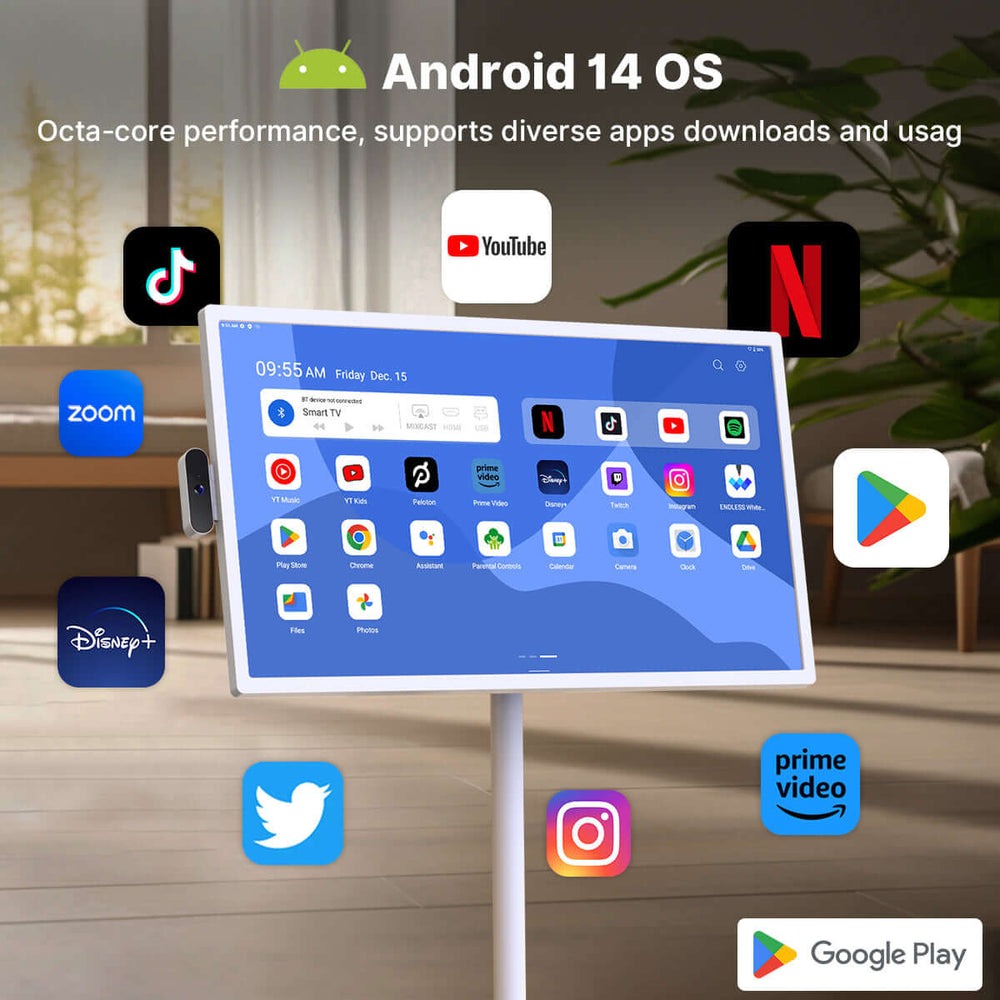
Space constraints represent one of the biggest challenges modern families face. Not every home has a dedicated media room, and apartments or smaller houses often force families to choose between functional living space and entertainment setups. Portable touch screen TVs and wireless screens from brands like ApoloSign eliminate this compromise entirely. You can bring out a high-quality display when it’s time for family viewing and tuck it away when you need the space for other activities. The setup process takes minutes rather than hours—no wall mounting, no cable management, no rearranging furniture around a fixed screen.
What truly sets portable screens apart is their independence from power outlets. Families who want to watch movies on the patio, in the garage during a rainy afternoon project, or at a campsite no longer need extension cords or proximity to electrical infrastructure. Built-in batteries provide hours of viewing time, making these devices genuinely go-anywhere entertainment hubs that serve multiple purposes across countless family scenarios.
Versatility for All Family Activities
Portable screens shine brightest when you consider the range of situations where they transform ordinary moments into shared experiences. Picture a warm summer evening with a movie projected in the backyard while the family lounges on blankets—no complicated projector setup required. During road trips, a portable screen mounted between seats keeps children engaged through long stretches of highway. Holiday gatherings become more interactive when you can set up a display in any room where guests congregate, sharing photos or streaming seasonal films without crowding around a laptop. Rainy weekends at a rental cabin, tailgate parties before a game, or even a quiet bedroom movie night when someone is feeling under the weather—each scenario benefits from a screen that travels effortlessly. This adaptability strengthens family bonding by removing barriers to shared entertainment, ensuring that togetherness isn’t limited by location or infrastructure.




Advantages Over Traditional TVs
Traditional televisions demand permanence. They require wall mounts or bulky stands, dedicated power connections, and often a tangle of cables connecting various devices. Portable screens bypass all of these limitations while delivering comparable visual experiences. Energy efficiency is another significant advantage—battery-powered displays consume far less electricity than large panel TVs, and their compact form factors mean less material waste over time. The convenience factor extends beyond portability itself; without dependency on fixed power sources, families gain true location freedom. You’re no longer planning activities around where the TV happens to be installed. Instead, the screen follows your family wherever the moment takes you, whether that’s three rooms away or three hundred miles from home.
Key Features to Look for in the Best Portable Screen
Not all portable screens are created equal, and understanding which features genuinely matter will save you from buyer’s remorse. The best portable screen for your family balances display quality, wireless capability, battery endurance, and connectivity—each playing a critical role in the overall experience. When you’re evaluating options, think beyond the spec sheet and consider how each feature translates into real-world family use.
Display quality sits at the top of the priority list because it directly affects viewing comfort, especially during extended movie marathons or gaming sessions. A screen that looks washed out in daylight or lacks sufficient brightness will frustrate everyone gathered around it. Look for displays that offer wide viewing angles so family members sitting off to the side still enjoy a clear picture. IPS panel technology tends to perform well in this regard, maintaining color accuracy even when viewed from different positions—essential when several people are watching simultaneously.
Battery life determines whether your portable screen is truly portable or just a TV with a handle. For outdoor movie nights, a screen needs to last through at least a full feature-length film without hunting for a charger. Many quality models deliver four to six hours of continuous playback, which covers most family viewing sessions comfortably. Pay attention to whether the manufacturer’s battery estimates reflect actual streaming conditions rather than static image display, as real-world performance often differs from advertised numbers.
Connectivity options round out the essential feature set. A portable screen that supports multiple input methods gives your family the flexibility to connect smartphones, tablets, gaming consoles, and streaming sticks without juggling adapters. HDMI and USB-C ports handle wired connections when you need maximum reliability, while wireless protocols handle casual streaming with minimal fuss. Built-in speakers are a convenient bonus, though families serious about audio quality may want screens that support external speaker connections via Bluetooth or a headphone jack.
Display Resolution: 1080p Full HD vs. 4K UHD
The resolution debate between 1080p Full HD and 4K UHD comes down to how your family primarily uses the screen. For streaming popular family shows, casual gaming, and video calls, 1080p Full HD delivers crisp, satisfying visuals that look sharp on screens up to about 17 inches. Most streaming services default to 1080p anyway, so you’ll be watching content at its native resolution without any upscaling artifacts. Families who prioritize portability and longer battery life often find that 1080p models hit the sweet spot since lower resolution demands less processing power, which translates directly into extended playback time on a single charge.
4K UHD resolution becomes worthwhile when your family watches high-quality cinematic content or uses the screen for detailed work like photo editing. The difference is most noticeable on larger portable displays where individual pixels become more visible at lower resolutions. However, 4K demands more from the battery and typically requires faster wireless connections to stream without buffering. If your family’s viewing habits lean heavily toward nature documentaries, blockbuster films, or competitive gaming where visual detail matters, the investment in 4K UHD pays off. For mixed-use families, a strong 1080p display often provides the best balance between visual quality and practical performance.
Wireless and Connectivity Options
Wireless capability is what transforms a portable screen from a simple display into a seamless family entertainment hub. Wi-Fi connectivity allows direct streaming from apps built into the screen itself, eliminating the need for an external device entirely. Screen mirroring technologies like AirPlay and Miracast let family members instantly share content from their phones or tablets—perfect for when someone wants to show vacation photos or a funny video to the whole group without passing a device around.
Bluetooth connectivity serves double duty by enabling wireless audio output and input device pairing. You can connect a portable Bluetooth speaker for richer sound during outdoor viewings or pair wireless headphones for quiet nighttime watching without disturbing others. Some wireless screens also support casting from multiple devices, allowing different family members to queue up content without physically swapping connections. The reduction in cable clutter alone makes wireless screens dramatically more portable since you’re carrying one device instead of a screen plus a bag of adapters and cords. When evaluating wireless options, prioritize screens that support both 2.4GHz and 5GHz Wi-Fi bands, as the 5GHz band provides faster, more stable streaming with less interference from neighboring networks—a real advantage in crowded environments like campgrounds or apartment buildings.
How to Choose and Use Your Ultimate Portable Screen: A Step-by-Step Guide
Knowing which features matter is only half the equation—applying that knowledge to your specific family situation is where the real decision happens. Choosing the best portable screen requires honest assessment of how, where, and how often your family will actually use it. A screen that’s perfect for weekend camping enthusiasts looks very different from one designed primarily for rotating between rooms in a small apartment. The goal is matching your real habits to the right combination of portability, display quality, and power independence so the screen you buy becomes a staple of family life rather than a gadget collecting dust in a closet.
Budget naturally plays a role, but thinking in terms of cost-per-use often reveals better value than simply choosing the cheapest option. A family that uses their portable screen three times a week gets dramatically more value from a mid-range model with excellent battery life than a budget option that frustrates with dim visuals and short runtime. Similarly, families who travel frequently should weight durability and compact design more heavily than those who primarily move a screen between the kitchen and bedroom. The following steps walk you through a structured approach to making this decision confidently, then getting the most from your purchase once it arrives.
Step 1: Assess Your Family’s Entertainment Needs
Start by mapping out where and when your family actually watches content together. Spend a week noting every instance where a portable screen would have improved the experience—maybe the kids wanted to watch something in the backyard, or you wished you had a second screen in the kitchen while cooking. Write down whether most of your viewing happens indoors or outdoors, since outdoor use demands higher brightness levels and potentially a more rugged build. Consider who will use the screen most frequently: young children benefit from touch screen functionality that lets them interact directly with educational apps, while teenagers and adults may prioritize resolution and wireless streaming speed. Think about typical viewing duration as well. If your family regularly watches two-hour movies, you need a battery that comfortably exceeds that threshold. Families who primarily use their screen for shorter sessions—cooking tutorials, video calls with grandparents, or quick gaming rounds—can afford to prioritize other features over maximum battery capacity.
Step 2: Compare Models and Features
With your needs clearly defined, create a simple comparison framework before browsing. List your top three priorities from Step 1—perhaps outdoor brightness, wireless screen mirroring, and battery life beyond four hours—and evaluate every model against these criteria first. Check whether each screen supports the streaming services your family uses and whether it handles the resolution your content demands; there’s no benefit to a 4K UHD display if your household primarily streams content available in 1080p Full HD. Verify the connectivity options match your devices: families deep in the Apple ecosystem should confirm AirPlay support, while Android households need reliable Miracast or Chromecast compatibility. Read user reviews specifically from families or multi-person households, as their feedback about viewing angles, speaker volume in open spaces, and real-world battery performance under streaming conditions proves far more useful than manufacturer specifications alone. Finally, confirm the screen’s weight and dimensions against your actual transport scenarios—measure your car’s seat-back space or your camping gear bag before committing.
Step 3: Setup and Optimization Tips
Once your portable screen arrives, fully charge the battery before first use to calibrate it properly. Connect to your home Wi-Fi on the 5GHz band for the smoothest streaming experience, and download any firmware updates immediately since manufacturers frequently improve wireless stability and battery management through software. For outdoor viewing, position the screen away from direct light sources and angle it slightly downward to reduce glare. Extend battery life by lowering brightness to the minimum comfortable level and disabling features you aren’t actively using, such as Bluetooth when streaming over Wi-Fi. Keep a portable power bank as backup for extended outdoor sessions, giving your family true independence from power outlets during all-day events or multi-movie marathons.
Choosing the Right Portable Screen for Your Family’s Lifestyle
Finding the best portable screen for your family doesn’t have to be overwhelming when you focus on what genuinely matters: display quality that satisfies everyone’s viewing preferences, wireless connectivity that eliminates cable frustration, and battery life that outlasts your longest movie nights. Portable screens solve the fundamental tension between wanting shared family entertainment and living in a world where flexibility and mobility define daily routines. Whether you prioritize 1080p Full HD for its efficiency and extended battery performance or invest in 4K UHD for cinematic detail, the right choice depends entirely on your family’s unique habits and favorite gathering spots. The step-by-step approach outlined here—assessing your real needs, comparing models against those priorities, and optimizing your setup—ensures you make a confident decision rather than an impulsive one. Your family deserves entertainment that adapts to life’s unpredictability rather than demanding everyone conform to a fixed screen in a fixed room. Take the time to explore portable screen options from dedicated manufacturers like ApoloSign and others that match your lifestyle, and transform any space into your family’s favorite viewing spot.