Staying consistent with training often comes down to one thing: the right soundtrack. With Musick AI, anyone can design music that matches specific workout goals, from strength sessions to long runs, without needing production skills. Thanks to its AI Music Generator tools, users can quickly move from an idea like “high‑tempo cardio mix” to a ready‑to‑play track that actually supports performance.
Musick AI offers an easy way to experiment with an AI Music Generator focused on workout‑ready tracks that feel purposeful instead of random background noise.
Table of Contents
I. Why Music Matters for Training
- Match tempo to workout type
Fast, punchy tracks help maintain higher cadence during sprints, boxing drills, or HIIT intervals, while slightly slower but energetic songs work better for heavy lifting or circuit strength. A custom high‑energy mix avoids sudden drops in intensity that can break focus. With Musick AI, users can describe the vibe and let the system keep tempo and mood consistent across the track.
- Use mood to reinforce goals
Prompts like “uplifting, energetic pop track with a catchy melody and upbeat rhythm” translate into tracks that feel motivating instead of distracting. Bright synths, dynamic percussion, and lively basslines can create a sense of forward motion that keeps effort up when fatigue appears. When the music mirrors the emotional goal of the session—confident, aggressive, or optimistic—sticking to the plan becomes easier.
- Build consistency with familiar structure
A song structure that includes intro, verse, chorus, bridge, and outro works well to frame warm‑up, peak sets, and cool‑down. Predictable sections help athletes time rest and exertion without staring at a timer. Because Musick AI composes complete pieces, it can supply that structure in a single continuous track tailored to one workout block.



II. Using Musick AI to Design Your Workout Track
- Start with a clear text prompt
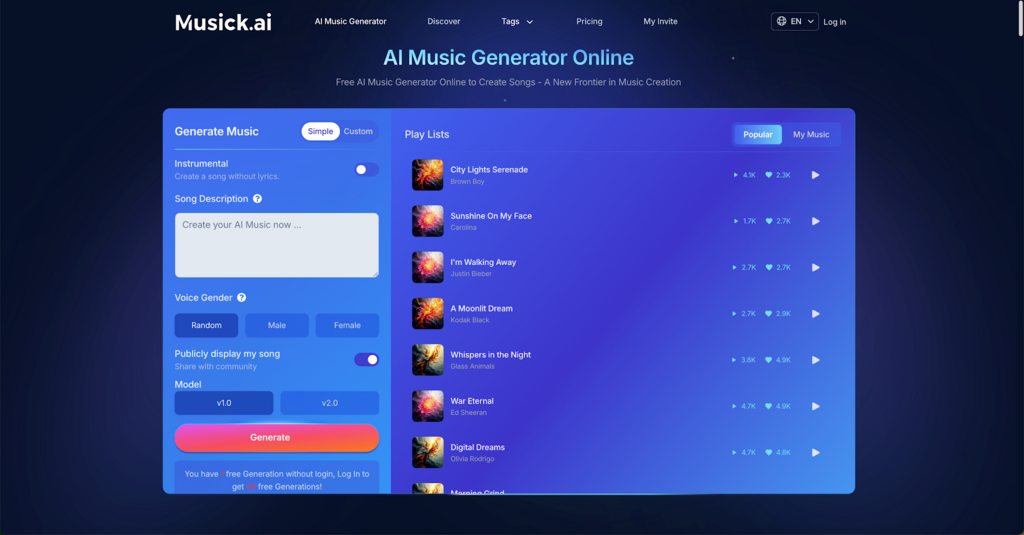
The site allows users to describe the style and topic they want, such as “high‑intensity EDM for sprint intervals” or “confident rap beat for heavy squats.” Detailed prompts mentioning genre, mood, instruments, and energy help the generator grasp the training context. For example, specifying “energetic, driving percussion, strong bass, and powerful chorus” gives Musick AI precise direction for a workout mix.
- Choose instrumental or full song
The “Instrumental” option lets users create songs without lyrics, ideal for those who prefer focus without vocals during lifts or technical drills. Other modes can incorporate vocals and lyrics when a more anthemic feel is needed, such as for big PR attempts or competition prep warm‑ups. Since the engine can generate music across many styles, both understated and intense options are available.
- Personalize with genre, mood, and style
On Musick AI, users can guide the generator with genres like EDM, R&B, jazz, pop, rap, metal, rock and roll, hiphop, blues, reggae, K‑pop, classical, disco, and country. This range makes it possible to switch from a high‑BPM dance feel for cardio to heavier rock or rap for strength days. Describing mood—such as “aggressive,” “uplifting,” or “focused”—further refines how the track will feel during training.
III. Exploring Playlists and Genres for Different Workouts
- Use sample tracks for inspiration
The homepage shows a playlist area with songs like “War Eternal,” “Digital Dreams,” and “Morning Grind,” which can be played to get a sense of what the system can produce. Listening to different tracks helps users decide which genre feels best for their own training style. These references can then guide the wording of new prompts inside Musick AI.
- Map genres to specific training blocks
EDM and hiphop often suit HIIT and cardio because of their strong rhythmic drive and clear beats. Rock, metal, or powerful rap can amplify intensity during strength sets or combat sports practice. Softer genres like jazz or certain pop moods can support warm‑ups, cooldowns, or mobility sessions when heart rate should stay controlled.
- Mix moods across a full session
A single workout can use several tracks generated from different prompts: steady, mid‑tempo for warm‑up; high‑energy for the main set; and calmer but still positive for cooldown. Because Musick AI can create multiple songs based on short text inputs, experimenting with several options for each phase is straightforward. Over time, users can save favorites and assemble a reusable personal library for recurring training plans.
IV. Building a Reusable Workout Library with Musick AI
- Generate and refine multiple ideas
Each generation offers a different take on a prompt, so users can test several tracks for the same workout goal. If one track feels slightly off—for instance, not intense enough—it is easy to adjust the description and try again. Small prompt tweaks, such as “more aggressive drums” or “brighter synths,” often lead to big improvements in how the music fits the session.
- Save tracks that match specific routines
Once a song fits a workout pattern—like a push‑day strength routine or a 30‑minute tempo run—it can be reused as a cue for that exact effort level. Repetition of the same music for the same session helps the brain associate those sounds with a certain performance standard. Over weeks, this link between a track created in Musick AI and a particular workout can improve mental readiness as soon as the mix starts.
- Use royalty‑friendly music for content and classes
The service focuses on consented data and strict adherence to copyright rules, and generated music is designed for uses such as social media, YouTube, and other commercial scenarios. This is useful for trainers or gym owners who need background tracks safe for online class uploads or promo clips. Rather than searching for complicated licenses, they can rely on music generated directly in the tool.
V. Extra Tools on Musick AI That Help Training Creators
- AI Song Lyrics Generator for hype tracks
An AI Song Lyrics Generator is available where users input genres and receive lyrics, helping those who want vocal tracks that carry a clear motivational message. These lyrics can match the theme of a program, such as discipline, resilience, or comeback stories. For fitness creators, themed songs can reinforce branding and give each series or challenge its own recognizable sound.
- AI Beat producer for custom rhythm
The AI Beat producer allows users to write melody notes and have the system turn them into a structured beat. This is especially helpful when a coach or athlete already has a rhythm in mind for drills, such as pacing for conditioning ladders or boxing combinations. By matching the beat to movement tempo, sessions become more coordinated and engaging.
- AI Rap Generator for high‑intensity motivation
An AI Rap Generator is mentioned, where users can design a music sheet or playlist and select genres. Rap tracks with clear rhythmic speech can push athletes through tough intervals or core finishers. Combining these rap tracks with instrumental sections gives coaches flexibility in building full sessions with peaks and valleys.
VI. Safe, Practical Use Cases for Fitness and Content
- Training videos and online coaching
Music created with Musick AI can be used in contexts like Instagram, YouTube, Facebook, LinkedIn, and similar channels. This supports fitness influencers, online coaches, or brands that need consistent, recognizable sound in their content. Because the tracks are AI‑generated with clear guidance on rights, they can fit seamlessly into recurring series or campaigns.
- Live classes and events
Gyms, studios, and event organizers can generate playlists that align with class types—HIIT, spin, strength, or dance—without relying on generic background tracks. With varied genres and moods, it becomes easier to match energy to different parts of a class, from warm‑up to cooldown. Instructors can keep their sound unique, since the tracks are tailored to their session themes.
- Recovery, therapy, and mood support
Use cases like therapy and mood support are also highlighted, where users select favorites and add them to a repository to improve emotional state. For athletes, calmer custom tracks can accompany stretching, breathing practice, or low‑intensity recovery days. This helps build a complete audio environment around training—not just for effort, but also for rest.
VII. Conclusion: Turn Sound Into Fuel
High‑energy workouts become more repeatable when the music is shaped around tempo, mood, and structure instead of coming from random playlists. Musick AI makes this practical by turning short, clear prompts into tracks that match specific phases of training, from focused warm‑ups to all‑out intervals and steady cooldowns. With features that cover genres, moods, instrumentals, lyrics, and beats, it functions as an AI Music Maker that supports real workout needs rather than just casual listening.
Over time, building a small library of favorite songs through this AI Song Maker can give every session a familiar sound that signals it is time to focus and push. Coaches, content creators, and everyday gym‑goers can all use the same tool to keep energy high in classes, videos, or solo training. For anyone serious about training, designing music with Musick AI is a simple way to turn sound into reliable fuel for performance—and to make every workout feel a little more powerful than the last.