Across the United States, industries that depend on stored fuel — agriculture, construction, fleet management, emergency services, and manufacturing — operate on the assumption that their fuel supply is available when they need it. That assumption is often wrong, and the consequences range from minor scheduling disruptions to significant financial and regulatory exposure.
What makes this problem persistent is not a lack of available solutions. It is the continued reliance on manual inspection routines, visual checks, and periodic pump-and-measure methods that were designed for a different era of operations. When fuel runs short unexpectedly, or when undetected leaks quietly drain reserves over days or weeks, the operational damage is rarely confined to a single department. It ripples outward — into labor costs, compliance records, equipment wear, and customer commitments.
This article examines the real costs that accumulate when automated monitoring is absent, industry by industry, and explains why the absence of technology in this area is itself a strategic and financial decision — one with measurable consequences.
Table of Contents
What Gas Tank Monitoring Systems Actually Replace
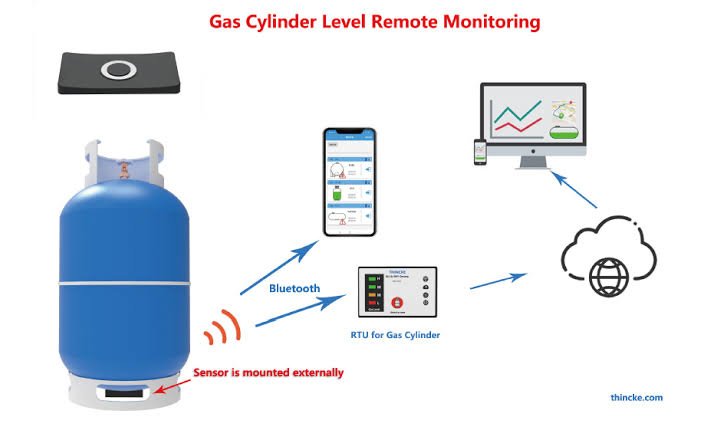
gas tank monitoring systems are automated tools that track fuel levels, detect anomalies, and provide real-time data to operations managers without requiring physical access to the tank. They replace a workflow that is older than most modern regulations: someone walks out to the tank, checks the gauge, logs a number, and reports back. That process is slow, subject to human error, and completely blind to what happens between checks.
The difference between that manual process and what modern gas tank monitoring systems offer is not simply convenience. It is the difference between reactive and informed operations. When a fuel level drops below a threshold, a properly configured monitoring system flags it immediately. When consumption spikes in a way that does not match expected usage, the discrepancy is recorded and can trigger an alert before it becomes a loss event.
For industries where fuel is a primary operational input — not a background expense — this shift in visibility changes how procurement, scheduling, and compliance are managed. Understanding the operational design behind these systems helps clarify what is genuinely lost when they are not in place.
Manual Monitoring and the Gap Between Checks
The most structurally underestimated cost of manual fuel monitoring is not any single incident. It is the cumulative exposure created by the time between checks. If a tank is inspected once daily, anything that happens in the intervening hours is invisible until the next inspection. A slow leak, a calibration error on the delivery side, or unauthorized access to the fuel supply could each go undetected for a full operational cycle.
In high-throughput environments — large construction sites, agricultural operations running seasonal equipment, or municipal fleet yards — that gap creates a window of vulnerability that compounds over time. The longer the interval between manual checks, the larger the potential discrepancy between what is assumed to be in the tank and what is actually there.
The Labor Cost of Manual Inspection Routines
Manual fuel monitoring requires dedicated labor time. Someone must be assigned to the task, trained to perform it consistently, and held accountable for accurate record-keeping. In many operations, this responsibility falls on workers whose primary role is something else entirely — a driver, a site supervisor, a maintenance technician. The time they spend checking and logging fuel data is time taken from their primary function.
When that labor time is aggregated across daily checks, weekly reports, and the administrative overhead of maintaining manual records for compliance purposes, the true cost of the manual workflow becomes more significant than it appears in any single transaction.
Industry-Specific Exposure in the US Market
The cost of operating without automated fuel monitoring is not uniform across industries. It takes different forms depending on how fuel is used, how it is regulated, and how tightly operations are scheduled. Each sector carries its own pattern of risk.
Agriculture and Seasonal Operations
Agricultural operations in the United States depend on fuel availability during narrow seasonal windows. Planting and harvest periods are time-sensitive in a way that few other industries experience. When equipment runs dry mid-operation because fuel reserves were not monitored accurately, the delay is not simply inconvenient. Depending on crop type and regional weather, a two-day delay during a critical window can affect yield outcomes for an entire season.
Farms that rely on manual tank checks often schedule refueling based on estimates rather than accurate readings. This leads to either over-ordering — which ties up working capital in stored fuel — or under-ordering, which creates the exact supply gap that disrupts seasonal timelines.
Construction and Heavy Equipment Sites
On active construction sites, fuel is consumed by multiple pieces of equipment simultaneously, often across large geographic areas where tank access is not always straightforward. The risk here is not just running out of fuel. It is the operational cascade that follows when a key piece of equipment stops mid-task. Cranes, excavators, and compactors that power down unexpectedly due to fuel depletion create safety concerns as well as scheduling setbacks that affect subcontractor coordination and project delivery timelines.
Construction fuel theft is also a documented industry problem. Without automated monitoring that records consumption patterns against expected usage, theft from on-site tanks can continue undetected for extended periods. The financial loss is compounded by the difficulty of pinpointing when and how the loss occurred after the fact.
Fleet Management and Transportation
Fleet operators managing large vehicle pools face a specific version of this problem. Fuel represents one of the largest variable costs in transportation operations. When fleet fueling depots lack automated monitoring, discrepancies between fuel dispensed, fuel logged, and fuel charged are difficult to reconcile accurately. Small consistent errors in manual logging, whether accidental or intentional, accumulate into meaningful budget variances over a fiscal year.
Transportation companies also operate under federal and state regulatory requirements related to fuel record-keeping, particularly when alternative fuels or taxable fuel types are involved. According to the U.S. Energy Information Administration, transportation accounts for a substantial portion of total US petroleum consumption, making fuel accuracy a financial and compliance matter simultaneously.
Emergency Services and Critical Infrastructure
For emergency response facilities — hospitals, fire stations, data centers, and utility substations — backup fuel reserves are not a cost management issue. They are a reliability mandate. Generator fuel must be available at full capacity at all times, because the conditions under which backup power is needed are precisely the conditions under which refueling logistics are most difficult.
Manual inspection schedules in these environments are a structural mismatch with the nature of the risk. A generator tank that has been slowly losing fuel to a seal leak will pass a weekly visual check until the day it doesn’t. By then, the gap between what is assumed and what is available may not be recoverable in time.
Compliance and Regulatory Cost Exposure
US environmental and safety regulations around above-ground and underground fuel storage are significant. The Environmental Protection Agency’s underground storage tank program, along with state-level regulations in most jurisdictions, establishes requirements for leak detection, inventory reconciliation, and record-keeping. Facilities that rely exclusively on manual processes to meet these requirements face a higher error rate, a greater documentation burden, and a more complicated audit trail.
Automated monitoring systems generate consistent, timestamped data that satisfies reconciliation requirements with far less manual effort. When a regulatory inspection occurs, the ability to produce accurate, uninterrupted records is a compliance asset. The absence of that capability — or the presence of gaps in manual records — creates regulatory exposure that can result in fines, mandatory corrective action, and increased scrutiny on subsequent inspections.
Environmental Liability and Leak Detection
Environmental liability from fuel leaks is among the most expensive outcomes in fuel storage risk management. Groundwater contamination from even a moderate undetected leak can trigger remediation costs that dwarf the value of the fuel itself. Manual inspection intervals create detection delays that directly affect the scope of contamination and therefore the cost of remediation.
Automated monitoring with continuous data capture reduces detection time significantly. The sooner a leak is identified, the sooner containment actions can be taken, and the smaller the environmental footprint of the event.
The Financial Logic of Doing Nothing
Many operations that have not adopted automated monitoring have not made an active decision against it. They have simply not made a decision at all. The existing workflow functions — imperfectly, but functionally — and the cost of its imperfection is distributed across budget lines in ways that are difficult to attribute directly to the absence of monitoring technology.
This is the nature of an invisible cost. Fuel discrepancies appear in the supply budget. Labor inefficiency appears in workforce reports. Compliance preparation costs appear in administrative overhead. None of them clearly points to monitoring as the root cause because there is no monitoring system to compare against. The baseline of poor visibility is treated as normal.
When individual costs are traced back to their origin — the gap in real-time data, the delay in anomaly detection, the manual effort of reconciliation — the aggregate picture becomes clearer. The decision to not implement automated monitoring is not a zero-cost position. It is a position that carries ongoing, compounding costs that simply are not labeled as such.
Conclusion
The case for automated fuel monitoring is not built on features or technology for its own sake. It is built on what operations actually lose in its absence: visibility, consistency, early warning capability, and the kind of audit-ready documentation that regulatory environments require. Across agriculture, construction, transportation, and critical infrastructure, those losses take different shapes but share a common structure — they are costly, incremental, and largely preventable.
For US industries that depend on reliable fuel availability, the real question is not whether automated monitoring is worth the investment. It is whether the accumulated cost of operating without it has been honestly accounted for. In most cases, when that accounting is done carefully, the numbers are not close.
-

-
-

-

-

-