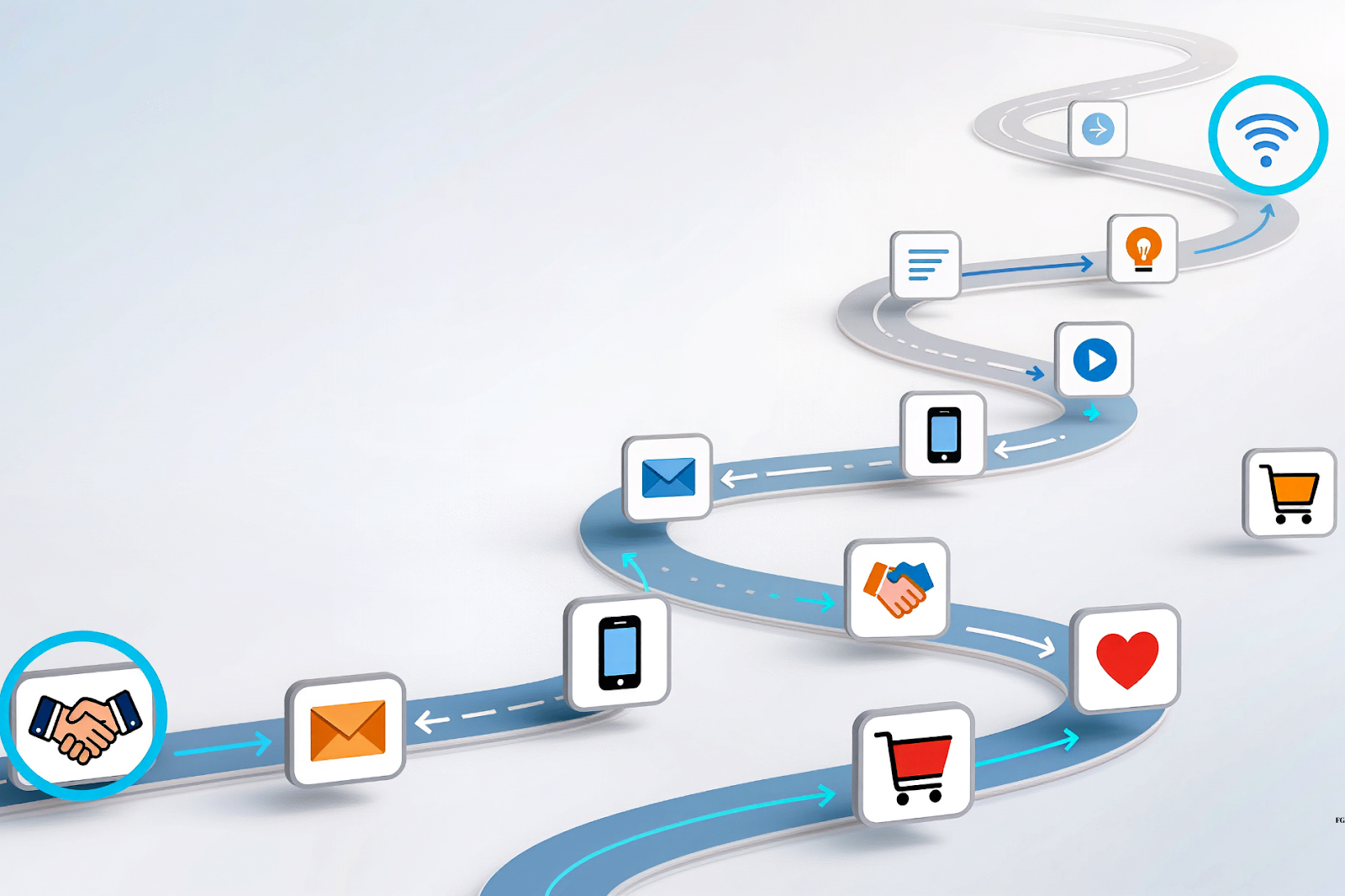
Consumers today don’t convert in one step. They research, compare, leave, return, read reviews, and often engage with multiple touchpoints before making a decision.
For service brands, this journey typically includes:
- A search query or ad click
- A website visit
- Content consumption (services, FAQs, blogs)
- Social proof (reviews, testimonials)
- A form fill, call, or booking
- Follow-up and nurturing
Winning brands design their marketing to support the entire journey, not just the first click.
That’s why conversion-focused foundations like Dental Website Design matter so much. Your website isn’t a brochure—it’s the engine of your funnel.
Table of Contents
Step 1: Build a Website That Converts, Not Just Looks Good
Many service websites fail because they prioritize aesthetics over outcomes.




High-performing service websites are built around:
- Clear value propositions
- Logical user flows
- Strong calls to action
- Trust signals (reviews, credentials, guarantees)
- Speed, mobile optimization, and accessibility
What Conversion-Driven Websites Do Differently
Instead of asking, “Does this look good?” they ask:
- What problem is the user trying to solve?
- What’s the next logical step for them?
- What friction might stop them from converting?
Dental practices have been forced to master this because patients are cautious, price-sensitive, and trust-driven. Those same principles apply to any service business competing online.
Step 2: Design the Funnel Before You Drive Traffic
One of the most common mistakes service brands make is running ads or SEO campaigns without a defined funnel.
A funnel answers three questions:
- Where does traffic land?
- What action should the user take next?
- What happens if they don’t convert immediately?
Core Funnel Components for Service Brands
- Top of Funnel: SEO, paid ads, social, referrals
- Middle of Funnel: Educational content, service pages, comparison info
- Bottom of Funnel: Forms, calls, booking tools, consultations
Dental marketing has evolved rapidly in this area, often using service-specific landing pages, segmented forms, and location-based funnels to increase conversion rates.
Step 3: Capture Leads the Right Way (Forms, Calls, and Booking)
Not all leads are equal. A poorly structured form can generate volume—but waste time and money.
High-quality lead capture focuses on:
- Asking only essential questions
- Matching form intent to user readiness
- Offering multiple conversion paths (call, form, booking)
- Tracking lead sources accurately
Why Intent-Based Lead Capture Matters
A user browsing for information should not see the same form as someone ready to book. Advanced service brands segment lead capture based on:
- Traffic source
- Page context
- User behavior
This approach improves both conversion rates and lead quality.
Step 4: Automate Follow-Up to Prevent Revenue Leakage
Speed matters. Studies consistently show that leads contacted within minutes are far more likely to convert.
Yet many service brands still rely on manual follow-up.
Automation changes that.
Smart Automation Includes:
- Instant email or SMS confirmations
- Internal alerts for sales or front-desk teams
- CRM routing based on service type or location
- Follow-up sequences for unconverted leads
Dental practices, in particular, rely on automation to handle high lead volume without overwhelming staff. These same systems work just as effectively for home services, legal firms, consultants, and agencies.
Step 5: Use Data to Optimize the Funnel (Not Guesswork)
Clicks and impressions don’t pay the bills. Revenue does.
Modern service brands track:
- Cost per lead
- Lead-to-appointment rate
- Appointment-to-sale rate
- Revenue by channel
This requires proper analytics, CRM integration, and attribution—not just surface-level metrics.
Why Dental Marketing Is a Leading Indicator
Dental practices operate in competitive local markets with tight margins. That pressure has driven them to adopt data-driven funnel optimization earlier than many other industries.
Agencies like Firegang Dental Marketing apply this same performance mindset to healthcare marketing—connecting design, traffic, automation, and analytics into a single growth system rather than isolated tactics.
Step 6: Build Trust at Every Funnel Stage
Service purchases are trust-based decisions. Users ask:
- Can I trust this business?
- Are they experienced?
- Do people like me get good results?
Trust signals should be embedded throughout the funnel:
- Reviews and testimonials
- Certifications and affiliations
- Clear pricing or expectations
- Educational content
- Professional branding and UX
Dental practices live or die by trust—and that’s why their funnels are often more refined than other service industries. But the lesson applies universally.
Step 7: Turn Marketing Into a Revenue System (Not a Cost Center)
The most successful service brands stop thinking in terms of campaigns and start thinking in terms of systems.
A revenue system includes:
- A conversion-optimized website
- Intent-driven traffic
- Structured funnels
- Automated follow-up
- Clear performance tracking
When all components work together, marketing becomes predictable, scalable, and measurable.
What Service Brands Can Learn from Dental Marketing
Dental practices are a powerful example because they operate in:
- High-competition local markets
- High-trust decision environments
- High customer lifetime value models
To survive, they’ve adopted:
- Advanced funnel strategies
- Conversion-focused website design
- Automation and analytics
- Revenue-based marketing decisions
Service brands in any industry can adopt these same principles—and gain a significant competitive edge.
Conclusion
Clicks don’t build businesses—systems do. Service brands that look beyond traffic and focus on funnels, automation, and conversion are the ones driving consistent revenue growth in today’s digital landscape.
Whether you’re a healthcare provider or a service brand looking to mature your marketing strategy, learning from proven, performance-driven frameworks can accelerate results. To explore how conversion-focused design, automation, and funnel strategy work together in real-world applications, visit https://www.firegang.com/.