The 2025 US Data Engineer’s Guide to Serverless ETL and Analytics with AWS Glue: PDFs, Playbooks and Patterns

Data engineering in the United States has shifted considerably over the last several years. Teams that once maintained on-premises ETL clusters or managed dedicated Spark environments are increasingly moving their extraction, transformation, and loading pipelines to serverless infrastructure. The pressure driving this shift is not purely technical. It comes from operational demands: faster delivery cycles, reduced infrastructure overhead, and the expectation that data pipelines should be reliable without requiring a dedicated team to monitor servers around the clock.
AWS Glue has become one of the primary tools in this transition. It offers a managed, serverless environment for running ETL jobs at scale, integrating with the broader AWS ecosystem in ways that reduce the coordination overhead between data storage, processing, and consumption layers. For data engineers working in production environments — where a failed pipeline has real downstream consequences — understanding how Glue operates in practice, not just in theory, is increasingly a job requirement.
This guide is written for working data engineers, analytics architects, and technical leads who are either building new Glue-based pipelines or evaluating whether their current approach is structurally sound. The focus here is practical: how Glue works, where it performs well, where it does not, and how documented patterns help teams avoid common failure modes.
Table of Contents
What Serverless ETL Actually Means in a Production AWS Environment
Serverless ETL does not mean infrastructure disappears. It means the infrastructure is abstracted away from the team managing it. In AWS Glue, this abstraction allows engineers to define jobs in Python or Scala using Apache Spark-based processing, without provisioning or managing the compute clusters that actually run those jobs. The service handles resource allocation, scaling, and job isolation automatically. Engineers define what the pipeline does, and Glue handles where and how it runs.
For teams evaluating this architecture, the serverless etl and analytics with aws glue pdf documentation available through AWS and third-party technical resources provides a structured starting point for understanding how job execution, cataloging, and scheduling interact in a production deployment. Reading structured technical documentation before committing to an architectural pattern helps teams avoid assumptions that look reasonable in development but create problems at scale.



The distinction between serverless and traditional ETL matters most when discussing reliability and cost structure. With traditional managed clusters, infrastructure costs are relatively constant regardless of pipeline activity. With Glue, costs are tied to job execution time and data volume processed. This creates a different kind of operational discipline: teams need to be more precise about when jobs run, how long they are expected to take, and what triggers a retry when something fails.
The Role of the AWS Glue Data Catalog
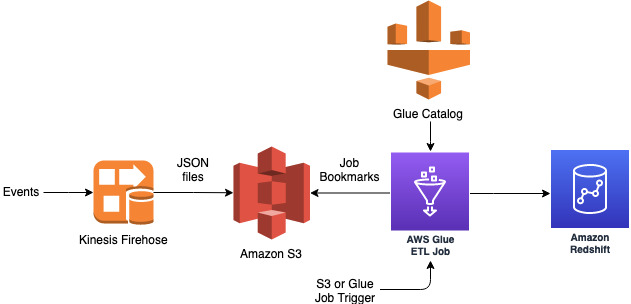
The Glue Data Catalog functions as the central metadata repository for a serverless ETL architecture. It stores schema definitions, table locations, and partition information for data stored in S3 or other supported storage systems. When a Glue job runs, it references the catalog to understand the structure of its source and target datasets rather than requiring engineers to hardcode schema information directly into job scripts.
This separation of metadata from processing logic has a practical reliability benefit. When a source schema changes — a column is added, a data type shifts, or a partition structure is reorganized — the catalog can be updated without rewriting every pipeline that touches that data. Teams that have managed ETL without centralized metadata management understand how quickly schema drift becomes a maintenance burden. The catalog does not eliminate that problem, but it provides the structure needed to manage it systematically.
Job Bookmarks and Incremental Processing
One of the more operationally significant features in Glue is job bookmarking, which allows pipelines to track which data has already been processed and only load new or changed records on subsequent runs. For pipelines ingesting data from continuously updated sources, this capability prevents full dataset reprocessing on every execution, which reduces both job duration and cost.
The behavior of bookmarks is not always intuitive, particularly when pipelines handle late-arriving data, deletions, or out-of-order records. Engineers who skip the documentation phase and configure bookmarks based on assumptions often encounter situations where records are skipped or reprocessed unexpectedly. Understanding the underlying mechanics — how Glue tracks state, what happens when a job fails partway through, and how bookmarks interact with partition structures — is essential before deploying incremental pipelines in a production context.
Common Architectural Patterns Used by US Data Engineering Teams
AWS Glue deployments in production environments tend to follow recognizable patterns. These patterns have emerged not from theoretical design exercises, but from teams working through the practical constraints of real data environments: inconsistent source data, variable job timing, cost sensitivity, and the need to integrate with existing tools in the AWS ecosystem.
Understanding these patterns — and the conditions under which each one performs well or breaks down — is one of the most valuable things an engineer can carry into a new deployment. The serverless etl and analytics with aws glue pdf format that AWS and technical communities publish captures many of these patterns in structured, referenceable form, which is particularly useful when onboarding new team members or reviewing pipeline architecture with stakeholders who are not deeply familiar with Glue’s mechanics.
The Medallion Architecture in Glue Pipelines
A common pattern in Glue-based data lakes is the medallion or multi-layer architecture, where raw data lands in an initial storage zone, is processed and cleaned into a structured intermediate layer, and is further aggregated or enriched into a consumption-ready layer. Each layer represents a different state of data quality and transformation maturity. Glue jobs are typically designed to operate on one layer at a time, with the output of one job forming the input of the next.
This layered approach has reliability advantages. When a transformation error occurs in the intermediate layer, raw data remains untouched and the pipeline can be corrected and rerun without needing to re-extract from the source system. Teams working with external data providers or rate-limited APIs particularly benefit from this structure, since re-extraction is often costly or operationally complex. The tradeoff is increased storage overhead and the need to manage lifecycle policies across multiple storage layers.
Orchestration with AWS Step Functions and EventBridge
Glue jobs on their own are processing units. They do not inherently manage dependencies between pipelines, handle conditional logic, or respond to external triggers. Orchestration — the layer that determines when jobs run, in what order, and what happens when they fail — is typically handled by AWS Step Functions or EventBridge, depending on the complexity of the pipeline graph and the nature of the triggers involved.
Step Functions allows teams to model pipeline dependencies as state machines, with explicit handling for success, failure, and retry conditions. This structure makes failure behavior predictable and auditable. EventBridge allows pipelines to trigger in response to events rather than schedules, which is useful for near-real-time ingestion scenarios where waiting for a fixed run window would introduce unacceptable data latency. Choosing between these approaches requires understanding not just the technical capabilities of each service, but the actual operational requirements of the pipelines being managed.
Reading and Applying PDF Documentation Effectively
A significant portion of the knowledge base for AWS Glue exists in PDF format: official AWS whitepapers, solution briefs, architectural guidance documents, and community-authored playbooks. These documents are dense, and many engineers scan them quickly during initial setup, then set them aside. That approach tends to surface problems later, when a pipeline behaves unexpectedly and the relevant configuration detail was buried in a section that was not read carefully the first time.
The more productive use of structured technical documentation is as a reference architecture tool rather than a quick-start guide. When a team is designing a new pipeline, working through a relevant serverless etl and analytics with aws glue pdf document as part of the design review — rather than after a problem emerges — brings edge cases and failure modes into the conversation before they become production incidents. According to the National Institute of Standards and Technology, structured documentation review is a core component of resilient system design across technical domains, a principle that applies directly to data pipeline architecture.
Translating Documentation into Team Playbooks
Official documentation describes how a service works in general terms. Team playbooks describe how a specific team operates that service in their specific environment. The gap between these two things is where most operational problems live. A playbook for a Glue-based ETL pipeline would typically document the expected behavior of each job, the conditions that trigger retries, how schema changes are handled, how cost anomalies are identified and investigated, and who is responsible for each layer of the pipeline when something goes wrong.
Creating playbooks requires teams to make decisions that documentation does not make for them. It forces clarity around questions that are easy to defer during initial development but critical when diagnosing an incident at an inconvenient time. Teams that invest in playbook development before going to production consistently resolve incidents faster and with less coordination overhead than those who rely entirely on individual engineer knowledge.
Cost Management in Serverless ETL Deployments
Serverless architecture does not automatically reduce costs. It changes the cost structure in ways that require different management habits. With Glue, cost is primarily driven by job execution time and the number of data processing units consumed during a run. Jobs that process large, unpartitioned datasets, run without bookmarks, or are triggered more frequently than necessary can generate costs that exceed what a well-tuned managed cluster would cost for the same workload.
Cost management in a Glue environment requires visibility into job execution patterns over time. AWS Cost Explorer and Glue’s native job metrics provide the data needed to identify which pipelines are driving the most cost and whether that cost is proportional to the business value the pipeline delivers. Teams that treat cost as a design constraint from the beginning — rather than reviewing it only after a budget alert fires — tend to make architectural decisions that remain financially sustainable as data volume grows.
Partitioning Strategy and Its Impact on Cost and Performance
How data is partitioned in S3 has a direct effect on Glue job performance and cost. Well-designed partition structures allow Glue jobs to read only the data relevant to a given processing window rather than scanning entire datasets. Poorly designed partitioning — or no partitioning at all — forces full dataset reads, which increases both job duration and cost. For teams managing large historical datasets, the difference between a partitioned and unpartitioned scan can be substantial enough to determine whether a pipeline is operationally viable.
Partitioning decisions made during initial data lake design are difficult to change later without significant rework. This is why understanding the access patterns of downstream analytics consumers before finalizing partition strategy is important. A partition structure optimized for one query pattern may perform poorly for another. Documenting these tradeoffs during design — and revisiting them as access patterns evolve — is part of maintaining a data architecture that remains functional over time.
Closing Thoughts
AWS Glue is a capable and well-integrated platform for serverless ETL and analytics workloads. For US data engineering teams navigating the shift from managed infrastructure to serverless pipelines, the technical capabilities of the service are rarely the limiting factor. What limits teams more often is the gap between understanding how Glue works in documentation and understanding how it behaves in their specific environment, under their specific data conditions, with their specific operational constraints.
Closing that gap requires investment in documentation review, architectural pattern selection, and operational playbook development before production deployment rather than after. The serverless etl and analytics with aws glue pdf resources available across AWS, technical communities, and third-party platforms exist precisely to support that kind of structured preparation. Teams that use them as design tools — not just onboarding materials — build pipelines that are more reliable, more cost-predictable, and easier to operate over time.
The patterns discussed in this guide are not prescriptive solutions. They are frameworks for thinking through the decisions that every Glue deployment requires. The specific choices a team makes will depend on their data sources, their downstream consumers, their cost constraints, and their organizational capacity. What remains consistent across successful deployments is the approach: understand the system before building on it, document decisions as they are made, and treat operational reliability as a design goal from the start.