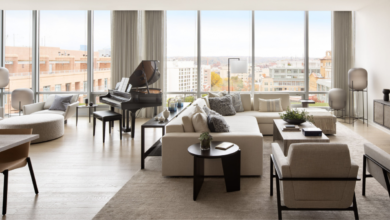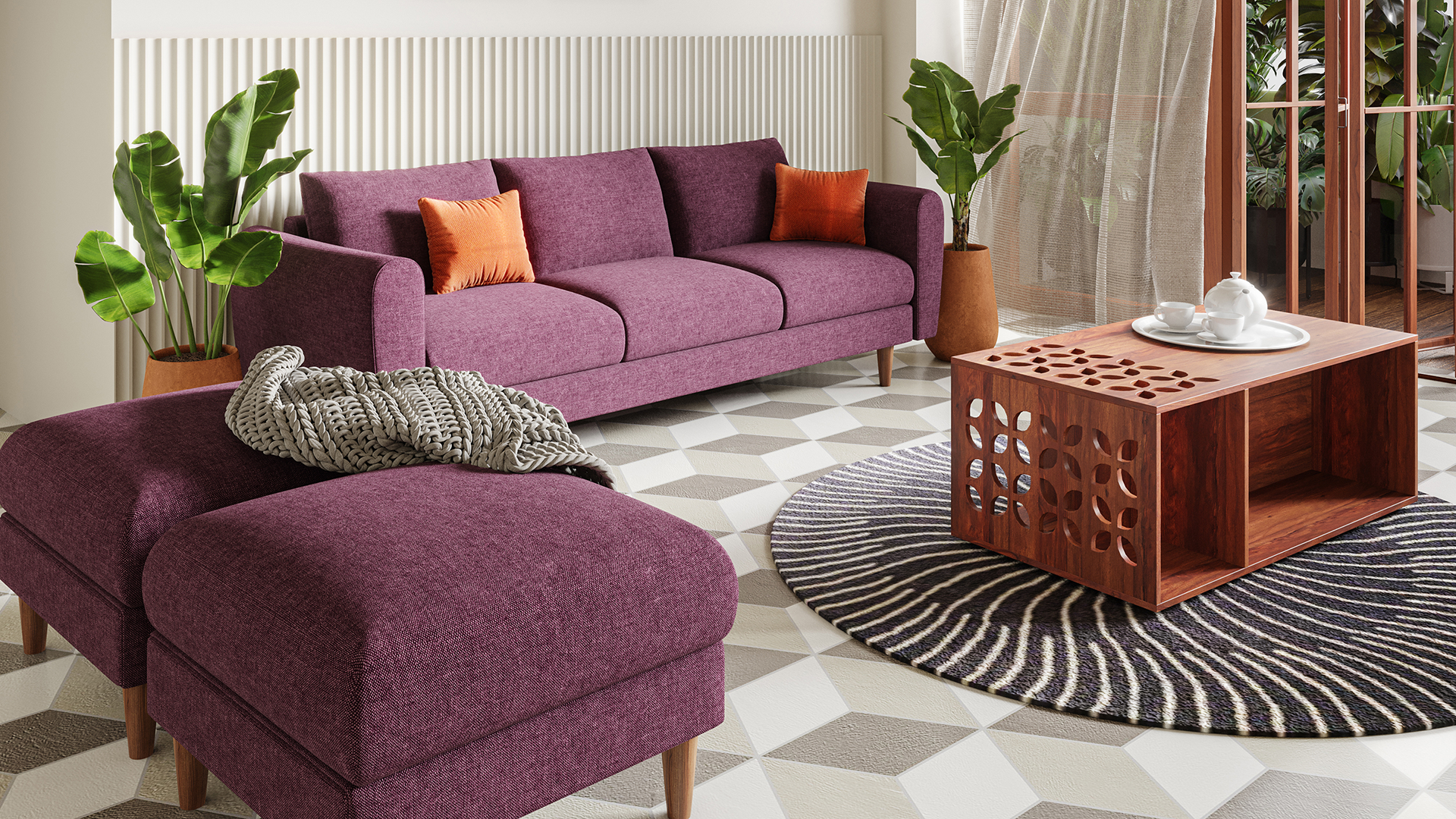
Small living rooms catch you off guard like that. You pick a 2-seater sofa because it’s the sensible call, feel good about showing some restraint, and then watch the room fill up regardless. The coffee table comes in. Side table finds a corner. The TV unit lands against the wall. Before long, you’re standing at the door, wondering how a room with a small sofa ended up feeling this packed.
The sofa was never the problem. Everything sitting around it is.
Table of Contents
That Wall Behind the Sofa
Pushing furniture against walls feels logical in a tight room. Sofa goes back, floor opens up, feels like progress. What actually happens is that every piece ends up lined around the edges, while a hollow gap sits in the middle doing nothing. The room looks less like somewhere people live and more like a space nobody’s quite finished setting up.
Pull the 2-seater sofa a few inches off the wall. Just a few. Hard to explain why it works until you’ve tried it yourself. The room stops feeling like things got stored there and starts looking like someone made actual decisions about it. That small gap creates a proper back edge to the seating area, and suddenly the whole setup feels intentional rather than just assembled.
The Coffee Table Gap
Nobody really questions this distance. The table goes down by feel, everyone moves on, and months later, the room still feels slightly off with no one knowing why.
Too close and standing up becomes a shuffle every single time. Too far, and the coffee table looks like it belongs to a completely different part of the room. Three feet works well in most spaces. Not a rule, just a number that consistently lands right. Close enough to reach without leaning forward, far enough that walking through doesn’t mean squeezing past things.
On the wall facing the sofa, don’t let the TV unit stretch all the way across. A unit with a wall showing on both sides sits much lighter in the room. One running edge to edge makes that whole wall feel like it’s pressing in.
One Side Table Is Genuinely Enough
Both ends of a 2-seater sofa are right there in full view. Two chunky side tables on each end, and the sofa starts looking trapped. The corners get heavy. The whole thing ends up feeling tighter than it actually is.
A side table has one job. Somewhere to rest things when you’re sitting. One slim table on whichever end gets used handles that without loading up both sides of a compact sofa with extra bulk. Rooms don’t need to be symmetrical, and in tight spaces, chasing symmetry usually makes things feel worse rather than better.
Rug Size Over Everything Else
A rug under the seating area pulls the 2-seater sofas and coffee table into the same visual space. Without one, Rugs quietly decide whether a seating area feels connected or chaotic. Without a rug, the sofa and coffee table can end up looking like separate pieces randomly parked near each other. The room loses that grounded feeling.
But the wrong rug size causes its own mess. Tiny rugs are probably one of the most common mistakes in smaller living rooms. People buy them thinking a smaller room equals a smaller rug. Makes sense in theory, but looks strange in practice.
The Corner That Just Sits There
Nearly every living room has one. That corner near or behind the sofa that stays empty and feels slightly unresolved even when everything else is in a decent place.
A floor lamp in that spot sorts it out without any fuss. Tall, narrow, takes up almost no floor space and actually brings light into that side of the room. Don’t put it right beside the sofa arm where it crowds the end. Tuck it into the corner behind the sofa, and it looks like it was always supposed to be there.
Before Anything Else Comes In
An armchair feels like the logical next step for a living room. A bookshelf seems practical. Both of them in a room already working around a small sofa and coffee table can push the space from manageable to genuinely uncomfortable pretty quickly.
Before anything else comes in, ask honestly whether the room needs it or whether it just feels like something a living room is supposed to have. Most small rooms that end up feeling cramped didn’t get there from one bad decision. It’s nearly always a series of individually reasonable additions that together quietly make the room stop working.
-

-

-
-
-
-