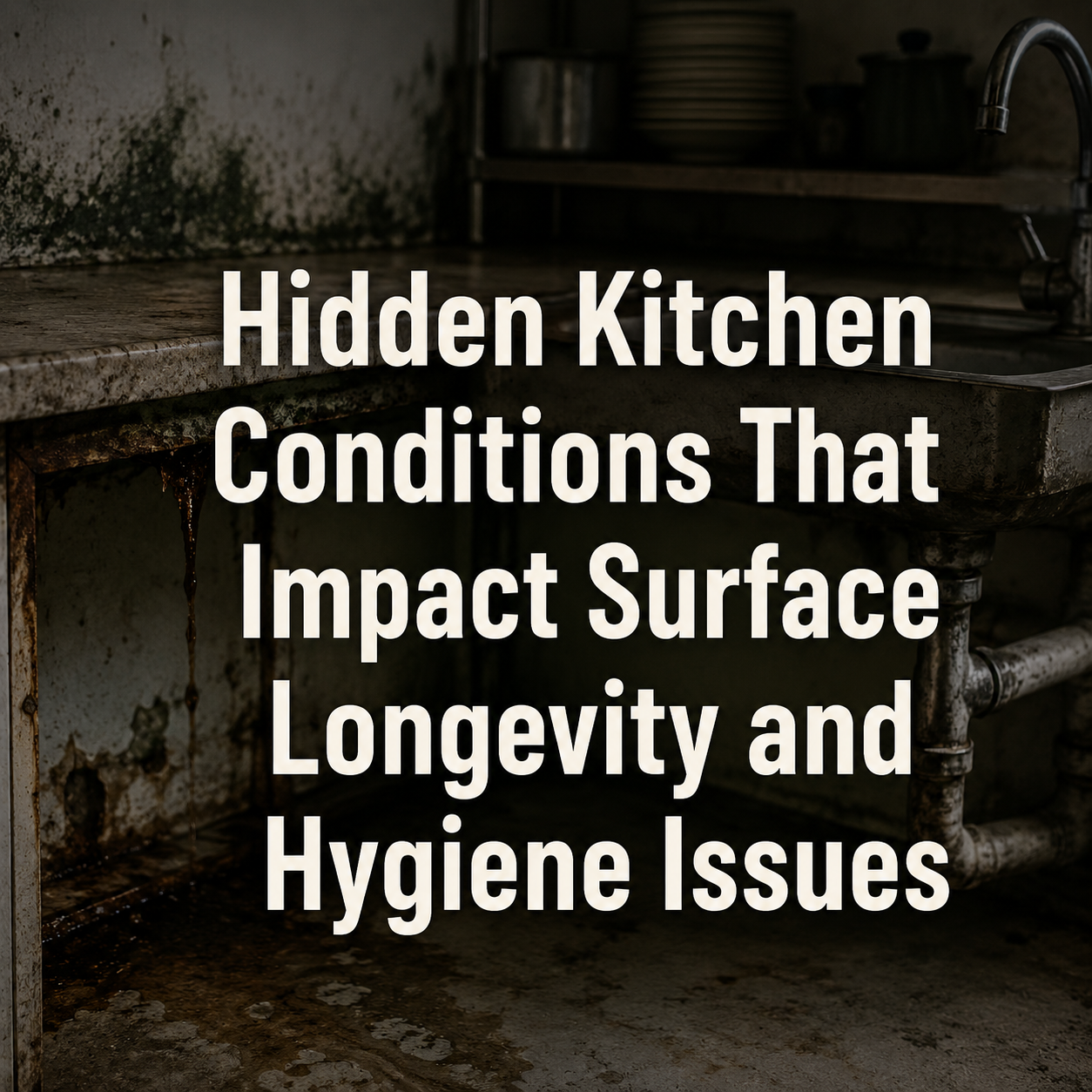
A kitchen can appear perfectly clean on the surface while hidden problems slowly damage benchtops, cabinetry, and food preparation areas underneath. Many homeowners only notice something is wrong when stains appear, cupboards begin swelling, or pests start showing up around appliances and sink areas.
What often goes unnoticed is how moisture, trapped heat, poor ventilation, and pest activity gradually affect both hygiene and the lifespan of kitchen materials. These hidden conditions can impact everything from cabinetry to stone slabs, especially in busy kitchens where heat, spills, and humidity are constant. Understanding the causes early can help prevent expensive repairs and long-term hygiene concerns.
Table of Contents
Moisture Is One of the Biggest Hidden Problems
Moisture is responsible for many kitchen surface issues that develop slowly over time. Small plumbing leaks beneath sinks, condensation behind appliances, and water trapped near splashbacks can quietly weaken surrounding materials. Even minor leaks can create damp conditions that remain hidden for months.
Timber cabinetry is especially vulnerable. When moisture penetrates joints and edges, swelling and deterioration often follow. Laminate surfaces may begin lifting, while internal structures weaken gradually.
Moisture also creates hygiene risks because damp areas become ideal environments for mould, bacteria, and pest activity. In enclosed spaces with limited airflow, these issues can spread without obvious warning signs.
Poor Ventilation Accelerates Surface Damage
Many kitchens lack proper airflow, especially around cooking zones and cabinetry corners. Steam from cooking, dishwashers, and sinks increases humidity levels daily. Without adequate ventilation, trapped moisture settles into porous materials and joints.
Over time, this constant exposure affects the longevity of surfaces. Cabinet interiors may develop odours, adhesives can weaken, and protective sealants may deteriorate faster than expected.
Ventilation issues also contribute to staining and discolouration on benchtops. While durable materials resist immediate damage, long-term exposure to moisture and trapped grease still affects appearance and hygiene.
This is particularly important around sink cut-outs and joins where water exposure happens repeatedly.
Hidden Pest Activity Creates Hygiene Risks
One of the most overlooked kitchen problems is hidden pest activity. Cockroaches are especially attracted to warm, damp spaces behind appliances, beneath sinks, and inside cabinetry. Kitchens naturally provide food residue, moisture, and dark hiding areas, making them ideal environments for infestations.
Even clean kitchens can develop problems if hidden conditions remain unresolved. Small leaks, crumbs trapped behind appliances, and gaps around plumbing create conditions that attract pests. This is where proper cockroach control becomes important, not only for hygiene but also for protecting kitchen structures from contamination and ongoing moisture-related deterioration.
Cockroach activity often leaves behind droppings, odours, bacteria, and debris that spread across hidden surfaces. These contaminants can affect food preparation areas and create persistent sanitation concerns.
Surface Materials Are Only as Durable as Their Environment
Many homeowners focus heavily on selecting durable kitchen materials but overlook the conditions surrounding them. Even highly resilient surfaces can deteriorate faster when exposed to persistent moisture, heat fluctuations, or poor maintenance practices. Water penetration near joins, trapped grime beneath appliances, and exposure to acidic spills all gradually affect surface integrity.
Natural and engineered stone surfaces remain popular because of their durability and appearance, but they still require proper sealing, cleaning, and environmental management. Moisture trapped beneath poorly sealed edges or around sinks can eventually create staining and structural concerns.
Similarly, cabinetry materials may deteriorate if water exposure continues unnoticed behind splashbacks or inside cupboards. The environment surrounding a surface often determines its lifespan more than the material itself.
Appliance Zones Are Common Trouble Areas
The spaces around kitchen appliances frequently become hidden problem zones. Refrigerators, dishwashers, ovens, and coffee machines generate heat and condensation. Crumbs, grease, and moisture often accumulate beneath or behind these appliances where cleaning is infrequent.
Cockroaches commonly hide in these areas because they provide warmth, darkness, and water sources. At the same time, trapped moisture behind appliances can affect flooring, cabinetry, and nearby wall materials.
In some kitchens, long-term condensation creates soft spots, mould growth, or hidden staining before any visible signs appear externally. Regular inspection behind appliances is essential for maintaining both hygiene and surface longevity.
Cleaning Habits Matter More Than Many Realise
Surface damage is not always caused by major incidents. In many cases, repeated daily habits contribute to gradual deterioration. Leaving standing water near sink edges, allowing spills to sit overnight, or failing to clean grease build-up behind cooking areas all increase wear over time.
Harsh cleaning chemicals can also damage protective sealants on benchtops and cabinetry. Abrasive scrubbing may weaken finishes and create microscopic surface damage that traps bacteria more easily.
Good maintenance involves consistency rather than aggressive cleaning. Drying surfaces properly, checking hidden areas regularly, and managing moisture quickly all help extend kitchen lifespan.
Structural Gaps and Seals Need Attention
Small structural gaps often become entry points for moisture and pests. Unsealed joins around splashbacks, cracked silicone near sinks, and gaps around plumbing penetrations allow water and contaminants to spread into concealed areas. Once moisture enters enclosed spaces, deterioration accelerates quickly.
These openings also create pathways for cockroaches and other pests to move throughout the kitchen unnoticed. Regularly inspecting seals, edges, and plumbing connections helps prevent larger structural and hygiene issues from developing later.
Conclusion
Many kitchen problems begin in places homeowners rarely inspect. Moisture behind cabinetry, hidden condensation, pest activity, poor ventilation, and neglected appliance areas all contribute to declining hygiene and reduced surface longevity over time.
Even durable materials like stone slabs can deteriorate faster when surrounding conditions are ignored. At the same time, unresolved moisture and food residue create environments that increase the need for effective cockroach control and ongoing sanitation management.
Maintaining a kitchen properly involves more than surface cleaning alone. Identifying hidden conditions early helps protect both the appearance and long-term functionality of the entire space.
FAQs
1. What hidden kitchen conditions cause surface damage?
Moisture, poor ventilation, trapped heat, leaks, and hidden pest activity are some of the most common causes.
2. Can moisture affect stone benchtops?
Yes. While stone surfaces are durable, prolonged moisture exposure around joins and edges can still cause staining and deterioration.
3. Why are cockroaches commonly found in kitchens?
Kitchens provide warmth, moisture, food residue, and dark hiding spaces that attract cockroaches.
4. How does poor ventilation impact kitchen hygiene?
Poor airflow traps moisture and grease, increasing the risk of mould, odours, bacteria, and surface deterioration.
5. What areas of the kitchen should be inspected regularly?
Under sinks, behind appliances, around splashbacks, and inside cabinetry should all be checked frequently.
6. How can homeowners improve kitchen surface longevity?
Managing moisture, cleaning consistently, repairing leaks quickly, maintaining seals, and improving ventilation all help extend surface lifespan.
-

-
-

-

-

-