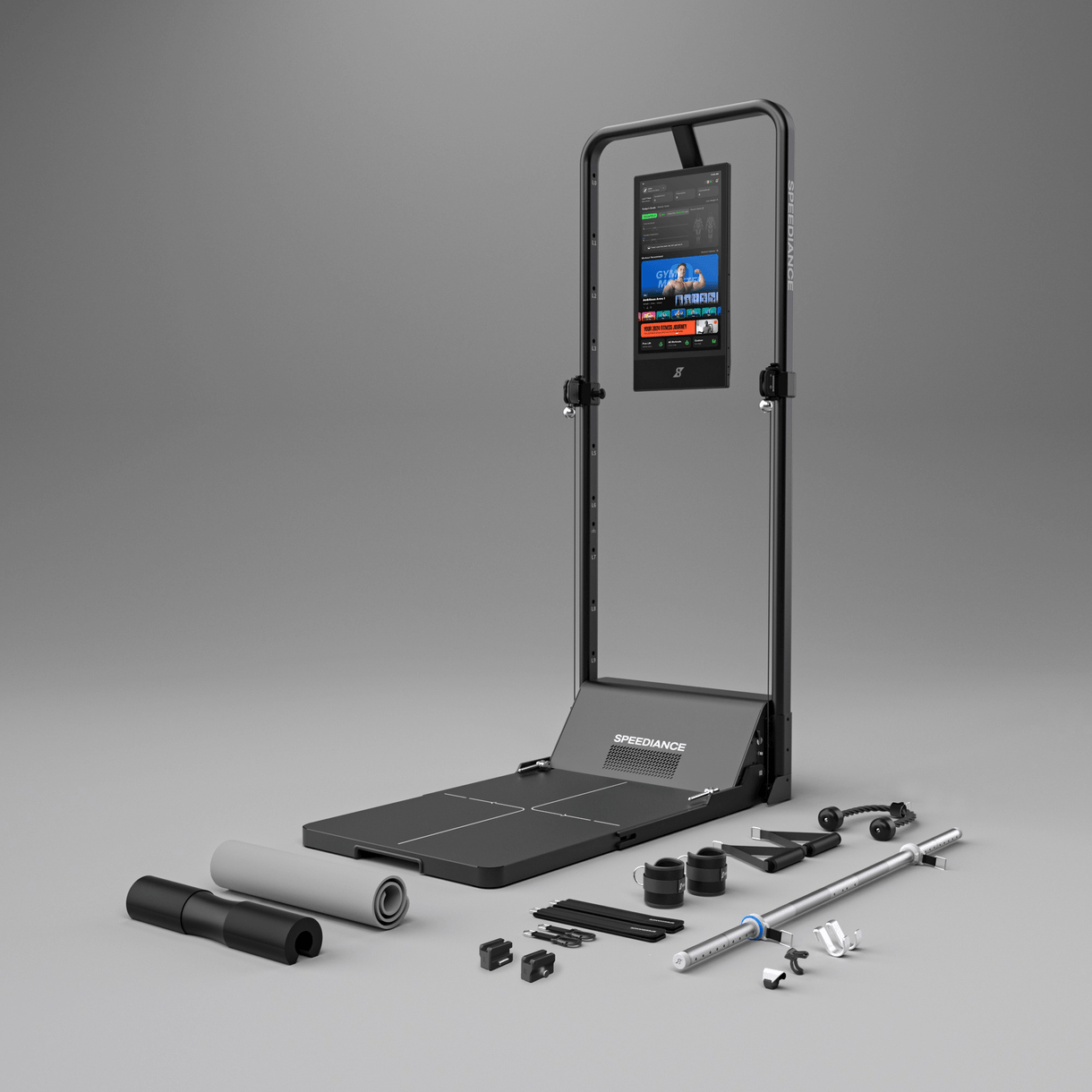
If you’ve ever tripped over a bulky weight bench, stared at a cluttered garage full of mismatched equipment, or felt limited by a basic setup that only handles a fraction of your fitness goals, you’re not alone. Traditional home gyms demand enormous space, significant investment, and still leave gaps in what they can deliver. The best compact home gym flips this equation entirely—offering a streamlined footprint without sacrificing capability. Today’s space-constrained fitness enthusiasts face a real dilemma: how do you get gym-quality workouts in a spare bedroom or apartment corner? Standard gear simply wasn’t designed for modern living spaces or the data-driven approach many users now expect from their training. This article explores how compact home gyms solve these challenges through innovations like digital weight systems that replace entire rack setups, built-in performance assessment tools that track your progress in real time, and versatile designs supporting everything from heavy strength work to cardio intervals. Whether you’re tight on space, budget, or patience with outdated equipment, the solutions ahead will reshape how you think about training at home.
Table of Contents
Why Compact Home Gyms Are Revolutionizing Fitness
Standard home gym equipment follows an outdated philosophy: one piece of gear for one function. A power rack dominates an entire wall, a treadmill claims a permanent corner, and a set of dumbbells sprawls across a rack that could double as a bookshelf. The result is a room that looks like a commercial gym’s storage closet—expensive, cluttered, and still incomplete. Compact home gyms reject this approach entirely. By consolidating multiple training modalities into a single, intelligently designed unit, they deliver the versatility of dozens of machines within a footprint smaller than a standard desk. The cost equation shifts dramatically too. Instead of accumulating equipment piece by piece—each with its own price tag and space requirement—users invest once in a system that grows with them through software updates and adjustable resistance profiles. This isn’t a niche trend. The demand for efficient home workout solutions has surged as more people recognize that commute time to a gym, monthly memberships, and waiting for equipment all represent friction that kills consistency. The best compact home gym eliminates that friction by placing a complete training ecosystem exactly where you need it, ready the moment motivation strikes. It’s a fundamental shift from equipment collection to integrated fitness platform.
Digital Weight System: Precision and Flexibility in Your Workouts
A digital weight system replaces an entire rack of dumbbells, plates, and cable stacks with electronically controlled resistance that adjusts at the turn of a dial or tap of a screen. Rather than physically swapping iron plates between sets, users select their desired load instantly—sometimes in increments as small as one pound. This precision matters more than most people realize. Traditional weight jumps of five or ten pounds can stall progress for weeks, particularly on isolation movements where muscles respond to gradual overload. Digital systems eliminate that barrier by letting you micro-progress at your own pace. Safety improves substantially as well. Without heavy plates to drop or pins to misalign, the risk of injury from equipment failure drops significantly. Many digital weight systems also incorporate automatic deloading—if the machine detects form breakdown or excessive strain, resistance reduces immediately. For home gym users training alone without a spotter, this feature alone justifies the technology. The ease of switching between exercises transforms workout flow too. Transitioning from a heavy squat to a light lateral raise takes seconds rather than minutes of plate changes, keeping heart rate elevated and sessions efficient.
Integrating Digital Weights for Enhanced Performance Tracking
Digital weight systems generate data that traditional equipment simply cannot. Every rep produces measurable output—force curves, time under tension, velocity, and power—all captured automatically and synced to companion apps or built-in displays. This integration addresses a core need for serious home gym users: objective progress tracking without manual logging. Instead of scribbling numbers in a notebook and guessing whether last Tuesday’s set felt heavier, you get precise records showing that your bench press power output increased three percent over the past month. Platforms like Speediance exemplify this approach, combining digital resistance with intelligent tracking that turns raw workout data into actionable insights. Metrics like total volume lifted per session, strength balance between left and right sides, and workout consistency streaks turn abstract effort into concrete feedback. Some systems even flag when you’re ready to increase weight based on performance trends, removing the guesswork from progressive overload programming. This data-driven approach keeps motivation high because progress becomes visible even during phases when the mirror doesn’t show obvious changes.
Performance Assessment Tools: Data-Driven Results for Home Gym Users
The gap between training hard and training smart often comes down to feedback quality. Commercial gyms offer personal trainers who watch your form and adjust your program, but most home gym users operate blind—repeating the same routines without knowing whether they’re actually improving. Performance assessment tools built directly into compact home gyms close this gap permanently. Modern systems incorporate rep counters that distinguish clean repetitions from partial or compensated ones, ensuring your logged volume reflects genuine work rather than ego-driven half reps. Heart rate monitoring integrates seamlessly through chest straps or wrist sensors, letting the system calculate recovery windows between sets and recommend when you’re ready for the next effort. Progress dashboards aggregate weeks and months of training data into visual timelines that reveal patterns invisible to daily perception—like how your lower body strength peaks mid-week or how sleep quality correlates with your power output the following morning. These aren’t vanity metrics. Performance assessment transforms decision-making around training intensity, exercise selection, and recovery timing. When your system shows that overhead pressing strength has plateaued for three consecutive weeks while horizontal pushing continues climbing, you gain actionable intelligence to restructure your programming. Some platforms generate automated recommendations based on these assessments, functioning as an always-available coach that adapts to your actual performance rather than following a generic template. For users whose primary goal is consistent improvement without guesswork, these built-in tools represent the clearest advantage compact home gyms hold over scattered traditional equipment that tracks nothing at all.
Maximizing Gains with Diverse Workout Types
A compact home gym only outperforms standard gear if it actually supports the full spectrum of training your body needs. The best systems deliver far beyond basic strength work, enabling users to shift between heavy resistance training, high-intensity interval sessions, steady-state cardio, and mobility work within the same machine and the same session. This versatility matters because the human body adapts quickly to repetitive stimuli. Running the same strength routine for months produces diminishing returns, and without variety, motivation erodes alongside progress. Compact home gyms with cable-based or digital resistance systems allow movements across multiple planes—horizontal pulls, vertical presses, rotational core work, and single-leg exercises—all from one station. For HIIT, rapid weight changes let you alternate between explosive low-resistance movements and heavy grinding sets without rest, driving cardiovascular adaptation and muscular endurance simultaneously. Cardio integration through rowing attachments or built-in cycling resistance means you never need a separate machine eating floor space just to elevate your heart rate on recovery days. Flexibility and mobility work benefits from adjustable cable heights that facilitate assisted stretching and controlled eccentric loading through full ranges of motion. Programming variety into your weekly schedule prevents plateaus more effectively than simply adding weight. Alternate between strength-focused days using heavy loads and low reps, hypertrophy sessions with moderate weight and higher volume, power days emphasizing speed, and active recovery sessions combining light resistance with extended stretching. This periodized approach—made practical by equipment that transitions instantly between modalities—keeps adaptation signals fresh and joints healthy over the long term.
Step-by-Step Guide to Building Your Optimal Compact Home Gym
Start by measuring your available space and defining a realistic budget—even a 6×6-foot area can accommodate a high-quality compact system. Next, prioritize equipment featuring a digital weight system, since this single technology replaces dozens of individual dumbbells and plates while enabling the micro-progressions that drive consistent strength gains. Confirm that your chosen system includes built-in performance assessment tools—rep tracking, force measurement, and app connectivity—so you never train without objective feedback on your progress. Once installed, configure your setup to support at least three distinct workout types: heavy strength sessions, interval-based conditioning, and mobility-focused recovery work. Map out a weekly schedule that rotates between these modalities to prevent adaptation plateaus and keep training engaging. Finally, commit to reviewing your performance data every two weeks. Look for trends in volume, strength balance, and consistency metrics, then adjust your programming based on what the numbers reveal rather than relying on feel alone. This iterative loop—train, measure, adjust—transforms a compact home gym from a piece of furniture into a continuously improving fitness system that evolves alongside your capabilities.
Why a Compact Home Gym Is the Smartest Long-Term Fitness Investment
The best compact home gym doesn’t just save space—it fundamentally outperforms standard gear by integrating technologies that scattered equipment can never match. Digital weight systems deliver the precision of micro-progressions and the safety of automatic deloading, replacing entire racks of iron with instant electronic adjustments. Built-in performance assessment tools transform every session into measurable data, giving you the objective feedback that previously required a personal trainer watching your every rep. Together, these features create a training environment where progress isn’t hoped for but tracked, verified, and optimized week after week. The ability to shift seamlessly between strength training, HIIT, cardio, and mobility work within a single footprint means your body receives the varied stimuli it needs to keep adapting rather than stagnating on repetitive routines. Making this investment isn’t about buying another piece of fitness equipment—it’s about choosing an integrated platform that evolves with you through software updates, data-driven adjustments, and programming flexibility. For anyone serious about long-term fitness without dedicating an entire room to the cause, a compact home gym represents the smartest path forward.
-

-

-

-

-

-