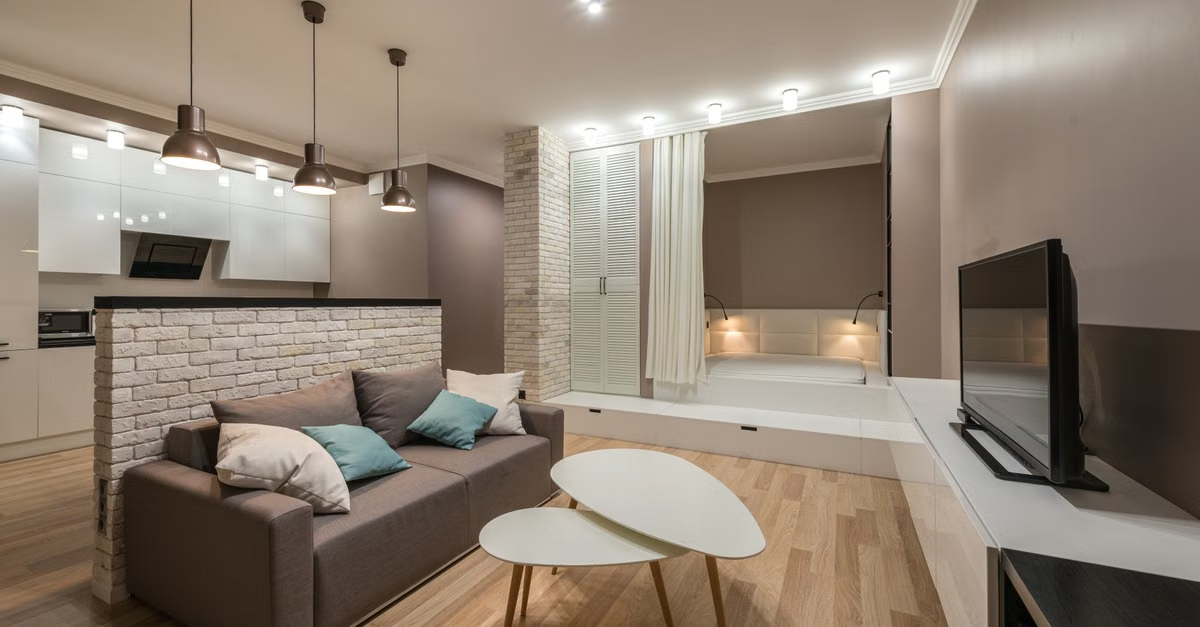
Starting a new job in Berlin, taking on a project with an open end date, or relocating from abroad all raise a practical question: Where can you find short-term housing without first having to arrange furniture, internet, and everyday essentials? Furnished apartments for temporary stays can be a practical solution. However, anyone who focuses only on the initial price or appealing photos often overlooks important details. A structured look at location, amenities, contract terms, and move-in logistics helps distinguish suitable offers from options that may seem affordable but remain unclear.
Table of Contents
Why furnished temporary housing in Berlin can be attractive
Not every stay in Berlin is intended to be permanent. Commuters, project-based employees, expats, and people between two permanent residences often need a functional apartment for a few months without making a long-term commitment. A furnished apartment removes many organizational hurdles: furniture and kitchen equipment are usually already in place, and depending on the offer, internet may also be included—especially compared with an unfurnished apartment, where buying furniture, waiting for delivery, and eventually moving everything out all have to fit into your own schedule. The German Federal Institute for Research on Building, Urban Affairs and Spatial Development also addresses the importance of flexible housing models for professionally mobile people in its review of housing for employees.
That convenience comes at a price. The all-inclusive rent for a furnished apartment may be higher than the base rent for a comparable unfurnished apartment. In return, you avoid the upfront cost of furniture and the effort involved in setting up and later moving out. What matters is that it is clear before signing the contract which services are included in the rent and which additional costs may apply. Anyone who reviews these points in advance can avoid unpleasant surprises and compare offers on a solid basis.
These criteria make the selection easier
The search becomes much easier if you first define what the apartment actually needs to provide in everyday life. The following points are a useful checklist:
- Location and daily commute: The distance to work and access to public transport are usually more important than proximity to the city center.
- Number of rooms and layout: Anyone working from home often needs more space than someone who only uses the apartment for sleeping.
- Amenities: A kitchen, workspace, storage, and laundry facilities determine how practical the apartment is for daily life.
- Budget: All-inclusive rent, deposit, contract term, and possible additional costs should be listed transparently.
- Availability: The desired move-in date needs to match the apartment’s actual availability.
- Point of contact: If questions or problems arise on site, responsive support matters.
This checklist does not replace your personal judgment, but it helps prevent a decision based solely on photos or a supposedly attractive price. Looking at existing providers also shows what such a search can look like in practice: anyone looking for serviced apartments in Berlin can, for example, find an overview of furnished apartments in several Berlin districts from WOONWOON. The listings include details on the number of rooms, availability, and all-inclusive rent, making it easier to compare offers using exactly the criteria mentioned above.




How to make move-in as predictable as possible
From the initial search to the handover of the keys, many uncertainties can be reduced through clear preparation. It helps to define the desired rental period, budget, number of occupants, and preferred district before making the first inquiry. You should also clarify which documents or proofs the provider requires, how the payment process works, and in what condition the apartment will be handed over.
A clearly described process from selection to key handover can provide orientation, regardless of which provider is ultimately chosen. Before the actual handover, it is advisable to check the inventory, confirm the appointment in writing, and know who your contact person is for the first few days after moving in. A brief handover protocol documenting the condition of the apartment and the items provided protects both sides and helps avoid later disputes.
Comparing Berlin districts based on daily life and commute
Berlin is large, and the choice of district affects everyday life more strongly than many people initially expect. Instead of relying on a general ranking, the decision should be based on your actual routine: Where is your workplace, how important is a quiet residential setting, and which infrastructure should be within walking distance? Charlottenburg and Wilmersdorf are considered established residential areas in the western part of the city and may be of interest to anyone whose workplace is located there. Tiergarten and Moabit offer relatively central connections, while Kreuzberg and Schöneberg are known for a more urban, lively environment with a wide range of restaurants and cafés. Weißensee is an example of a quieter district in the eastern part of the city with greener surroundings, which may suit people who do not need to live very close to the center. Research on residential location decisions from a housing biography perspective also shows how strongly personal circumstances and preferences shape the choice of where to live.
What matters here is this: no district is inherently better or worse for temporary housing. The key is the combination of commute, personal housing preferences, and the specific apartment on offer. A district overview, as many providers present on their websites, helps narrow the search early on. Even a trial trip to your workplace during typical commuting hours can be useful, because actual travel time can differ considerably from the theoretical distance.
What should be clarified before making an inquiry
Certain questions come up again and again when looking for temporary housing. The following answers show what prospective tenants should pay attention to.
What information should a listing include?
A reliable listing should at least state the location, number of rooms, amenities, availability, and price range. If this information is missing, it should be clarified before making an inquiry.
Does an all-inclusive rent automatically cover everything?
No. The term only means that several cost items are bundled together. Which services are actually included and whether additional charges may apply is stated in the contract—and should be checked carefully there.
What applies to rental duration and pets?
Both depend on the respective provider and contract. Minimum rental periods and pet policies should be clarified before submitting a binding inquiry in order to avoid misunderstandings.
What is part of the key handover?
A confirmed appointment, clarified payment status, an inventory list, a joint review of the apartment’s condition, and a named contact person for the period after move-in.
Finding an apartment that fits the actual stay
In the end, no single criterion is decisive. What matters is the interaction of length of stay, commute, budget, and desired level of comfort in determining which apartment is truly suitable. Availability changes constantly, so it is worth setting priorities early and comparing offers using fixed criteria. Providers such as WOONWOON, which present their furnished apartments with district information, room count, and rental framework in a clear format, can be a practical starting point when reviewing specific offers in Berlin. Anyone who describes their own situation clearly and works through the points mentioned above in advance is more likely to find an apartment that not only makes the stay possible in the short term, but also makes it comfortable.