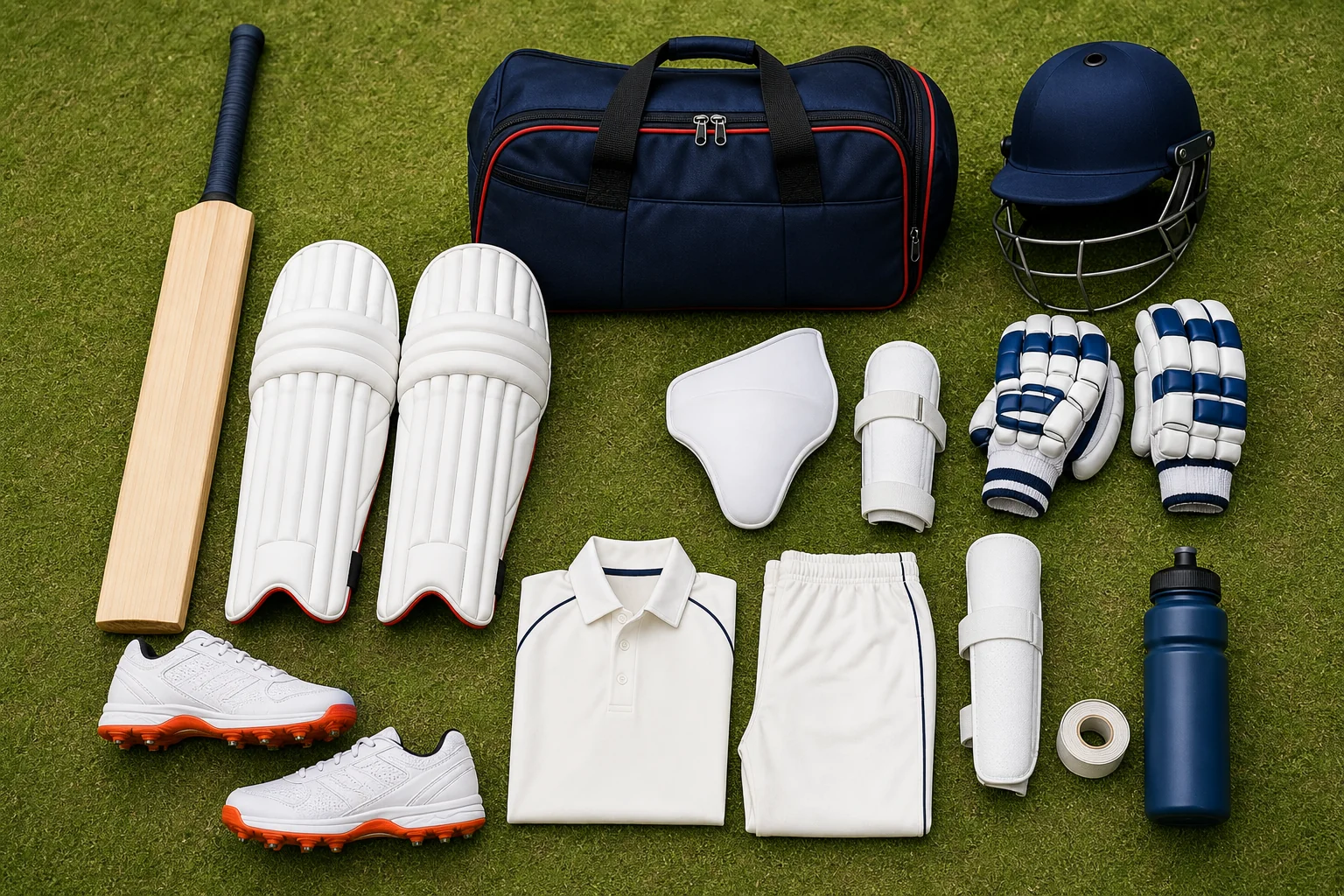
A beginner’s cricket kit should start with a suitable bat, batting gloves, pads, a helmet, an abdominal guard and cricket shoes. These are the core items for anyone preparing to face a hard ball in nets or matches. The exact kit will vary with the format being played, but safety, correct fit and ease of movement matter more than building an oversized bag from the first day.
Table of Contents
Start With the Playing Format
Before buying any equipment, establish whether the player will use a tennis ball, a soft training ball or a leather cricket ball. A casual tennis-ball game does not demand the same equipment as a hard-ball practice session. Leather-ball cricket calls for a much more protective setup, while a tennis-ball player may initially need only a bat, appropriate footwear and basic personal comfort items.
The difference is important because a cricket kit is not just a collection of accessories. A helmet, pads, gloves and abdominal guard are intended to reduce the impact of the ball on vulnerable areas. Beginners playing organised hard-ball cricket should treat protective equipment as central to their kit rather than as extras to add later.
The Essential Batting Kit
Cricket bat
The bat is the first item most new players consider, but a beginner does not need to choose purely by appearance. The main priorities are a manageable weight and a size that suits the player. A bat that feels difficult to lift, bring down or control can make basic shot practice unnecessarily hard.
Cricket bats are typically made from English or Kashmir willow. For younger players, a size-appropriate bat is especially important. It is worth holding the bat before making a final choice, as comfort and control are personal. The aim is to develop a sound, repeatable batting movement rather than to start with a bat that feels too heavy.


Batting gloves
Batting gloves protect the fingers and palms when the ball strikes the bat handle or makes contact with the hands. A useful pair should offer padded fingers, grip and sweat absorption without making it difficult to hold the bat securely. Gloves should fit comfortably: overly loose gloves can shift during a shot, while tight ones can restrict hand movement.
Gloves are required for batting, but it helps to recognise that they are different from wicketkeeping gloves. A player buying a first kit should choose batting gloves unless they intend to keep wicket. For a broader understanding of cricket equipment and its role in the game, TheCricScope can be read alongside practical training with a coach or team.
Batting pads
Batting pads protect the legs from the ball and are a core hard-ball item. They should sit snugly enough to stay in place while running and playing shots, but should not limit bending or movement. Pads are shaped to reflect a player’s batting stance, so left-handed and right-handed options need to be considered.
A first-time buyer should put both pads on and move around in them before deciding. Practise a forward stride, bend the knees and take a few running steps. If the straps feel uncomfortable or the pads shift too much, they may become a distraction during play. Secure, comfortable pads allow a beginner to focus more fully on watching the ball.
Protection That Should Not Be Skipped
Helmet
A helmet protects the head and face against fast bowling and is an essential item for hard-ball batting. Modern cricket helmets include a protective grille, interior padding and a chin strap. The helmet should feel stable rather than loose, with the grille positioned correctly in front of the face.
A player should not assume that one helmet will fit everyone in the same household or team. Trying it on is essential. Check that the chin strap secures the helmet properly and that the player can see clearly while keeping the head still. A helmet that moves during batting or feels uncomfortable is unlikely to provide the confidence a beginner needs against quicker deliveries.
Abdominal guard
An abdominal guard, often called a box or cup, protects the groin area. It is worn inside specially designed undergarments and is a small but important part of a hard-ball kit. Because it is largely out of sight, beginners sometimes overlook it while concentrating on bats, pads and gloves.
That is an avoidable mistake. The guard should be held securely in place and worn comfortably beneath cricket clothing. It belongs in the bag for net sessions as well as matches, because a ball can cause injury whether the session is formal or informal. A basic kit is incomplete for hard-ball batting without one.
Additional body guards
Thigh guards, arm guards and chest guards provide added protection for parts of the body that pads and gloves do not cover. They are not always part of the minimum beginner purchase, but they are useful protective additions, particularly for players facing faster bowling or building confidence in regular hard-ball practice.
A player can add these guards gradually after the essential helmet, gloves, pads and abdominal guard are in place. The key is not to buy protection that does not fit or is never worn. Each guard should remain comfortable while running, turning and playing a full range of shots. The best kit is one that the player can use consistently.
Shoes, Clothing and Carrying Gear
Cricket shoes
Cricket shoes support running, batting, bowling and fielding, while helping a player maintain grip on the playing surface. Shoes may have spikes or rubber soles depending on where the game is played. This choice should match the surface rather than be based only on appearance.
For a beginner, stable footwear that fits well is a sensible priority. Shoes should allow comfortable movement through a batting stance, quick running between wickets and time in the field. If the player is using a tennis ball rather than a leather ball, specialised spiked shoes may not be necessary, but footwear should still suit the ground and allow safe movement.
Clothing, socks and personal comfort
A cricket shirt, lower wear, socks and suitable undergarments form the practical base of match clothing. In hot and sunny conditions, a cap and sunglasses can also help fielders manage bright daylight. A towel and water bottle are useful additions for training or a longer game, particularly when sweat and hydration affect comfort.
These items may seem less significant than pads or a helmet, but a comfortable player is less likely to be distracted during practice. Keep an extra pair of socks in the bag if possible, especially after a wet session or extended day on the ground. Small preparations can make a kit more reliable without making it unnecessarily complicated.
Kit bag
A kit bag keeps equipment together and protects it during travel. It does not need to be the first major investment, but it becomes useful once a player is carrying a bat, helmet, pads, gloves, shoes and guards. Bags may include separate areas for shoes, helmets and used clothing, which can help keep the main equipment organised.
Pack the bag in a consistent order so that essential items are easy to find. Put smaller pieces, such as the abdominal guard, glove inners, towel and water bottle, in a dedicated pocket. After each session, remove damp clothing and allow gloves, pads and shoes to air out instead of leaving everything closed inside the bag.
Equipment for Bowlers and Wicketkeepers
A beginner bowler still benefits from sensible shoes, comfortable clothing and a water bottle, but will also need the correct ball for the session. Training can involve soft balls or tennis balls, while formal hard-ball cricket uses leather balls. The type of ball should always match the level and nature of the session.
Wicketkeepers need specialist equipment beyond the standard batting kit, including wicketkeeping gloves, wicketkeeping pads and inners. They may also use a wicketkeeping helmet. A player who occasionally keeps wicket should not assume batting gloves can perform the same function. Keeping involves repeated impact and requires gear designed specifically for that role.
A Simple First-Kit Checklist
For a beginner entering hard-ball cricket, this is a sensible order of priority:
- Cricket bat in an appropriate size and manageable weight
- Batting gloves
- Batting pads
- Helmet with grille, padding and chin strap
- Abdominal guard and suitable undergarments
- Cricket shoes suited to the playing surface
- Comfortable cricket clothing and socks
- Kit bag, water bottle and towel
- Optional thigh, arm and chest guards
- Specialist wicketkeeping gear only if required
Conclusion
The most effective beginner cricket kit is safe, well fitted and suited to the format being played. Start with the batting essentials, give protection the same importance as the bat, and add specialist gear only when the player’s role requires it. A carefully chosen basic kit makes early practice more comfortable and lets beginners concentrate on learning the game. Watching live matches is another useful way to learn, and pre-match coverage such as today match predictions can help beginners know which players and conditions to look out for.