From CES to SXSW: The Best Trade Show Promotional Materials for Major US Conferences in 2025

Major US conferences have returned to full capacity. CES in Las Vegas draws over 130,000 attendees. SXSW in Austin pulls in tens of thousands across multiple venues. The National Restaurant Association Show, MAGIC Las Vegas, and countless industry-specific events fill convention floors with competing brands, each fighting for a few seconds of attention from buyers, partners, and press who have already seen thousands of booths before noon.
For marketing managers, brand directors, and operations leads who handle the physical preparation for these events, the challenge is not creativity — it is execution under pressure. Conference timelines are fixed. Booth setups are measured in hours, not days. Shipping logistics are unforgiving. And the materials that represent a company at these events carry the full weight of first impressions with decision-makers who have no reason to stop unless something earns their attention.
This article looks at how companies preparing for major US conferences in 2025 should think about their physical presence — what kinds of materials hold up under real event conditions, what often underperforms, and how procurement and marketing teams can make smarter decisions before the freight deadline arrives.
Table of Contents
Why Physical Materials Still Determine Booth Performance at Large Conferences
Digital engagement tools have become standard at most conferences, but they have not replaced physical materials — they have added to the checklist. Attendees at events like CES or the Consumer Healthcare Products Association Annual Meeting carry phones and tablets, but they also pick up brochures, keep branded items in their bags, and reference printed materials during post-show evaluations. The physical presence of a brand in a conference environment is not a legacy habit; it is a functional part of how information is communicated and retained in a high-volume, high-noise setting.
Companies that invest in well-produced trade show promotional materials consistently report better booth engagement and stronger post-show follow-through. The reason is straightforward: physical materials persist after the conversation ends. A product sheet left with a prospect goes into a bag and onto a desk. A branded item used daily keeps the company name in front of someone long after the event floor closes.



The Relationship Between Material Quality and Perceived Credibility
At large conferences where multiple companies offer similar services or products, the physical quality of materials communicates something about the company before anyone speaks a word. A poorly printed brochure on lightweight paper signals limited attention to detail. An oversized banner with uneven color or visible pixelation suggests a rushed production process. These details register with experienced buyers even if they are not consciously evaluated.
The reverse is also true. Clean printing, consistent brand colors, durable finishes, and well-structured layouts all suggest that a company manages its own standards carefully. For companies entering new markets or meeting major clients in person for the first time, this matters more than most marketing teams acknowledge during budget planning.
Large-Format Display Materials for High-Traffic Conference Environments
Large-format displays — including retractable banners, tension fabric displays, and backwall systems — are the structural foundation of most trade show booths. At events with dense floor plans like the National Retail Federation’s Big Show or the International Builders’ Show, these displays serve both a wayfinding function and a brand communication function. They need to be visible from a distance, structurally stable across a multi-day event, and portable enough to ship efficiently across the country.
Retractable Banners: High Utility, Consistent Risk
Retractable banners remain one of the most commonly used display formats at US conferences. They are relatively affordable, easy to transport, and fast to set up. However, their popularity also means they are easy to produce poorly. The most common problems include print quality that degrades under bright convention lighting, banner film that wrinkles during transport, and hardware that fails during the event itself.
For major conferences where booth space is expensive and replacement options are limited, sourcing retractable banners from a reliable production partner — not just the cheapest available option — makes a material difference. Teams should always carry a backup banner for events lasting three or more days.
Tension Fabric Systems for Premium Positioning
Tension fabric displays have become the preferred format for companies with larger booth footprints at events like SXSW or the International CES. The seamless graphic surface, combined with durable aluminum framing, allows for more visually complex designs without the print seams that can interrupt a large-format image. They ship in compact cases relative to their assembled size and can incorporate lighting elements without structural modification.
The upfront cost is higher than standard banner solutions, but the reusability across multiple events — with only graphic replacements needed — makes them a practical long-term investment for companies attending five or more conferences per year.
Printed Collateral That Supports Sales Conversations
Printed collateral — product sheets, capability brochures, case study summaries, and leave-behind cards — functions differently than display materials. Where displays attract attention, printed collateral supports the conversation that follows. The distinction matters because many companies either over-invest in collateral that nobody reads or under-invest to the point where sales representatives have nothing concrete to leave with a qualified prospect.
What Actually Gets Kept After the Conference
Research published through the Center for Exhibition Industry Research consistently shows that attendees retain printed materials that are specific, legible, and immediately useful — not everything handed to them at a booth. A two-page product summary with clear specifications and a contact block is more likely to survive the post-show bag clean-out than a twelve-page corporate overview that requires sustained reading to extract useful information.
The most effective printed materials used at major US conferences tend to share a few characteristics: they are easy to scan, they answer one or two specific questions rather than trying to explain everything, and they include contact information that does not require the reader to search for it.
Paper Stock and Finish Selection Under Event Conditions
Convention floors are physically demanding environments for paper materials. High humidity in coastal venues like Miami or San Francisco, or repeated handling across three-day events, degrades lightweight paper quickly. Collateral produced on heavier stock with matte or soft-touch laminate finishes holds up significantly better and also communicates quality in a tactile way that standard paper does not.
Teams shipping materials to events in climates different from their home office location should factor environmental conditions into paper and finish selections well ahead of production deadlines.
Branded Promotional Items and Giveaways at Major Conferences
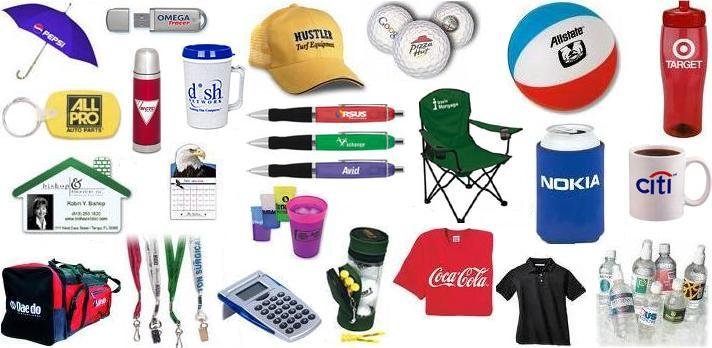
Branded promotional items occupy a unique position in conference strategy. They are often dismissed as low-value budget items, but the reality is more nuanced. At major events like SXSW or the National Association of Broadcasters Show, branded items serve as passive advertising that extends beyond the conference floor. A well-chosen item used regularly by an attendee generates brand exposure that outlasts any display or printed piece.
Choosing Items Based on Relevance, Not Novelty
The most common mistake companies make with giveaways is selecting items based on novelty rather than relevance to their audience. A tech accessory given away at CES lands differently than the same item distributed at an agricultural industry conference. The item should connect logically to the attendee’s professional context or daily workflow. Items with no obvious connection to the brand or audience tend to be forgotten quickly regardless of their cost.
Practical items — those with clear daily utility — consistently outperform novelty items in post-event brand recall. Notebooks, charging accessories, quality tote bags, and drinkware tend to remain in regular use for weeks or months after the conference ends.
Volume Planning and Logistics for National Events
Volume decisions for giveaways at large national conferences require more planning than most teams allocate. Running out of materials on day one of a three-day conference is a common and avoidable problem. Over-ordering creates unnecessary shipping costs and inventory management issues. The most reliable approach is to set volume based on expected qualified traffic — not total attendance — and reserve a portion of the budget for a supplemental order that can be rush-produced and shipped to the venue if needed.
Digital Integration with Physical Trade Show Materials
The relationship between physical materials and digital engagement has shifted considerably over the past several years. QR codes on printed collateral, near-field communication tags embedded in branded items, and landing pages designed specifically for conference follow-up have all become standard practice at major events. These integrations allow physical materials to serve as entry points into a tracked digital journey without requiring the prospect to remember a web address or search for the company later.
The key operational requirement is ensuring that any digital element connected to a physical material is fully tested and functional before the freight ships. A QR code that routes to a broken page, or a landing page that loads poorly on mobile, undermines the entire investment in the physical material it was meant to support. This check should happen at least two weeks before the conference to allow time for corrections.
Shipping, Storage, and On-Site Handling of Conference Materials
The physical quality of conference materials at the booth is only as good as the condition they arrive in. Shipping and on-site handling are operational risks that receive far less attention during planning than design and production. Banners arrive damaged. Boxes are lost in the convention center’s freight system. Booth materials ordered for a West Coast event are sitting in a warehouse on the East Coast the morning of setup.
Companies attending multiple major conferences per year benefit from establishing consistent working relationships with freight carriers familiar with convention center drayage systems. Many convention centers, including those hosting CES and large industry trade events, use third-party freight contractors whose timelines and delivery protocols are separate from standard commercial shipping. Understanding these logistics before the first event prevents costly surprises during setup.
Conclusion: Building a Materials Strategy That Holds Up Across the Conference Season
The US conference calendar in 2025 is demanding. For companies attending multiple major events — from the technology-forward floors of CES to the creative industry environment of SXSW to the sector-specific shows that fill the calendar from January through November — the cumulative investment in trade show promotional materials is significant. Managing that investment well requires treating materials not as a line item to minimize, but as an operational commitment that directly affects how the company is perceived by the people it most needs to reach.
The decisions that matter most happen before production begins: choosing formats that hold up under real event conditions, selecting quality specifications that reflect the company’s standards, building in lead time that accounts for shipping realities, and aligning every physical element with the specific audience attending each event. Companies that approach conference materials with that level of planning consistently perform better on the floor — not because they spent more, but because they prepared more carefully.
For marketing and operations teams building their 2025 conference schedule now, the time to review material strategies, vendor relationships, and production timelines is well ahead of the first event on the calendar — not the week before freight is due.