Picture this: a meticulously planned outdoor reception where guests are squinting into the sun, shifting their chairs every twenty minutes to chase shrinking patches of shade, and abandoning beautifully set tables because the midday heat has become unbearable. Poor shade planning doesn’t just cause discomfort—it undermines the entire guest experience and reflects poorly on the event itself. Whether you’re organizing a corporate luncheon, a wedding reception, or a community gathering, shade isn’t a luxury; it’s infrastructure. So here’s a question worth asking: are your current shade solutions actually working for your layout, your aesthetic, and your guests? Most event planners default to round umbrellas or temporary canopies without considering how a square patio umbrella could transform their setup. With its maximized coverage area, seamless alignment with standard event furniture, and clean contemporary lines, the square umbrella addresses problems most planners didn’t realize they had. This article explores exactly why this often-overlooked shape is a strategic game-changer for outdoor events of every scale.
Table of Contents
Beyond the Round: Key Advantages of a Square Patio Umbrella
Round patio umbrellas have dominated outdoor events for decades, largely because they’re familiar and widely available. But familiarity doesn’t equal effectiveness. When you place a circular canopy over a rectangular dining table—the most common configuration at any catered event—you’re left with exposed corners where guests sitting at the ends receive little to no protection. The geometry simply doesn’t match. A square patio umbrella eliminates this mismatch entirely. Its canopy mirrors the footprint of standard banquet tables, buffet stations, and lounge seating arrangements, delivering shade precisely where people actually sit.
The coverage advantage is measurable. A square canopy with a 10-foot span covers 100 square feet of ground, while a round umbrella of the same diameter covers roughly 78 square feet—a 22% reduction in usable shade from the same nominal size. For event planners working within tight venue boundaries, that difference compounds across every umbrella deployed. You’re paying for shade; you should actually get it.
Layout integration is where square models truly outperform. When you line up multiple patio umbrellas in a row, square canopies create a near-continuous shade corridor with minimal gaps between units. Round umbrellas, by contrast, leave crescent-shaped pockets of direct sunlight between each one—exactly where servers walk and guests transition between zones. The angular design also aligns naturally with architectural elements like deck edges, garden walls, and poolside borders, producing a cohesive visual rhythm rather than a scattered, ad hoc appearance. This clean geometry gives events a polished, intentional aesthetic that resonates with modern and minimalist themes. Beyond looks, that structural precision also hints at something equally important: stability under pressure, which demands closer attention to materials and engineering.
Built for Durability: Materials and Features for Event-Ready Umbrellas
Event planners don’t have the luxury of hoping the weather cooperates. When you’re responsible for 150 guests, a catering team, and a client’s expectations, your shade equipment must perform without question from setup to breakdown. This is where material selection separates event-grade patio umbrellas from backyard accessories. The frame is your foundation. Aluminum frames offer the best balance of lightweight portability and corrosion resistance—critical when crews need to transport, assemble, and reposition dozens of units in a single morning. Fiberglass ribs add a layer of wind resilience that steel simply can’t match; they flex under gusts rather than snapping, which means fewer mid-event failures and zero safety hazards near guests.



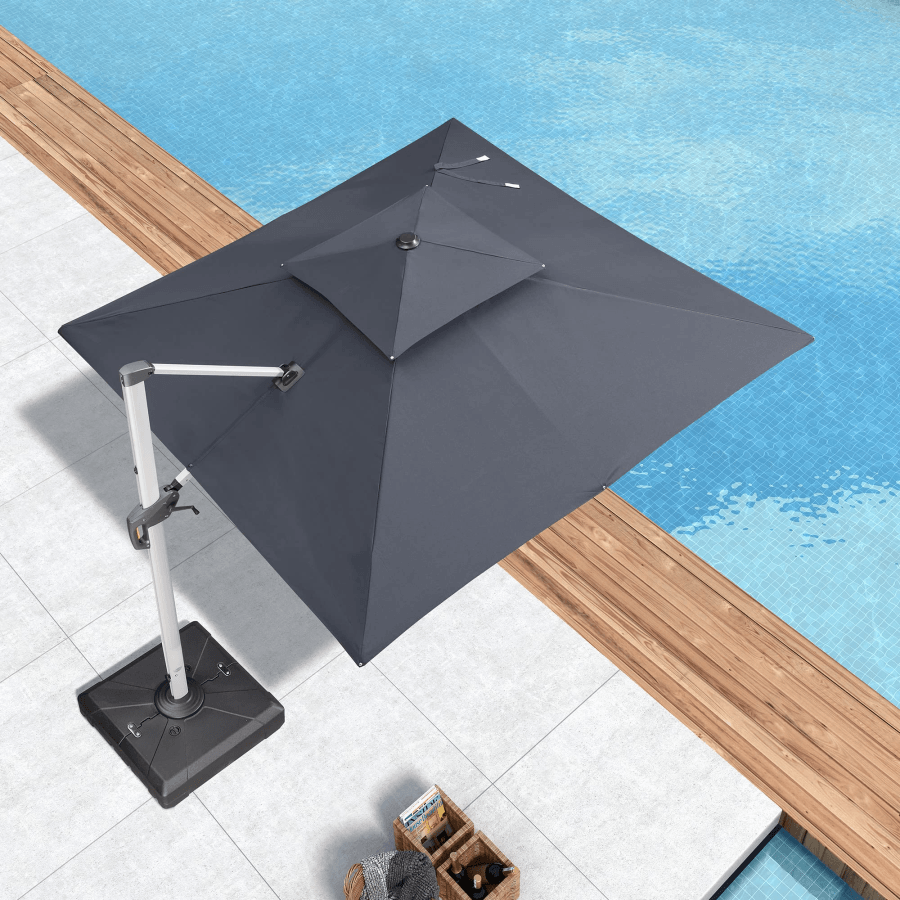
The canopy fabric demands equal scrutiny. UV-resistant umbrellas aren’t a premium upgrade for outdoor events—they’re a baseline requirement. Prolonged sun exposure causes skin damage that begins well before guests feel uncomfortable, and fabrics without adequate UPF ratings offer a false sense of protection. Solution-dyed acrylic and polyester canopies rated at UPF 50+ block over 98% of harmful ultraviolet radiation while resisting color fade across seasons of use. This matters for rental companies and venues that deploy the same inventory repeatedly; fabric that looks washed out after one summer undermines your brand. Manufacturers like PURPLE LEAF have recognized this demand by engineering outdoor umbrellas with fade-resistant fabrics and robust frame systems designed to withstand the repeated deployment cycles that professional events require.
Operational features determine how smoothly your team can adapt throughout a long event day. Crank-lift mechanisms allow a single staff member to deploy or retract a canopy in seconds, while push-button tilt systems redirect shade as the sun tracks across the sky—no need to physically relocate heavy bases. Perhaps most overlooked is canopy ventilation. A built-in wind vent at the apex allows air to pass through rather than catching underneath like a sail. This single engineering detail dramatically reduces uplift force, keeping your garden umbrellas and poolside shade solutions anchored securely even when afternoon breezes pick up unexpectedly.
The Event Planner’s Practical Guide to Square Patio Umbrellas
Assessing Your Space and Choosing the Right Size
Before purchasing or renting a single unit, walk your venue with a tape measure and a scaled site plan. Start by identifying primary shade zones—dining areas, cocktail stations, registration desks, and any spot where guests will remain stationary for more than ten minutes. Measure each zone’s footprint in square feet, then match it against available canopy sizes. A standard 8-foot square umbrella covers 64 square feet, suitable for a four-top table with chairs pulled out. A 10-foot model handles six- to eight-person rectangular tables comfortably. For poolside shade solutions or open lounge areas, consider that guests spread out more informally, so allow an additional 15–20% coverage beyond the furniture footprint itself. When calculating quantity, map umbrellas onto your floor plan edge-to-edge rather than center-to-center; this approach reveals actual gap exposure between units. Leave 12 to 18 inches between adjacent canopy edges to allow for tilt adjustments without collision, while still maintaining a near-continuous shade line. Avoid placing bases where they obstruct traffic lanes—offset positioning or cantilever mounts solve this in tight corridors.
Setup, Safety, and Wind Management for Events
Efficiency during load-in determines whether your team stays on schedule. Assign two-person teams per umbrella: one to position and secure the base, one to insert the pole and deploy the canopy. Pre-stage all bases at marked locations before bringing poles and canopy units from transport vehicles—this prevents bottlenecks and reduces trips across the venue. For base selection, weight is non-negotiable. A minimum of 50 pounds per base keeps a standard square umbrella grounded in mild conditions; for exposed sites or coastal venues, use 80- to 100-pound bases filled with sand or water. Cross-base plates that bolt to existing deck surfaces offer the most reliable anchoring where permanent installation is acceptable. When wind forecasts exceed 20 mph, close and strap all canopies using integrated velcro ties until conditions ease. During moderate breezes of 10–15 mph, keep wind vents unobstructed and lower the canopy tilt to reduce the profile exposed to gusts. Designate one team member as a weather monitor with authority to retract all patio umbrellas immediately if conditions deteriorate—guest safety always overrides aesthetic considerations.
Styling and Theming with Your Shade Solution
The clean, geometric silhouette of a square canopy functions as a design element, not just a functional add-on. For modern or minimalist event themes, select neutral tones—white, taupe, charcoal—that recede visually and let floral arrangements, lighting, and table settings command attention. Bold canopy colors work when you want the umbrellas themselves to define the palette: deep navy for nautical-themed waterfront receptions, terracotta for Mediterranean garden umbrella installations, or black for high-contrast corporate branding opportunities. Coordinate canopy color with table linens by choosing complementary rather than matching shades; identical tones flatten the visual field, while a deliberate contrast creates depth. The angular lines of square models pair naturally with geometric decor elements—hexagonal planters, rectangular lounge sofas, and linear string-light runs overhead. For poolside events, white or cream canopies against blue water create the resort aesthetic clients frequently request. Drape sheer fabric panels from canopy edges for a softer, romantic look at evening receptions, transforming utilitarian shade structures into atmospheric design features that photograph beautifully and elevate the entire venue presentation.
Comparing Your Shade Options: Why Square Often Wins
Event planners typically evaluate four main shade categories: round patio umbrellas, market umbrellas, cantilever models, and square canopies. Each has a place, but when assessed against the specific demands of professional events—efficient space use, visual cohesion, and reliable coverage—square models consistently outperform. Round umbrellas waste perimeter coverage at corners of rectangular setups, leaving gaps that become painfully obvious when the sun sits low. Market umbrellas, while affordable and easy to source, tend toward residential construction that can’t withstand the repeated deployment cycles and extended hours that events demand. Cantilever designs offer impressive flexibility with their offset poles, but they require significantly more ground clearance, heavier base systems, and careful positioning to avoid pole interference with traffic flow—complications that multiply when you’re coordinating dozens of shade points across a venue.
Square patio umbrellas resolve these trade-offs simultaneously. Their canopy geometry integrates flush against walls, along pool edges, and between adjacent units without the crescent gaps that plague round alternatives. This makes them ideal both as garden umbrellas lining a ceremony aisle and as poolside shade solutions flanking a resort-style lounge area. The straight edges create sightlines that event photographers appreciate—clean frames without awkward curved intrusions. From a procurement perspective, UV-resistant umbrellas in square configurations deliver more protected square footage per dollar spent, reducing the total unit count needed to shade an equivalent area. Fewer units means faster setup, lower transport costs, and simpler inventory management. The square patio umbrella isn’t merely an aesthetic preference—it’s a strategic operational decision that compounds efficiency gains across planning, logistics, and guest experience. For professionals who treat shade as infrastructure rather than decoration, the geometry speaks for itself.
Make the Strategic Switch to Square Shade Solutions
The square patio umbrella earns its place in professional event planning not through novelty but through measurable performance. It delivers 22% more shade per nominal size than round alternatives, aligns seamlessly with the rectangular furniture that dominates catered events, and creates continuous coverage corridors that eliminate the frustrating sunlit gaps between units. Its clean geometry integrates with modern architectural lines and contemporary decor themes, giving photographers clean frames and giving guests consistent comfort from first arrival through final toast. Built with aluminum frames, fiberglass ribs, and UPF 50+ canopy fabrics, event-grade square models withstand the rigors of repeated deployment without compromising safety or appearance. These aren’t marginal improvements—they’re compounding advantages that reduce unit counts, accelerate setup timelines, lower transport costs, and elevate the guest experience simultaneously. For event planners who understand that shade is infrastructure, not afterthought, the square canopy represents a strategic upgrade with returns visible in every photograph, every satisfied client review, and every event that runs smoothly despite the sun overhead. Take a hard look at your current shade inventory. If it’s dominated by round umbrellas and improvised canopies, you’re working harder for less coverage. The geometry is clear—make the switch and let your next outdoor event prove the difference.