Text messaging has become one of the most trusted communication channels in business operations. Employees receive authentication codes through it. Customers confirm appointments, deliveries, and transactions through it. Organizations use it for internal alerts, identity verification, and time-sensitive instructions. That trust is exactly what makes it a target.
Over the past several years, a quiet but persistent threat has worked its way into this channel. Fake text messages — designed to look like they come from banks, employers, government agencies, or internal IT systems — have caused real financial losses, data breaches, and operational disruptions across industries. The problem is not theoretical. It affects procurement teams who receive fraudulent vendor messages, HR departments targeted with payroll redirection scams, and individuals manipulated into sharing access credentials.
Understanding how this threat works, where it appears, and what can be done to reduce exposure is not a matter of IT specialization. It is a practical concern for anyone responsible for communication security, operational continuity, or risk management.
Table of Contents
Understanding Spoof SMS and Why It Works
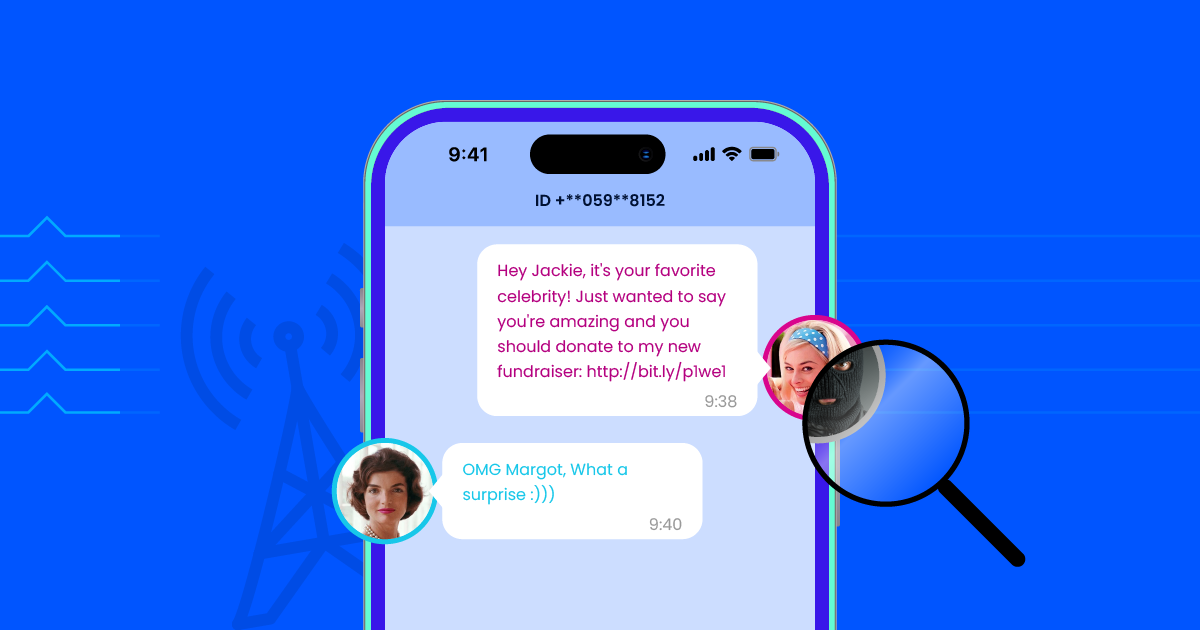
Spoof SMS refers to the practice of sending a text message in which the displayed sender name or number has been altered to appear as someone or something it is not. The recipient sees a message that appears to come from their bank, their employer, a delivery service, or a government body — when in fact it originates from an entirely different source. Because most people trust what appears in the sender field of a text message, spoofed messages often go unquestioned until harm has already been done.
The mechanics behind this are not complex. SMS infrastructure was built decades ago with functionality and reach in mind, not security. The protocol that governs how messages are sent and received does not include a native mechanism to verify that the sender is who they claim to be. This gap has been exploited at scale by criminal actors, fraudulent marketing operations, and in some cases, individuals with targeted intentions.



For organizations managing customer communications, employee notifications, or multi-factor authentication workflows, the implications are significant. A spoofed message that mimics an internal IT alert can prompt an employee to reset credentials on a fraudulent portal. A message pretending to be from a payment processor can redirect a transaction. The damage often occurs before anyone realizes the message was not legitimate.
Businesses and security professionals working on this problem have developed detection and protection approaches, and resources like spoof sms protection services represent one part of a broader response to this ongoing challenge. Understanding the threat in full, however, starts with knowing how these messages are constructed and distributed.
How Sender Identity Is Falsified
The ability to alter the sender name or number in an SMS message comes from features built into older telecommunications infrastructure. When businesses began using text messaging for customer communications, they needed the ability to display a recognizable name — a company name rather than a random phone number. That functionality, called alphanumeric sender ID, was a legitimate tool for branded communication.
The same capability, however, can be misused. Anyone with access to certain SMS gateway services can set the sender ID to any name or number they choose. Some jurisdictions and carriers have implemented controls to restrict this, but enforcement is uneven, and the global nature of telecommunications makes it possible to route messages through systems with weaker protections. The result is that a message displaying the name of a major bank or a government agency can be sent by an entirely unrelated party.
Number spoofing works similarly. A sender can configure outgoing messages to display a specific phone number — one that belongs to a legitimate organization — rather than the number associated with the device or gateway being used. When a recipient calls that number back, they reach the legitimate organization. This creates a false sense of verification and makes the original fraudulent message appear more credible in retrospect.
Common Scenarios Where Spoofed Messages Cause Harm
The range of contexts in which spoofed text messages are used as tools of fraud or manipulation is wide. What these scenarios share is a reliance on the recipient’s trust in the sender identity combined with a request for action — clicking a link, confirming account details, approving a transaction, or entering a code.
Financial Fraud and Account Takeover
One of the most frequent uses of SMS spoofing involves impersonating financial institutions. A message arrives appearing to come from a recipient’s bank, warning of suspicious account activity and requesting immediate verification. The link in the message leads to a site that mirrors the bank’s interface. Credentials entered there go directly to the attacker.
What makes this particularly effective is the combination of urgency and apparent legitimacy. The sender name matches the bank’s actual name. The message may even appear in the same conversation thread as previous genuine bank messages — a consequence of how some mobile operating systems group texts by sender ID rather than by verified sender identity. The recipient has no immediate visual signal that anything is wrong.
This type of attack is not limited to individual consumers. Business accounts, payroll systems, and corporate banking relationships are targeted with the same approach, often with higher financial stakes and more targeted research behind the message.
Operational Disruption Through Internal Impersonation
In workplace environments, spoofed messages that appear to come from senior staff, IT departments, or HR systems create a different kind of risk. An employee receives what appears to be an urgent message from their manager or IT team asking them to approve a login, install a tool, or share access credentials. The instruction feels routine because the source appears credible.
This category of attack is sometimes called smishing when it involves phishing-style content delivered via SMS. According to the Cybersecurity and Infrastructure Security Agency, SMS-based phishing represents a growing vector for credential theft and business email compromise equivalents, particularly as organizations have strengthened email security and attackers have adapted accordingly.
The operational consequences extend beyond the initial breach. When an employee unknowingly grants access or shares credentials based on a spoofed message, the resulting investigation, remediation, and potential regulatory obligations can consume significant organizational resources.
Delivery and Logistics Fraud
The rise of e-commerce has made delivery notifications one of the most commonly received types of text messages. Attackers have taken advantage of this by sending messages that appear to come from postal services or delivery companies, alerting recipients to a delivery issue that requires them to confirm their address, pay a small fee, or click a link to reschedule.
This format works because it fits a pattern recipients expect. The message looks familiar, the sender name matches a known organization, and the action requested feels low-stakes. In practice, the link leads to a page designed to harvest payment information or personal data.
Why Detection Is Difficult for Recipients
The challenge with spoof sms attacks is that the signals most people rely on to judge trustworthiness have been deliberately mimicked. The sender name looks right. The message content follows a recognizable format. The timing often aligns with something real — a recent purchase, a pending delivery, a scheduled payment. Asking recipients to identify spoofed messages through awareness alone is not a sufficient defense.
Human behavior under urgency compounds the problem. Messages that create time pressure — warnings of account suspension, delivery failures, or security alerts — are designed to reduce the time a recipient spends evaluating the message. The faster the recipient acts, the less scrutiny is applied. This is not a failure of judgment so much as an exploitation of how people naturally process urgent information.
Technical detection at the device level is also limited. Mobile operating systems do not currently provide recipients with verified sender identity information in the same way that email clients display domain authentication results. The sender field shows what it has been told to show.
Organizational and Technical Approaches to Reducing Risk
Addressing the risk of spoof sms messages requires action at multiple levels. No single measure eliminates the problem entirely, but a combination of technical controls, communication protocols, and organizational awareness reduces exposure meaningfully.
Carrier-Level and Platform-Level Controls
Some telecommunications carriers have implemented filtering systems that flag or block messages with spoofed sender IDs, particularly when those IDs match known financial institutions or frequently impersonated brands. These controls are more developed in some markets than others, and their effectiveness depends on the route through which a message travels.
Businesses that send legitimate SMS communications can register their sender IDs through verified channels, which allows carriers to distinguish authorized senders from those using the same identity without permission. This does not prevent spoofing entirely, but it creates a baseline that makes anomalous activity more identifiable.
Internal Policies That Reduce Vulnerability
Organizations benefit from establishing clear protocols around what types of instructions will and will not be communicated via SMS. If employees know that the IT department will never request credentials through a text message, or that payroll changes require email confirmation through verified channels, the social engineering aspect of spoofed messages becomes less effective.
These policies need to be communicated consistently and reinforced through incident reporting. When employees receive suspicious messages and report them, the organization gains visibility into active targeting attempts that would otherwise go unnoticed.
Customer-Facing Communication Standards
For businesses communicating with customers via SMS, establishing recognizable patterns — and clearly communicating what those patterns are — helps customers identify when something does not match. If an organization commits to never including links in verification messages, customers have a concrete reference point when they receive a message claiming to be from that organization but containing a link.
• Registering sender IDs through carrier verification programs reduces the ability of third parties to impersonate a brand’s messaging identity
• Using dedicated short codes rather than standard phone numbers adds an additional layer of identity consistency for high-volume or sensitive communications
• Informing customers proactively about what to expect — and what will never be asked — creates a reference framework that makes spoofed messages easier to question
• Implementing multi-factor authentication that does not rely solely on SMS reduces the damage that can result from a successful spoofing attempt
• Establishing an internal reporting path for suspicious messages ensures that targeted attempts are documented and can inform organizational response
Conclusion: Managing a Persistent and Evolving Threat
Spoof SMS is not a new problem, but it remains an effective one. The underlying technical limitations of SMS infrastructure have not been fully resolved, and the scale at which text messaging is used across financial services, healthcare, logistics, and enterprise operations means the attack surface continues to grow.
What has changed is the level of sophistication with which these messages are crafted and targeted. Generic mass messages have given way to campaigns that incorporate personal details, mimic specific organizational communication styles, and time their delivery to coincide with real events in a recipient’s life.
Addressing this requires more than awareness. It requires technical controls at the platform and carrier level, organizational policies that reduce the leverage these messages have over employees and customers, and clear communication standards that give recipients a reliable way to question what they receive.
The businesses and security teams that take this seriously are not necessarily the ones that have been hit hardest. They are the ones that recognized early that trust in a communication channel, once broken, is difficult to restore — and that protecting that trust is worth the operational investment required to do it properly.