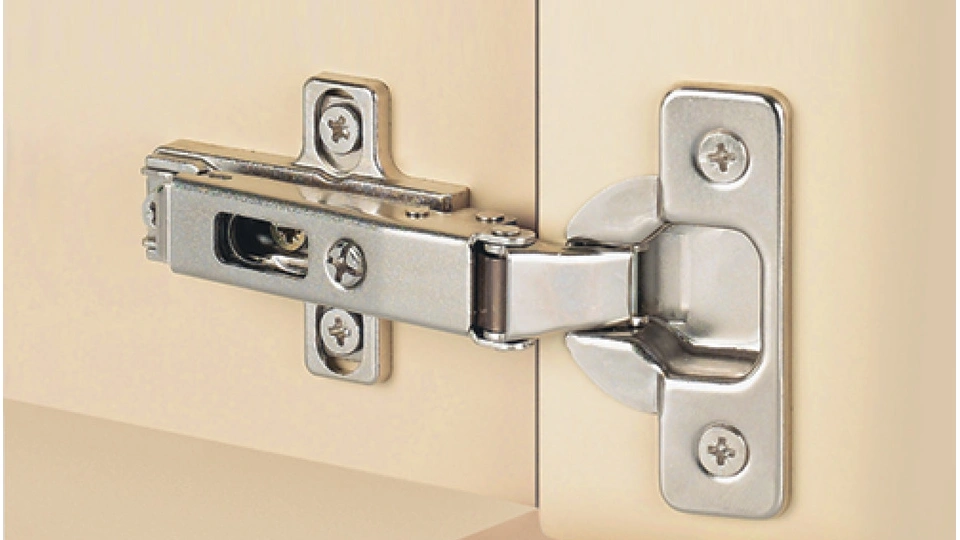
When a cabinet door fails quietly — sticking, slamming, or drifting open on its own — the first assumption is usually installation error. But in many cases, the problem starts much earlier, with the component itself. For contractors, millwork shops, cabinet manufacturers, and commercial fit-out teams, hinge quality is not a secondary concern. It is a primary one, because poor-performing hardware gets discovered at the worst possible time: during a final walkthrough, after a warranty claim, or in the middle of a high-volume production run.
Sourcing hardware from a domestic manufacturer adds a layer of accountability that import-heavy supply chains often cannot match. But not every US-based supplier operates at the same level of consistency, and not every manufacturer is equipped to serve the full range of applications that a serious buyer requires. Before committing to a supplier relationship, there are specific questions that separate a reliable long-term source from one that simply lists products online.
Table of Contents
1. Does the Manufacturer Specialize in Soft Close Mechanisms or Treat Them as One SKU Among Many?
Specialization matters in hardware manufacturing because the engineering behind a soft close mechanism is genuinely complex. The internal dampening system that controls closing velocity must perform consistently across temperature changes, repeated cycles, and varying door weights. When a manufacturer treats a soft close hinge manufacturer relationship as a specialty — meaning they have dedicated engineering, tooling, and quality control around that product category — the result is typically a more reliable component than one produced as an afterthought in a broad catalog.
A supplier that positions soft close hinges as a core product, rather than a filler line, is more likely to invest in cycle testing, material consistency, and design refinement. That depth of focus tends to show in the finished product, particularly over time and under repeated use. Buyers who have sourced from generalist distributors often discover variation in dampening tension across batches — a problem that specialized manufacturers are better equipped to prevent.
Why Product Depth Signals Manufacturing Maturity
A manufacturer with genuine depth in a product category will typically offer variations designed for specific applications — inset doors, face-frame cabinets, overlay configurations, and heavy-duty commercial use. When a supplier’s catalog shows thoughtful product differentiation rather than a single universal option, it suggests real engineering investment. That investment usually correlates with tighter tolerances and more consistent dampening performance across the product line.



2. What Is Their Production and Lead Time Reliability Under Real Demand Conditions?
Lead time reliability is one of the most underweighted factors in hardware sourcing decisions. A supplier that meets lead times during low-demand periods may not perform the same way when multiple large orders are placed simultaneously. For cabinet shops running production schedules or contractors managing multiple commercial projects, a missed hardware delivery does not just create inconvenience — it creates measurable downtime and potential client penalties.
The right question is not simply “what is your lead time?” but rather “what does your lead time look like during peak production periods, and what is your process when a large order conflicts with existing commitments?” The answers reveal a great deal about operational maturity.
The Relationship Between Inventory Management and Delivery Consistency
Manufacturers who maintain strategic finished goods inventory — rather than building entirely to order — can typically respond more reliably to urgent requests without disrupting existing schedules. Understanding whether a supplier carries buffer stock, and how that stock is managed, gives buyers a clearer sense of realistic supply reliability rather than best-case lead times.
3. How Does the Manufacturer Control for Consistency Across Production Batches?
Batch consistency is a real and underappreciated issue in hardware manufacturing. A soft close hinge that performs well in the first shipment should perform identically in the fifth. When dampening tension varies between batches — even slightly — the result is noticeable to end users and difficult to diagnose after installation. Cabinet doors in the same kitchen or commercial space should all close at the same controlled rate. When they do not, the problem reflects upstream inconsistency in the manufacturing process.
Asking a manufacturer directly about their quality control protocols — including whether they conduct cycle testing, how frequently they calibrate production tooling, and how they handle non-conforming product — provides useful signal about whether consistency is actively managed or simply assumed.
Why Dampening Mechanism Tolerances Matter at Scale
At the level of a single cabinet, minor variation in hinge performance may go unnoticed. At the level of a 200-unit commercial fit-out or a production run of 500 cabinets, that variation compounds. Components with tighter manufacturing tolerances around the internal dampening mechanism are less prone to the gradual drift in performance that appears in lower-quality production. Buyers sourcing at volume benefit from asking how tolerance is verified, not just specified.
4. What Materials and Finish Standards Does the Manufacturer Actually Use?
Material quality in a hinge is not just a durability question — it also affects corrosion resistance, finish consistency, and long-term mechanical performance. In environments where humidity is a factor, such as kitchen cabinetry, bathroom vanities, or coastal commercial builds, the base material and surface treatment determine how well a hinge holds up over years of use. A hinge that oxidizes or degrades in finish changes how it looks and, in some cases, how it functions.
According to the American Society for Testing and Materials, material and finish standards for hardware components can vary significantly based on intended application environments — a distinction that reputable manufacturers acknowledge and design for, rather than applying a single standard across all products.
How Finish Quality Affects End-Client Satisfaction
In residential and high-end commercial work, hardware finish is visible. Hinges that leave a cabinet interior show through open doors, and even concealed components can affect the perceived quality of a finished installation if they discolor or corrode prematurely. Manufacturers who invest in quality plating and surface treatment processes tend to produce components that maintain their appearance under normal use — an outcome that directly affects client satisfaction and reduces callback requests.
5. Can the Manufacturer Support Custom Requirements Without Excessive Minimums?
Not every project fits a standard catalog. Commercial applications may require specific overlay configurations, unusual door weights, or finishes that match a broader hardware specification. A manufacturer’s ability to accommodate reasonable custom requirements — without imposing order minimums that only make sense for large distributors — reflects how they are structured to serve different buyer types.
Some manufacturers are set up exclusively for high-volume commodity production and cannot realistically serve smaller custom runs. Others have engineering and production flexibility that makes modest custom orders practical. Understanding which category a supplier falls into early in the relationship saves time and avoids misaligned expectations.
Balancing Customization Capability with Production Reliability
Custom capability is only valuable if it does not introduce lead time uncertainty or quality variability. Suppliers who handle custom orders within a structured process — with defined engineering review, documented specifications, and clear timelines — are more reliable partners than those who accommodate custom requests informally. The process behind custom production matters as much as the willingness to do it.
6. What Does Their Warranty and Post-Sale Support Process Actually Look Like?
Warranty terms printed in a product catalog and the reality of how warranty claims are handled are often two different things. A supplier who makes the claims process straightforward — clear documentation requirements, reasonable resolution timelines, and knowledgeable support staff — removes a significant risk from a buyer’s operations. One who makes claims difficult to process, or who disputes field failures without substantive investigation, adds risk even when the hardware itself is adequate.
The right question is not just “do you offer a warranty?” but “how does the claims process work, and what is a typical resolution timeline?” Suppliers with genuine confidence in their product quality tend to have cleaner, more defined processes because they expect relatively few claims.
Post-Sale Support as a Reflection of Manufacturing Confidence
A manufacturer who stands behind their product with accessible, responsive support is usually one who has high confidence in their production quality. Suppliers who are difficult to reach after a sale, or who redirect buyers to generic distributors for support, often lack the internal structure to take real accountability for component performance. For buyers managing multiple client projects, post-sale accountability is not a secondary consideration — it is part of the total cost of the supplier relationship.
7. How Does the Manufacturer Handle Supply Chain Disruptions and What Is Their Domestic Sourcing Depth?
The past several years have demonstrated clearly that supply chain disruptions are not theoretical. For buyers who depend on predictable hardware availability, understanding how a manufacturer manages upstream material supply is relevant to real planning decisions. A domestic manufacturer who sources primary materials from US suppliers or maintains strategic material inventory is generally better positioned to absorb disruption than one who depends on a single offshore material source with no buffer.
This is not an argument against international material sourcing — it is a question of supply chain architecture. Manufacturers who have thought through contingency supply options and can articulate them clearly are more dependable long-term partners than those who have not addressed the question.
Why Domestic Manufacturing Depth Reduces Procurement Risk
When a manufacturer has genuine production depth domestically — meaning not just assembly, but meaningful manufacturing activity on home soil — they typically have more control over the variables that affect delivery reliability and quality consistency. That control does not eliminate all risk, but it reduces the number of dependencies that can fail simultaneously. For buyers building long-term supplier relationships, that architecture matters.
Making the Right Call Before the Relationship Starts
Choosing a hardware manufacturer is not a purchasing decision made once and forgotten. It is a supply relationship that affects product quality, project timelines, client satisfaction, and operational risk on an ongoing basis. The seven questions outlined here are not procedural formalities — they reflect the real operational concerns that surface when a supplier relationship runs into difficulty.
Asking these questions before a first order is placed takes a modest amount of time. Discovering the answers after a production run has shipped, a project deadline has been missed, or a client has raised a complaint takes considerably more. The manufacturing quality, batch consistency, post-sale support structure, and supply chain depth of a soft close hinge manufacturer directly determine whether that relationship adds stability to a buyer’s operations or introduces new points of failure.
In a market where hardware quality varies significantly and domestic manufacturing is not always what it appears to be, due diligence at the sourcing stage is not overcaution — it is standard professional practice. The manufacturers worth working with will answer these questions clearly and without hesitation.