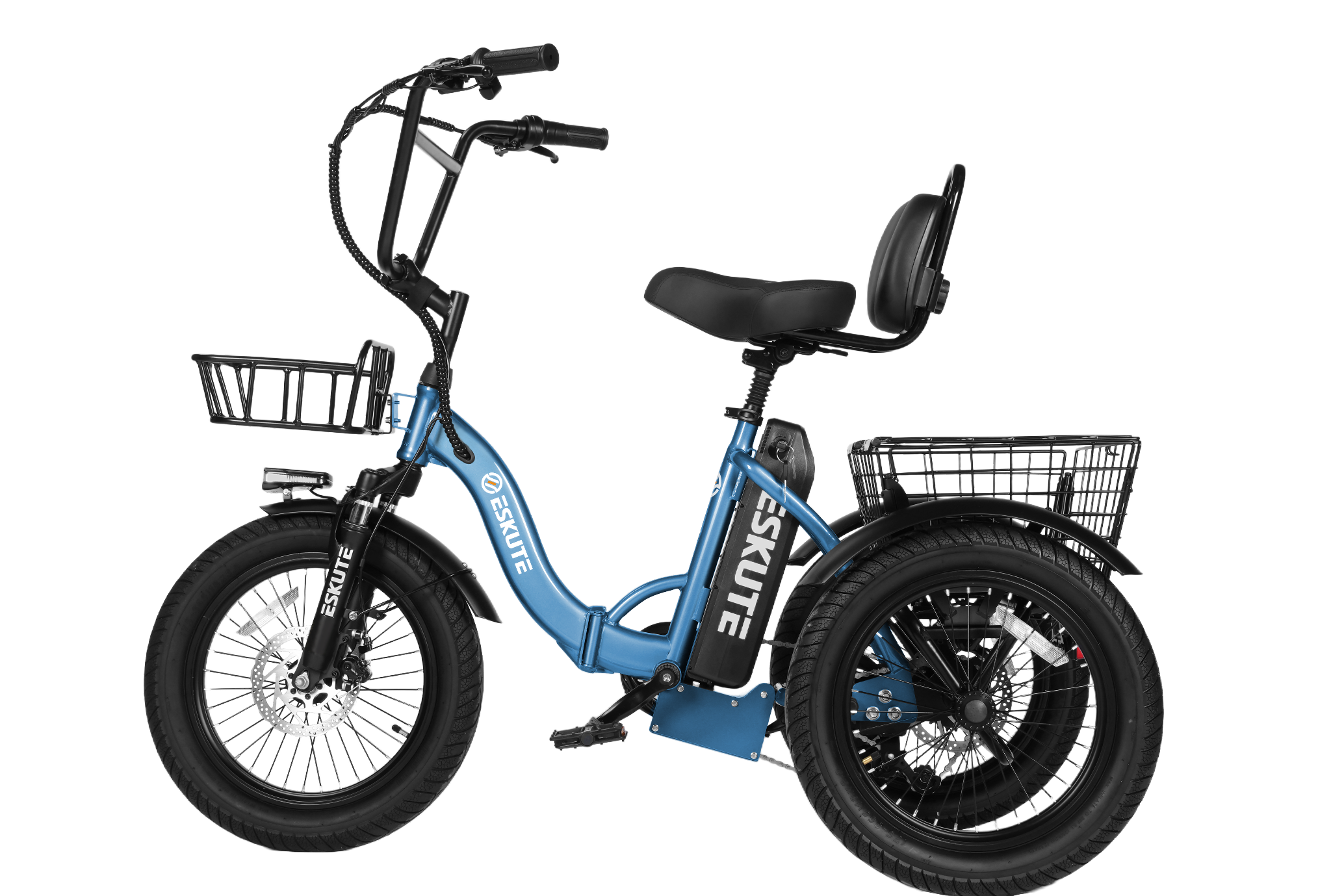
Every morning, millions of commuters sit trapped in gridlock, watching fuel costs climb and stress levels rise. Whether it’s the unpredictable expense of car ownership or the physical exhaustion of cycling long distances, traditional commuting methods are increasingly falling short of modern needs. Electric tricycles for adults have emerged as a compelling alternative — offering the stability of three wheels, practical cargo capacity, and the efficiency of electric assist, all while significantly reducing your carbon footprint.
But here’s the challenge most buyers face: not every electric tricycle suits every commute. A model perfectly designed for a flat five-mile urban route may struggle on a hilly fifteen-mile journey. Choosing the wrong one means either running out of battery halfway to work or overspending on power you never actually need.
This guide cuts through the confusion by walking you through a practical, distance-first approach to selecting your ideal electric tricycle. You’ll learn how to accurately assess your commute requirements, decode critical specifications like motor power and battery capacity, explore standout models including options from ESKUTE, and apply proven cost-saving strategies. By the end, you’ll have a clear, confident path to the commuter electric bike that genuinely fits your daily life.
Table of Contents
Assessing Your Commute: The Foundation for Choosing a Commuter Electric Bike
Before comparing motors or browsing battery specs, the smartest first move is mapping out exactly what your commute demands. Start with the basics: measure your one-way distance, then double it. That round-trip figure becomes your non-negotiable baseline for range. A five-mile one-way trip sounds manageable, but a ten-mile daily round-trip — plus the occasional errand stop — means you need a tricycle that comfortably handles twelve to fourteen miles per charge without pushing its limits.
Terrain matters just as much as distance. A flat urban route through city streets places far less strain on a motor than a suburban commute with even modest inclines. Ride a hilly route on a low-powered tricycle and you’ll drain the battery significantly faster than the manufacturer’s rated range suggests. Take note of elevation changes along your path — even a few sustained climbs can reduce effective range by twenty percent or more.



Think honestly about what you’ll carry. Groceries, a laptop bag, tools for work — cargo weight directly affects both motor strain and battery consumption. Some commuters also need to transport a passenger, which demands a sturdier frame and more powerful motor. Factor in your local climate too. Cold temperatures reduce battery efficiency, and wet or windy conditions influence how hard the motor works to maintain speed.
This assessment isn’t just background research — it directly shapes the motor wattage and battery capacity you’ll need. Skipping it leads to either an underpowered tricycle that struggles daily or an overpowered model that costs more than your commute actually requires.
Decoding Key Specifications: Motor Power and Battery Capacity
Understanding Motor Power for Varied Commute Terrains
Motor wattage is the single biggest determinant of how well an electric tricycle handles your specific route. Entry-level motors in the 250W range work reliably for short urban commutes — typically under eight miles — on relatively flat ground. They keep speeds comfortable for city traffic while staying within legal limits in most European countries and several US states. Step up to a 500W motor and you gain meaningful hill-climbing capability, making it the practical sweet spot for suburban commuters dealing with moderate inclines or carrying regular cargo loads. For longer routes exceeding twelve miles or terrain with sustained steep grades, a 750W motor delivers the torque needed without constantly maxing out the system. Running a motor near its ceiling every day accelerates wear and drains the battery faster than rated specs suggest, so choosing slightly more power than your minimum requirement is a sound investment in longevity.
Battery Capacity and Range: Ensuring Enough Power for Your Distance
Battery capacity, measured in watt-hours, is your range budget. A rough but reliable rule: every 10Wh of capacity delivers approximately half a mile of range under moderate assist on flat terrain. A 500Wh battery, then, offers a theoretical ceiling near twenty-five miles — but real-world conditions consistently trim that figure. Rider weight above 180 pounds, consistent headwinds, cold temperatures below 50°F, and higher assist levels each chip away at effective range. For a ten-mile round trip, a 400Wh battery feels adequate on paper but leaves little buffer for detours or a grocery stop. Targeting a battery that covers your round-trip distance at roughly seventy percent of its rated capacity gives you a comfortable margin without overpaying for unused energy. Charging time matters too — most commuter-grade batteries reach full charge in four to six hours, meaning an overnight charge fits naturally into any routine. Battery lifespan typically runs 500 to 800 full charge cycles before capacity noticeably degrades, so avoiding full discharges and storing the battery at partial charge during long breaks significantly extends its usable life.

Exploring ESKUTE Models and Other Commuter Electric Bikes
ESKUTE has carved out a solid reputation in the commuter e-bike space, and their tricycle-oriented offerings reflect a genuine understanding of daily rider needs. The ESKUTE Polluno Pro, for instance, pairs a capable rear-hub motor with a substantial battery pack, delivering a stable, upright riding position that suits commuters who prioritize comfort over speed. Its integrated rear cargo rack handles everyday loads without compromising balance — a meaningful advantage over two-wheeled alternatives when you’re navigating stop-and-go urban traffic with a full bag. The step-through frame design makes mounting and dismounting effortless, particularly valuable for riders who make multiple stops throughout their commute.
Beyond ESKUTE, the commuter electric tricycle market offers several strong contenders worth evaluating. Addmotor’s Motan series targets longer-range commuters with larger battery configurations and reinforced frames built for heavier cargo loads. Schwinn’s entry-level electric tricycles appeal to budget-conscious commuters on shorter, flatter routes, trading raw power for affordability. EWheels focuses on stability-first designs with wider rear axles, making them popular among riders who prioritize low-speed control over hill-climbing performance.
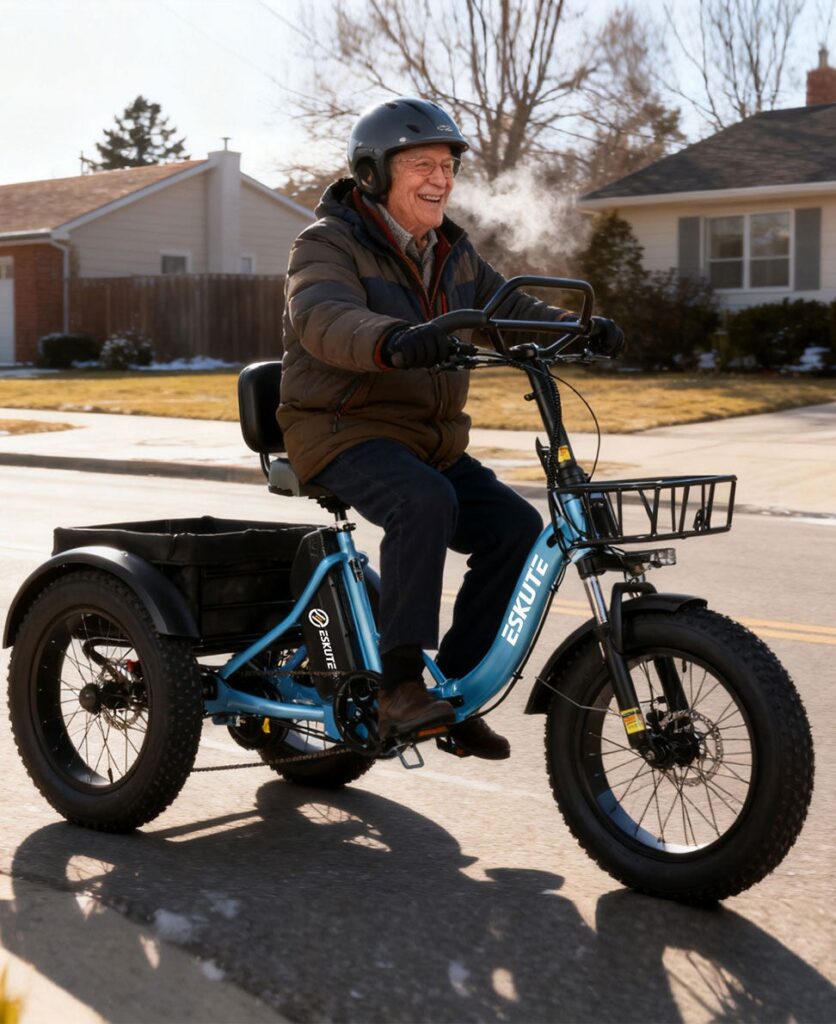
When comparing models across brands, three features consistently separate adequate commuter tricycles from genuinely excellent ones. First, look for integrated lighting — front and rear — since dedicated commuters often ride in low-light conditions. Second, assess the cargo system: a rear basket alone rarely meets real commuting demands, while models offering front baskets or pannier compatibility provide meaningful daily flexibility. Third, evaluate frame geometry for your body type. A poorly fitted tricycle creates fatigue that compounds over a five-day commuting week, regardless of how capable the motor and battery are.
Cost-Saving Strategies for Daily Commuting with E-Bikes
Switching to an electric tricycle isn’t just a lifestyle change — it’s a financial decision that pays dividends over time. The most immediate savings come from fuel replacement. The average car commuter spends well over $1,500 annually on gasoline alone, while charging an e-bike battery costs roughly $0.10 to $0.20 per full charge. Even daily commuters rack up less than $50 in annual electricity costs, making the contrast stark and immediate.
Maintenance costs tell a similar story. Cars demand oil changes, brake replacements, transmission servicing, and tire rotations that collectively cost hundreds of dollars each year. Electric tricycles have far fewer moving parts — no combustion engine, no exhaust system, no complex drivetrain. Routine maintenance typically involves brake adjustments, tire inflation, and occasional chain lubrication, all manageable at minimal expense. Over a three-year period, the cumulative savings on fuel and maintenance alone often offset the initial purchase price.

Extending your battery’s lifespan is another practical savings lever. Avoid depleting the battery below twenty percent regularly, store it indoors during cold months, and use the lowest effective assist level on flat stretches. These habits can push your battery well past the standard 500-cycle threshold, delaying a replacement that typically costs $200 to $400.
Finally, check for local incentives. Several US states and many European countries offer tax credits, rebates, or subsidies for electric bike purchases, sometimes covering ten to thirty percent of the cost. Employers increasingly offer commuter benefits applicable to e-bikes as well. Combining these programs with long-term operational savings makes the return on investment considerably shorter than most buyers initially expect.
Step-by-Step Guide to Selecting Your Electric Tricycle
With your commute assessed and specifications understood, translating that knowledge into an actual purchase comes down to five clear steps. Start by documenting your commute parameters — round-trip distance, elevation changes, typical cargo weight, and weather conditions — in a single reference sheet. This prevents spec-sheet excitement from overriding practical requirements when you’re browsing options.
Next, use those parameters to filter models by motor power and battery capacity. A commuter covering ten flat miles daily needs different specs than someone tackling fifteen hilly miles with a loaded cargo rack. Shortlist three to five models that meet your baseline requirements, including ESKUTE offerings alongside competing brands, so you’re comparing real alternatives rather than fixating on a single option.
Third, prioritize a test ride whenever possible. Comfort compounds over a five-day commuting week — a tricycle that feels slightly awkward in a parking lot becomes genuinely fatiguing by Friday. Pay attention to handlebar reach, seat height adjustability, and how naturally the pedal-assist system responds to your cadence.
Fourth, calculate total cost of ownership rather than sticker price alone. Factor in estimated annual electricity costs, routine maintenance, any available tax credits or employer commuter benefits, and the fuel savings you’ll accumulate. A model priced slightly higher often delivers better long-term value through superior battery lifespan and lower servicing needs.
Finally, verify warranty coverage before committing. A solid commuter tricycle should carry at least a one-year warranty on electrical components and a two-year frame warranty, with accessible customer support for replacement parts. Confirm that local service options exist, since shipping a tricycle for repairs adds both cost and downtime to an otherwise straightforward ownership experience.
Making the Right Choice for Your Daily Commute
Choosing the right electric tricycle for your commute ultimately comes down to one foundational principle: let your actual route drive every decision. Distance sets your battery requirements, terrain determines motor power, and cargo needs shape the frame and storage configuration you’ll rely on daily. Skipping this assessment — and jumping straight to spec sheets or price tags — is how commuters end up with tricycles that either fall short on range or cost far more than their commute demands.
The specifications covered here give you a practical framework for evaluating any model objectively. Whether you’re drawn to ESKUTE’s commuter-focused designs, Addmotor’s heavy-duty configurations, or a budget-friendly entry-level option, the same criteria apply: match motor wattage to your terrain, target battery capacity that covers your round trip at seventy percent of rated range, and factor in long-term ownership costs rather than sticker price alone.
The step-by-step selection process ties everything together — from documenting your commute parameters to verifying warranty coverage — so no critical detail slips through when you’re ready to buy. Combined with the cost-saving strategies available through efficient battery habits and local incentives, the financial case for switching is genuinely compelling.
The right electric tricycle doesn’t just get you to work — it transforms the entire commuting experience into something sustainable, affordable, and surprisingly enjoyable. That transformation starts with the clarity this guide provides.