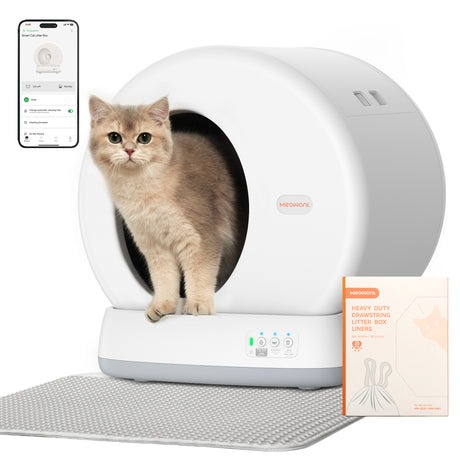
Every cat owner knows the drill: the daily scoop, the lingering odor, the guesswork about whether your cat’s bathroom habits are normal or cause for concern. Traditional litter box maintenance is one of those unglamorous realities of pet ownership that demands time, consistency, and a strong stomach. Miss a day, and you’re not just dealing with a smelly problem — you may also be overlooking subtle signs that your cat’s health is changing.
Enter the smart self-cleaning litter box, a technological leap that’s reshaping how we care for our feline companions. These devices promise to automate the messy work while simultaneously turning routine bathroom visits into a stream of meaningful health data. But do they truly deliver on that promise, and how do they stack up against the hands-on approach most cat owners have relied on for decades?
This article digs into the real differences between smart and traditional litter care, with a sharp focus on health monitoring, ease of maintenance, and safety engineering. Whether you’re a tech-savvy pet owner curious about the latest innovations or simply someone tired of the daily scoop, understanding these distinctions could transform how proactively you manage your cat’s well-being.
Table of Contents
Traditional Cat Litter Care: Limitations and Daily Hassles
For most cat owners, litter box maintenance follows a familiar rhythm: scoop once or twice daily, do a full clean every week or two, and hope the odor stays manageable in between. It’s a routine that demands consistency, and when life gets busy, that consistency is often the first thing to slip. A skipped day here, a rushed scoop there — and suddenly you’re not just behind on chores, you’re potentially missing critical information about your cat’s health.
The core problem with traditional litter care isn’t just the inconvenience — it’s the reactive nature of the whole system. Without any automated tracking, owners rely entirely on memory and observation to notice changes in their cat’s bathroom habits. Did your cat visit the box more than usual yesterday? Was the output smaller than normal? These are the kinds of subtle shifts that can signal early-stage urinary tract infections, kidney disease, diabetes, or digestive issues, yet they’re nearly impossible to catch reliably through manual scooping alone.




Odor control presents its own challenges. Traditional boxes, even with high-quality litter, require frequent attention to stay fresh. Waste left sitting for even a few hours can deter cats from using the box, leading to accidents elsewhere and compounding both the hygiene problem and the stress on your cat. There’s also no built-in alert system — no notification telling you the box needs attention, no record of how many times it was used overnight.
Ultimately, traditional litter care places the entire monitoring burden on the owner, creating gaps that a busy household simply cannot always fill. The result is a system that is fundamentally reactive: problems are noticed only after they’ve become visible, by which point a health issue may already be well underway.
The Smart Cat Litter Box Revolution: Technology and Core Features
Smart self-cleaning litter boxes represent a genuine shift in how pet owners interact with one of the most routine — and least glamorous — aspects of cat care. At their core, these devices combine mechanical automation with sensor technology to handle waste removal independently, but the more compelling story lies in what they do beyond just cleaning themselves. They observe, record, and communicate, turning an ordinary bathroom visit into a data point that can meaningfully inform your cat’s health management.
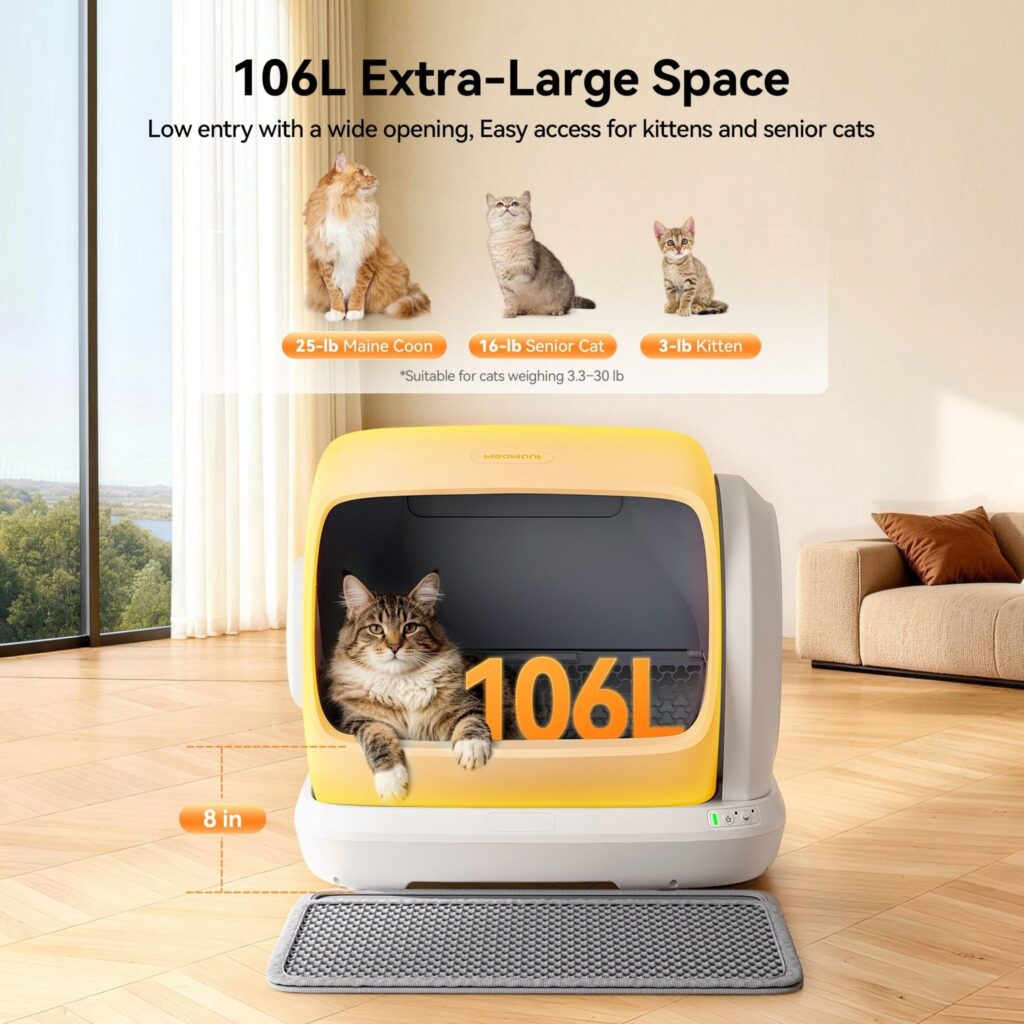
The hardware foundation of most smart litter boxes relies on a combination of weight sensors and motion or infrared detectors. Weight sensors are particularly valuable: they can identify individual cats in multi-pet households by recognizing each animal’s unique body weight, then log separate usage data for each. Motion detectors confirm when a cat has entered and exited the unit, triggering the cleaning cycle only after the cat is safely clear. Some models also incorporate waste-level sensors that alert owners when the disposal drawer is nearing capacity, eliminating the guesswork of manual checks.
The automatic raking or rotating drum system is what handles the physical cleaning. Depending on the design, a rake sifts clumped waste into a sealed compartment, or the entire globe rotates to separate clumps from clean litter. Either way, the process runs on a timer or motion-triggered delay — typically five to ten minutes after a cat exits — keeping the box consistently fresh without owner intervention. Brands like Meowant have built their smart litter box designs around this combination of sensor precision and mechanical reliability, reflecting how central these features have become to the category as a whole.
How Self Cleaning Litter Boxes Automate the Process
The automation cycle follows a straightforward sequence: a cat enters, sensors detect the presence and log the visit, the cat exits, and after a preset delay, the cleaning mechanism activates. Safety sensors continuously monitor the interior during this cycle; if motion or weight is detected inside the unit, the mechanism immediately halts. Once cleaning completes, waste is deposited into a sealed, odor-trapping drawer or bag. Most models send a maintenance alert to the owner’s smartphone when the waste compartment needs emptying — typically every few days depending on usage — reducing the task to a quick, contained disposal rather than the prolonged scooping session traditional boxes require.
Connectivity and User Interface for Modern Pet Owners
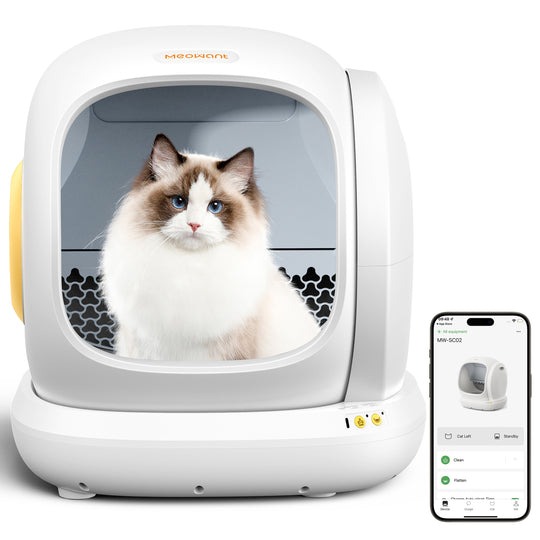
The companion app is where the smart litter box ecosystem truly distinguishes itself. Through Bluetooth or Wi-Fi connectivity, owners can monitor usage in real time, review historical visit logs, adjust cleaning schedules, and receive push notifications for maintenance needs or unusual activity — all from a smartphone. Many apps display usage trends as easy-to-read charts, making it simple to spot changes over days or weeks. Some models integrate with broader smart home platforms, allowing voice control or automation routines. For busy households, this digital layer transforms litter box management from a physical chore into a largely passive, data-informed process that fits naturally into a modern pet care routine.
Health Tracking: Unlocking Insights into Your Cat’s Well-being
One of the most significant advantages smart litter boxes hold over traditional care isn’t the automation itself — it’s the continuous, passive health monitoring that comes with it. Cats are notoriously private animals who instinctively conceal signs of illness, making early detection genuinely difficult for even the most attentive owners. A smart litter box sidesteps this challenge by collecting objective, timestamped data on every bathroom visit, building a behavioral baseline that makes deviations immediately visible rather than something you might notice — or miss — during a rushed morning scoop.
The data these devices collect is more nuanced than most owners expect. Beyond simply logging that a visit occurred, advanced models record visit frequency, time spent inside the unit, weight at each visit, and the estimated volume of waste deposited. Over days and weeks, this information paints a detailed portrait of what “normal” looks like for your specific cat. When something shifts — more frequent short visits, a sudden drop in weight, or an unusual overnight pattern — the system flags it rather than waiting for you to notice something seems off.
The health conditions this kind of monitoring can surface early are clinically significant. Increased visit frequency with reduced output is a classic early indicator of feline lower urinary tract disease or a urinary blockage, both of which require prompt veterinary attention. A gradual increase in litter box visits paired with weight loss can point toward hyperthyroidism or diabetes. Conversely, infrequent visits or extended time inside the unit may suggest constipation or pain associated with arthritis. These are conditions where days matter — early intervention typically means simpler treatment, lower veterinary costs, and better outcomes for your cat.
Monitoring Bathroom Habits for Early Health Detection
Smart litter boxes track several specific metrics that manual observation simply cannot match in consistency: the number of daily visits, the duration of each visit, the time of day patterns, and waste volume estimates derived from weight differential readings. When a cat’s visit frequency jumps from three times per day to seven, or when visit duration suddenly shortens to under thirty seconds repeatedly, these numbers tell a story. Urinary tract infections, bladder stones, and kidney disease all produce characteristic usage patterns that show up in the data before they become obvious to the naked eye. Digestive disruptions — diarrhea or constipation — are similarly reflected in visit duration and frequency metrics, giving owners a concrete reason to schedule a veterinary check rather than waiting to see if the issue resolves on its own.
Data Analytics and Personalized Health Alerts
The companion app doesn’t just store raw numbers — it interprets them. Most platforms use trend analysis to compare recent activity against each cat’s individual baseline, generating alerts when readings fall outside normal ranges. Rather than receiving a generic notification, owners see context: “Luna visited the box 9 times today, compared to her usual 3-4.” This kind of personalized alert transforms data into a clear, actionable signal. The historical logs also prove invaluable during veterinary consultations, giving your vet a precise record of behavioral changes over weeks rather than relying on your memory of when something seemed different. Some platforms even generate shareable health reports formatted for veterinary review, shortening the diagnostic process and helping owners arrive at appointments already equipped with meaningful information. For multi-cat households, individual cat identification through weight recognition keeps each animal’s data separate and accurate, ensuring no cat’s health patterns get lost in the noise.
Easy Maintenance and Safe Engineering: Practical Benefits for Owners and Cats
The appeal of a smart litter box isn’t purely about data — for most owners, the immediate, tangible benefit is simply having less to do. Traditional litter boxes demand daily scooping, weekly deep cleans, and constant odor management. Smart systems compress most of that effort into one quick task: emptying a sealed waste drawer every few days. The enclosed disposal compartment contains odor far more effectively than an open box, meaning the surrounding space stays fresher with minimal intervention. For households with multiple cats, this reduction in manual labor is especially pronounced — what once required multiple daily scooping sessions becomes a streamlined routine that takes minutes rather than accumulating into a significant time commitment across the week.
Simplifying Care with Automated Cleaning Systems
The practical difference in day-to-day effort is substantial. With a smart self-cleaning box, the owner’s primary task shifts from scooping clumps to simply pulling out and replacing a waste drawer or liner — a contained, odor-minimized process that typically takes under two minutes. Most units signal exactly when this needs doing through an app notification, so there’s no need to check manually or estimate based on how long it’s been. Deep cleaning of the unit itself is still necessary periodically, but manufacturers generally design these components to disassemble easily, with smooth surfaces that resist litter buildup. Compared to scrubbing a traditional box that has accumulated waste residue over days, the maintenance gap is significant. Owners report spending a fraction of the time on litter-related chores, freeing that energy for more meaningful interaction with their cats.
Ensuring Feline Safety with Advanced Design and Materials
Safety engineering is where smart litter box manufacturers have invested considerable attention, and for good reason — any automated device that a cat enters and exits independently must be designed with multiple layers of protection. Weight and infrared sensors continuously monitor the interior throughout the cleaning cycle; the moment any sensor detects a cat’s presence, the mechanism stops immediately and resets its timer. This fail-safe operates independently of the scheduled cycle, meaning it activates whether the cat returns unexpectedly or never fully exited. The materials used in reputable models, including those from pet-focused brands like Meowant, are selected to be non-toxic and free of sharp edges, with interior surfaces smooth enough to prevent paw or claw entrapment. Globe-style units feature wide, unobstructed entry openings that accommodate cats of varying sizes without creating a confined, stressful experience. When evaluating models, prioritize those with clearly documented sensor response times, certifications for material safety, and enclosed waste compartments that prevent cats from re-accessing deposited waste — a combination that protects both physical safety and long-term hygiene.
Smart Litter Technology: A Better Way to Care for Your Cat
Smart self-cleaning litter boxes have moved well beyond novelty status — they represent a genuinely practical upgrade for cat owners who want more from their pet care routine than a daily chore. The advantages over traditional care are clearest in two areas: the quality of health monitoring and the reduction in hands-on maintenance. Where manual scooping offers only a snapshot of what happened in the last twenty-four hours, a smart system builds a continuous, objective record of your cat’s behavior — one that can surface early warning signs of urinary, digestive, or metabolic conditions long before they become obvious. That kind of proactive visibility is difficult to put a price on when early intervention can mean the difference between a simple treatment and a serious health crisis.
For tech-savvy pet owners, the companion app ecosystem adds a layer of control and insight that fits naturally into a connected lifestyle. For everyone else, the simple reality of spending minutes rather than accumulating daily scooping sessions is compelling enough on its own. Safety engineering has matured to the point where well-designed models protect cats reliably through multiple sensor layers and thoughtful material choices.
As technology continues to advance, smart litter boxes will only become more sophisticated in the health data they capture and interpret. Evaluating your options now — weighing health monitoring depth, safety certifications, and maintenance simplicity — puts you in a stronger position to make a choice that genuinely benefits your cat’s long-term well-being.