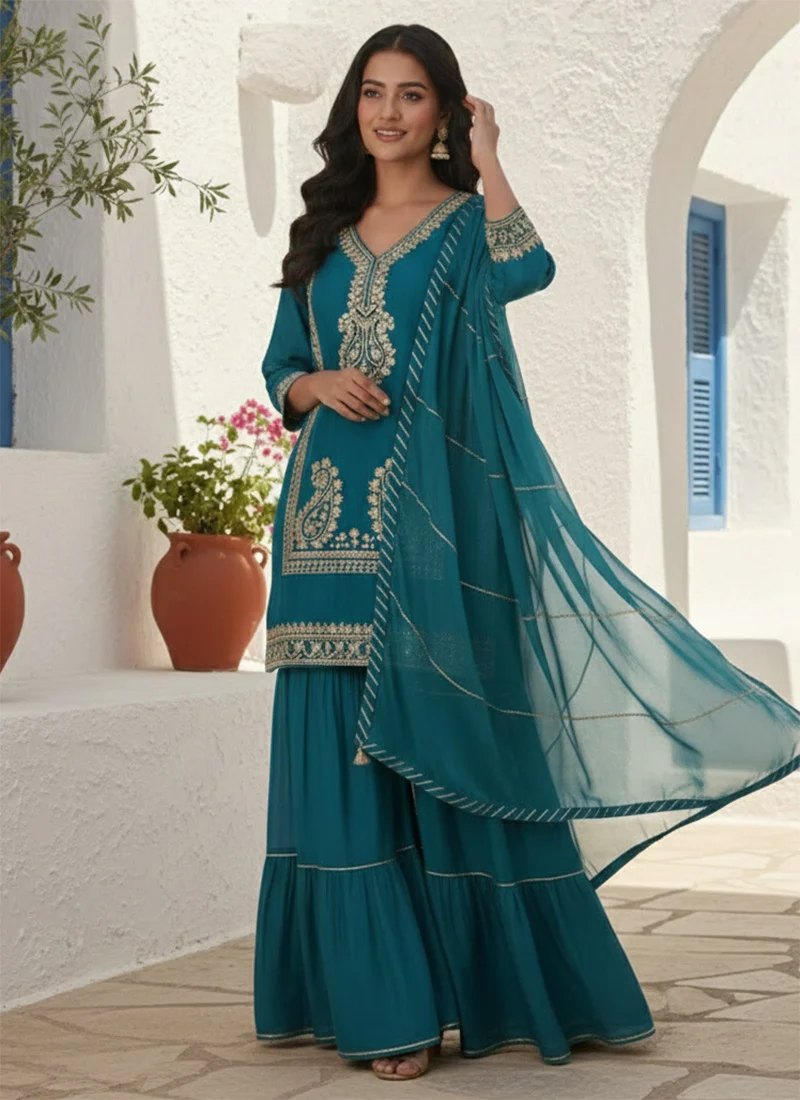
There’s a particular kind of elegance that Pakistani suits carry that feels simultaneously refined and effortless, structured yet soft, deeply cultural yet completely wearable in the modern world. It’s not an accident. Pakistani ethnic fashion has spent decades perfecting the art of understated sophistication, and the results speak for themselves in every embroidered neckline, every perfectly draped dupatta, and every fabric choice that feels considered rather than casual. If you’ve been exploring Pakistani suits for women and wondering how to translate that traditional elegance into something that feels current, contemporary, and genuinely your own, this guide is exactly where you need to start.
Because styling a Pakistani suit for the modern world isn’t about stripping away its traditional roots. It’s about building on them intelligently.
Table of Contents
First, Understand What Makes Pakistani Suits Distinct
Before you can style something well, you need to understand what it is and what makes it different from other ethnic silhouettes.
Pakistani suits are typically characterised by longer kurta lengths that fall well below the knee, often reaching the mid-calf or floor. The silhouettes tend to be straighter and more fluid than their Indian counterparts, with less structured flaring and more emphasis on clean, elegant lines. The embroidery particularly around the neckline, hemline, and sleeves is typically finer and more intricate, favouring delicate threadwork, resham embroidery, and subtle stone detailing over heavy zari or zardozi.
The fabric is where Pakistani fashion truly distinguishes itself. Lawn cotton, chiffon, organza, and karandi are all hallmarks of Pakistani suit construction fabrics that drape beautifully, photograph softly, and feel genuinely comfortable across long hours of wear.
Understanding these characteristics means understanding which styling choices will enhance them and which will work against them.
Styling Move 1: Ditch the Conventional Dupatta Drape
The dupatta is where most women either elevate their Pakistani suit look or quietly undersell it and the conventional over-the-shoulder drape, while perfectly acceptable, is also the most visually predictable option available.
In 2026, contemporary styling of the dupatta is far more interesting. Try draping it across one shoulder and letting it fall diagonally across the body; this creates movement and an asymmetric visual line that feels fashion-forward. Alternatively, try the waist-tie method: fold the dupatta lengthwise and knot it loosely at the waist over the kurta, letting the ends fall to the side. This immediately modernises the silhouette and gives the outfit a more styled, intentional quality.
For very formal occasions, pinning the dupatta at one shoulder and letting it trail behind gives a cape-like drama that photographs beautifully and feels genuinely elevated.
The dupatta doesn’t have to be worn but when it is, wear it with intention rather than habit.
Styling Move 2: Mix Traditional Suits With Contemporary Bottoms
One of the most effective ways to give a Pakistani suit a modern edge is to rethink what goes underneath the kurta. The traditional straight-cut salwar or churidar is elegant and timeless but it’s also the expected choice, and expected choices rarely create memorable looks.
Consider pairing a long Pakistani kurta with wide-leg trousers in a complementary solid colour. The contrast between the intricate embroidery of the kurta and the clean lines of tailored wide-leg pants creates a fusion silhouette that reads as contemporary without abandoning the ethnic foundation.
Straight-leg denim is another option that more women should be exploring. A beautifully embroidered Pakistani kurta in chiffon or organza worn over well-fitted dark denim is an Indo-Western combination that has been quietly gaining ground in urban fashion circles and for good reason. It works. It’s practical, it’s stylish, and it communicates a confidence in mixing aesthetics that feels very current.
Dhoti pants in a coordinated fabric bring a different kind of modern energy, relaxed, artisanal, and rooted in craft while remaining unmistakably contemporary in silhouette.
Styling Move 3: Rethink Your Footwear Entirely
The footwear you choose with a Pakistani suit can either anchor the look in tradition or pivot it toward something more modern and that pivot is often the single most effective styling tool available.
Traditional juttis and khussas are beautiful and entirely appropriate but if contemporary is the goal, consider how much a pair of block-heeled mules in a neutral tone can shift the entire energy of the outfit. Or clean white sneakers worn under a casual printed lawn suit, a combination that sounds unconventional but photographs surprisingly well and has been embraced by a younger generation of ethnic fashion enthusiasts.
For evening occasions, strappy heeled sandals in metallic tones of gold, bronze, or silver give Pakistani suits a cocktail-party energy without compromising the ethnic integrity of the outfit. The key is keeping the shoe relatively simple so it doesn’t compete with the embroidery of the suit.
Styling Move 4: Modernise Your Jewellery Choices
Pakistani suits and heavy traditional jewellery are a classic combination but modern styling often calls for a more edited approach. The contemporary rule is simple: let the embroidery of the suit dictate the weight of the jewellery.
A heavily embroidered neckline already functions as jewellery. Adding a statement necklace on top of it creates visual clutter rather than elegance. In this case, opt for simple stud earrings or small hoops and let the kurta neckwork do the talking.
Conversely, a minimally embroidered or plain Pakistani suit in a beautiful fabric is the perfect canvas for statement jewellery, a bold oxidised necklace, a layered gold chain set, or even sculptural contemporary earrings that bridge the ethnic-modern divide.
Rings and bangles are always appropriate with Pakistani suits and add a quiet femininity without disrupting the overall aesthetic. Stack thin gold bangles on one wrist or choosing a single cuff in an interesting design either works.
Styling Move 5: Play With Colour Blocking
Traditional Pakistani suits often feature tonal embroidery where the threadwork is in a shade close to the base fabric colour. While this is undeniably elegant, contemporary styling opens up a more playful relationship with colour.
Try pairing a contrast-colour dupatta with your suit, a rust dupatta with a sage green suit, a cobalt dupatta with a dusty pink suit, or a cream dupatta with a deep burgundy base. This colour-blocking approach gives the outfit a graphic, modern quality that feels very much in step with current fashion sensibility.
You can also apply this to the bottoms: a kurta in one colour with a salwar or trouser in a deliberately contrasting shade creates a co-ord energy that feels fashion-forward while remaining entirely within the ethnic wardrobe vocabulary.
The Occasions That Call for a Modern Pakistani Suit Look
Contemporary styling of Pakistani suits isn’t appropriate for every occasion and knowing when to modernise and when to let tradition lead is part of the skill.
Casual daytime events, brunches, and family visits are ideal for the more relaxed modern interpretations: the denim pairing, the sneaker styling, the minimal jewellery approach.
Office environments where ethnic wear is welcome respond well to the wide-leg trouser combination and the edited dupatta drape polished, professional, and culturally expressive without being overdressed.
Semi-formal celebrations and festival gatherings are where you can bring in the colour blocking, the statement jewellery, and the more dramatic dupatta styling.
Save full traditional styling the complete three-piece suit in heavy fabric with conventional draping and layered jewellery for formal weddings and ceremonial occasions. That look belongs there, and it remains magnificent in its rightful context.
Final Thoughts
The beauty of Pakistani suits in 2026 is precisely this flexibility: they are traditional enough to carry cultural meaning and contemporary enough to be reimagined endlessly. The women who wear them best are the ones who understand both dimensions and move fluidly between them.
Style it your way. Style it with intention. And never apologise for making something traditional feel like your own.