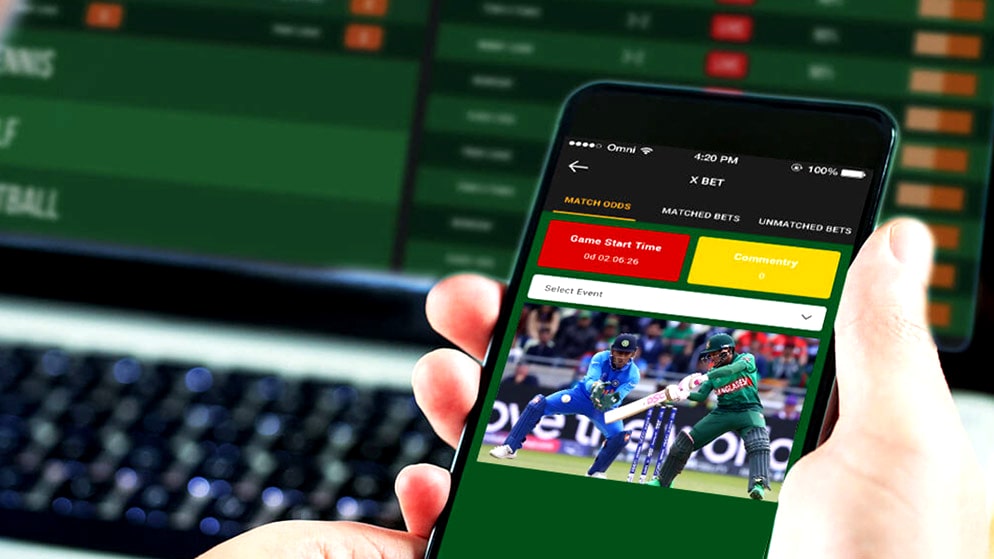
The landscape of online betting has shifted dramatically over the last decade. Platforms like weiwei168 have democratized access to casino games and sports betting, bringing the thrill of the casino floor to mobile devices. However, accessibility does not equate to profitability. Statistical analysis of player behavior reveals that a significant majority of losses are not attributed to “bad luck,” but rather to fundamental errors in strategy and risk management.
Successful betting is rarely about predicting the future with certainty; it is about managing probability and minimizing unforced errors. When players approach Weiwei168 without a structured plan, they effectively increase the house edge, turning games of chance into guarantees of loss. By analyzing the most common pitfalls through a statistical lens, players can tighten their gameplay, extend their bankroll, and approach betting with the discipline of an investor rather than a gambler.
Here is a comprehensive breakdown of the critical mistakes to avoid, analyzed through the framework of probability and risk management.
Why does poor bankroll management lead to statistical ruin?
The single most prevalent reason for player attrition on platforms like Weiwei168 is the lack of a defined bankroll management strategy. In statistical terms, this is often referred to as the “Risk of Ruin.” Even if a player finds a game with a favorable return, variance dictates that short-term results will fluctuate. Without an adequate financial buffer, a standard losing streak can wipe out a player’s funds before the probabilities have a chance to normalize.
Many novices bet arbitrarily, often wagering 10% or even 20% of their total balance on a single event. From a statistical standpoint, this is unsustainable. If you have a 50% chance of winning a bet, the probability of losing five times in a row is roughly 3%. While that sounds low, if you play hundreds of hands or rounds, that 3% event becomes a statistical inevitability. If your bet sizing is too large, that streak ends your game.



The Solution: Adopting the “Unit System” is the professional standard. A single “unit” should represent between 1% and 3% of your total bankroll. If you have a budget of $1,000, your maximum bet should never exceed $30. This approach creates a buffer that allows you to absorb the natural variance of the game without reaching a zero balance.
How does ignoring ‘House Edge’ and RTP affect long-term results?
Every game on Weiwei168 is built on mathematics. The “House Edge” is the mathematical advantage the casino holds over the player, while RTP (Return to Player) is the percentage of all wagered money a game will pay back to players over time. A common mistake is treating all games as equal. They are not.
For example, a typical slot machine might have an RTP of 95%, meaning for every $100 wagered, the machine is programmed to return $95 over the long haul. In contrast, European Roulette has an RTP of 97.3%, and Blackjack played with basic strategy can have an RTP as high as 99.5%.
Players often gravitate toward games with flashy graphics or high payouts without checking the RTP. Statistically, playing a game with a 90% RTP versus a 99% RTP dramatically reduces your “time on device” and your chances of walking away with a profit.
The Solution: Always check the information tab of the specific game title on Weiwei168. Prioritize games with the lowest house edge. If you are playing slots, look for titles with an RTP above 96%. If you are playing table games, avoid side bets, as these almost universally carry a significantly higher house edge than the main game.
Is the ‘Gambler’s Fallacy’ influencing your decision-making?
One of the most dangerous psychological traps in betting is the Gambler’s Fallacy. This is the erroneous belief that if a particular event occurs more frequently than normal during the past, it is less likely to happen in the future (or vice versa).
On a platform like Weiwei168, this often manifests in Roulette or Baccarat. If the ball lands on “Red” five times in a row, players flood their bets onto “Black,” believing it is “due.” In reality, every spin of the wheel or deal of the card shoe is an independent event (provided the cards are shuffled). The probability of landing on Red is exactly the same on the sixth spin as it was on the first. The wheel has no memory.
Basing wagers on the history of independent events is a surefire way to lose money. It leads to progressive betting systems where players increase their stakes to catch a result that isn’t statistically guaranteed to happen.
The Solution: Treat every round as a fresh start. Do not look for patterns in random number generators (RNGs). Acknowledging that previous results have zero influence on future outcomes is the hallmark of a disciplined, mathematically sound player.
What is the statistical impact of chasing losses?
“Chasing losses” refers to the practice of increasing bet sizes to recover money lost in previous rounds. This is often an emotional reaction rather than a logical one, known in the industry as going on “tilt.” From a data perspective, chasing losses usually involves a negative progression system (like the Martingale strategy), where you double your bet after every loss.
While the math suggests that one win will eventually recover all losses plus a small profit, this strategy ignores two critical real-world constraints: table limits and bankroll caps. Exponential growth is powerful. If you start with a $10 bet and lose seven times in a row, your eighth bet requires $1,280 just to break even. Most players do not have the bankroll to sustain this, or they hit the table maximum limit, making recovery impossible.
The Solution: Set a “Stop-Loss” limit before you log in to Weiwei168. If you lose that amount, the session ends. Statistically, protecting your downside is more important than maximizing your upside. Accepting a small loss today preserves your capital for a potentially profitable session tomorrow.
Are you miscalculating the value of bonuses and promotions?
Weiwei168, like many platforms, offers bonuses to attract and retain players. A frequent mistake is viewing these bonuses as “free money.” In the context of probability, a bonus is a tool that can either reduce the house edge or trap your liquidity, depending on the terms and conditions attached.
The critical metric here is the “Wagering Requirement” or “Rollover.” If you receive a $100 bonus with a 30x rollover, you must place $3,000 worth of bets before you can withdraw any winnings derived from that bonus. If the house edge on your chosen game is high, the statistical probability of busting that $100 bonus before completing the $3,000 requirement is high.
Furthermore, many players fail to check game contribution rates. Slots might contribute 100% to the rollover, while Blackjack might only contribute 10%. Playing Blackjack to clear a bonus with a 10% contribution rate effectively multiplies the wagering requirement by ten, making it statistically nearly impossible to profit.
The Solution: Read the fine print. calculate the “Expected Value” (EV) of the bonus. If the wagering requirements are too high (e.g., above 40x) or the time limits are too short, it may be statistically advantageous to decline the bonus and play with your own cash to maintain control over your withdrawal options.
How does betting under the influence alter risk assessment?
While this seems like a lifestyle tip, it is fundamentally a data issue. Alcohol and fatigue impair the prefrontal cortex, the part of the brain responsible for risk assessment and long-term planning. Studies on decision-making show that impaired subjects are significantly more likely to ignore probabilities and engage in high-risk behaviors.
When playing on Weiwei168, you are interfacing with algorithms designed to be mathematically perfect. If your cognitive faculties are reduced, you cannot effectively execute basic strategies or adhere to stop-loss limits. The “error rate” in your decision-making spikes. In games like Blackjack or Poker, where skill plays a role, playing tired or intoxicated maximizes the house edge against you.
The Solution: Treat betting like a business transaction. Only play when you are alert, rested, and sober. If you feel fatigue setting in, the data suggests your decision-making quality is about to degrade—log off immediately.
Are you failing to utilize basic strategy charts?
In games of skill available on Weiwei168, such as Blackjack and certain Video Poker variants, there is a mathematically optimal move for every single combination of cards. This is known as “Basic Strategy.”
A common mistake is playing by “feel” or “intuition.” “I feel like the dealer has a ten” is not a strategy; it is a guess. Playing Blackjack by intuition results in a house edge of roughly 2% to 4%. Playing with perfect basic strategy reduces that edge to 0.5%. Over thousands of hands, that difference equates to a massive amount of money saved or won.
The Solution: Never play skill-based games without a reference chart. These charts are widely available and are derived from computer simulations of millions of hands. Using them is not cheating; it is playing the game as it was mathematically designed to be played. Memorize the charts or keep them open in a separate window while you play.
Conclusion: The Discipline of the Data-Driven Player
Avoiding mistakes on Weiwei168 is not about finding a magic system to beat the house; it is about plugging the leaks in your own gameplay. The house already has a statistical advantage—there is no need to give them a larger one through poor bankroll management, emotional betting, or misunderstanding the rules of probability.
By shifting your mindset from that of a gambler hoping for luck to that of a strategist managing risk, you drastically change the dynamic of your sessions. You stop chasing losses and start managing variance. You stop playing random games and start selecting high-RTP options. You stop guessing and start executing. In the world of online betting, discipline is the only metric that consistently correlates with longevity.