Picture this: you’re deep into a crucial study session at the library, your essay is due in three hours, and suddenly your laptop flashes the dreaded low battery warning. No outlets are available within sight, and your phone—your lifeline to research materials and group chat coordination—is already at 15%. This nightmare scenario plays out daily for students across campuses worldwide. Modern academic life demands constant connectivity: laptops for note-taking and assignments, tablets for digital textbooks, phones for communication and quick research, and even wireless headphones for focused study sessions. Yet the infrastructure hasn’t caught up. Lecture halls have limited outlets, libraries become battlegrounds for power access, and coffee shops often restrict charging to paying customers. Traditional single-port chargers tie you to walls and force impossible choices about which device gets priority. Enter the portable USB-C power bank: a compact, multi-device charging solution that liberates students from outlet dependency. With capabilities extending beyond simple phone charging—including powering USB-C to dual HDMI adapters for presentations—these devices have become essential academic tools. This article explores why every student needs one and what features truly matter for campus life.
Table of Contents
The Modern Student’s Power Dilemma: Beyond the Single Outlet
Today’s students carry an entire digital ecosystem in their backpacks. A laptop serves as the primary workstation for essays, research, and coding assignments. A smartphone handles everything from instant communication with study groups to quick fact-checking during lectures. Many add a tablet for annotating digital textbooks or sketching diagrams, while wireless earbuds block out distractions in noisy common areas. Each device demands regular charging, yet campus infrastructure remains stubbornly inadequate. Walk into any university library during finals week and witness students sprawled awkwardly on floors near the few available outlets, their study positions dictated by cord length rather than comfort or collaboration needs. Lecture halls built decades ago offer perhaps two outlets for a room of fifty students. Coffee shops post signs limiting charging time or requiring continuous purchases. This creates a cascading productivity crisis: a dead laptop means handwritten notes that need later transcription, a dead phone means missed group coordination and lost access to cloud-stored materials, and anxiety about battery percentages becomes a constant mental drain. A portable power bank transforms this equation entirely. Rather than a device that merely extends your phone’s life by a few hours, modern high-capacity power banks function as personal power stations that keep your entire academic toolkit operational throughout marathon study sessions, back-to-back classes, and collaborative projects—wherever learning happens, completely independent of wall outlets.
Why USB-C is the Non-Negotiable Standard for Students
USB-C has emerged as the universal connector that finally ended the cable chaos plaguing students for years. Modern MacBooks, Dell XPS laptops, iPad Pros, Samsung Galaxy phones, and countless other devices now feature this reversible oval port as their primary charging and data interface. This standardization means one cable type can handle your entire device collection, eliminating the need to carry separate chargers for each gadget. Beyond simple convenience, USB-C delivers Power Delivery technology capable of transmitting up to 100 watts—enough to charge even power-hungry gaming laptops at full speed. A quality USB-C power bank can replenish your laptop during a lecture as effectively as a wall outlet would. The protocol also supports simultaneous high-speed data transfer at 10Gbps or faster, meaning the same port handles external storage drives and peripherals without performance compromises. Perhaps most remarkably for academic work, USB-C carries video signals through its Alternate Mode capability. This transforms your power bank into more than a battery—it becomes infrastructure. When you connect a USB-C to dual HDMI adapter to your laptop, powered by your portable power bank, you can drive two external monitors simultaneously for research-heavy projects that demand multiple windows and reference materials side by side. Imagine setting up a triple-screen workspace in a group study room: your laptop display plus two borrowed monitors, all running independently from wall power through your backpack-sized power bank. This capability proves invaluable during thesis writing when you need your draft on one screen, research papers on another, and citation management on your laptop. Computer science students benefit enormously when debugging code across multiple terminals and documentation windows. The same setup powers compelling presentations where you mirror content to an audience display while keeping presenter notes private on your laptop screen. Investing in USB-C infrastructure today means your charging solution remains relevant through multiple device upgrade cycles, protecting your investment as you progress from freshman orientation to graduate school.

Key Features to Look for in Your Campus Power Bank
Capacity and Portability: The Sweet Spot
Understanding power bank capacity starts with milliamp-hours (mAh), which measures total energy storage. A 20,000mAh power bank typically delivers one full laptop charge plus two complete phone charges—enough for a demanding academic day. The 20,000mAh to 30,000mAh range offers optimal balance: sufficient power for multiple devices without the bulk of industrial batteries. A 25,000mAh unit weighs roughly one pound and fits easily in backpack side pockets, making it genuinely portable rather than a burden you’ll leave behind.
Port Configuration: Your Charging Station
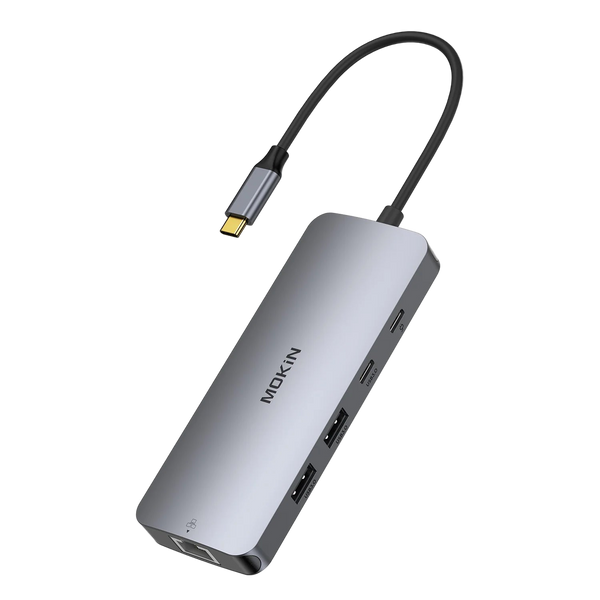
The ideal student power bank functions as a portable USB-C charging station with strategic port variety. Look for at least two USB-C Power Delivery ports—one for your laptop drawing 65 watts, another simultaneously charging your tablet at 30 watts. Include two USB-A ports for legacy devices like wireless earbuds, fitness trackers, or older phones that friends inevitably need to borrow. This four-port minimum transforms your power bank into a true multi-device hub. Brands like MOKiN design power banks with this multi-port architecture, creating compact formats that mirror desktop charging stations. The right configuration means never choosing which device gets priority—your entire tech ecosystem charges simultaneously during lunch breaks or commutes.





Power Delivery (PD) and Fast Charging
Power Delivery technology separates functional power banks from frustrating ones. Standard USB charging delivers 5-10 watts, requiring hours to replenish a laptop. USB-C PD negotiates up to 100 watts, charging your laptop from empty to 80% during a single lecture period. For students rushing between back-to-back classes with only fifteen-minute gaps, this speed difference transforms usability. Verify your power bank supports at least 65-watt PD output—the minimum for charging most student laptops at full speed while simultaneously powering accessories.
Real-World Student Scenarios Solved
The All-Day Library Marathon
Finals week demands marathon study sessions that stretch from morning coffee until the library’s closing announcement echoes through empty halls. Your portable USB-C power bank eliminates the outlet scavenger hunt that wastes precious minutes. Plug your laptop into the power bank’s 65-watt port and your phone into a secondary USB-C connection, then claim any seat based on lighting, quiet, or proximity to your study group—not electrical infrastructure. A 25,000mAh power bank delivers ten solid hours of laptop runtime plus continuous phone charging, carrying you through an entire day of research, writing, and problem sets without a single wall connection.
The Group Project Presentation
Presentation day arrives, and the conference room’s single outlet sits eight feet from the screen setup. Your group needs to drive content to two projectors simultaneously—one facing the audience, another angled toward your team for reference. Connect your laptop to a USB-C to dual HDMI adapter, then plug the adapter into your fully charged power bank. Your laptop now outputs to both displays while drawing power from your portable battery, completely independent from room infrastructure. The presentation runs flawlessly for ninety minutes without battery anxiety interrupting your flow. This same configuration works for thesis defenses, hackathon demos, or any scenario where presentation locations and power sources don’t align conveniently.
The Dorm Room Charging Hub
Dorm rooms offer frustratingly few outlets, often poorly positioned behind furniture. Transform your power bank into a bedside USB-C charging station by connecting it to the wall overnight, then using its multiple ports to charge your laptop, phone, tablet, and earbuds simultaneously from a single power source. During the day, simply disconnect the fully charged power bank and slip it into your backpack, taking your entire charging infrastructure mobile. This approach consolidates cable clutter and eliminates the nightly device-shuffling ritual of deciding which gadgets get overnight charging priority.
Making the Smart Choice: Recommendations and Integration
When selecting your portable USB-C power bank, prioritize models offering 20,000-30,000mAh capacity with at least 65-watt Power Delivery output and multiple port configurations—two USB-C PD ports plus two USB-A ports create the most versatile setup. Safety certifications matter significantly: look for UL, CE, or FCC marks indicating the device has passed rigorous testing for overcharge protection, temperature regulation, and short-circuit prevention. Reputable manufacturers build reliability into their designs, offering warranties and customer support that protect your investment beyond the initial purchase. Think beyond the power bank as an isolated purchase—view it as the centerpiece of an integrated mobile productivity system. Pair it with quality USB-C cables rated for data and power transmission, a USB-C to dual HDMI adapter for presentation flexibility, and perhaps a compact cable organizer to keep everything accessible in your backpack. This ecosystem approach means your charging infrastructure scales with your academic demands: freshman year might require basic laptop and phone charging, but by junior year when you’re leading research projects or design studios, that same power bank seamlessly supports dual-monitor workflows powered entirely from your portable battery. The initial investment—typically between fifty and one hundred dollars for quality units—pays dividends through eliminated productivity losses, reduced battery anxiety, and newfound freedom to work wherever inspiration and collaboration happen rather than wherever outlets permit. A portable USB-C power bank isn’t merely an accessory; it’s academic infrastructure you carry in your pocket, transforming any space into your personal powered workspace.
Your Essential Academic Power Solution
A portable USB-C power bank has evolved from convenient accessory to indispensable academic necessity. In an educational landscape where digital devices form the backbone of every assignment, lecture, and collaborative project, battery anxiety and outlet dependency create genuine barriers to learning. The modern USB-C power bank solves this fundamental problem by delivering reliable, multi-device charging wherever your studies take you—from crowded libraries to remote study spots to presentation venues with inadequate infrastructure. Its USB-C foundation provides future-proof versatility that extends far beyond simple phone charging, enabling laptop power throughout marathon study sessions and even driving dual displays through HDMI adapters for sophisticated presentation setups. As a portable charging station supporting your entire digital ecosystem simultaneously, it eliminates the productivity losses and mental drain caused by dead batteries and outlet scarcity. The investment—modest compared to the devices it protects and powers—pays immediate returns in uninterrupted workflow, reduced stress, and newfound freedom to work and collaborate anywhere inspiration strikes. Equip yourself with a quality portable USB-C power bank and reclaim control over your academic productivity. Transform every space into your powered workspace, ensure your presentations run flawlessly regardless of venue limitations, and focus your mental energy on learning rather than battery percentages. This small device represents your key to truly mobile, modern academic life.