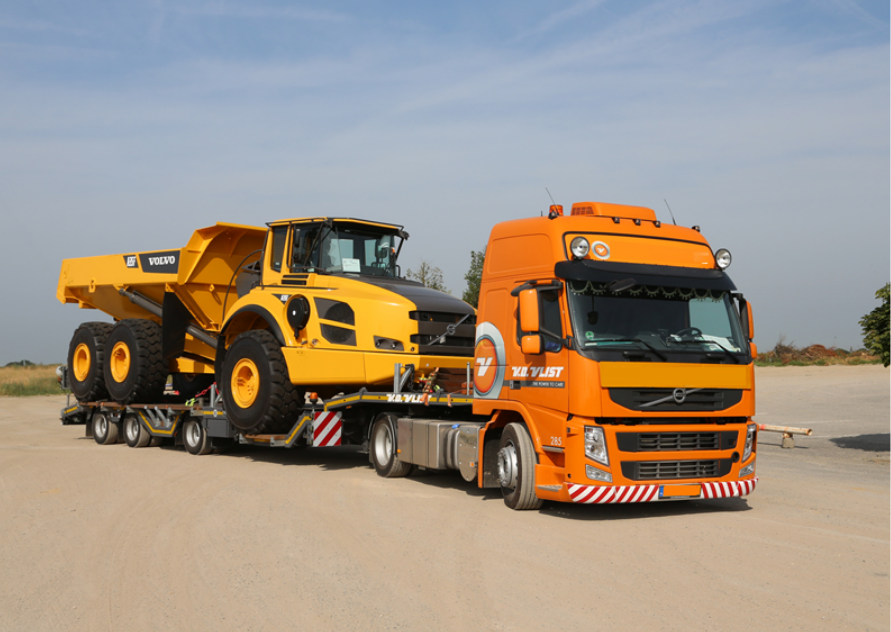
Moving heavy or specialized equipment between facilities, job sites, or across state lines is not a routine logistics decision. It involves coordinated planning, compliance with transport regulations, proper loading protocols, and a clear understanding of what happens when something goes wrong in transit. Yet many companies treat equipment moves the way they treat parcel shipping — they shop for the lowest rate, confirm a pickup date, and assume the rest will work itself out.
The result is often a frustrating and costly experience: equipment arriving damaged, deadlines missed because permits weren’t secured in advance, or liability gaps that only surface after an incident. These are not fringe outcomes. They are common consequences of a hiring process that skips the questions that matter most.
This article addresses seven specific mistakes that companies make when selecting a provider — not to criticize the industry, but to give decision-makers a clearer picture of what separates a smooth move from a costly one.
Table of Contents
1. Choosing a Provider Based Solely on Price
When companies hire an equipment transportation service, price is often the first and sometimes only filter applied. This is understandable from a budget management perspective, but it creates a decision framework that ignores the operational variables that actually determine outcome quality.
What Low Bids Often Leave Out
A low bid is frequently built around the most optimistic version of the job. It may exclude accessorial charges, permit fees, escort vehicle costs, or fuel surcharges that are practically certain to apply. When these items surface later as additions to the invoice, the original quote no longer reflects the actual cost of the move. Companies that evaluate multiple bids without standardizing the scope of each quote end up comparing different services at different levels of coverage, which makes the comparison itself unreliable.



The Hidden Cost of Service Gaps
Beyond invoice accuracy, price-driven selection often signals reduced coverage in areas like equipment securement, driver experience with oversized loads, or the provider’s internal process for handling delays and damage claims. A lower price is sometimes a reflection of fewer safeguards, not greater efficiency. When equipment is damaged in transit or a move takes longer than scheduled, the downstream cost to operations almost always exceeds whatever was saved on the transport rate.
2. Not Verifying Carrier Authority and Insurance Before Booking
Carrier authority and insurance are not bureaucratic formalities. They define whether the company moving your equipment is legally authorized to do so, and whether any loss or damage during transit falls within a covered, recoverable claim. Skipping this verification step is one of the most common and consequential mistakes companies make.
Understanding the Difference Between Broker and Carrier
Many equipment moves are arranged through brokers who contract the actual transport to third-party carriers. This is standard practice, but it means the entity you hire may not be the one physically moving your equipment. The carrier they assign may have different insurance levels, equipment conditions, and safety records. Companies that do not ask who the operating carrier will be — and do not verify that carrier’s credentials independently — are accepting a level of risk they may not be aware of.
Cargo Insurance Is Not Uniform
Insurance policies in freight and equipment transport vary significantly in what they cover, how claims are processed, and what limits apply. Standard cargo insurance may not fully cover high-value machinery. Some policies include exclusions for improper loading, mechanical failure during transit, or acts of weather. Before a move is confirmed, it is worth requesting a certificate of insurance and reviewing the coverage limits against the declared value of the equipment being shipped.
3. Providing Incomplete or Inaccurate Equipment Specifications
Accurate equipment dimensions and weight are fundamental to safe and legal transport. When this information is estimated rather than measured, or when details like operational attachments and non-removable components are left out, the resulting transport plan may be built on inaccurate assumptions.
Why Specification Errors Create Cascading Problems
Incorrect specifications can lead to the wrong trailer type being dispatched, permits being applied for with wrong dimensions, or a load that cannot legally move once it arrives at a weigh station. Each of these scenarios can delay the move significantly — sometimes by days — and may result in additional costs that were entirely avoidable with a more thorough initial intake process.
4. Underestimating the Permitting Process for Oversized Loads
Many types of industrial and construction equipment exceed standard legal dimensions for road transport. Moving these loads requires state-issued oversize or overweight permits, and in some cases, route surveys, pilot cars, or time-of-day restrictions. According to the Federal Highway Administration, permit requirements vary by state and can involve multiple agencies when a move crosses jurisdictional lines.
Timing Permits Around Project Schedules
Companies frequently underestimate how much lead time permit approval requires. Some permits can be obtained quickly; others require engineering review, bridge analysis, or coordination with utility companies to raise overhead lines. When a project schedule is built without accounting for permit lead times, the transport becomes a critical path item that holds up everything downstream. The equipment transportation planning process should begin earlier than most project timelines currently allow.
5. Failing to Establish a Clear Chain of Responsibility
When an equipment move involves multiple parties — a broker, a carrier, a loading crew, and a receiving facility — it is not always obvious who is responsible at each stage. This ambiguity rarely creates a problem when everything goes smoothly. When something goes wrong, it creates significant friction around accountability, documentation, and claim resolution.
Defining Responsibility at Each Handoff Point
A clear transport agreement should specify who is responsible for loading and securing the equipment, what documentation must accompany the shipment, who is the point of contact at each stage, and how damage or delay is to be reported and escalated. Without these definitions in writing, companies often find themselves in a position where every party involved has a reasonable-sounding explanation for why the issue was not their responsibility.
Condition Documentation Before and After
Photographic and written documentation of equipment condition prior to loading is a basic risk management step that many companies skip. In the absence of pre-move condition records, proving that damage occurred during transport becomes significantly more difficult. Providers that do not support or require this kind of documentation at pickup should be questioned about their claims process.
6. Selecting a Provider Without Industry-Specific Experience
Not all equipment transportation providers work across all industries or equipment types. A provider experienced with agricultural machinery operates differently from one that regularly moves industrial generators, medical imaging equipment, or crane components. The handling requirements, securement methods, loading protocols, and risk considerations differ meaningfully between equipment categories.
Experience Affects More Than Just Handling
Industry-specific experience also influences how a provider interacts with the receiving site, how they plan for facility access and unloading conditions, and whether they understand the operational sensitivity of the equipment being moved. A provider unfamiliar with your equipment type may not ask the right questions at intake — and by the time that gap becomes apparent, the move is already in progress.
References and Verifiable Track Record
Asking for references from companies in a similar industry or with similar equipment types is a reasonable and underused step. Most providers with genuine experience in a category will be able to provide references readily. Those who cannot, or who offer only generic testimonials, may not have the depth of experience their marketing materials suggest.
7. Treating Communication as a Secondary Concern
Communication quality between a company and its transport provider has a direct impact on how well the move is managed, particularly when unexpected issues arise. Many companies discover too late that their provider’s communication structure is reactive rather than proactive — meaning they hear about problems only after they have already caused disruption.
What Proactive Communication Looks Like
A well-managed equipment transportation service maintains regular contact through the dispatch and transit phases, notifies clients in advance of potential delays, and has a clear process for escalating issues that require client decisions. This does not require sophisticated technology; it requires a consistent, organized internal process and a commitment to keeping the client informed rather than managing them after the fact.
Evaluating Communication Before the Move Begins
A provider’s communication behavior during the quoting and booking phase tends to reflect how they will operate during the move itself. If responses are slow, information is incomplete, or the intake process feels disorganized, these are signals worth taking seriously. Companies that set clear communication expectations in the contract — including update frequency and escalation contacts — generally experience fewer surprises when the move is underway.
Closing Thoughts
Equipment transportation failures rarely happen because of a single dramatic oversight. They happen because a series of small assumptions went unexamined, because questions that should have been asked early were deferred until they became urgent, or because the selection process treated a specialized service as though it were a commodity.
The seven mistakes outlined here are not hypothetical. They represent recurring patterns across industries where equipment moves are part of normal operations. Correcting them does not require a complicated process — it requires asking more specific questions earlier, verifying credentials before booking, and establishing clear documentation and communication standards before the first load leaves the ground.
Companies that approach equipment transport with the same rigor they apply to other operational decisions tend to experience fewer disruptions, lower incident rates, and a more predictable overall cost. That outcome is available to any organization willing to take the hiring process seriously from the beginning.