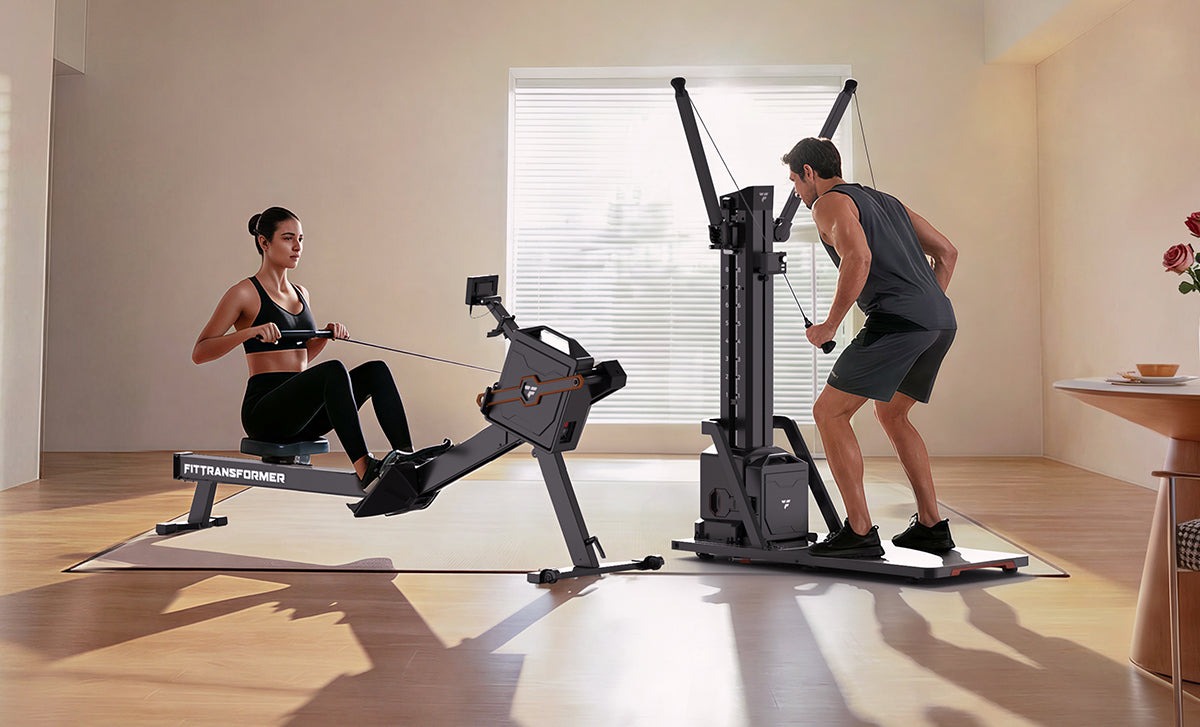
Home gyms have surged in popularity over the past few years, with more fitness enthusiasts choosing to work out on their own terms rather than committing to costly gym memberships. But as this trend grows, so does a familiar frustration: traditional home gym systems simply weren’t built for the way most people actually live. They’re heavy, expensive to set up, and once assembled, they’re essentially permanent fixtures that dominate your living space.
For anyone working with a spare bedroom, a garage corner, or a compact apartment, these rigid setups create more stress than motivation. They demand significant upfront investment, offer little room for customization, and become obsolete the moment your fitness goals evolve.
Modular gym frames represent a smarter, more adaptable approach to home fitness. Designed with flexibility at their core, these systems let you build, expand, and reconfigure your workout space as your needs change. In the sections ahead, we’ll explore how modular frames outperform traditional systems across space efficiency, affordability, and versatility — making them the definitive choice for modern home gym essentials.
Table of Contents
The Limitations of Traditional Home Gym Systems
Traditional home gym systems were designed for a different era — one where space was plentiful and budgets were generous. Today’s reality looks quite different. All-in-one cable machines and multi-station rigs routinely cost thousands of dollars before you’ve purchased a single accessory, and their footprints can consume an entire room. Once bolted together, they’re nearly impossible to reconfigure, meaning a shift in your training goals — say, moving from bodybuilding to functional fitness — often requires starting over entirely. For renters or anyone living in apartments and smaller homes, these systems present an additional headache: they’re difficult to move and even harder to disassemble without losing hardware or damaging flooring. Storage isn’t an option; they simply sit there, collecting dust when motivation dips. Modular alternatives are increasingly filling the gap these rigid systems leave behind, offering fitness enthusiasts a more practical path to building a capable, adaptable home gym without the spatial or financial penalties.
What Are Modular Gym Frames? An Introduction to Modern Home Gym Essentials
Modular gym frames are configurable structural systems built from interchangeable components — uprights, crossbars, brackets, and attachment points — that can be assembled, expanded, or rearranged without specialized tools or permanent installation. Unlike traditional all-in-one machines, these frames function as a flexible foundation that integrates with a wide range of accessories: pull-up bars, cable attachments, dip handles, landmine units, and more. The core principle is adaptability. A modular home gym system grows with you, allowing incremental upgrades rather than wholesale replacements. Whether you’re outfitting a garage, a spare room, or a studio apartment corner, the frame adjusts to fit the space rather than forcing the space to accommodate it. Many designs also incorporate foldable elements, making them genuinely practical for compact living. This combination of structural flexibility and equipment compatibility is what positions modular gym frames as the defining standard for modern home gym essentials — a smarter starting point for anyone serious about training at home.
Key Advantages of Modular Gym Frames Over Traditional Systems
Space Efficiency: The Power of Foldable Design
Foldable modular frames transform how compact spaces function. When not in use, they fold flat against a wall or tuck into a corner, reclaiming floor space for everyday living. A spare bedroom doubles as a training room without permanent sacrifice. For apartment dwellers especially, this foldable design means a full workout setup can disappear in minutes — no dedicated gym room required, just smart use of what you already have.
Affordability and Cost-Effectiveness
Rather than committing thousands upfront to a fixed all-in-one machine, modular frames let you start with a core structure and add components as your budget allows. This incremental approach spreads costs over time while still delivering a functional training environment from day one. Long-term, you’re replacing individual attachments rather than entire systems, which dramatically reduces the total investment needed to keep your home gym current and capable. Brands like FitTransformer have built their product lines around exactly this philosophy, offering entry-level frame configurations that can be expanded over time without compatibility issues.
Versatility and Customization with Modular Systems
No two training journeys look alike, and modular systems respect that reality. Whether your focus shifts from strength training to mobility work or you simply want to add a new movement pattern, modular frames accommodate the change through swappable attachments and reconfigurable layouts. You’re not locked into the manufacturer’s vision of your ideal workout. Instead, the system evolves alongside your goals, making it genuinely future-proof in a way no fixed machine can match.
Addressing Target Audience Needs: Solutions for Fitness Enthusiasts
Space-Saving Exercise Solutions in Action
Consider a 10×10 spare bedroom that doubles as a guest room. A foldable modular frame mounts to wall studs and swings flat when company arrives, then deploys fully in under two minutes for morning training sessions. In garage setups, modular frames can be positioned along one wall, preserving space for a car or storage. The key is planning your layout around the frame’s fold points — keep a clear 6-foot deployment zone in front, and the rest of your space stays functional around the clock. Wall-mounted hooks and integrated storage brackets on the frame itself can also house resistance bands, cables, and handles, eliminating the need for separate storage furniture entirely.
Affordable Gym Equipment Options Made Accessible
Starting with a base modular frame — typically just the uprights and a pull-up station — gives you an immediately functional training tool at a fraction of the cost of a full cable machine. From there, a cable pulley attachment, a dip bar set, and a landmine bracket can be added across several months as budget allows. Each addition meaningfully expands your exercise library without redundancy. Buying attachments individually also creates a secondary market advantage: individual components hold resale value better than aging all-in-one machines, meaning upgrades cost less net when you factor in what you can sell back.
Step-by-Step Guide to Implementing Your Modular Gym Frame
Getting your modular gym frame up and running doesn’t require a contractor or a weekend of frustration. Start by measuring your available space accurately — note ceiling height, wall stud locations, and any obstructions like doors or windows. A minimum 6×8 foot footprint works for most base configurations, but wall-mounted foldable frames can operate in even tighter conditions.
Next, define your primary training goals before purchasing. A strength-focused setup prioritizes a pull-up station and cable attachment, while a functional fitness layout benefits from a landmine bracket and dip handles. Choosing the right modular frame means matching the frame’s attachment compatibility to the accessories you actually plan to use — not just what looks impressive in a catalog.
For installation, follow these core steps: locate and mark wall studs, mount the base uprights using the manufacturer’s hardware at the specified torque, then attach horizontal crossbars before adding any accessories. Always perform a load test with bodyweight before adding weighted movements.
Budget planning is equally straightforward. Allocate your initial spend to the frame and one or two primary attachments. Set a quarterly review to assess which movement patterns feel underserved, then add components accordingly. This staged approach keeps spending intentional and prevents the accessory accumulation that inflates costs without adding real training value. Most complete setups reach full functionality within three to four incremental purchases.
Spotlight on Sail Frame: A Case Study in Modular Innovation
Sail Frame exemplifies everything modular gym design should deliver. Built around a foldable wall-mounted structure, it collapses flat when not in use and deploys into a full training station within seconds — no tools required. Its standardized attachment points accept a broad range of accessories, from cable pulleys to dip handles, making it genuinely compatible with evolving fitness goals. What sets Sail Frame apart is its engineering precision: the fold mechanism maintains structural integrity under load while still enabling effortless storage. For fitness enthusiasts who want a capable, space-conscious home gym without compromise, Sail Frame demonstrates that modular innovation isn’t just a concept — it’s a practical, proven solution.
Modular Frames Are the Future of Home Fitness
The case against traditional home gym systems isn’t complicated — they cost too much, demand too much space, and offer too little flexibility for the way modern fitness enthusiasts actually live and train. Modular gym frames solve all three problems simultaneously, delivering a smarter foundation that adapts to your space, your budget, and your evolving goals rather than working against them.
Throughout this article, we’ve seen how foldable modular designs reclaim living space without sacrificing training capability, how incremental purchasing makes a capable home gym financially accessible, and how swappable attachments keep your setup relevant no matter where your fitness journey takes you. Products like Sail Frame show that these aren’t theoretical benefits — they’re engineering realities available right now.
If you’re serious about building a home gym that genuinely works for your life, modular frames aren’t just a viable option — they’re the only logical starting point. Start with a solid base frame, add attachments as your training develops, and build a setup that grows with you. Your home gym should serve your ambitions, not limit them.
-

-

-

-

-

-