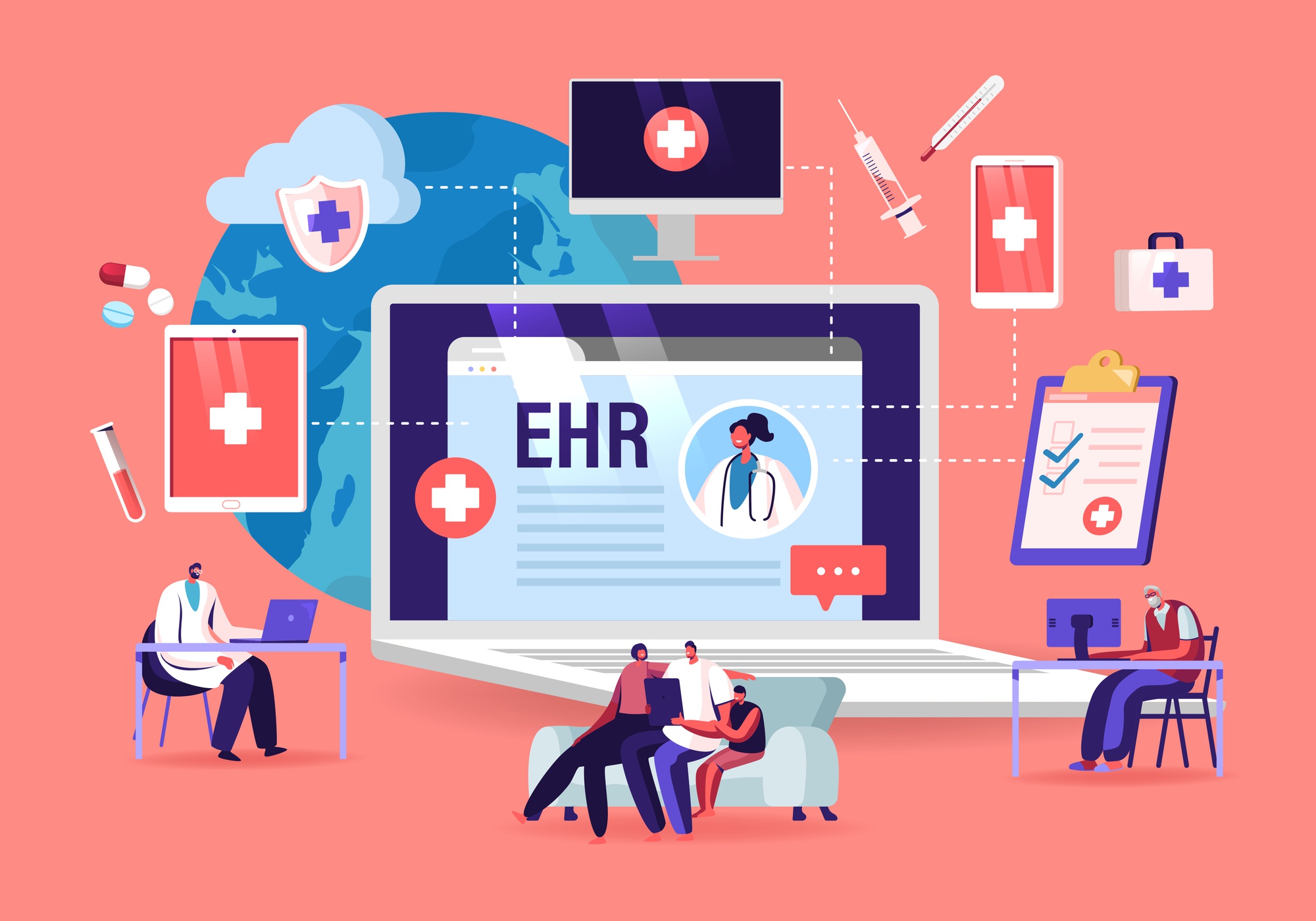
EHR integration plays a central role in how healthcare organizations share, manage, and use patient information across departments and partner systems.
When clinical systems connect well, patient data moves with less manual handling, fewer delays, and better visibility across workflows. That can improve access to laboratory, imaging, pharmacy, and operational information while reducing repeated entry and avoidable friction.
This article explains the main ways EHRs connect with other platforms, the operational benefits of stronger interoperability, the common barriers that slow interface projects down, and the standards that support more reliable data exchange across healthcare environments.
Table of Contents
Methods for Connecting EHR Software Integrations
The integration architecture you choose affects cost, maintenance, flexibility, and how easily new systems can be added later. While the right option depends on your environment, most healthcare organizations rely on one of three broad approaches.
API-Based Integration Approaches
Application programming interfaces, or APIs, allow software systems to exchange data through defined rules and authentication methods. In healthcare, APIs are now a major part of interoperability strategy, especially as FHIR-based development has expanded.
ASTP/ONC describes HL7 FHIR as a widely used API-focused standard used to represent and exchange health information, and its standards guidance says FHIR enables clinical and administrative data to be exchanged quickly and efficiently.
API-based integration can reduce repeated data entry by letting systems share patient data directly instead of forcing staff to re-enter the same details across multiple applications.
Some organizations build direct API connections to each EHR vendor they work with. Others use integration platforms that normalize data across multiple EHRs through one API layer.
For healthcare teams evaluating EHR integration platforms, Lifepoint Informatics portal is a good option since it’s built around supporting EHR integration, reporting, administrative workflow support, and clinical data exchange across hospitals, health systems, laboratories, diagnostic imaging centers, health insurers, and accountable care organizations.
Interface Engine and Middleware Solutions
Middleware and interface engines sit between the EHR and external systems. Their role is to route messages, transform data, and handle protocol differences between platforms. This approach is often useful when an organization connects to multiple vendors or needs more control over mapping and message handling.
The main advantage is centralized management. Rather than maintaining every connection separately, teams can manage multiple interfaces through one integration layer. That can make complex environments easier to support, especially when older and newer standards need to work together.
Point-to-Point Direct Connections
Point-to-point integration connects two systems directly without a separate middleware layer. This can work well for a limited number of straightforward connections, especially when the data exchange needs are narrow and stable.
The downside is that complexity grows quickly as more systems are added. A setup that seems simple with one or two interfaces can become difficult to manage when every new connection needs its own build, maintenance, and troubleshooting path.
Benefits of Integration with EHR Systems
The value of EHR integration usually shows up in daily operations before it shows up in strategy documents. Staff spend less time moving data manually, clinicians can access more complete records, and departments work with fewer communication gaps.
Reduced Manual Data Entry and Errors
One of the clearest benefits of integration is the reduction in manual data entry. When patient data, orders, and results move directly between systems, there are fewer chances for transcription mistakes and fewer delays caused by duplicate work.
That matters in settings where staff already work across multiple systems. Better interoperability reduces administrative burden and helps teams spend more time on clinical and operational tasks that actually require judgment.
Faster Access to Patient Information
Integrated systems make it easier for clinicians and staff to access current information within their normal workflow. That can improve response times, reduce the need to search across separate applications, and make patient records more useful at the point of care.
Federal interoperability efforts have consistently focused on this type of access, with FHIR and related standards supporting more modern and timely data exchange.
Improved Clinical Decision-Making
Clinical decisions improve when providers can review more complete information without waiting for separate lookups or manual follow-up. Better access to lab data, imaging reports, medication history, and care documentation can support faster and more informed decisions across care settings.
The benefit is not that integration solves every workflow problem on its own. It is that better-connected systems make reliable information easier to use when time matters.
Cost Savings and Operational Efficiency
Integrated systems can also improve operational efficiency by cutting repeated work, reducing reconciliation effort, and helping staff move through workflows with fewer interruptions.
The exact financial impact varies by organization, so it is better not to rely on universal savings claims. Still, the operational case for interoperability is strong because disconnected systems tend to create extra work at nearly every step.
Common Challenges and Solutions for EHR Integration
Integration projects often run into the same kinds of issues, especially when systems were not designed to exchange data easily from the start.
Data Format Compatibility Issues
Different vendors may rely on different message structures, terminologies, and exchange formats. Some systems still depend heavily on HL7 v2, while others increasingly support FHIR-based exchange.
HL7 materials cited by NLM note that Version 2 remains the most used health information exchange standard in the United States, with HL7 reporting in 2024 that 95% of U.S. healthcare organizations use it.
The practical solution is not always to replace older standards immediately. In many cases, organizations need an integration strategy that supports both modern APIs and established messaging frameworks.
Legacy System Integration Hurdles
Legacy systems remain one of the biggest barriers to interoperability. Older applications may have weak API support, limited documentation, or rigid workflows that make new connections harder to build.
Middleware can help bridge those gaps by translating data and routing messages securely between systems that otherwise would not communicate well.
Security and HIPAA Compliance Requirements
Healthcare integration also has to meet strict security and privacy expectations. Systems that exchange patient information need appropriate access controls, auditing, secure transmission, and role-based permissions.
Direct Secure Messaging is one example of a standards-based approach designed for secure information exchange over the internet. ONC describes Direct as a simple, secure, scalable, and standards-based method for sending health information between partners in a way that resembles secure email. DirectTrust likewise describes it as a secure communication transport mechanism that uses digital certificates and PKI to encrypt sensitive information over the open internet.
Staff Training and Change Management
Even technically sound integrations can struggle if staff are not trained properly or workflows are not introduced clearly. Teams need role-specific guidance on what is changing, how to use the new workflow, and how to escalate issues.
Projects tend to go more smoothly when users are involved early, and training happens close to launch rather than long before it.
Vendor Lock-In and System Dependencies
Vendor lock-in can limit flexibility when data exports, interface support, or integration options are tightly controlled. This is why many organizations now place more emphasis on standards-based interoperability and scalable interface design during vendor evaluation.
EHR Interoperability Standards and Protocols
Standards provide the common structure that allows healthcare systems to exchange data accurately. Without them, each connection would require a custom interpretation of how information should be formatted and understood.
HL7 Standards for Healthcare Data Exchange
HL7 has long been one of the core standards for healthcare data exchange. Version 2 remains especially common in orders, results, admissions, discharges, transfers, and public health communication, and HL7 continues to position it as the workhorse of healthcare messaging.
That continued use matters because many healthcare interfaces still depend on HL7 v2 even as newer approaches are adopted.
FHIR: Fast Healthcare Interoperability Resources
FHIR was developed to make health data exchange more flexible and API-friendly. HL7 describes it as a standard for exchanging healthcare information electronically, and ASTP/ONC describes it as a widely used API-focused standard for representing and exchanging health information. CMS also tied FHIR to major interoperability policy through the Interoperability and Patient Access Final Rule.
Because FHIR is built around modular resources and web-based exchange, it is especially relevant for patient access, app connectivity, and newer interoperability use cases.
DICOM for Medical Imaging Integration
DICOM is the international standard for medical images and related information. It defines the formats needed to exchange imaging data with the data quality required for clinical use and supports interoperability across imaging devices, PACS, workstations, and related systems.
That makes DICOM essential when imaging information needs to move between radiology environments and broader health IT systems.
Direct Messaging and Secure Communication
Direct Secure Messaging supports encrypted health information exchange between trusted parties. ONC and DirectTrust both describe Direct as a widely used, standards-based way to exchange sensitive health information securely across organizations.
For organizations that need straightforward, secure exchange, Direct remains an important part of the interoperability landscape.
Conclusion
EHR interface development matters because healthcare systems depend on reliable information flow across labs, imaging, clinical records, and partner organizations. Choosing the right integration method affects not only technical performance but also long-term support, scalability, and staff workload.
Widely used standards such as HL7, FHIR, DICOM, and Direct Secure Messaging remain central to successful interoperability. At the same time, strong results depend on more than protocol choice alone. Legacy systems, security requirements, workflow design, and staff readiness all shape implementation success.
-

-

-

-

-

-