You know the one.
A small box in the dresser. A tangled pile of chains. A bracelet you haven’t worn in ten years. One lonely earring whose partner disappeared sometime around 2007.
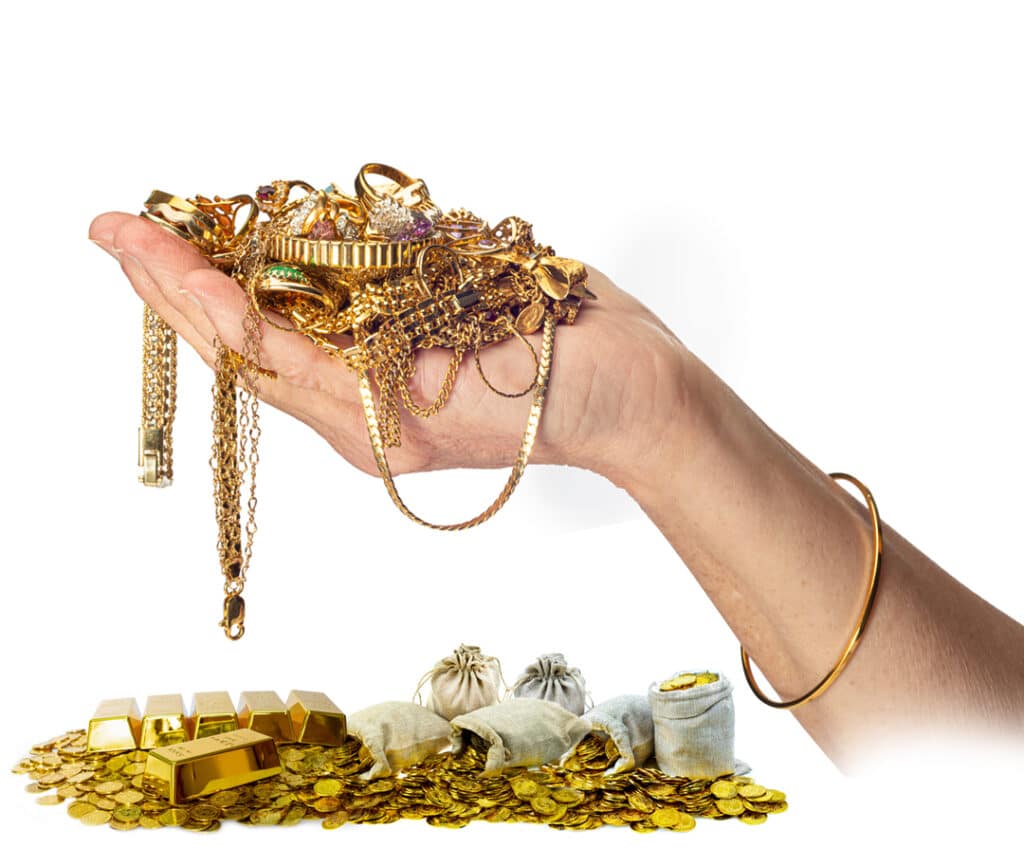
You open the drawer looking for something else—and suddenly you’re holding a handful of gold.
That’s when the thought shows up:
Is this actually worth anything?
A quick search later and you’re considering whether it might be time to sell your gold.



But before you drop everything in an envelope or walk into the first gold buyer you see, there are a few things worth understanding first.
Because gold selling is simple.
But doing it well? That takes a little awareness.
Table of Contents
First Reality Check: Not All Gold Is the Same
Gold jewelry looks similar on the surface.
Shiny. Yellow. Valuable-looking.
But here’s the catch: most jewelry isn’t pure gold.
Instead, it’s mixed with other metals to make it stronger and more durable. That mixture is measured in karats, which tells you how much real gold is inside the piece.
Here’s the quick breakdown:
- 24K – nearly pure gold
- 18K – 75% gold
- 14K – about 58.5% gold
- 10K – roughly 41.7% gold
The higher the karat, the more actual gold content—and generally, the higher the potential value.
Most pieces include a tiny stamp somewhere on the clasp or inside the band. It might say 14K, 18K, or something similar.
If you’ve never noticed it before, congratulations—you’re about to start checking every piece you own.
Weight Matters… But Timing Matters Too
Selling gold isn’t just about the jewelry itself.
It’s also about the market.
Gold prices fluctuate constantly based on global supply, economic conditions, and investor demand. Some days the value climbs. Other days it dips.
According to the U.S. Geological Survey (USGS), gold remains one of the most widely traded precious metals in the world, meaning its price moves alongside global financial activity.
What does that mean for someone cleaning out a jewelry box?
Simple: the value of your gold today might be different next month.
That doesn’t mean you should obsessively track the market—but understanding that pricing shifts can help you make a more informed decision.
Broken Jewelry Is Still Valuable
Here’s a fun myth to retire immediately:
Broken jewelry is not worthless.
A snapped chain? Still gold.
A single earring? Still gold.
A ring missing its stone? Still gold.
Buyers typically evaluate items based on gold weight and purity, not whether the piece is wearable.
In fact, many people sell what’s often called scrap gold—damaged or outdated jewelry that simply isn’t being worn anymore.
And once you start digging through drawers, you may find more than you expected.
Old watches. Coins. Random pieces you forgot you even owned.
It adds up faster than you’d think.
Choosing the Right Buyer Matters
Here’s where things get important.
Not all gold buyers operate the same way.
Some provide clear evaluations, transparent pricing, and step-by-step explanations of how your items are assessed. Others… move a little faster than you might prefer.
A reputable service, such as platforms designed to help you sell your gold, typically explains the evaluation process and allows sellers to understand how the final price is calculated.
That transparency matters.
Because selling gold should feel like a transaction—not a mystery.
Pause for a Second: Is Any of It Sentimental?
Before you sell everything in one sweep, take a moment.
Some pieces may carry more emotional value than financial value.
A wedding band from a grandparent. A necklace passed down through the family. A class ring that brings back memories—even if you never wear it.
Selling gold is about converting unused items into something useful.
But it’s worth separating valuable metal from meaningful memories before making that decision.
Future you may appreciate the pause.
The Hidden Value Sitting in Plain Sight
Most people don’t realize how much unused gold they already own.
It sits quietly in jewelry boxes, drawers, and old keepsake containers for years—sometimes decades—without a second thought.
Then one day curiosity kicks in.
And that small pile of forgotten jewelry suddenly becomes an opportunity.
When the time feels right to sell your gold, a little preparation goes a long way—helping you understand what you have, how it’s valued, and how to approach the process with confidence.