Cold chain integrity in vaccine storage is not a new concern, but the operational stakes around it have risen considerably over the past several years. Regulatory scrutiny has increased, storage requirements have become more precise across product categories, and the cost of a temperature excursion — in both discarded product and documentation failure — has become harder to absorb for pharmacies and distributors of any size.
For US-based organizations managing vaccine inventories, selecting the right temperature monitoring equipment is no longer a back-office procurement decision. It directly affects compliance standing, product viability, and the trust placed in an organization’s handling practices. Understanding what separates a capable device from an inadequate one requires more than reading a spec sheet. It requires knowing what real operational environments demand and where devices tend to fall short.
Table of Contents
What a Vaccine Temperature Data Logger Actually Does in a Distribution Context
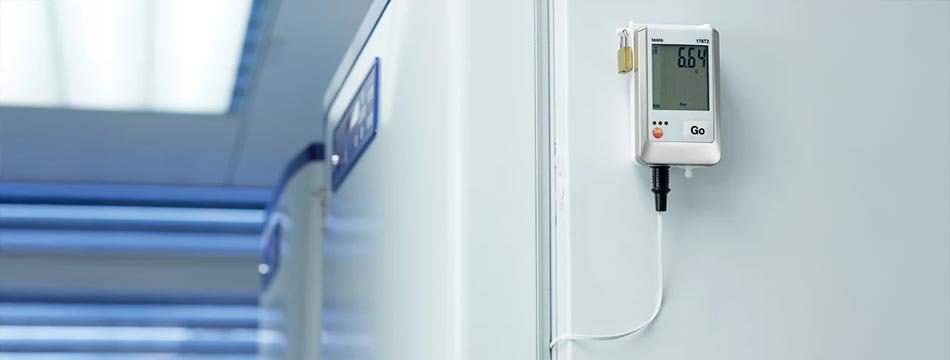
A vaccine temperature data logger is a device that continuously records temperature conditions within storage environments — refrigerators, freezers, transport containers, or climate-controlled rooms — and retains that data in a retrievable format. Unlike simple thermometers, these devices build a time-stamped record of conditions over extended periods, making it possible to reconstruct the thermal history of any stored vaccine lot at any point during its custody chain.
For those assessing options across current products and regulatory context, a Vaccine Temperature Data Logger overview can provide useful context on what the current product landscape looks like before committing to a procurement direction.
The distinction between a logger and a simple alarm system matters in practice. An alarm tells you when a threshold has been crossed. A data logger tells you when, for how long, by how much, and whether recovery occurred — all details that matter during an excursion investigation or a regulatory audit. In a distribution environment where vaccines move through multiple custody points, having that historical record is often the difference between maintaining product confidence and initiating a full recall review.
Why Continuous Logging Matters More Than Snapshot Readings
Many older monitoring systems rely on periodic temperature checks — a reading taken manually at set intervals throughout the day. This approach creates gaps in the record that become liabilities during review. A storage unit could experience a brief but damaging excursion between manual readings and leave no documentation trail. Continuous logging eliminates those gaps by recording conditions at consistent intervals regardless of staffing schedules, shift changes, or weekends.
For pharmacies operating with limited staff, or distributors managing large storage areas across multiple zones, this matters operationally. The monitoring does not rely on a person being present. The record exists independently of whoever is responsible for checking it. That independence is what gives the data its value during an external audit or an insurance review following a product loss event.
Regulatory Requirements That Shape Device Selection in the United States
The Centers for Disease Control and Prevention publishes vaccine storage and handling guidelines that outline minimum standards for temperature monitoring in facilities participating in immunization programs. These guidelines specify requirements around calibration, alarm thresholds, data retention, and device type — and they are referenced by state health departments that administer vaccine distribution contracts, which means non-compliance carries direct programmatic consequences.
Facilities that participate in the Vaccines for Children program, for example, are required to use calibrated devices with current certificates of calibration traceable to national standards. The device must meet specific performance benchmarks, and the documentation supporting those benchmarks must be accessible on demand. Organizations that rely on consumer-grade or uncertified devices risk disqualification from program participation, regardless of whether a temperature excursion has actually occurred.
Calibration and Traceability as Operational Requirements
Calibration is one of the most commonly misunderstood requirements in temperature monitoring procurement. Many buyers assume that a device is calibrated if it reads accurately when new. In regulatory terms, calibration means something more specific: the device’s accuracy has been verified against a traceable reference standard, and a dated certificate documents that verification.
Traceability, in the standards context maintained by organizations such as the National Institute of Standards and Technology, means that the calibration chain can be followed back to a recognized national measurement standard. This distinction becomes important when a device’s readings are challenged during an audit or a product loss dispute. A device that reads correctly but lacks documented, traceable calibration provides less evidentiary support than one with a current, properly formatted certificate.
For distributors managing large device inventories, calibration also has a scheduling dimension. Certificates expire, and replacement or recalibration must happen before expiration to maintain compliance continuity. This requires an administrative tracking process that many organizations underestimate when initially selecting devices.
Storage Environment Factors That Affect Device Performance
The physical environment in which a vaccine temperature data logger operates has a direct effect on how reliably it performs over time. Storage facilities vary considerably in their thermal stability, and devices that perform adequately in a controlled laboratory setting may behave differently inside an aging pharmacy refrigerator, a warehouse walk-in cooler, or a transport box during a last-mile delivery run.
Temperature variability within a single storage unit is a real phenomenon. Different zones within the same refrigerator can experience measurably different conditions depending on airflow patterns, door seal integrity, and unit placement. Devices positioned at a single point may not capture the full range of conditions that vaccines within that unit experience. Understanding where within a storage environment a device is placed — and whether that placement reflects actual product conditions — affects how useful the logged data is during a review.
Connectivity and Alert Delivery in Multi-Location Operations
For organizations managing vaccine storage across multiple locations — a regional pharmacy chain, a hospital network, or a public health distribution hub — device connectivity determines how quickly an excursion can be identified and addressed. Devices that only store data locally require physical access to retrieve and review records. Those with wireless or network connectivity can transmit alerts and data in real time, enabling a centralized response regardless of where the excursion originates.
The value of real-time alerts depends entirely on how those alerts are received and acted upon. A device that sends an alarm to a single email address is only as effective as the person monitoring that address during off-hours. Organizations need to assess not just whether a device supports alerts, but how those alerts are routed and who is responsible for acting on them across different shift patterns and facility locations.
Battery Life and Power Continuity During Transport
Stationary storage environments can typically be connected to building power, but vaccine transport introduces a different power challenge. Devices used in transport coolers, refrigerated vehicles, or temporary field storage must operate reliably without a continuous power source. Battery life, low-battery warning functions, and the device’s behavior during a power interruption all affect whether the logged record accurately reflects conditions during a full transport window.
Some transport scenarios involve extended periods between charging or battery replacement opportunities. A device that goes offline mid-transport creates a gap in the record that cannot be reconstructed. Evaluating battery specifications and understanding how the device handles power transitions should be part of any procurement review for organizations with distribution responsibilities.
Data Access, Reporting, and Integration With Existing Records Systems
A vaccine temperature data logger generates value through its data. The format in which that data is stored, accessed, and reported determines how practically useful it is across different operational scenarios. Some devices produce data in proprietary formats that require specific software to interpret. Others export in standard formats that can be integrated into existing inventory or compliance management systems.
For organizations with established documentation workflows, compatibility matters. A device that produces PDF reports directly may be adequate for a small pharmacy. A distributor managing dozens of storage locations may need devices whose data can be pulled into a centralized system, cross-referenced with lot numbers, and exported in formats compatible with regulatory submissions or customer-required documentation packages.
Audit Trails and Documentation Integrity
The evidentiary value of logged temperature data depends on its integrity. Records that can be edited after the fact, or that lack metadata showing when they were generated and by whom, carry less weight during a regulatory review or a liability dispute. Devices and associated software that produce tamper-evident records — where any alteration is documented rather than simply overwritten — provide stronger documentation foundations.
This matters particularly in environments where documentation is reviewed by third parties: state health departments, insurance auditors, customer compliance teams, or accreditation bodies. The chain of custody for data must be as defensible as the chain of custody for the vaccines themselves.
Closing Considerations for US Distributors and Pharmacies
Selecting a vaccine temperature data logger is fundamentally a risk management decision. The right device reduces the probability of undetected excursions, supports compliance documentation, and provides defensible records during reviews that may occur months or years after the fact. The wrong device — or a capable device used without proper calibration schedules, placement discipline, or alert management — creates the appearance of monitoring without the substance.
For US distributors and pharmacies, the operational environment is specific enough that general purchasing criteria rarely tell the full story. Program participation requirements, multi-location management needs, transport chain complexity, and documentation integration demands all shape what an appropriate solution looks like for a given organization.
The most practical approach is to assess device options against the actual conditions in which they will operate — not against an idealized scenario. That means involving the people who manage storage environments daily, understanding where existing monitoring processes fall short, and verifying that any new device selection comes with a clear plan for calibration maintenance, alert routing, and data access over time. Equipment procurement is straightforward; building the operational practice around it is where most organizations find the real work begins.
-

-

-

-

-

-