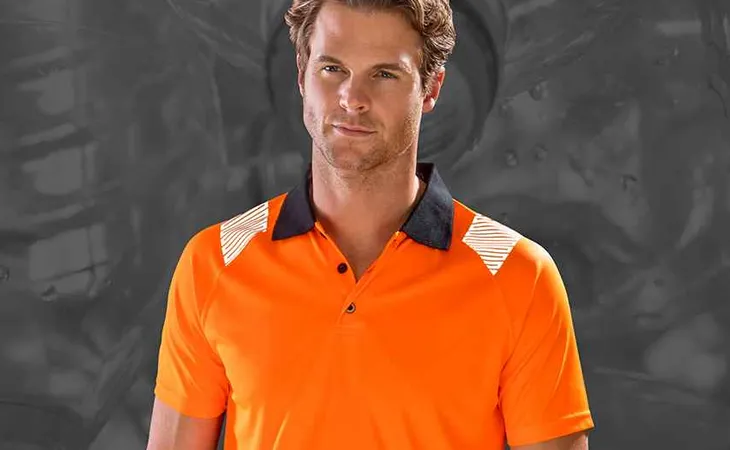
The Hidden OSHA Compliance Benefits of Custom Printed Hi Vis Polo Shirts American Employers Miss

Most safety managers treat high-visibility workwear as a procurement decision rather than a compliance strategy. They select garments that meet the minimum visibility standards, issue them to workers, and consider the obligation fulfilled. What this approach misses is the broader role that workwear plays in OSHA’s general duty clause expectations, site-specific documentation requirements, and the way enforcement inspectors evaluate a company’s overall safety program culture.
The result is that many American employers are technically within the letter of the standard but operationally exposed in ways that only become visible during an incident investigation or a formal inspection. The gap is not always about whether a garment reflects enough light. It is often about whether the employer can demonstrate a consistent, deliberate approach to worker identification, hazard control, and site accountability. Printed workwear, specifically garments that carry employer identification, role designation, or site-specific information, addresses several of these exposures simultaneously in ways that plain hi-vis garments simply cannot.
Table of Contents
Why Customization Creates a Compliance Trail That Plain Hi-Vis Cannot
When an employer chooses custom printed hi vis polo shirts for their workforce, the decision does more than improve visual identification on site. It creates a documented, traceable connection between a specific garment, a specific employer, and an implied set of responsibilities under that employer’s safety program. This matters in a regulatory context more than most procurement teams realize.
OSHA’s enforcement framework does not evaluate PPE in isolation. Inspectors assess whether an employer has a coherent system for identifying hazards, assigning controls, and ensuring those controls are implemented consistently across the workforce. A uniform that carries the company name, a worker’s role, or department designation signals that the employer has taken deliberate steps to manage worksite visibility as an organizational practice, not just a clothing requirement. That distinction influences how inspectors characterize a site’s safety culture, which in turn affects how citations are classified and how penalties are assessed.
The Role of Worker Identification in Site Accountability
One of the less-discussed aspects of worksite safety compliance is the employer’s obligation to maintain effective supervision and accountability across all personnel present on a site. This is particularly relevant in industries like construction, logistics, utilities, and road maintenance, where multiple contractors, subcontractors, and vendors may be present simultaneously.




When workers are dressed in generic high-visibility gear, supervisors and safety officers face genuine difficulty determining at a glance which individuals belong to which organization, which workers have undergone site-specific inductions, and whether visiting personnel are operating within appropriate zones. Printed workwear resolves this immediately. An employer whose workforce is clearly identified through garment customization can demonstrate to an OSHA compliance officer that their supervision systems are active and that they have taken practical steps to separate and identify their workforce from other parties on a shared site.
Documentation and Incident Investigation Implications
When an incident occurs on a worksite, the investigation that follows is shaped by available evidence. Video footage, witness accounts, and physical documentation all contribute to the picture of what happened, who was involved, and what controls were in place at the time. Generic high-visibility gear makes it difficult to identify specific individuals in footage or photographs, which can complicate both internal investigations and external regulatory reviews.
Printed garments change this dynamic. If a worker is wearing a garment that identifies their employer, role, and department, footage becomes far more useful as evidence of safe practice. Employers can demonstrate who was present in a given area, confirm that workers were wearing appropriate identifying gear, and establish that their workforce was visually distinct from other parties on site. In the context of an OSHA investigation, this level of documentation discipline often determines whether an employer is seen as having exercised reasonable care.
OSHA’s General Duty Clause and the Standard of Reasonable Employer Practice
Section 5(a)(1) of the Occupational Safety and Health Act, commonly referred to as the general duty clause, requires employers to provide a workplace free from recognized hazards that are causing or likely to cause death or serious physical harm. The clause is deliberately broad, and it is used by compliance officers in situations where no specific standard directly addresses the hazard in question.
What constitutes a recognized hazard and what qualifies as an adequate control measure are both subject to interpretation, and those interpretations are heavily influenced by what is considered standard industry practice. As printed high-visibility workwear becomes more common across construction, transport, and industrial sectors, employers who rely on unbranded, generic garments may find themselves in a weaker position when arguing that they met the prevailing standard of care. The comparison is not hypothetical. Industry norms shift, and what was once acceptable becomes, over time, evidence of a gap.
How Custom Workwear Reflects a Proactive Hazard Control Philosophy
OSHA’s inspection criteria place significant weight on whether an employer has approached safety management proactively or reactively. Proactive safety management means identifying potential hazards before incidents occur and putting systems in place to address them in a structured way. Reactive safety management means responding to incidents as they happen without a clear prior framework.
Custom workwear is a small but meaningful signal of proactive management. It suggests that the employer has thought about how workers are identified, how supervisors can account for personnel in dynamic environments, and how the workforce is distinguished from other parties on site. These are all components of a broader hazard identification and control system. When an OSHA inspector reviews a company’s safety program documentation and then walks a site where every employee is clearly identified through their garments, the two things reinforce each other in a way that strengthens the employer’s overall compliance posture.
The Gap Between ANSI Standards Compliance and OSHA Compliance
Many employers conflate compliance with ANSI/ISEA 107, the American National Standard for high-visibility safety apparel, with full OSHA compliance. The two are related but not equivalent. ANSI 107 sets performance requirements for the garment itself, covering background material color, retroreflective tape configuration, and garment classification. OSHA references these standards in its rules for specific industries and environments, but OSHA compliance extends beyond what the garment is made of.
According to the OSHA standards for construction industry traffic control, workers exposed to public vehicular traffic must wear high-visibility apparel meeting ANSI requirements, but the broader obligation to manage worksite hazards does not end there. Employers are expected to implement comprehensive controls that address the full range of foreseeable risks. Printed identification on garments contributes to those controls in a way that plain ANSI-compliant gear does not.
When Garment Identity Becomes a Control Measure
In multi-employer worksites, OSHA holds each employer responsible for the hazards their own employees are exposed to, regardless of who created those hazards. This means that an employer cannot simply defer to the site controller or general contractor when it comes to ensuring their workers are visible, identifiable, and operating within safe parameters.
Custom printed garments allow each employer on a shared site to actively maintain responsibility for their own workforce’s identification. When workers from five different contractors are all wearing generic yellow vests, the practical ability of any single employer to supervise and account for their own people is compromised. Garments that carry company-specific identification restore that ability and demonstrate to OSHA that each employer is exercising independent oversight of their personnel.
Consistency as a Safety Outcome, Not Just an Aesthetic One
One argument that surfaces regularly in discussions about workwear customization is that it is primarily a branding decision. The implication is that it serves marketing or corporate identity purposes and that the safety value is secondary. This framing misunderstands how consistency functions as a safety control in dynamic worksites.
When all members of a workforce wear identical, clearly identified garments, supervisors can conduct rapid visual checks across an area without needing to approach and verify each individual. New workers, temporary staff, and site visitors stand out immediately because their garments do not match the established pattern. This is a genuine risk management function. It allows for faster identification of unauthorized personnel in hazardous zones, quicker headcounts during evacuation procedures, and clearer lines of accountability when something goes wrong.
Uniformity and the Reduction of Identification Errors
Identification errors in safety-critical environments have documented consequences. When emergency responders arrive at a site, their ability to quickly identify who belongs to which organization, who may be a civilian, and who is a trained worker affects how they prioritize actions. Printed workwear provides an immediate, visual answer to questions that cannot always be addressed quickly through verbal communication in a noisy or chaotic environment.
For the employer, ensuring that all direct employees wear consistent, clearly printed garments reduces the risk of misidentification during an incident and provides emergency responders with useful information at a glance. This outcome is not theoretical. It is a practical extension of the worksite hazard control system that OSHA expects employers to maintain.
Closing Considerations for Safety and Operations Managers
The compliance value of custom printed workwear is not captured in any single OSHA regulation because it operates across multiple regulatory concerns simultaneously. It contributes to general duty clause compliance by demonstrating a deliberate approach to hazard control. It supports multi-employer worksite accountability by making workforce identification clear and traceable. It strengthens incident investigation documentation by ensuring that workers are identifiable in footage and records. And it signals to enforcement inspectors that the employer treats safety management as a system rather than a checklist.
None of this requires a significant operational overhaul. The decision to move from generic high-visibility gear to printed, identified workwear is a procurement-level change that has compliance-level implications. For operations managers and safety officers who are reviewing their programs with an eye toward both regulatory exposure and practical site management, it is a change worth making before an inspector, an incident, or an investigation makes it necessary.
The employers who understand this connection tend to be the ones who have already dealt with the consequences of not having it. Those who have not yet encountered that situation have an opportunity to address it proactively, on their own terms, before the stakes are higher than a garment order.