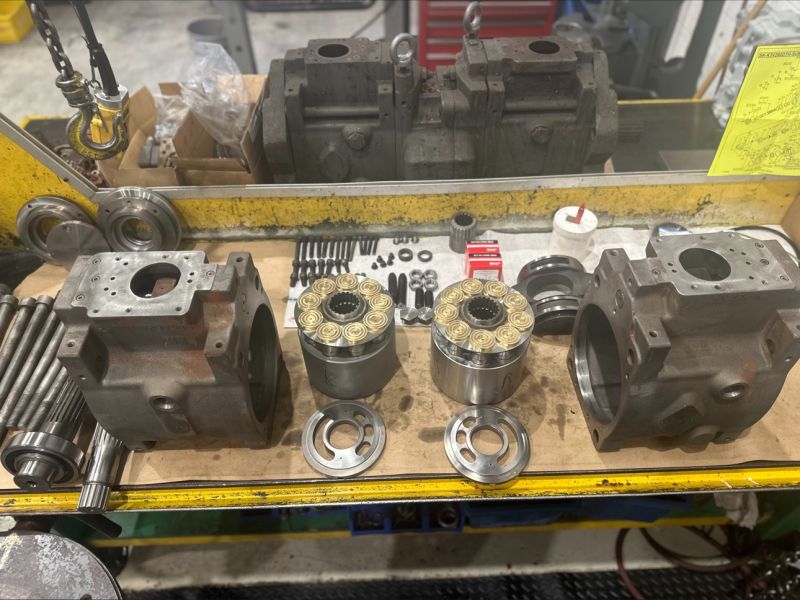
When a hydrostatic pump fails on a piece of heavy equipment, the decision about how to restore it carries more operational weight than most purchasing teams initially expect. The choice is not simply about cost — it involves lead times, performance consistency, warranty coverage, and the long-term reliability of the machine that depends on that pump. For fleet managers, equipment dealers, and procurement professionals working across agriculture, construction, turf care, and industrial sectors, the method of restoration matters as much as the replacement itself.
OEM remanufacturing has become an increasingly prominent option in the US market, particularly as supply chain pressures have shifted buyer priorities toward reliability and standardization. Understanding what it actually involves — and where it fits within a broader maintenance and procurement strategy — helps organizations make more confident, defensible decisions when equipment is down and timelines are tight.
Table of Contents
What OEM Remanufacturing Actually Means for Hydrostatic Pumps
OEM remanufacturing refers to the process of restoring a used hydraulic or hydrostatic pump to its original performance specifications using components, tolerances, and procedures that align with the original equipment manufacturer’s standards. Unlike basic repair, which addresses a specific failure point, or aftermarket rebuilding, which may involve non-original parts and varying quality controls, oem remanufacturing treats the entire unit as a candidate for full restoration. Every worn or suspect component is evaluated against factory standards, and the end product is expected to function identically to a new unit.
For buyers researching this option, the Oem Remanufacturing guide available through specialized hydrostatic pump service providers outlines how this process is applied to specific pump models and what standards govern the restoration work. This kind of structured documentation helps procurement teams understand what they are buying and what guarantees, if any, are associated with the restored unit.
How OEM Standards Differ from General Rebuild Practices
General pump rebuilding can vary significantly between service providers. A shop performing a standard rebuild may replace only the components that visibly failed, use substitute parts sourced from multiple suppliers, and return the pump to approximate function rather than verified specification. The result may work adequately in low-stress applications, but in hydrostatic systems — where pressure tolerances, flow efficiency, and mechanical timing are tightly calibrated — approximate is often not enough.
OEM remanufacturing, by contrast, follows a defined process. Components are replaced according to a scheduled criteria, not just observed failure. Clearances are measured and restored to original tolerances. The unit is tested under load conditions that reflect real-world operating demands. This consistency is what separates oem remanufacturing from other forms of pump restoration and what justifies its position as a higher-confidence option for critical applications.
The Operational Case for Choosing Remanufactured Over New
New OEM pumps offer obvious advantages in terms of documentation and warranty, but availability is not always guaranteed. Supply chain disruptions, regional distribution gaps, and manufacturer lead times have made new units difficult to source quickly in certain markets. For operations that cannot afford extended downtime, a properly remanufactured pump — available sooner and at a lower cost — often represents the more practical choice without a meaningful sacrifice in performance.
Cost and Availability Compared to New Units
The cost difference between a new OEM pump and a remanufactured one is rarely trivial. In many cases, buyers can expect to pay significantly less for a remanufactured unit while receiving a component that has been restored to the same functional standard. This cost reduction does not reflect lower quality when the remanufacturing process is properly executed — it reflects the fact that the core housing and structural components are being retained and restored rather than cast and machined from raw material.
Availability is an equally important consideration. Because remanufacturing facilities work with existing pump cores, they are often able to fulfill orders faster than waiting for a new unit to move through a distribution chain. For agricultural operations during harvest or construction contractors managing deadline-sensitive projects, that difference in lead time has direct financial consequences.
Warranty Implications and Risk Management
Reputable oem remanufacturing programs typically include a warranty on the restored unit, though the terms vary by provider and pump model. Buyers should evaluate not just the length of the warranty but what it covers — whether it addresses labor, the core unit, specific components, or the full assembly. A clear warranty from a credible service provider reduces the financial exposure associated with a second failure and gives procurement teams a defensible position when justifying the decision internally.
Risk management in this context also involves documentation. A properly remanufactured pump should come with records of what was replaced, what tests were performed, and what standards were used to evaluate the restored unit. Without this documentation, the buyer has no basis for evaluating the quality of work performed or for making informed decisions about future maintenance intervals.
Understanding the Core Exchange Model in Remanufacturing
Most oem remanufacturing programs operate on a core exchange basis. The buyer sends in their failed or worn pump — the “core” — and receives a remanufactured unit in return, either from existing inventory or after their specific core has been processed. This model keeps costs lower by maintaining a supply of rebuildable units in circulation, and it allows remanufacturing facilities to plan and batch work more efficiently than on-demand custom repair.
Core Condition and Its Effect on the Final Product
The condition of the core unit sent in affects what the service provider can do with it. A pump that has been run dry, subjected to contaminated fluid, or operated beyond its rated capacity may have damage that compromises the housing itself — the one component that the remanufacturing process relies on being structurally sound. In these cases, the core may be rejected or the scope of restoration may be limited.
Buyers who understand this dynamic are better positioned to manage their core assets responsibly. Returning a pump at the first signs of performance degradation — rather than waiting for catastrophic failure — preserves the core’s value and increases the likelihood of a successful remanufacture at standard cost. This is a practical reason why regular fluid analysis and early-stage performance monitoring pay dividends beyond the immediate maintenance interval.
Logistics and Turnaround Expectations
Turnaround times for remanufactured pumps depend on whether the service provider maintains a ready exchange inventory or works exclusively with the customer’s core. Exchange programs generally offer faster turnaround because a refurbished unit is already available for immediate shipment. Custom core programs take longer but may be necessary for less common pump models where exchange inventory does not exist.
US buyers working with domestic remanufacturing providers benefit from shorter shipping distances and more predictable logistics compared to sourcing internationally. The International Organization for Standardization publishes quality management frameworks that many domestic remanufacturing operations use as a foundation for their quality control processes, which provides buyers with an additional layer of process assurance when evaluating providers.
Selecting the Right Remanufacturing Provider
Not all providers offering oem remanufacturing services operate at the same standard. The term itself is not uniformly regulated in the US market, which means buyers need to apply their own evaluation criteria rather than assuming the label guarantees a specific outcome. Assessing a provider’s capabilities, documentation practices, and service history is a necessary step before committing to a long-term relationship or high-volume purchasing arrangement.
What to Evaluate Before Committing
When assessing a remanufacturing provider, the most informative questions relate to process rather than price. Does the provider follow a documented teardown and inspection process? What criteria determine component replacement versus retention? Is testing performed under load, and is test data recorded and provided with the unit? These questions reveal whether the operation is genuinely executing oem remanufacturing or applying the term loosely to a more basic rebuild service.
Experience with specific pump brands and model families also matters. Hydrostatic pumps from Sauer-Danfoss, Bosch Rexroth, Parker, Eaton, and other manufacturers each have unique tolerances, component configurations, and failure patterns. A provider with documented experience on the specific platform relevant to the buyer’s equipment is less likely to introduce errors that a less familiar shop might overlook.
Evaluating Long-Term Provider Relationships
For organizations managing large fleets or operating in industries with consistent pump utilization, establishing a preferred provider relationship with a remanufacturing specialist offers advantages beyond individual transactions. It creates an opportunity for the provider to understand the operating context of the equipment, track failure patterns across multiple units, and provide insight that informs maintenance scheduling and fluid management practices.
A long-term provider relationship also streamlines the logistics and documentation process over time. Core handling procedures, shipping arrangements, and turnaround expectations become standardized, reducing the administrative burden on the buyer’s side and making the remanufacturing program easier to manage at scale.
Closing Considerations for US Buyers in 2025
The decision to pursue oem remanufacturing for hydrostatic pumps is ultimately a question of operational confidence. When the process is properly executed — with documented standards, verified testing, and clear warranty terms — it delivers a restored component that performs at factory specification, often at a lower cost and with faster availability than a new unit. For US buyers operating in demanding industries where equipment reliability directly affects productivity and revenue, that combination of factors makes remanufacturing a credible and practical part of a larger maintenance strategy.
What separates buyers who get full value from remanufacturing programs from those who encounter problems is the quality of the decisions made before the work begins. Understanding what the process involves, what questions to ask a provider, how to manage core assets responsibly, and what documentation to expect at delivery are all factors within the buyer’s control. Approaching oem remanufacturing with that level of preparation leads to better outcomes, fewer repeat failures, and a more defensible procurement process across the organization.
As 2025 continues to present supply chain variability and cost pressure across industrial and equipment-intensive sectors, remanufacturing programs that meet genuine OEM standards are likely to see sustained demand. Buyers who invest time in understanding this option now — rather than reacting to a failure event without preparation — will be better positioned to make fast, informed decisions when equipment uptime is on the line.
-
-
-

-

-

-