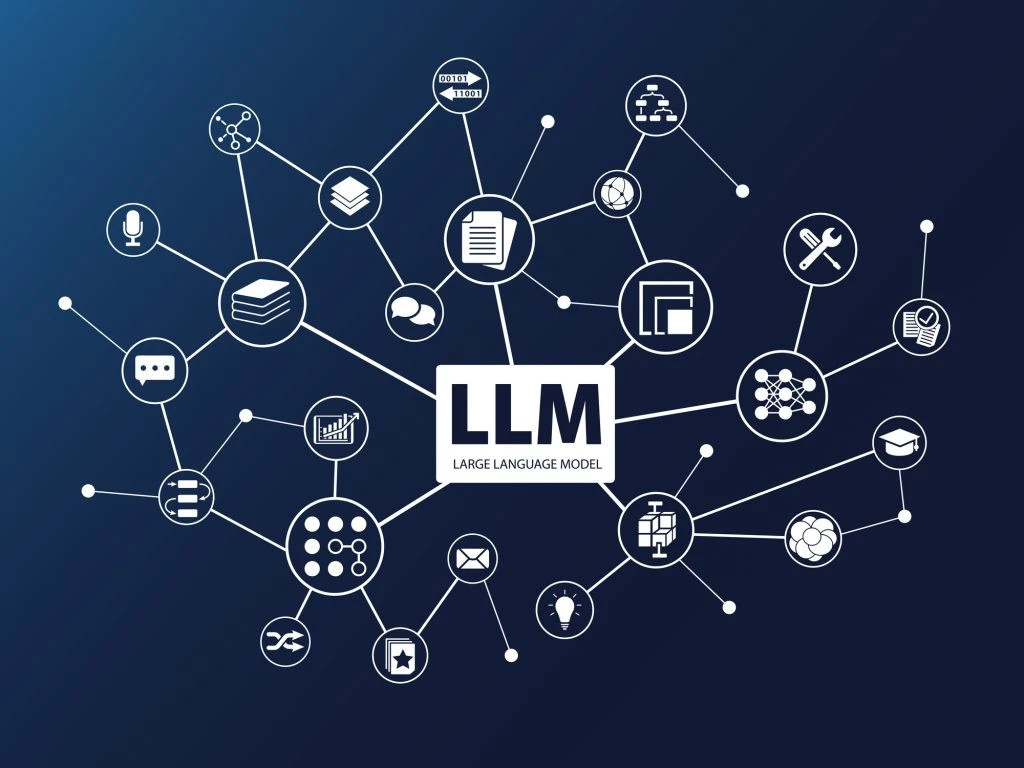
Organizations across the United States are increasingly moving beyond experimentation with artificial intelligence and into structured, production-level deployment. The shift is less about enthusiasm for new technology and more about addressing concrete operational gaps — inconsistent data handling, slow document processing, fragmented customer communication systems, and the growing cost of manual knowledge work. For many companies, the question is no longer whether to adopt language model technology, but how to build it responsibly, at scale, and in alignment with existing infrastructure.
This guide is written for technology leaders, operations managers, and business decision-makers who are evaluating how to move from an initial AI concept to a functioning, maintainable system in production. It covers the full development arc — from early scoping through architecture decisions, integration, and long-term system management — with an emphasis on what actually determines success or failure in real enterprise environments.
Table of Contents
What Large Language Model Development Services Actually Involve
Large language model development services refer to the structured process of designing, training, fine-tuning, deploying, and maintaining language-based AI systems for specific business use cases. This is distinct from simply connecting to a third-party AI API. A proper development engagement addresses how a model understands domain-specific language, how it integrates with existing data sources, how it behaves under production load, and how its outputs are governed for accuracy and compliance.
For those looking to understand the full scope of what this process entails before engaging a provider, this Large Language Model Development Services guide outlines the technical and strategic layers involved in building custom AI language systems for enterprise environments.
The core distinction between a prototype and a production system lies in reliability. A prototype demonstrates that a concept can work. A production system must work consistently, across varying inputs, within defined response parameters, without degrading over time, and without producing outputs that create legal, reputational, or operational risk. Getting from one to the other requires more than engineering effort — it requires organizational clarity about what the system is supposed to do and who is responsible for it.
The Gap Between Proof of Concept and Real Deployment
Many organizations discover that a successful internal demo does not translate directly into a production-ready tool. The reasons are predictable: demo environments use curated inputs, production environments do not. A model that performs well when given clean, structured questions will behave differently when employees or customers submit ambiguous, incomplete, or off-topic queries.
Closing this gap requires deliberate investment in what the industry calls “hardening” — testing edge cases, defining failure modes, building fallback behaviors, and establishing monitoring systems that flag when model performance degrades. These are not optional steps. They are the difference between a system that improves operations and one that introduces new categories of error.
Scoping a Development Engagement for Enterprise Use
The quality of a large language model development project is determined early — during the scoping phase. Organizations that enter development without clear answers to foundational questions typically spend more time and money than planned and often produce systems that do not meet the original business need.
Scoping must address three things before any technical work begins: what problem the system is solving, what data it will use, and what success looks like in measurable operational terms. Each of these deserves more attention than most organizations initially give them.
Defining the Problem with Enough Specificity
The most common scoping failure is defining the problem too broadly. “Automate customer support” is not a useful specification. “Classify incoming support tickets into five categories and generate a draft response using account history and product documentation” is a specification that a development team can actually build against.
The narrower the initial problem definition, the faster a working system can be built and validated. Expansion can happen after the core system is stable. Trying to solve multiple complex problems in a single initial build increases the risk of delivering something that partially solves each and fully solves none.
Understanding Data Readiness Before Development Starts
Language models learn from data, and the quality of that data directly shapes what the model can and cannot do reliably. Organizations often assume their data is ready before it is. In practice, data exists in formats that require significant processing — inconsistent labeling, redundant records, missing context, or outdated information that would teach the model incorrect patterns.
A development engagement that includes an honest data audit at the outset saves substantial time downstream. It also prevents the common situation where a model is trained, tested, and then discovered to have learned from poor-quality input — requiring a rebuild from an earlier stage.
Architecture Decisions That Affect Long-Term System Performance
The architectural choices made during development have consequences that extend far beyond the initial build. How a model is trained, where it is hosted, how it connects to other systems, and how it handles sensitive data all affect how maintainable and trustworthy the system remains over time.
In the US market, these decisions are also shaped by regulatory context. Industries including healthcare, financial services, and legal services operate under data governance requirements that restrict where information can be stored, who can access it, and how it must be protected. As the National Institute of Standards and Technology has outlined in its AI risk management frameworks, responsible AI development requires systematic attention to data governance, model transparency, and accountability structures throughout the system’s lifecycle.
Choosing Between Fine-Tuning and Retrieval-Augmented Generation
Two of the most common technical approaches in large language model development are fine-tuning and retrieval-augmented generation, often referred to as RAG. Each serves a different purpose, and choosing between them — or combining them — depends on the nature of the use case.
Fine-tuning involves training a pre-existing base model on domain-specific data so that it learns the language, terminology, and reasoning patterns relevant to a specific field. This approach works well when the model needs to internalize specialized knowledge and apply it consistently across many types of queries. It is more resource-intensive upfront but can produce more coherent outputs for narrow domains.
Retrieval-augmented generation, by contrast, connects a language model to an external knowledge base at inference time. Instead of the model relying entirely on what it learned during training, it retrieves relevant documents or records and uses them to construct a response. This approach is better suited to situations where information changes frequently, where accuracy must be traceable to specific source material, or where the knowledge base is too large to encode through fine-tuning alone.
Hosting and Infrastructure Considerations for US Operations
Decisions about where a model is hosted — cloud-based infrastructure, on-premise servers, or a hybrid arrangement — affect both performance and compliance. Organizations that handle sensitive customer information or operate in regulated industries often have constraints that rule out certain cloud configurations.
Beyond compliance, hosting decisions also affect latency. A model that responds slowly in production creates friction for users and reduces adoption. Designing infrastructure to meet realistic response-time requirements under normal load — not just peak load in a test environment — is a critical part of production readiness that is sometimes underestimated during the planning phase.
Integration with Existing Business Systems
A language model that operates in isolation from other business systems produces limited value. The operational benefit comes from integration — connecting the model to the platforms, databases, and workflows that employees and customers already use. This is also where many development projects encounter their most significant friction.
Enterprise environments typically include legacy systems, proprietary software, and a mix of data formats that were not designed with AI integration in mind. Integration work requires careful planning to avoid creating brittle connections that break when underlying systems are updated, and to ensure that data flowing between systems maintains its integrity throughout the process.
Maintaining Human Oversight in Automated Workflows
One of the practical realities of deploying large language model development services in enterprise settings is that full automation is rarely appropriate as a starting point. Even in use cases where the long-term goal is high levels of automation, beginning with human review of model outputs builds the feedback data needed to improve the system over time.
Structured human oversight also reduces the risk of consequential errors going unnoticed. A model that generates a response to a legal inquiry, a financial recommendation, or a healthcare question should have a review mechanism — not because the model is necessarily unreliable, but because the cost of unreviewed errors in these domains is high. Building oversight into the workflow from the start is more efficient than retrofitting it after an incident occurs.
Monitoring, Maintenance, and System Longevity
Production AI systems are not static. The world changes, organizational data changes, and user behavior changes. A model that performs well at launch can degrade over time if it is not actively monitored and periodically updated. This is one of the most frequently underestimated aspects of large language model development services when organizations plan their initial budgets and timelines.
Effective monitoring tracks both technical performance metrics — response accuracy, latency, error rates — and business outcome metrics, meaning whether the system is actually producing the results it was built to produce. These two categories do not always move together. A system can be technically stable while gradually drifting away from the behaviors that made it useful.
Planning for Model Updates and Retraining Cycles
Maintenance contracts and update cycles should be defined before a system goes live, not after. Organizations that treat a model deployment as a one-time project rather than an ongoing operational commitment tend to find themselves managing systems that are increasingly misaligned with current business needs.
Retraining a model — whether full retraining or targeted adjustments — requires access to updated, labeled data and a testing process that confirms the updated model performs correctly before it replaces the current version in production. Building these processes into operational planning from the start prevents the kind of rushed, poorly tested updates that introduce new problems into previously stable systems.
Conclusion
Moving from an AI prototype to a production system that delivers consistent, reliable results requires more than technical skill. It requires organizational clarity, data discipline, realistic architectural planning, and a genuine commitment to long-term maintenance. The organizations that succeed with large language model development services in the US market are typically those that treat the process as an operational investment rather than a technology experiment.
The US enterprise environment is competitive, and the pressure to deploy AI quickly is real. But speed without structural rigor produces systems that fail quietly — underperforming in ways that are hard to diagnose and expensive to correct. The better path is methodical: define the problem clearly, assess data honestly, choose architecture that fits the actual use case, integrate thoughtfully, and maintain actively. Organizations that follow this path build systems that continue to function well as business conditions evolve — which is the only outcome that justifies the investment.
-
-

-

-

-

-