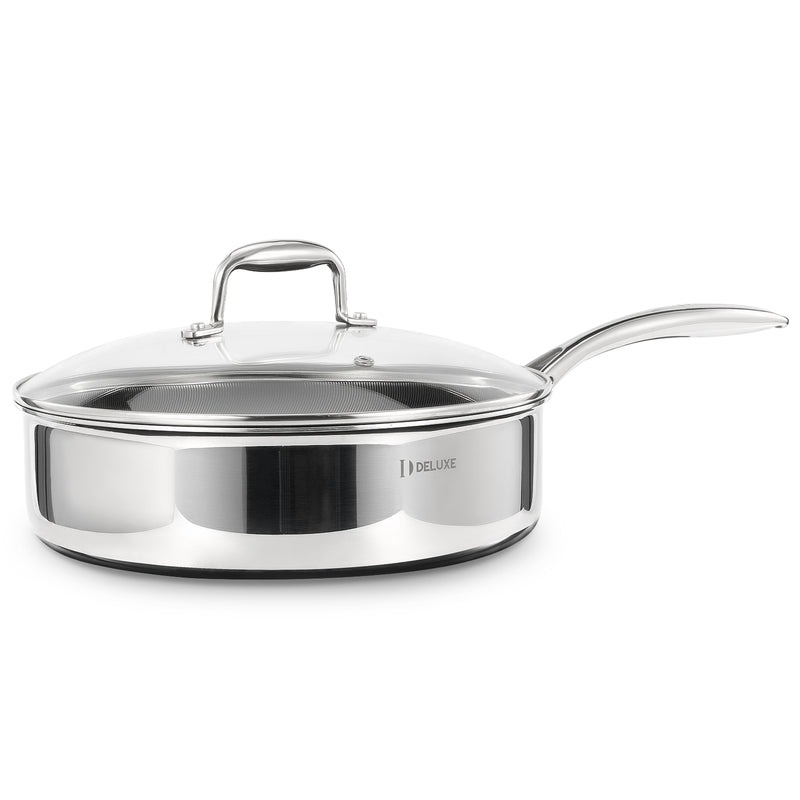
You’re standing in the kitchen aisle, surrounded by gleaming pots and pans in every material imaginable. Should you reach for that sleek stainless steel set, or stick with the familiar non-stick, aluminum, or cast iron pieces you grew up watching your parents use? It’s a decision that goes far beyond appearance. The cookware you choose directly impacts how your food cooks, how long your investment lasts, how much effort you spend on maintenance, and ultimately, how much joy you find in your kitchen.
The challenge is that conflicting advice floods the internet. One source swears by cast iron’s heritage, another insists non-stick is essential, and yet another claims stainless steel is the only serious option. Home cooks want access to a variety of kitchenware in one place and need confidence in product quality and warranty offers — but cutting through the noise feels impossible.
This article delivers a clear, head-to-head quality comparison of stainless steel versus traditional cookware. We’ll examine materials, heating performance, longevity, ease of care, and cost so you can determine exactly which cookware collections match your cooking style — and shop with confidence for high-quality kitchenware that truly lasts.
Table of Contents
Understanding Stainless Steel Cookware: What Sets It Apart
Stainless steel cookware is forged from an alloy combining iron, chromium, and nickel. The chromium creates an invisible oxide layer that resists corrosion, while nickel adds luster and further protection. This non-reactive surface means your tomato sauce or lemon-based reduction won’t pick up metallic flavors — a genuine advantage when cooking acidic dishes.
Quality grades matter here. The designation 18/10 indicates 18% chromium and 10% nickel, offering superior corrosion resistance and a brighter finish compared to 18/8 or lower grades. When evaluating high-quality kitchenware, these numbers are your first checkpoint for long-term performance.
What truly elevates modern stainless steel is multi-layer construction. Tri-ply and fully clad designs sandwich an aluminum or copper core between stainless steel layers, delivering rapid, even heat distribution from base to rim. This eliminates the hot spots that scorch garlic or unevenly brown meat. The result is precise temperature control that professional chefs rely on daily.
Beyond performance, stainless steel works on every cooktop — gas, electric, ceramic, and induction — while handling oven temperatures that would destroy non-stick coatings. Its polished, professional appearance anchors premium cookware collections and signals durability before you even turn on the burner. That said, traditional cookware retains a devoted following for good reasons worth exploring.
Traditional Cookware Options Explained: Non-Stick, Aluminum, and Cast Iron
Traditional cookware falls into three broad categories, each with a distinct personality in the kitchen. Non-stick pans, typically coated with PTFE (polytetrafluoroethylene), are lightweight champions of convenience. Eggs slide out effortlessly, pancakes flip without drama, and cleanup takes seconds. However, these coatings degrade under high heat and scratch easily with metal utensils, meaning most non-stick pans need replacement every one to three years — a cycle that adds up financially and environmentally.
Uncoated aluminum is the workhorse of budget kitchens and commercial restaurants alike. It conducts heat faster than almost any other cookware metal, keeping energy costs low and cook times short. The trade-off is reactivity: acidic ingredients like tomatoes or vinegar can leach metallic flavors into food, and thinner gauges warp under high heat. Anodized versions solve some of these issues but introduce their own care requirements.
Cast iron occupies a nostalgic, almost reverent place in many households. When properly seasoned, it develops a naturally non-stick patina, retains heat like no other material, and can literally last generations. Yet it’s heavy enough to strain wrists, heats unevenly at first, and demands consistent maintenance — immediate drying, periodic re-seasoning, and careful storage to prevent rust. Each traditional material serves specific tasks well, but every one carries trade-offs that become clear when measured against stainless steel’s all-around capabilities. For home cooks searching for all products under one roof, understanding these limitations is the first step toward a smarter investment.
Key Quality Comparisons: Stainless Steel vs. Traditional Cookware
Now we reach the core question: when you place stainless steel directly alongside non-stick, aluminum, and cast iron, which material genuinely delivers superior quality? The answer depends on what you prioritize — longevity, cooking precision, or daily convenience. Let’s break down the three criteria that matter most to home cooks who want to shop with confidence for high-quality kitchenware.
Durability and Longevity: Which Cookware Lasts Longer?
Stainless steel resists dents, rust, and scratches with remarkable consistency, often lasting decades without visible decline. Non-stick coatings, by contrast, begin flaking or losing their release properties within one to three years of regular use, especially when exposed to high heat or metal utensils. Aluminum warps under thermal stress and discolors over time, while uncoated versions react with acidic ingredients. Cast iron is extraordinarily tough but brittle — a single drop onto a hard floor can crack it, and neglected seasoning invites rust. For home cooks seeking a one-time investment they can trust for life, stainless steel delivers the most reliable long-term durability.
Heat Performance: Even Cooking and Temperature Control
Tri-ply stainless steel with an aluminum or copper core heats rapidly and distributes temperature uniformly from the center to the edges, making it ideal for searing steaks, building fond for pan sauces, and deglazing with wine. Thin aluminum heats fast but creates hot spots that scorch delicate sauces. Cast iron excels at heat retention — perfect for deep frying and slow braises — yet responds sluggishly to temperature adjustments. Non-stick pans heat evenly when well-constructed but cannot tolerate the high temperatures needed for proper browning without risking coating damage. For versatile, responsive performance across techniques, multi-layer stainless steel consistently wins within comprehensive cookware collections.
Maintenance and Care: Effort vs. Reward
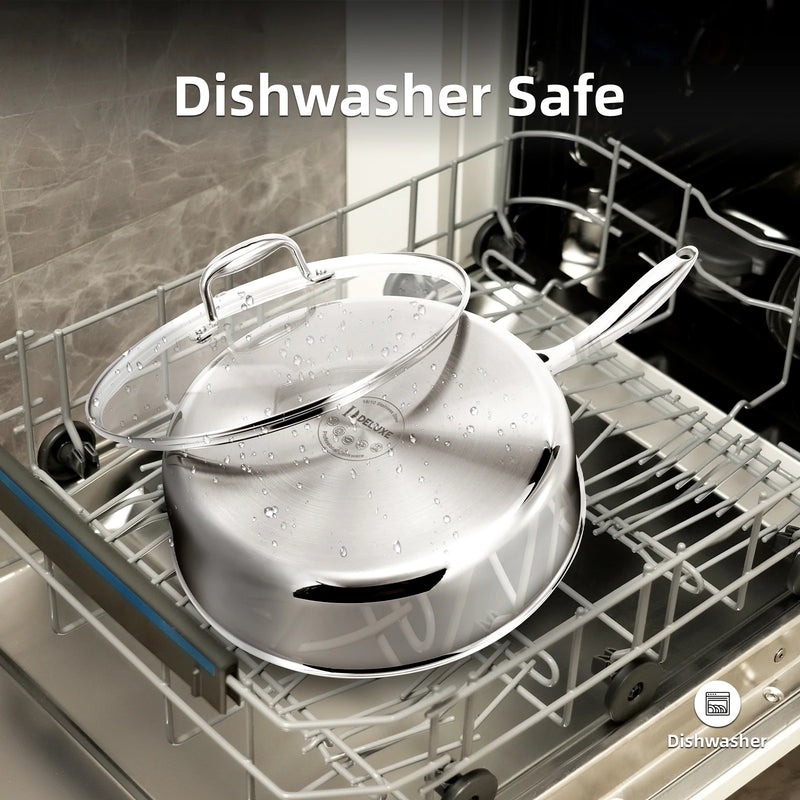
Most stainless steel is dishwasher-safe, tolerates any utensil material, and needs only occasional polishing with a mild cleanser like Bar Keeper’s Friend to stay bright. Food can stick if you skip preheating, but proper technique eliminates this quickly. Non-stick demands gentle hand-washing, silicone or wooden utensils only, and eventual replacement when the coating deteriorates. Aluminum requires specialized cleaners to address oxidation, and anodized versions need careful handling to preserve their surface. Cast iron calls for hand-washing without harsh soap, immediate drying, and periodic re-seasoning — a ritual some enjoy but many find burdensome. Stainless steel strikes the best balance between minimal effort and lasting reward, making it the practical backbone for home cooks exploring all products in a high-quality kitchenware lineup.
Why Home Cooks Choose High-Quality Kitchenware: Meeting Real Kitchen Needs
The modern home cook doesn’t want to visit five different stores or browse dozens of websites to assemble a functional kitchen. Access to a variety of kitchenware in one place matters — and stainless steel cookware collections deliver exactly that. A single line typically spans sauté pans, saucepans, stockpots, and specialty pieces with matching lids and consistent handle design, eliminating the guesswork of mixing brands and hoping everything stacks neatly in your cabinet.
Confidence in product quality and warranty offers seals the decision. Reputable stainless steel manufacturers routinely back their products with limited lifetime guarantees or warranties stretching ten years or more. Traditional non-stick pans rarely offer more than a two-year promise — because the manufacturer knows the coating won’t last beyond that. When you invest in stainless steel, the warranty itself signals the brand’s confidence in what they’ve built.
Consider a home cook who spent years cycling through non-stick sets every eighteen months. After switching to a tri-ply stainless steel collection from Deluxe Cookware, she noticed steaks developed a richer crust, pan sauces came together effortlessly thanks to proper fond development, and cleanup — once she learned to preheat correctly — became no more difficult than before. Three years later, those same pans look nearly new. This shift toward “forever cookware” reflects a broader movement: home cooks increasingly prefer one quality purchase over repeated disposable replacements, choosing long-term value and the peace of mind that their tools won’t let them down mid-recipe.
Building the Perfect Cookware Collections: Which Pieces Matter Most
A smart cookware collection doesn’t require dozens of pieces — it requires the right ones. Start with four stainless steel essentials: a 10-inch skillet for searing and sautéing, a 3-quart saucepan for grains and sauces, a 5-quart Dutch oven or deep sauté pan for one-pot meals, and an 8-quart stockpot for soups, pasta, and batch cooking. These four pieces cover roughly 80% of daily cooking tasks with confidence and consistency.
Mixing materials strategically still makes sense. Keep one well-seasoned cast iron skillet for cornbread, high-heat steaks, or campfire cooking, and reserve a single non-stick pan exclusively for eggs and crepes. But let stainless steel anchor your kitchen — it handles everything else without compromise. Purchasing a complete 8- or 10-piece collection from a single reputable brand often costs less than assembling individual pieces from different manufacturers, and you gain matching lids, uniform handle design, and stackable storage that reduces cabinet clutter.
When evaluating collections, look for tri-ply or fully clad construction, ergonomic handles that stay cool on the stovetop, and tight-fitting lids that lock in moisture. These markers distinguish high-quality kitchenware from budget imitations. A well-chosen stainless steel collection simplifies your kitchen, streamlines your shopping, and gives you access to all products you need in one reliable, cohesive set.
Shop with Confidence: Quality Assurance, Warranties, and What to Look For
Shopping with confidence means more than liking how a pan looks on the shelf. It requires clear product descriptions that specify exact alloy composition, transparent material specs listing ply count and core metal, verified customer reviews from real home cooks, and warranty offers that prove the manufacturer stands behind their work. When these elements align, you can buy without second-guessing.
Warranty differences between stainless steel and traditional cookware reveal a telling gap. Quality stainless steel brands like Deluxe Cookware routinely offer limited lifetime warranties or guarantees spanning ten to twenty-five years. Traditional non-stick pans typically carry one- to two-year coverage — an implicit admission that the product has a short functional lifespan. Aluminum cookware falls somewhere in between, often offering three to five years but rarely more. A longer warranty isn’t just peace of mind; it’s a measurable indicator of how long the manufacturer expects their product to perform.
Before purchasing, check for certifications that validate quality claims: NSF International certification for food safety standards, induction-compatible logos confirming magnetic base construction, and dishwasher-safe labels backed by testing. These marks distinguish genuinely high-quality kitchenware from marketing hype. Buy from specialized kitchenware retailers that curate cookware collections thoughtfully and offer straightforward return policies — this directly satisfies the need for access to a variety of kitchenware in one place without the risk of being stuck with a disappointing product.
Use this quick checklist when evaluating any cookware purchase: confirm the material grade (18/10 stainless steel is ideal), lift the piece to assess weight and balance, inspect base thickness for even heat distribution, grip the handle for comfort and heat resistance, test the lid fit for a secure seal, and verify warranty length in writing. Stainless steel cookware from established brands consistently scores highest across every point on this list, giving home cooks genuine confidence that their kitchen investment will deliver results for years — not months — to come.
Why Stainless Steel Is the Smart Long-Term Kitchen Investment
Stainless steel cookware outperforms traditional non-stick, aluminum, and cast iron across the metrics that matter most to home cooks: durability that spans decades rather than months, even heat distribution that elevates everyday meals, and maintenance simplicity that respects your time. Traditional materials still earn their place in specific roles — cast iron for unmatched heat retention during slow braises, non-stick for effortless eggs — but stainless steel delivers the best all-around performance for the vast majority of daily cooking tasks.
By investing in well-constructed stainless steel cookware collections, you gain access to a variety of kitchenware in one place, backed by warranties that traditional options simply cannot match. You shop with confidence knowing the manufacturer stands behind their product for years, not seasons. High-quality kitchenware shouldn’t be a gamble — it should be a guarantee.
The right cookware is an investment in your daily cooking joy. Whether you’re upgrading a worn-out starter set or building a lifetime collection from scratch, prioritize quality construction, transparent material specifications, and meaningful warranty coverage. Let stainless steel anchor your kitchen, complement it with one or two specialty pieces, and cook with the assurance that your tools will perform as brilliantly as your recipes demand. Browse the latest stainless steel cookware collections today — and experience the difference that true quality makes.
-

-

-

-

-

-