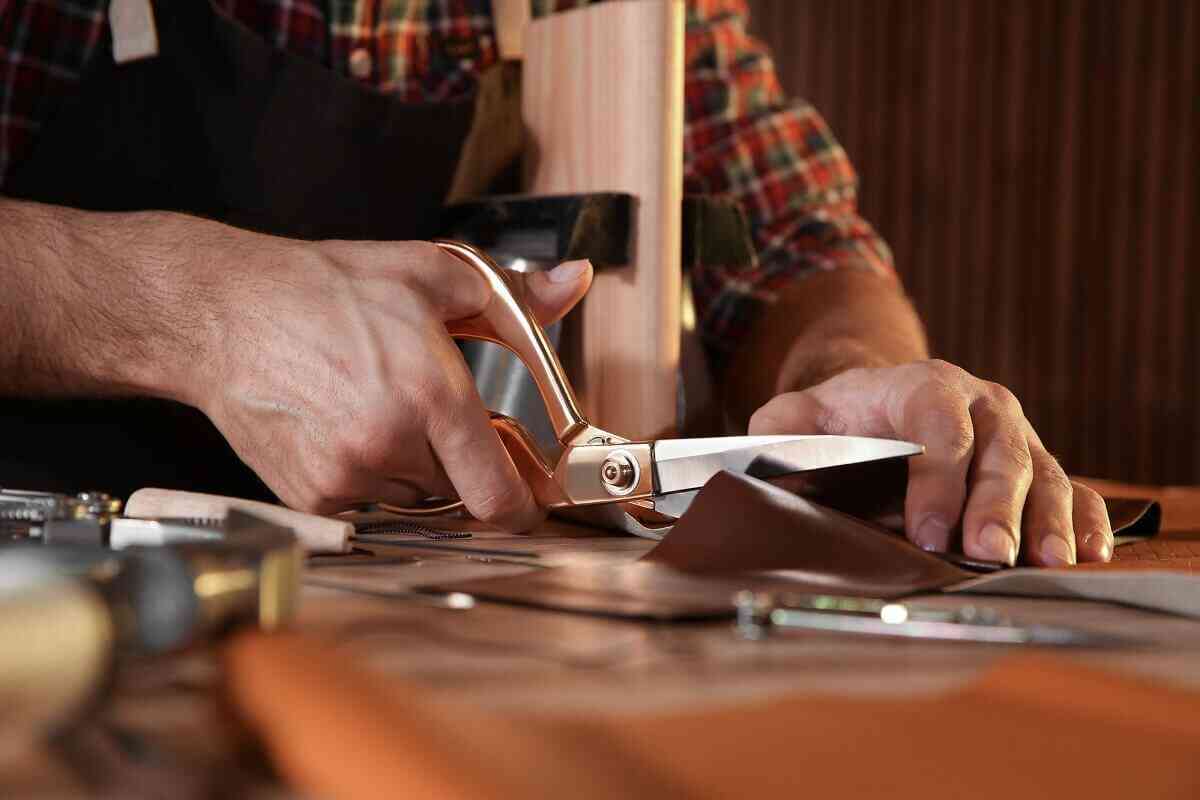
In leather manufacturing, cutting is one of the most decisive production stages because it shapes material use, labor flow, and downstream consistency simultaneously. A small adjustment in how parts are arranged, pressed, or separated can affect waste levels, throughput, and product uniformity across an entire line. That is why yield has become a central measure in modern cutting operations.
Yield, in practical terms, refers to how much usable output is obtained from every hide or sheet. In leather work, this is more complex than in many other materials because natural variation is always present. Thickness changes, scars, grain differences, and irregular edges make every cutting plan a technical exercise rather than a simple repeatable action. Cutting equipment is not only expected to divide material, but it must help production teams manage variation without slowing output.
Table of Contents
Why yield matters beyond material savings
Material efficiency is often the first reason manufacturers evaluate cutting performance, but yield affects more than raw input cost. Poor yield can lead to uneven part availability, disrupt assembly schedules, and increase sorting time. When too many usable sections
are lost early in production, the impact reaches stitching, skiving, finishing, and quality control.
A cutting process with strong yield management supports better planning. It allows production teams to estimate how many parts can be taken from each batch, how much rework may be required, and whether specific hide grades are suitable for certain products. Better yield also improves consistency in multi-part items such as bags, belts, footwear components, and upholstery panels, where matching appearance and dimensions is important.


The challenge of working with natural materials
Leather does not behave like fabric, plastic, or sheet metal. Each piece contains characteristics that affect cut decisions. Some sections may be visually suitable for exposed components, while other areas are better reserved for hidden reinforcements or smaller parts. As a result, cutting is tied closely to inspection and layout strategy.
The process must account for grain direction, stretch behavior, surface quality, and the final application of each component. A clean edge alone is not enough. A part can be
dimensionally correct yet still unsuitable if it comes from an area with inconsistent texture or structural weakness. This is why cutting departments often operate as both material evaluators and production drivers.
How cutting machines shape production flow
Cutting machinery influences workflow through speed, repeatability, and control. Press based systems support die cutting for repeat runs, while other setups may be used for strap preparation, splitting, or edge-related preparation before assembly. The right machine type depends on part volume, product complexity, and the range of materials entering the line.
In many operations, the industrial leather cutting machine sits at the point where craftsmanship and production discipline meet. It must deliver consistent dimensions while helping operators deal with irregular hide shape and quality zones. When equipment performs reliably, the rest of the process becomes easier to standardize. When it does not, variation spreads quickly through the line.
Yield starts with layout discipline
One of the most overlooked parts of cutting efficiency is layout discipline. Parts that are placed without a clear sequence often increase waste, even when the machine itself is accurate. Efficient cutting begins before the first press or pass. Teams need a method for grouping parts by size, priority, and visual requirement.
Larger visible panels are usually positioned first because they require the highest-quality areas. Smaller components can then be arranged around them to recover value from the remaining sections. This layered approach reduces avoidable loss and helps make full use of a hide’s working area. In high-mix production, layout planning also lowers the chance of cutting the correct shapes from the wrong visual zones.
Consistency reduces downstream correction
Cutting quality affects every department that follows. If parts vary in edge cleanliness, shape, or size, assembly teams spend more time correcting fit problems. That may include trimming, re-aligning, or rejecting components that should have been accurate from the start. These corrections slow production and make output harder to forecast.
Consistent cutting also supports quality documentation. When part dimensions remain stable from batch to batch, teams can identify whether defects are linked to material quality, machine setup, die wear, or operator handling. Without consistent cutting, diagnosing production issues becomes far more difficult because too many variables change at once.
The shift toward measurable cutting performance
Manufacturers increasingly assess cutting operations using measurable indicators rather than relying solely on visual judgment. Yield percentage, scrap rate, cut accuracy, changeover time, and usable part recovery now provide a clearer view of performance. This matters in leather production because material costs remain significant, and every preventable loss directly affects margins.
A yield-focused approach does not mean cutting faster at any cost. It means building a process where material selection, machine setup, layout logic, and part quality work together. The best results come from treating cutting as a controlled production function rather than an isolated shop-floor task.
Cutting efficiency is a systems issue
Smarter leather cutting is not defined by speed alone. It depends on how well machines, operators, material grading, and layout choices work as one system. Yield improves when cutting decisions reflect both technical requirements and the material’s natural limits. That is what turns cutting from a basic mechanical step into a production advantage.
In leather manufacturing, waste is often discussed as an unavoidable outcome of natural variation. Some loss will always exist, but uncontrolled loss is a different matter. When yield becomes the starting point, cutting operations become easier to measure, easier to improve, and more reliable across the full production cycle.