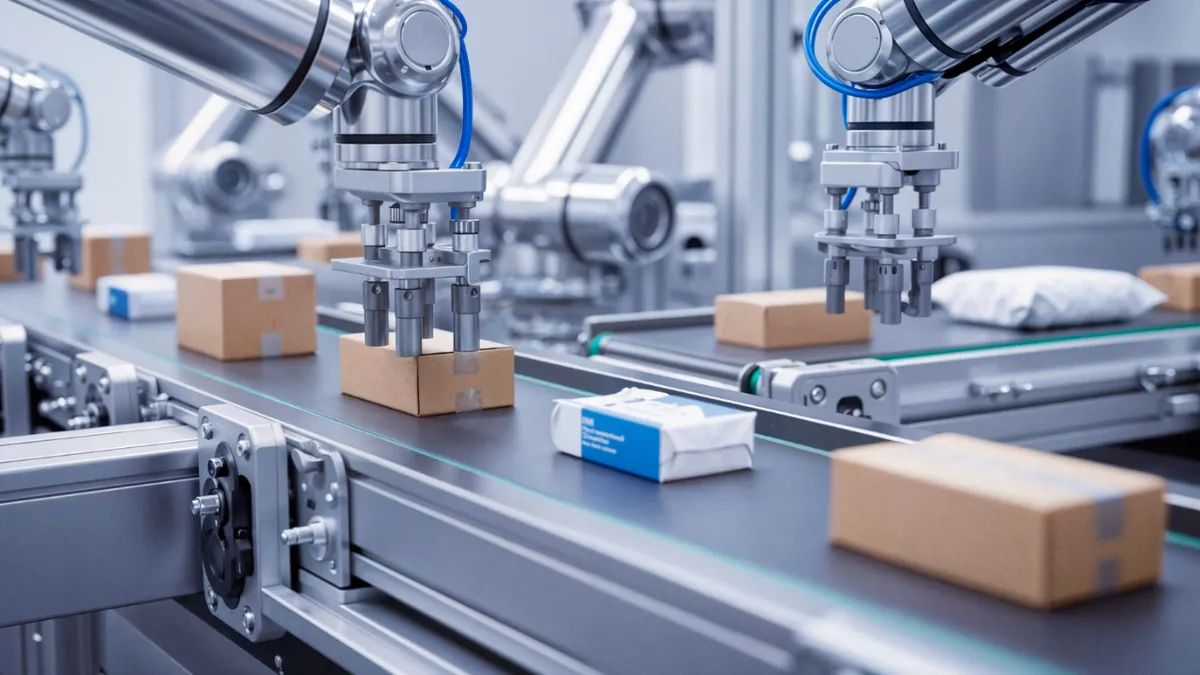
Mass production built the modern economy. Assembly lines, standardized parts, and volume-driven pricing turned manufacturing into a numbers game — the more you make, the more you earn. For decades, entrepreneurs entering physical product industries accepted this as gospel. But a different model has been gaining ground, and it’s rewriting the rules of what a profitable manufacturing business looks like.
Small-batch, high-specification manufacturing — particularly in the custom vehicle and performance parts space — is proving that precision and exclusivity can outperform volume in both margin and brand equity.
Table of Contents
The Economics of Exclusivity
Traditional manufacturing scales profit through volume. The unit cost drops as quantities rise, and margins grow once fixed costs are absorbed. This works well for commodity goods but creates a ceiling for entrepreneurs in specialized markets.
Small-batch production flips this structure. When you manufacture fewer units with greater precision and craft, the pricing logic changes entirely. Buyers in performance and custom vehicle markets are not comparison shopping on price alone — they are paying for fit, finish, engineering specificity, and the confidence that the part was built with their exact application in mind. That value proposition supports premium pricing that high-volume factories cannot match.
The result is a business model where lower output generates higher per-unit revenue, and where relationships with clients often lead to repeat work across multiple projects rather than single transactional purchases.
Prototyping as a Revenue Stream, Not Just a Cost Center
Most manufacturing businesses treat prototyping as overhead — a necessary expense on the road to the real product. Small-batch manufacturers are repositioning it as a billable service and a client acquisition tool.
When a custom vehicle builder or specialty OEM needs a one-off component to test fitment, validate aerodynamics, or present at an industry show, they need a fabrication partner who can move quickly and deliver something that looks and performs like a finished product. Entrepreneurs who have built prototyping capability — through 3D scanning, rapid iteration workflows, and advanced fabrication techniques — are capturing that spend directly.
This is where the application of automotive composites becomes a strategic business differentiator, not merely a materials choice. The ability to produce prototype-quality composite parts that can also function as production-ready components removes an
entire phase from the client’s development cycle. That compression of timeline has real dollar value, and clients pay for it.
Niches Don’t Stay Small Forever
One of the persistent myths about niche manufacturing is that it limits growth. In practice, deep expertise in a narrow category creates a compounding advantage that generalist manufacturers cannot easily replicate.
A business that builds a reputation for precision work in custom automotive fabrication attracts clients with increasingly complex requirements. Those clients refer to other clients with similar needs. Over time, the niche becomes a defensible market position rather than a constraint.
The boutique automotive sector — encompassing specialty builders, track-day performance programs, low-volume OEMs, and concept vehicle developers — is a concentrated market with high spending per project. Winning a meaningful share of that market does not require a massive scale. It requires a track record of technical execution and the operational agility to handle varied project types without losing quality.
Operational Agility as a Competitive Advantage
Large manufacturers optimize consistency at scale. Their processes are designed to replicate the same output thousands of times with minimal deviation. That infrastructure becomes a liability when a client needs something that doesn’t fit the standard template.
Small-batch manufacturers compete precisely in those gaps. The ability to take a project from concept to physical prototype using in-house engineering, scanning, and fabrication — without handing off to multiple vendors — shortens lead times and reduces the points of failure in a project. For clients working on tight development schedules, that integrated capability is worth paying significantly more for.
Entrepreneurs building in this space are also discovering that operational agility attracts a type of client that larger manufacturers cannot serve well: the innovator on a compressed timeline with a non-standard specification. These clients tend to have budgets that reflect their urgency and the uniqueness of their requirements.
Building a Brand on Craft, Not Capacity
In commodity manufacturing, brands rarely command premiums. Buyers choose price and lead time. In precision, small-batch manufacturing, brand signals something more specific: the confidence that a shop understands the technical demands of high performance applications and has delivered against them before.
Entrepreneurs who document their work — through project portfolios, fabrication process content, and client outcomes — build brand equity that operates as a continuous sales channel. A potential client evaluating fabrication partners for a six-figure custom vehicle program is not responding to a generic pitch. They are looking at evidence of past execution.
This is one of the clearest examples in any industry where marketing and product quality are effectively the same function. The work itself, presented well, does the selling.
The Bigger Picture for Manufacturing Entrepreneurs
The small-batch model is not a transitional stage on the way to mass production. For many entrepreneurs in specialized industries, it is the destination — a stable, high-margin business built on expertise, client relationships, and the kind of technical reputation that takes years to develop and is nearly impossible for larger competitors to undercut on quality alone.
Volume was never the only path to profitability. Precision, it turns out, is a business strategy.
-

-

-
-
-

-