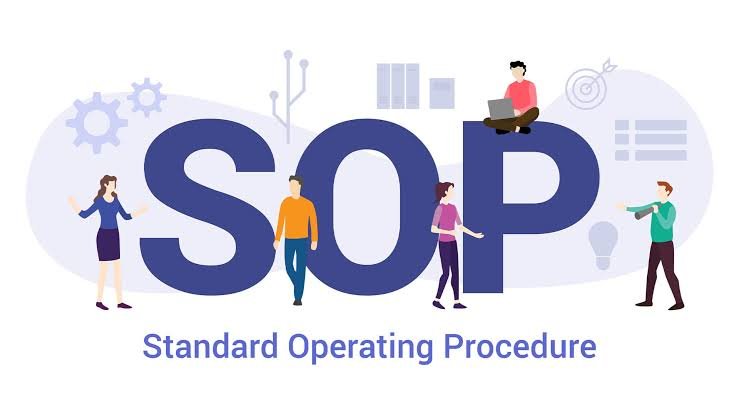
Standard operating procedures exist for a reason. They represent the institutional knowledge a company has accumulated — the right way to complete a task, in the right order, with the right checkpoints. When they work, they reduce errors, protect consistency, and give teams a shared reference point. When they fail, the consequences rarely announce themselves clearly. Instead, they surface as rework, missed steps, inconsistent outputs, and compliance gaps that only become visible after the damage is done.
For many US companies, the problem is not that SOPs are absent. It is that they exist on paper — or in shared drives, printed binders, or email threads — and are never systematically tracked, updated, or confirmed as followed. This distinction matters more than most organizations acknowledge. A written procedure that no one can confirm was completed is, operationally speaking, not much different from no procedure at all.
The shift away from manual SOP management is not a technology trend. It is a response to real operational failures that have been accumulating quietly across industries for years. Understanding what those failures look like, and why they persist, is the first step to addressing them honestly.
Table of Contents
What SOP Tracking Actually Means in an Operational Context
SOP tracking refers to the systematic recording and verification of whether standard operating procedures are being followed, completed, and updated in real time. It is distinct from simply having procedures documented. Documentation confirms that a process exists. Tracking confirms that it is being executed — by whom, when, in what sequence, and with what outcome. For organizations managing field teams, service operations, or regulated workflows, this distinction carries significant operational weight. A Sop Tracking overview makes clear that visibility into procedure completion is a foundational requirement for any operation where consistency directly affects quality or safety outcomes.
The gap between having a procedure and confirming it was followed is where most operational errors occur. In manual systems — spreadsheets, paper checklists, verbal confirmations — there is no reliable audit trail. A supervisor may assume a procedure was followed because the team said it was. A technician may skip a step under time pressure and have no record of the deviation. A compliance officer reviewing a process may find nothing wrong on paper while the actual execution has drifted significantly from the documented standard.




Why Manual Systems Accumulate Risk Silently
Manual SOP management does not fail dramatically. It fails gradually, through small deviations that compound over time. A checklist completed from memory rather than step-by-step. A procedure updated in one document but not in the version the field team is using. A sign-off that was backdated because the actual completion time was not recorded. None of these seem catastrophic in isolation. Together, they create an operation that believes it is following its own standards but cannot verify that it actually is.
This type of silent drift is particularly common in industries with high employee turnover, distributed teams, or complex multi-step workflows. The institutional knowledge that SOPs are meant to preserve gets diluted as people leave, new hires skip steps they were never properly trained on, and supervisors inherit processes they never helped design. Manual systems have no mechanism to catch this erosion before it affects outcomes.
The Real Costs Companies Are Not Measuring
When organizations calculate the cost of poor SOP compliance, they typically focus on direct, visible expenses — a failed inspection, a customer complaint, a safety incident. These costs are real, but they represent only a portion of what manual SOP management actually costs. The larger costs are less visible because they are absorbed into normal operations rather than attributed to a specific failure.
Rework and Inconsistency Across Service Delivery
When procedures are not tracked, outcomes vary depending on who completed the task, on what day, under what conditions. This variation is the root cause of rework. A job that was done without following the documented sequence may produce a technically acceptable result most of the time — but not always. When it does not, the cost of correcting it is treated as an isolated incident rather than a systemic pattern. Without tracking data, organizations cannot identify which steps are being skipped, which teams are deviating from standards, or which processes need revision. They can only react after outcomes fail.
Rework costs extend beyond labor. They include scheduling disruptions, material waste, customer dissatisfaction, and the management time required to investigate and resolve issues. In service operations, rework often means returning to a customer site, which doubles the labor cost of the original job. These costs accumulate quietly in ways that general overhead figures do not capture.
Compliance Exposure That Does Not Show Up Until an Audit
Regulated industries — healthcare services, food processing, construction, industrial maintenance — operate under documentation requirements that mandate proof of procedure completion, not just proof that procedures exist. The Occupational Safety and Health Administration maintains requirements across numerous industries that tie directly to documented procedure adherence. When a company cannot produce verified records of SOP completion during an audit or incident investigation, the absence of documentation is treated as a compliance failure regardless of whether the procedure was actually followed.
Manual systems are particularly exposed here. Paper records can be lost, altered, or incomplete. Spreadsheet logs often reflect intended completion rather than actual completion, since there is no mechanism to distinguish between the two. Companies that have invested heavily in writing strong SOPs but have not invested in tracking their execution often discover this gap for the first time when facing an inspection or a liability claim.
Training and Onboarding Inefficiency
New employees in high-turnover industries typically learn procedures through informal handoffs from existing staff. Without tracked sop tracking data, there is no baseline against which a new hire’s performance can be measured or coached. Supervisors cannot identify which steps are being missed, which sequences are being reversed, or which procedures are being interpreted differently across team members. Training becomes a one-time event rather than an ongoing calibration, and the gap between how procedures are documented and how they are actually performed widens with each new hire.
This creates a compounding problem. As the workforce turns over, the documented procedure and the practiced procedure drift further apart. Eventually, the written SOP no longer reflects what the team is doing, but no one updates it because no one has the data to know it has changed. The document becomes a formality rather than a functional guide.
Why Visibility Into Execution Is the Missing Variable
Most organizations that struggle with SOP compliance are not struggling because they lack good procedures. They are struggling because they have no real-time view of whether those procedures are being followed as written. The difference between a procedure that is documented and a procedure that is verified is the presence of a tracking system that records execution as it happens.
Effective sop tracking creates a data layer between the written standard and the field outcome. It allows managers to see, in aggregate, where deviations are occurring, which teams or individuals are consistently missing steps, and which procedures may need to be revised because they are routinely bypassed under real working conditions. This is information that manual systems structurally cannot provide.
The Shift From Assumed Compliance to Confirmed Compliance
One of the most significant operational changes that comes with structured sop tracking is the shift from assumed compliance to confirmed compliance. In manual environments, compliance is largely assumed — supervisors trust that their teams follow procedures because the alternative is too resource-intensive to manage. Confirmed compliance replaces that assumption with documented evidence. Each step is recorded, timestamped, and tied to a specific team member, creating an audit trail that serves both operational and liability purposes.
This shift also changes the management conversation. Instead of asking whether procedures were followed after a problem occurs, managers can monitor adherence before problems develop. Patterns of deviation become visible early enough to address through coaching, retraining, or process revision rather than through incident response.
Industries Where This Problem Is Most Acute
The consequences of poor SOP tracking are not evenly distributed. Some industries carry significantly more exposure than others, not because their procedures are worse, but because the cost of deviation is higher.
• Field service operations — including HVAC, plumbing, electrical, and facilities maintenance — rely on technicians completing multi-step procedures at customer sites without direct supervision. Deviation from documented procedures in these environments directly affects service quality, safety, and warranty liability.
• Healthcare support services, including clinical environments and home care, operate under strict compliance requirements where documentation of procedure completion is not optional. Missing steps in care protocols can affect patient outcomes and trigger regulatory consequences.
• Food service and food production operations are subject to safety standards where deviation from documented handling and preparation procedures can create liability exposure that far exceeds the cost of any single incident.
• Industrial and manufacturing maintenance teams manage complex equipment where skipping a verification step in a maintenance procedure can lead to equipment failure, unplanned downtime, and safety incidents that are significantly more expensive than the labor cost of tracking compliance.
• Construction and contracting operations deal with subcontracted workforces where procedure adherence is difficult to monitor without structured tracking systems, and where deviations directly affect inspection outcomes and project liability.
Closing: The Operational Case for Taking This Seriously
The cost of manual SOP management is not always easy to quantify because it hides inside other line items — rework, turnover, compliance penalties, service callbacks, and the management time spent investigating problems that better documentation would have prevented. This is precisely why many organizations underestimate it. They are not ignoring the cost; they simply cannot see it clearly enough to attribute it correctly.
What structured sop tracking changes is visibility. It does not guarantee perfect compliance, and it does not replace the need for well-designed procedures. What it does is close the gap between what a company believes its teams are doing and what they are actually doing. For organizations operating at scale, across distributed teams, or in regulated environments, that gap is where the real cost lives.
The companies that recognize this early — and build execution-tracking into their operational infrastructure before a compliance failure or a pattern of costly rework forces the issue — are the ones that operate with the clearest picture of their own performance. That clarity has a measurable value, even when the cost of losing it is spread across too many line items to see at once.