Deer processing in the United States follows a predictable seasonal rhythm — archery openers in early fall, rifle seasons through November and December, and the steady work of breaking down carcasses in cold garages, walk-in coolers, and processing facilities across the country. For most hunters who process their own deer, the tools they use are chosen once and rarely reconsidered. That works well enough until it doesn’t. A blade that fails mid-cut, dulls after two deer, or leaves ragged bone edges that contaminate surrounding meat isn’t just inconvenient — it adds time, wastes yield, and creates real food safety concerns.
Choosing the right cutting tool for bone work is one of the more consequential decisions a hunter or small processor makes, yet it often receives less attention than the choice of hunting rifle or broadhead. The information available tends to skew toward general-purpose recommendations rather than the specific demands of deer anatomy, carcass temperature, and processing volume. This guide is written to address that gap in a straightforward, practical way.
Table of Contents
Understanding What a Bone Saw Blade Actually Does Under Working Conditions
A bone saw blade is not simply a smaller version of a wood-cutting or metal-cutting blade. It is designed around the specific mechanical properties of bone — which is dense, slightly flexible, and layered with marrow that can clog a tooth pattern not designed to handle it. When you cut through a deer’s pelvis, sternum, or spine, the blade encounters resistance that shifts depending on the thickness of the bone cortex, the angle of the cut, and whether the carcass is still warm or has been chilled. Each of those factors affects how quickly a blade performs, how long it stays sharp, and whether it leaves a clean or fractured cut surface.
Understanding the specific demands of deer bone — rather than bone in general — helps narrow down the right choice considerably. Deer are mid-sized animals, and their bone density falls between smaller game and large bovines. That places them in a middle range where both underpowered and overly aggressive blades can cause problems. A blade too fine-toothed for the job will bind; one too coarse will splinter bone fragments into the surrounding meat.
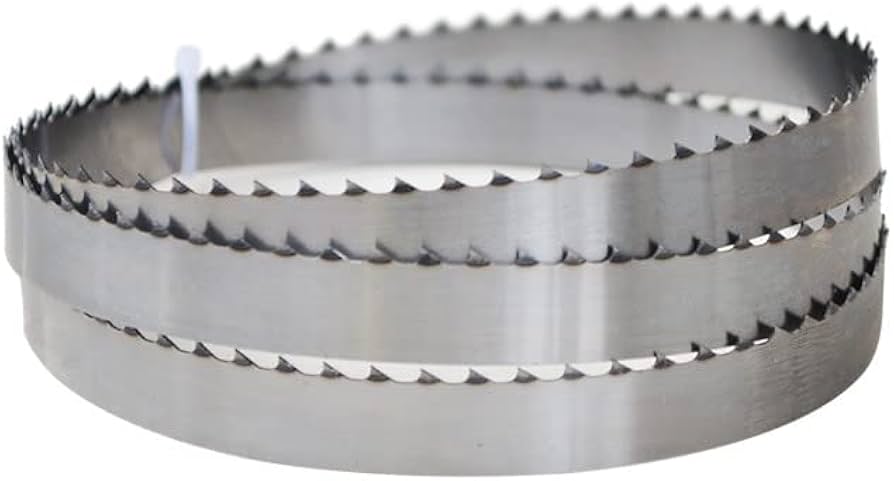
Hunters and processors who want a working reference point for comparing blade specifications by application type can review product categories like bone saw blade options organized by intended use, which helps clarify the practical distinctions between blade types before a purchase decision is made.
Why Tooth Geometry Matters More Than Most Buyers Expect
The geometry of the teeth on a saw blade — their angle, spacing, and set — determines how the blade interacts with bone tissue at the point of contact. A tooth pattern designed for fast clearing will remove material quickly but may leave a rough, splintered edge that introduces bone dust into the surrounding meat. A finer pattern will produce a cleaner cut but generates more heat through friction and dulls faster under sustained use.
For deer processing specifically, the sternum split, the pelvic cut, and the separation of the spine each place different demands on the blade. The sternum and pelvis involve relatively thin bone with cartilaginous areas, while the spine — particularly in older bucks — is denser and requires more sustained cutting pressure. A single blade choice that handles all three reasonably well is more valuable in a practical processing context than a specialized blade optimized for only one cut.
The Impact of Blade Hardness on Longevity Through a Season
Blade hardness directly affects how many deer a single blade will process before performance drops to a level that affects cut quality. A blade that starts dull or loses its edge after two or three carcasses creates compounding problems — more physical effort, longer processing time, and a greater tendency to push rather than cut through bone, which increases the risk of slipping and injury.
Most hunters processing their own deer take between three and twelve animals in a season. A blade that cannot sustain clean performance across that range without resharpening or replacement adds a hidden cost and workflow disruption that few buyers account for at the point of purchase. Hardness and material composition are the primary factors that determine this longevity, and they vary significantly across product categories.
Matching Blade Type to the Specific Cuts Required in Deer Processing
Deer processing follows a fairly consistent sequence of cuts, and each stage of that sequence places different mechanical demands on the saw. Skinning and field dressing are typically done with knives, but once the carcass is hung and cooling, the saw comes into use for splitting the sternum to open the chest cavity, cutting through the pelvis for a clean gut removal, halving or quartering the carcass for storage or transport, and in some cases, separating primal cuts at the spine for processing into roasts or chops.
Each of these cuts benefits from different blade characteristics. A one-size approach often means compromising in multiple places. Understanding which cuts you make most frequently — and which are most critical to your final yield — helps establish a priority order for blade selection.
Hand Saw Blades Versus Reciprocating and Band Saw Blades
The type of saw driving the blade is as important as the blade itself. Hand saw blades, reciprocating saw blades, and band saw blades are not interchangeable, and each platform has different implications for processing workflow.
Hand saws give the processor direct tactile feedback and work well for occasional use or in settings without power access. The blade selection for hand saws in deer processing should prioritize comfort through the cut — meaning a tooth count that moves through bone steadily without stalling or requiring excessive force. Reciprocating saws offer speed and power but require more control, particularly near joints where the blade can catch unexpectedly. Band saws, common in small processing facilities, allow precise, repeatable cuts but require the carcass to be positioned carefully relative to the blade path.
In home processing environments, reciprocating saw setups are increasingly common due to their low cost and availability. The trade-off is blade durability — reciprocating motion places more stress on individual teeth than the unidirectional motion of a band saw, meaning blade replacement cycles are shorter under equivalent workloads.
Sanitation Considerations That Affect Blade Selection
Blade selection in food-context applications — which deer processing is, since the animal will be consumed — carries a sanitation dimension that purely mechanical considerations overlook. Blades with complex tooth geometries or porous coatings are more difficult to clean thoroughly between uses and between processing sessions. Bone marrow, fat, and blood residue that remain on a blade after cleaning create contamination risks in subsequent use, particularly if the blade is stored between seasons without proper treatment.
According to food safety guidance from the USDA Food Safety and Inspection Service, cross-contamination through equipment surfaces is a significant pathway for pathogen transfer in game processing environments. A blade that can be cleaned to a genuinely sanitary state quickly and reliably is worth the consideration, particularly for hunters who process multiple deer over the course of a week.
Volume, Frequency, and the Economics of Blade Replacement
For a hunter who processes one or two deer per season in a residential garage, blade replacement economics look very different than they do for someone running ten to fifteen animals or operating a small commercial processing operation. The cost-per-use calculation shifts considerably depending on volume, and that calculation should inform whether a hunter invests in a premium blade designed for sustained performance or accepts a shorter service life from a mid-range option replaced more frequently.
There is also a skill factor embedded in this decision. A hunter who is new to self-processing benefits from a forgiving blade — one that is not so aggressive that it creates control problems but not so underpowered that it requires technique to compensate. Experienced processors can adapt their approach to accommodate a wider range of blade characteristics, which gives them more flexibility in the selection process.
When Blade Sharpening Is a Viable Option and When It Is Not
Some bone saw blades are designed to be resharpened, extending their service life and reducing per-season costs for high-volume users. Others — particularly reciprocating saw blades — are manufactured as disposable tools with hardened teeth that cannot be effectively resharpened with standard equipment. Knowing which category a blade falls into before purchase prevents the assumption of sharpening capability that some buyers carry into a decision.
For hunters processing their own deer with moderate frequency, the sharpening question often comes down to whether they have access to the equipment and skill required or whether they are willing to pay a professional to sharpen blades on their behalf. In most cases, replacement is more practical than sharpening for reciprocating and hand saw blades. Band saw blades, by contrast, can often be resharpened or retipped economically if they are made from appropriate materials.
Practical Steps for Selecting the Right Blade Before the Season Starts
Selecting the right bone saw blade before the season begins — rather than after the first deer is hanging and the wrong blade is already in hand — is a straightforward process when approached systematically. The decision involves a small number of clearly definable variables, and working through them in sequence leads to a well-matched choice without unnecessary complexity.
Start by identifying the saw platform you are working with, since blade selection is constrained by compatibility. Then consider the number of deer you realistically expect to process in a season, which sets the performance threshold for durability. Evaluate the cuts you make most frequently and whether those cuts involve thin or dense bone sections. Finally, consider the cleaning and storage conditions in your processing environment and whether sanitation ease is a meaningful factor in your setting.
• Confirm the saw platform first — hand saw, reciprocating, or band saw — before evaluating any blade specifications, since compatibility determines your actual selection pool.
• Estimate seasonal processing volume honestly, including whether you take on deer from family or friends, which can significantly raise the total carcass count in a given year.
• Identify your most demanding cut — typically the spine or pelvis in mature bucks — and use that cut as the benchmark for blade performance requirements rather than optimizing for the easiest cut.
• Factor cleaning time into the decision, particularly if you process multiple deer in close succession and thorough sanitation between animals is a workflow constraint.
• Consider whether you want a single blade that covers the full processing sequence or whether you are open to using different blades for different stages of the work.
Closing Considerations
Selecting a bone saw blade for deer processing is not a particularly complex decision, but it is one that rewards a few minutes of structured thinking before the season opens. The costs of a poor fit — in time, effort, yield loss, and food safety risk — are real and cumulative across a season. A blade chosen with the specific demands of deer anatomy, your processing volume, and your equipment in mind will perform more consistently and require less management throughout the work.
Most hunters arrive at a reliable setup through trial and error over several seasons. That process is avoidable. Understanding what drives blade performance in bone-cutting applications — tooth geometry, material hardness, platform compatibility, and sanitation properties — gives a first-time or occasional processor the same decision framework that experienced processors develop over years of practical use. The result is fewer interruptions during processing, cleaner cuts, better yield, and a more manageable workflow from field to freezer.
-

-
-
-

-

-